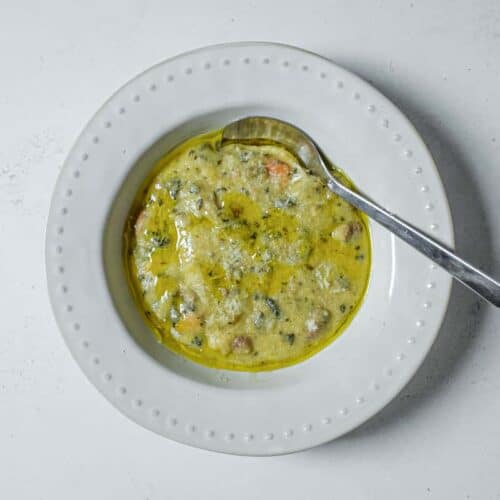
Polenta Incatenata
Polenta Incatenata is a hearty Tuscan classic made with creamy polenta, tender borlotti beans, potatoes and cavolo nero. Inspired by my travels in Tuscany, this rustic Italian dish is rich, comforting and packed with flavour. A wonderful example of traditional cucina povera.
Servings: 8
Calories: 451kcal
Ingredients
- 200 g dried borlotti beans cranberry beans (7oz) (or two 400g cans, drained)
- ⅓ cup olive oil
- 1 medium onion diced
- 2 carrots diced
- 1 celery stalk chopped
- 3 garlic cloves chopped
- 1 bay leaf
- 1 bunch cavolo nero cabbage around 220g/8oz (stems removed, leaves chopped)
- 2 potatoes 2.5cm/1-inch - cubed (300g)
- 1 litre vegetable stock
- 2 cups fine polenta not instant polenta (around 300g)
- 1 ½ tsp sea salt
- 50 g unsalted butter optional
- 1 cup finely grated Parmigiano-Reggiano optional, for serving
Instructions
- Soak the beans overnight in plenty of water. Once soaked, rinse well then place in a saucepan. Cover in water by about 2-inches/4cm and bring to a boil. Lower the heat and cook for around 45-60 minutes until the beans are cooked but not too soft. Drain and set aside to cool. Alternatively, you can skip this step and use 2x400g cans of borlotti, drained.
- Heat the olive oil in a large, heavy-based pot, over a medium heat, until just hot. Add the onion, celery, carrots, garlic and bay leaf and fry gently for 4-5 minutes until translucent.
- Add the beans, potatoes, cavolo nero and stir for 2-3 minutes until the cabbage is wilted.
- Pour in the stock and 1.5 litres of water and bring to a boil. Season generously with salt & pepper and simmer gently for 25 minutes, until the vegetables are tender.
- In a gentle stream, pour in the polenta, stirring constantly as you go. Bring to a simmer and cook gently for 45 minutes, stirring regularly to avoid the polenta catching on the bottom of the pot.
- At this stage, the mixture will begin to look like a thick porridge and the beans will mostly break down. If the mixture becomes too thick, add a little water or broth at a time - you should aim for a texture like creamy mashed potato.
- Beat in the butter (if using) until creamy.
- Serve alongside the grated cheese to sprinkle over along with a drizzle of extra-virgin olive oil (optional).
Notes
- Beans – Borlotti beans are my favourite for their creamy texture and earthy flavour. Cannellini or butter beans work just as well. You can also use two 400g (14oz) cans of beans, drained, to skip the soaking and pre-cooking.
- Polenta – Use traditional fine polenta rather than instant or quick-cooking varieties. The longer cooking time helps everything come together into one creamy, cohesive dish.
- Leafy greens – Cavolo nero (Tuscan kale) is my preferred choice, but regular kale, Swiss chard or cabbage are all excellent alternatives.
- Consistency – Polenta absorbs a lot of liquid during cooking. Add extra hot water or broth as needed to achieve a soft, creamy consistency similar to mashed potato.
- Stirring – Stir regularly to prevent the polenta sticking to the bottom of the pot. Be careful of hot splatters as the mixture thickens.
- Mantecatura – For an extra silky finish, vigorously beat in the butter at the end of cooking. You can leave it out or use vegan butter for a dairy-free version.
- Serving – I love serving this with plenty of grated Parmigiano Reggiano and a generous drizzle of extra virgin olive oil. It's delicious on its own or alongside grilled sausages or a hearty pork stew.
- Storage – Refrigerate in an airtight container for 3–4 days or freeze for up to 3 months. Reheat gently, adding a little water or broth to restore its creamy texture.
Nutrition
Calories: 451kcal | Carbohydrates: 58g | Protein: 15g | Fat: 18g | Saturated Fat: 7g | Polyunsaturated Fat: 2g | Monounsaturated Fat: 9g | Trans Fat: 0.2g | Cholesterol: 22mg | Sodium: 654mg | Potassium: 659mg | Fiber: 8g | Sugar: 2g | Vitamin A: 3029IU | Vitamin C: 12mg | Calcium: 202mg | Iron: 2mg