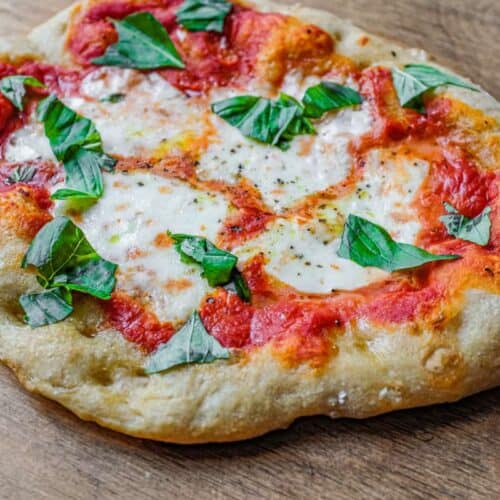
Pinsa Romana
Move over Pizza, there's a new (actually very old) star in town. Pinsa Romana is a crisp, soft bread from Rome that is a taste and textural sensation. Learn how to make your own pinsa dough at home topped with my four favourite flavours.
Servings: 4 pinsa
Calories: 1057kcal
Ingredients
For the Pinsa Dough
- 4 cups bread flour
- ½ cup rice flour
- ¼ cup spelt flour
- 3 g dried yeast
- 2 tsp salt
- 1 tbsp olive oil
- 2¼ cups water (room temperature)
For the Pinsa toppings
Tomato, Mozzarella & Basil
- ½ cup tomato passata
- 1 fresh buffalo mozzarella (cut into thick slices)
- 1 stem basil leaves (roughly torn)
- salt & pepper
Mushroom
- 2 tbsp olive oil
- 5 medium mushrooms (about 1 cup sliced)
- 1 garlic clove (minced)
- 1 stem fresh thyme (or oregano or marjoram)
- 1 cup grated mozzarella
- salt & pepper
Sausage & Potato
- 1 medium potato peeled and cubed
- 2 tbsp olive oil
- 1 stem fresh rosemary
- 2 Italian sausage (removed from skin)
- salt & pepper
Burrata, Mortadella & Pistachio
- 1 burrata
- 2 slices mortadella ham
- 1 tbsp pistachios (shelled and chopped)
- salt & pepper
- 1 tbsp extra virgin olive oil (optional)
Instructions
Making the Pinsa dough
- Combine the flours together until well mixed.
- Mix in the yeast and about 80% of the room temperature water until well combined. It’s quite a wet dough so will be sticky. I like to do this in a bowl to avoid mess and it where the dough will rest, so I makes sense. Rest for 15 minutes.
- Chop the dough with some kitchen scissors into chunks then add the oil, salt and remaining water. Note: The chunks help you to knead the remaining water more easily. Adding the salt at this stage gives the yeast time to bloom a little.
- Cover the dough loosely with plastic wrap and rest for 15 minutes.
- Pull and stretch the dough for 2-3 minutes to knead.
- Cover and leave for 1 hour at room temperature then repeat the process of kneading. Cover again and place in the fridge for 24 hours. It will expand and double in size if not more.
- After 24 hours, remove the dough onto a floured surface and cut into 4 pieces. Roll into balls and tuck the dough under to form neat balls.
- Step 8 – Place these into separate bowls and cover. Leave for 1-2 hours for a final prove. Preheat oven to 240ºC/465ºF, or as close as you can get with your oven (You can use a pizza stone if you have one too.)
- Take one ball and gently stretch into a small oval. Use your fingers to firmly press indents into the dough and then drizzle lightly with olive oil.
Baking the Pinsa (some steps can be done in advance)
- For all pinsa, you should pre-bake the bases. Roll out to the desired size and bake in a preheated oven of 240ºC/460ºF for 5-6 minutes until the surface looks set and dry. Remove and cool. Repeat with as many bases as you need. This stage can be done well in advance (just cover the pinsa bases until you need them). You can also freeze (see notes below).
Tomato, Mozzarella & Basil
- Spoon and spread the tomato passata over the cooked pinsa base and top with slices of mozzarella.
- Bake in the oven for 4-5 minutes until the pinsa is crisp on the top and bottom. Remove and sprinkle with some torn basil leaves and a little salt & pepper and serve hot.
Mushroom
- In advance: in a frying pan, heat the olive oil and fry the mushrooms with the garlic and thyme, seasoned with a little salt & pepper for 10 minutes until the mushroom has released all its water and they are quite dry in consistency. Discard the thyme and set aside.
- Cover the cooked pinsa oval evenly with the grated mozzarella and then arrange the mushrooms on top and season lightly with salt & pepper.
- Bake in the oven for 4-5 minutes until the pinsa is crisp on the top and bottom. Serve hot.
Sausage & Potato
- In advance: Peel and cube the potato and then toss with the olive oil, rosemary and a little salt & pepper. Roast in a preheated oven 200ºC/400ºF for 30-40 minutes until cooked and browned. Discard the rosemary and set aside.
- Cover the pre-cooked pinsa oval evenly with the grated mozzarella and then scatter over a few potato cubes. crumble some raw sausage over the pinsa.
- Bake in the oven for 4-5 minutes until the pinsa is crisp on the top and bottom. Serve hot.
Burrata, Mortadella & Pistachio
- Bake the pinsa oval in the oven for 5-10 minutes until crisp on the top and bottom. Remove and cool completely.
- Tear the mortadella slices into pieces and arrange on the pinsa bread
- Cut the burrata into pieces carefully place on top of the mortadella slices
- Sprinkle with chopped pistachio and season lightly with salt & pepper
- Optional: drizzle lightly with a little extra virgin olive oil.
Notes
Alternative toppings:
Pinsa possesses incredible versatility, adapting flawlessly to your preferences. Whether you favor pineapple or not, any favorite topping of yours will complement a pinsa perfectly. Beyond the ones displayed here, I have numerous other favorites to explore, too.
- Thinly sliced eggplant, tomato, mozzarella and basil
- Black olive, artichoke and mozzarella
- Thinly sliced potato, rosemary and olive oil
- Anchovy and caramelised red onion
- Guanciale, Bitter Greens and Mozzarella
- Sausage, Tomato & Mozzarella
- Shrimp, tomato and chilli pepper
- Spicy salami, tomato & mozzarella
- Tomato, shrimp and chilli
- Porchetta!
- Pre-baking is key, and helpful too as you can bake all your bases at once and when it comes time to top and rebake it's so much easier than dealing with regular uncooked pizza dough.
- Breaking the dough into pieces after the initial mixing process facilitates better absorption of the final amount of water and salt.
- For a crisper bottom, cooking the pinsa on a pizza stone is recommended, but using a sheet pan works perfectly fine if a pizza stone is unavailable.
- The pronounced flavor and open texture of pinsa dough come from allowing enough time to develop.
- Avoid trying to take shortcuts in this process, and let science work its magic!
- Refrigerating Pinsa dough - Once fermentation is complete, you have the option to store the dough in the fridge for up to a day, during which it will continue to develop in flavor.
- Freezing Pinsa dough - After preparing the dough, divide it into portions, tightly wrap each portion in plastic wrap or place them in airtight freezer bags, and store in the freezer. When you intend to use it, simply allow the dough to thaw in the refrigerator overnight and bring it to room temperature before shaping and baking.
- Freezing pre-baked pinsa bases - bake your bases as normal and then cool. Freeze in single layers until solid, then place all in a freezer bag. This will avoid sticking. Defrost in single layers, then add your toppings and bake as normal.
- Leftovers - If you have any cooked pinsa left, it can be refrigerated for 1-2 days. When you're ready to enjoy it again, feel free to reheat it or savor it cold.
Nutrition
Calories: 1057kcal | Carbohydrates: 132g | Protein: 34g | Fat: 43g | Saturated Fat: 13g | Polyunsaturated Fat: 5g | Monounsaturated Fat: 22g | Cholesterol: 69mg | Sodium: 1866mg | Potassium: 799mg | Fiber: 7g | Sugar: 3g | Vitamin A: 399IU | Vitamin C: 16mg | Calcium: 204mg | Iron: 8mg