

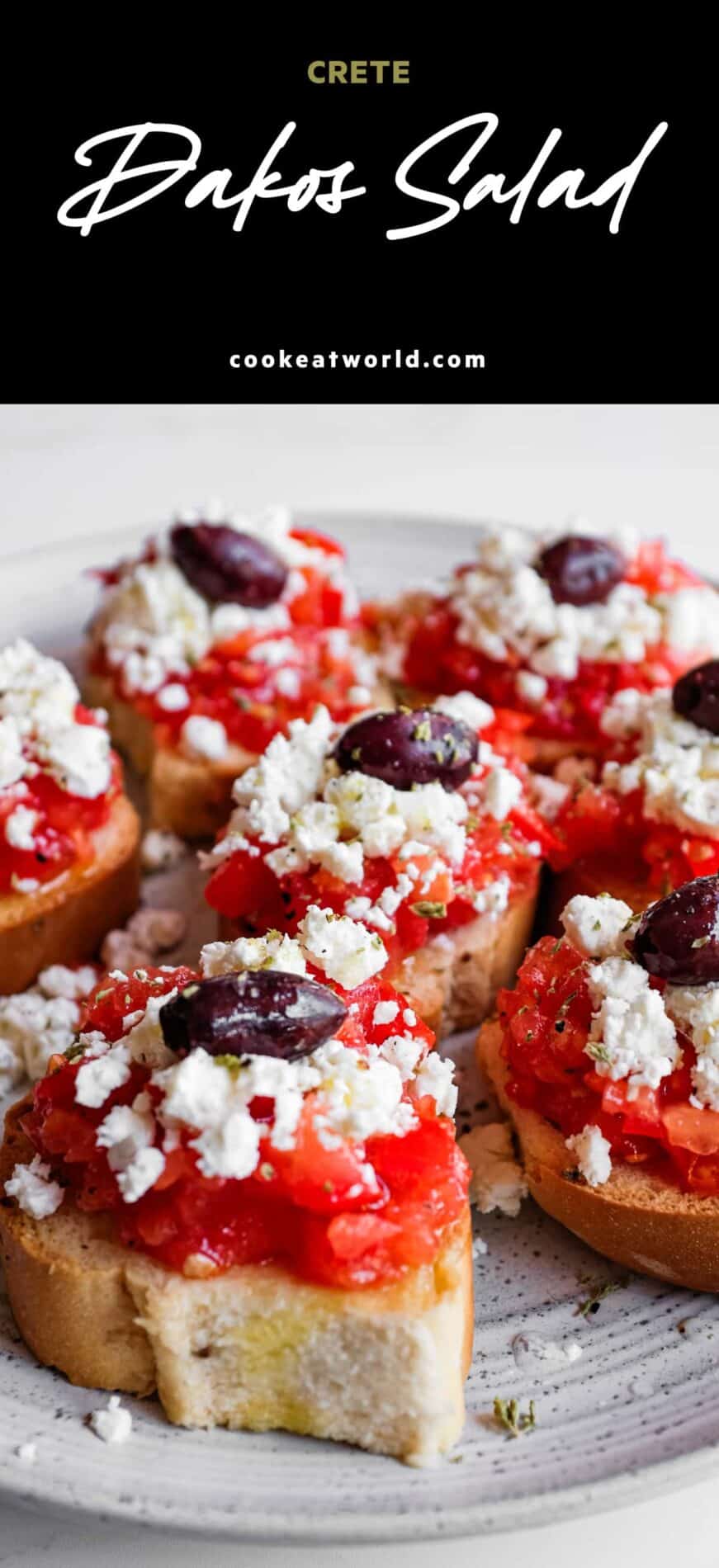

Cretan Dakos Salad
By Lee Jackson ↣ Published on: June 16, 2026
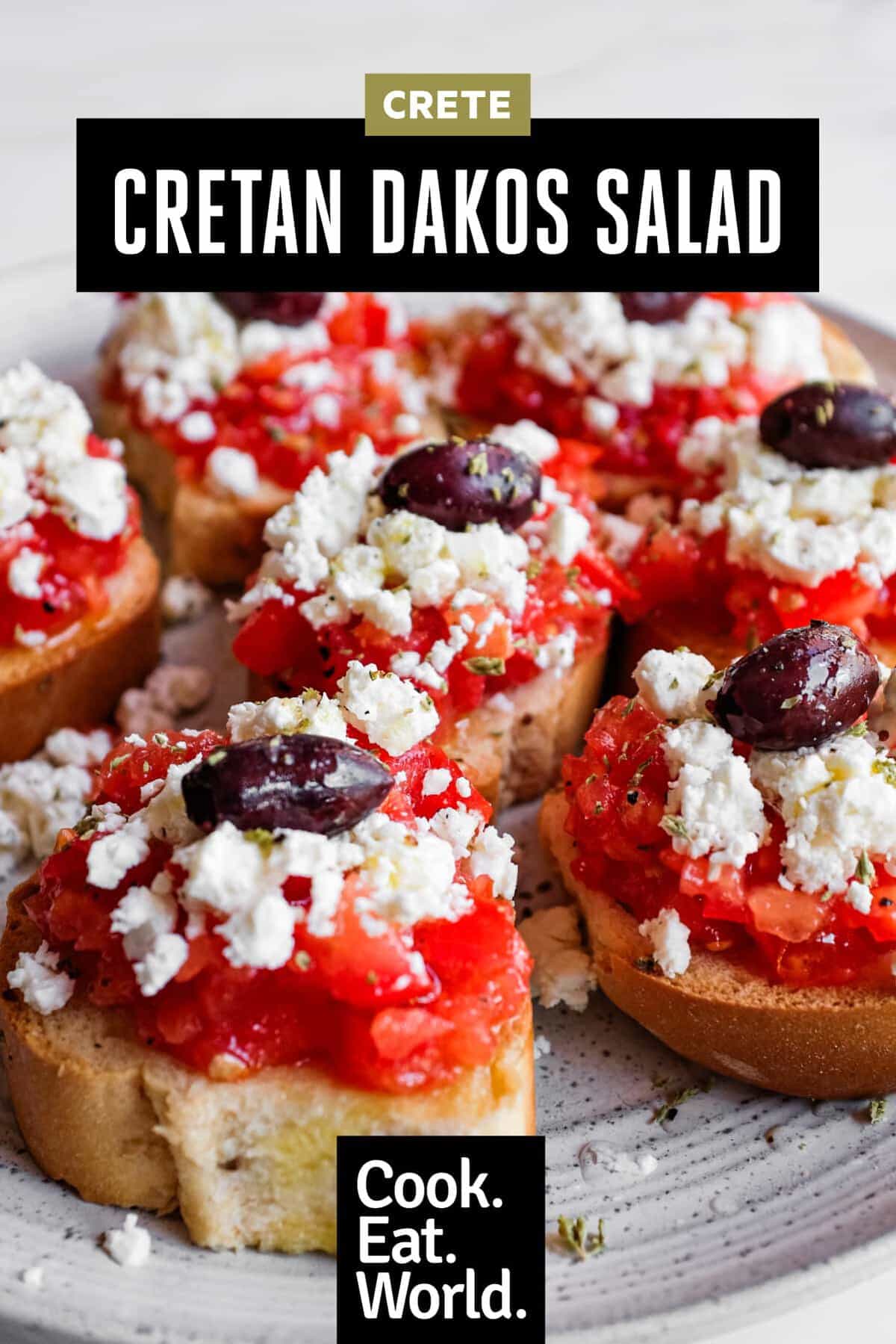
Nothing is simpler than this quick and easy Cretan dish called Dakos. Crunchy rusk breads are topped with the cleanest flavours of tomato, feta cheese, olive and oregano. They’re the perfect mezze-style offering and so easy to pull together.
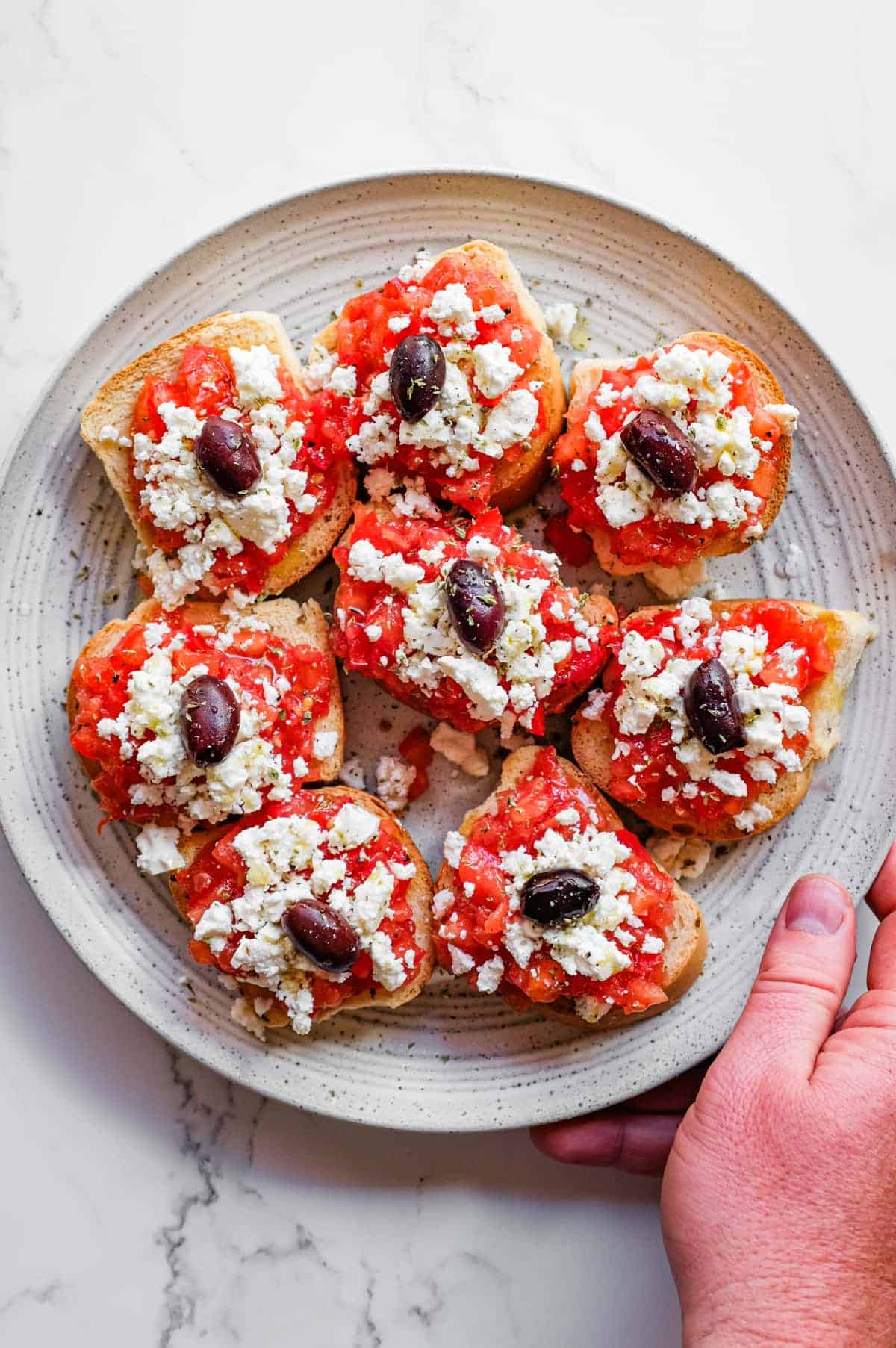
Mezze food is one of my go-to favourites to serve at home. And one of the simplest and tastiest is this ingenious offering from Crete and Greece. Crisp rusk breads are generously topped with sweet, juicy tomatoes and salty feta cheese. A tangy kalamata olive rounds out the flavour alongside a light dusting of dried Greek oregano and a drizzle of extra virgin olive oil (Greek, naturally).
I can whip this dish up in a matter of minutes with ingredients I always have at hand - this is especially handy if I receive a few unexpected guests which is commonplace. They always go down a treat as they're light, fresh and healthy - and much more satisfying than a bowl of potato chips!
Dakos is on regular rotation and is an integral part of my Mediterranean recipe collection as well as my favourite mezze recipes that I cook all the time.
What's Ahead?
What is Dakos Salad?
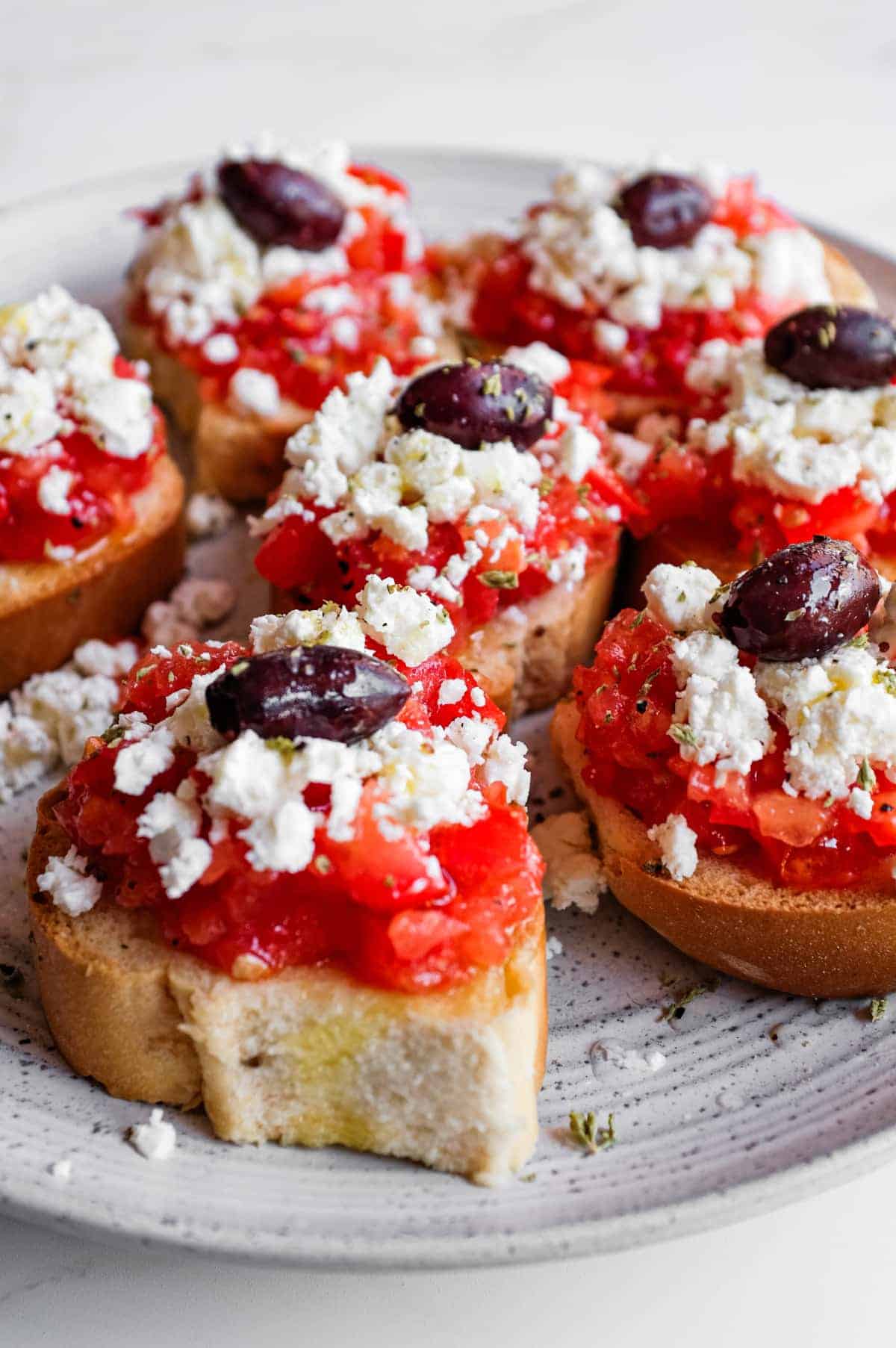
Dakos salad is somewhat of a confusing name, but this simple dish from Crete and Greece is served in many ways across the region. Most commonly, it's served like an Italian bruschetta. The bread comes in the form of dried barley rusk which is topped with finely chopped or grated tomato, salty feta and often olives or capers. A light sprinkling of dried oregano and extra virgin olive oil finish off the dish.
Typically Dakos are served as a meze/small plate or as a light lunch in the summer months. They're perfect as an appetiser or starter and even as a simple rustic supper. They're popular as a home prepared dish and at tavernas and restaurants. They can be prepared in no time, which is an appealing option if you're hungry.
Why You'll Love Dakos
- Crisp, juicy and packed with Mediterranean flavour
- Uses just a handful of simple ingredients
- Perfect for warm-weather lunches and sharing plates
- A brilliant way to showcase ripe summer tomatoes
- Rustic, authentic and effortlessly impressive
- No cooking required beyond simple prep
- Ready in minutes
- Delicious as a light meal, appetiser or meze plate
- The contrast of crunchy rusks and juicy tomato is irresistible
- Tastes like a Greek island holiday on a plate
Stuff You'll Need
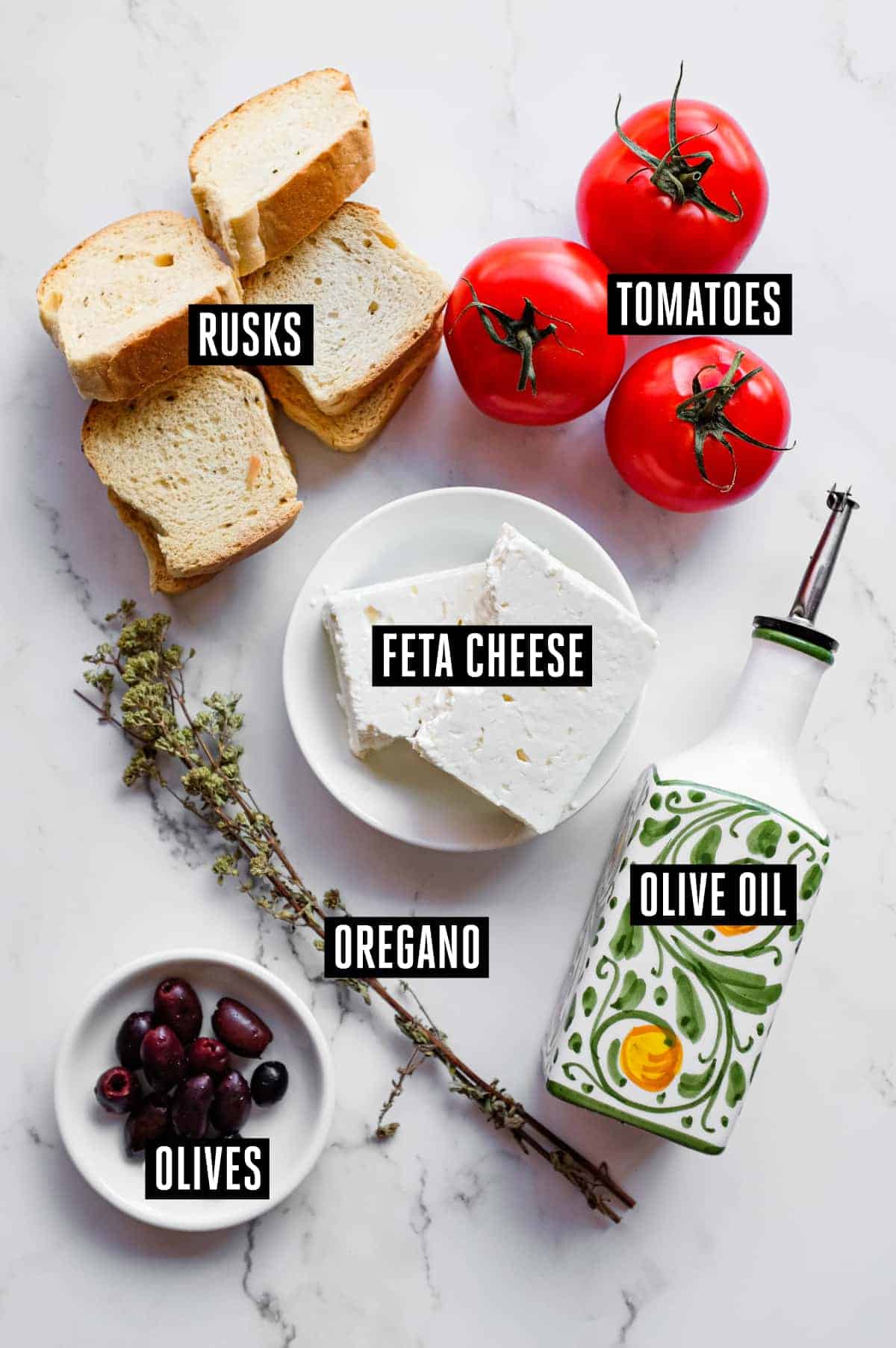
Bringing this little treasure to life is a quick and easy affair as I generally always have the ingredients at hand. Here's how...
- Barley rusks - known as paximadia in Greece, are used as the crisp, rustic base that soaks up the tomato juices and olive oil while still retaining some crunch.
- Tomatoes - sweet and fresh, they're chopped finely or grated and seasoned with salt & pepper. They bring all the freshness you'd expect from Cretan cuisine.
- Feta - traditionally, dakos uses creamy Cretan cheeses like mizithra or xinomizithra, though feta is a common modern substitute.
- Olives - commonly a tangy note is added with kalamata olives or salty capers. You can use either, or both.
- Dried Oregano - traditionally, dried is used, I've made using fresh oregano and it's delicious, but I actually prefer the traditional dried.
- Extra Virgin olive oil - Greek is best, but use the best you can get as it really brings out the flavour of everything else.
Step by Step
There's not a lot to do to make these tasty treats. Here's how simple they are to prepare.
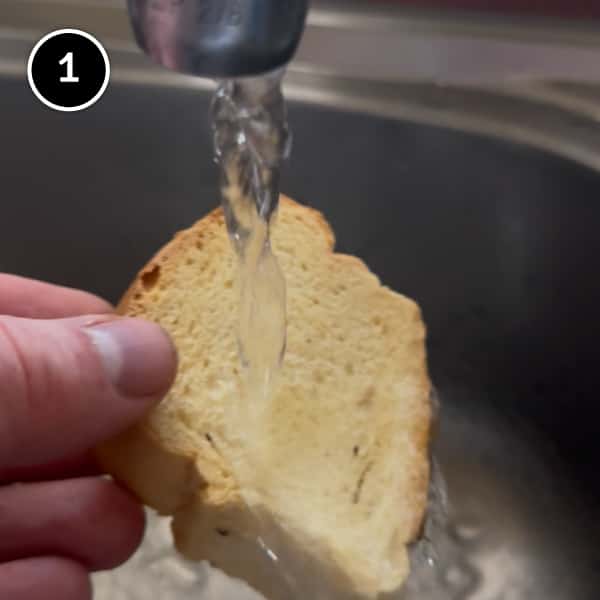
- Step 1 - Traditionally, the rusks are run under cold water for 1-2 seconds - this softens the surface a little while remaining crunchy inside. I've found it makes a difference, so I follow this step for the most authentic texture. You can also just let the juices from the tomato do its magic if you wish.
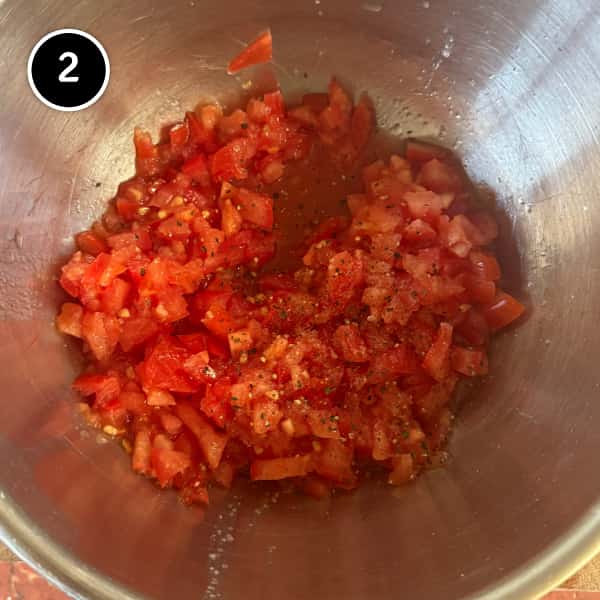
- Step 2 - Grate or finely chop the tomatoes. I use both methods; if the tomatoes are firm, I coarsely grate — if they're ripe and soft, I finely chop to avoid them turning into mush. I season them with salt and pepper and stir in a little olive oil sometimes.
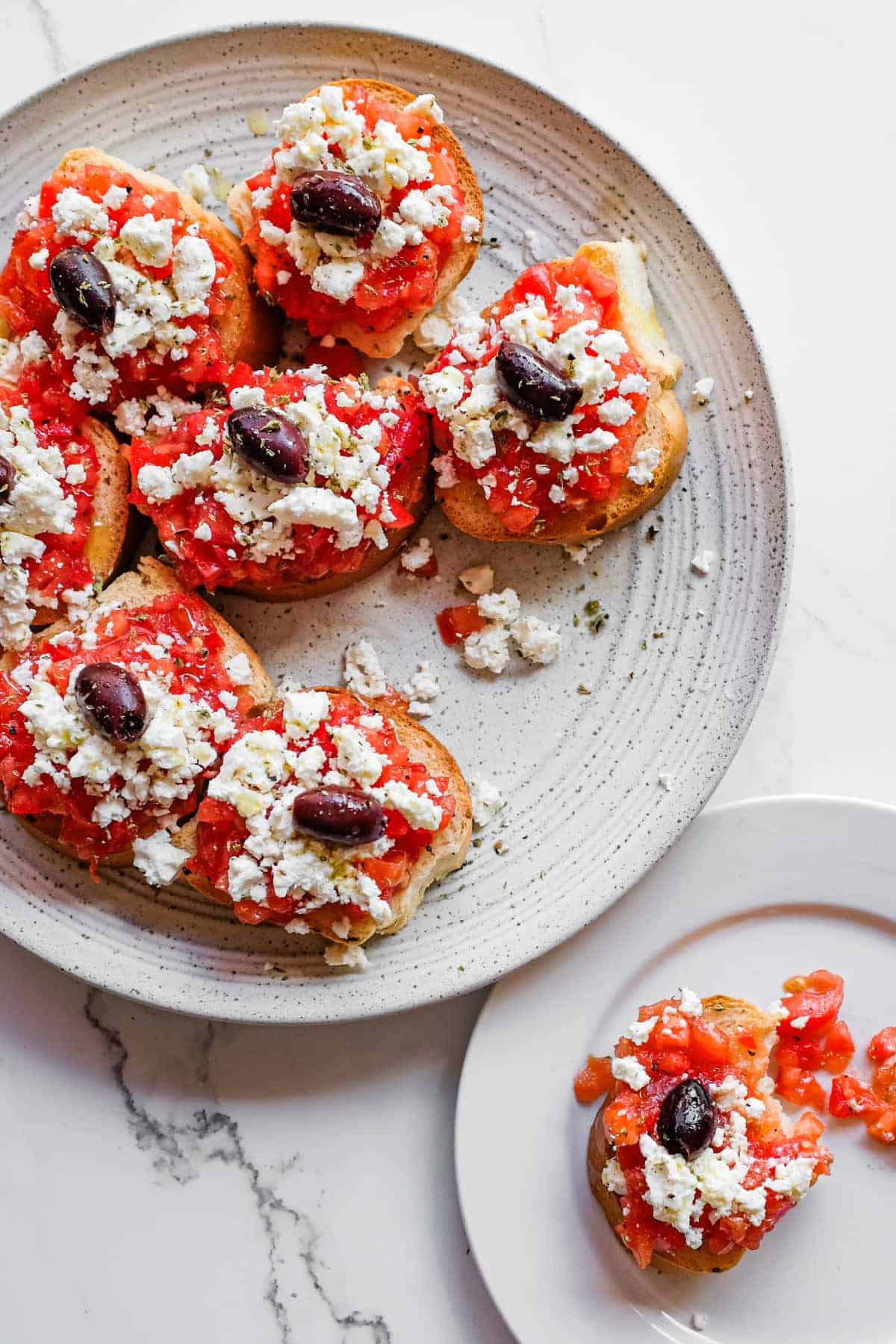
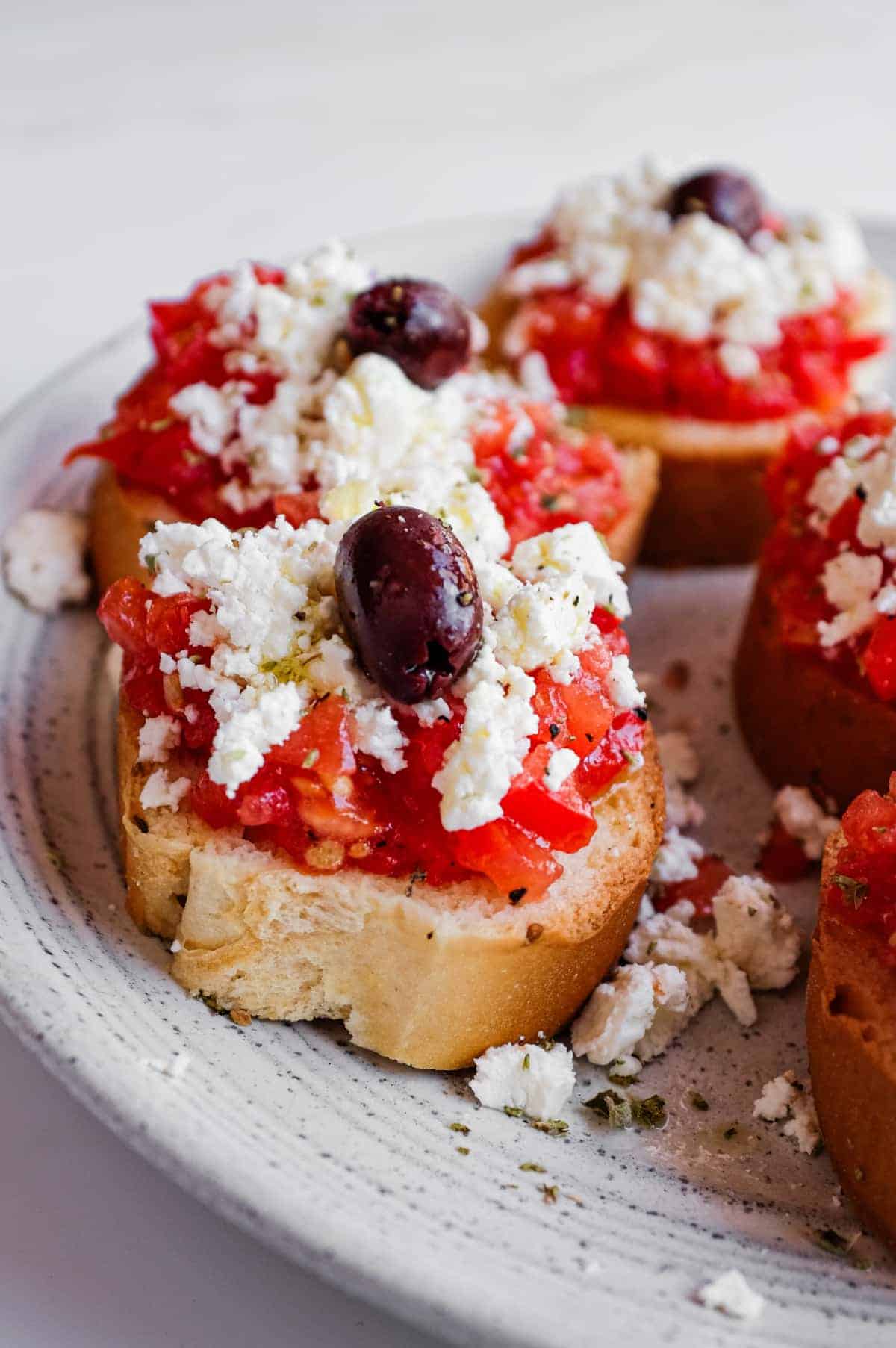
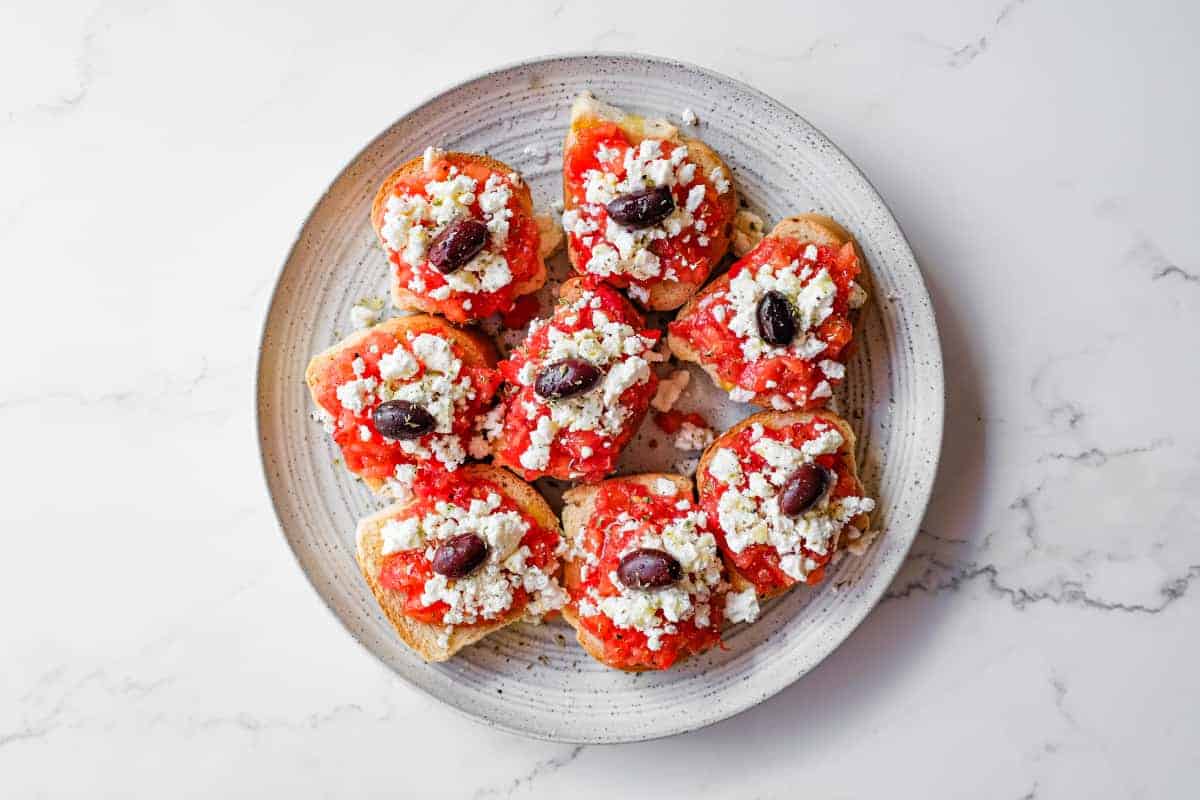
Once you've done that, all that's needed is to assemble the dakos salad by adding a generous spoonful of tomato to each rusk, followed by a spoonful of feta and then an olive or a few capers. Lastly, a light dusting of oregano, followed by a final drizzle of extra virgin olive oil.
Pro Tips
- Use the best tomatoes you can find — dakos relies on their sweetness and juice
- Don’t soak the rusks too heavily or they’ll turn soggy
- Use good quality extra virgin olive oil — it makes a huge difference
- Allow the dakos to sit for a minute or two before serving so the rusks soften slightly
- Feta is delicious, but mizithra gives a more authentic Cretan flavour
- Add olives or capers for extra salty, briny contrast
Storage Suggestions
This is a quick and easy dish to prepare, so I don't recommend making in advance or storing. The rusks will become soft and mushy if left for too long. On this occasion, prepare and eat!

Ready to get Started?
Dakos really is a wonderful and wonderfully simple Mediterranean speciality to make at home. My friends and family love them, and I'll often just bring out a big platter to serve alongside wine or beers well before the main food event, just to keep hanger at bay. They're an essential addition to my Med-style mezze recipes and a fast favourite amongst guests. I'm sure you'll agree when you make and sample the Cretan good life yourself.
More Mediterranean recipes
If you liked this recipe, I'm sure you'll love some more of my favourite Greek and Mediterranean recipes.
Any Questions? (FAQ)
Have a question? Let me know in the comments.
What is dakos?
Dakos is a traditional Cretan dish made with barley rusks topped with grated tomato, cheese, olive oil and oregano.
What are the rusks used in dakos?
Dakos is traditionally made with Cretan barley rusks known as paximadia, which soften slightly while still retaining some crunch.
Can I make dakos with feta?
Yes. Traditional versions use mizithra or xinomizithra, but feta is a common and delicious substitute.
Do I need to soak the rusks first?
Only lightly. A quick splash of water helps soften them slightly without turning them soggy.
Can dakos be made ahead of time?
It’s best assembled just before serving so the rusks keep their texture.
This recipe uses affiliations and may receive a commission based on your activity (link clicks). Learn more.
Ingredients
- 8 small barley rusks
- 3 tomatoes
- 200 g feta (crumbled)
- 3 tbsp extra virgin olive oil
- 1 tsp dried oregano
- Salt & Pepper
- 8 Kalamata olives
Instructions
- Finely chop or grate the tomato and season with salt & pepper. Drizzle in about 2 tbsp of olive oil and mix well.
- Briefly run the rusks under cold water for 1 second each, or sprinkle lightly with water. They should stay firm and crunchy in the middle.
- Arrange on a platter, then add a spoonful of tomato over each.
- Follow with a spoonful of crumbled feta and add an olive on top.
- Lastly, sprinkle each with a little oregano and then a final drizzle of olive oil.
- Leave for a 2-3 minutes to allow the tomato juice to soak in a little then serve.
Notes
Tips
- Use the ripest tomatoes you can find — dakos relies on their sweetness and juice.
- Don’t soak the rusks too heavily or they’ll turn soggy.Good quality extra virgin olive oil makes a huge difference here.
- Let the dakos sit for a minute or two before serving so the rusks soften slightly while still retaining crunch.
- Feta works beautifully, but mizithra gives a more authentic Cretan flavour.
- Olives and capers add a lovely salty, briny contrast.
Storage
Dakos is best assembled and eaten immediately. As it sits, the rusks soften and lose their signature texture, so I don’t recommend making it ahead or storing leftovers.Nutrition
Leave A Comment