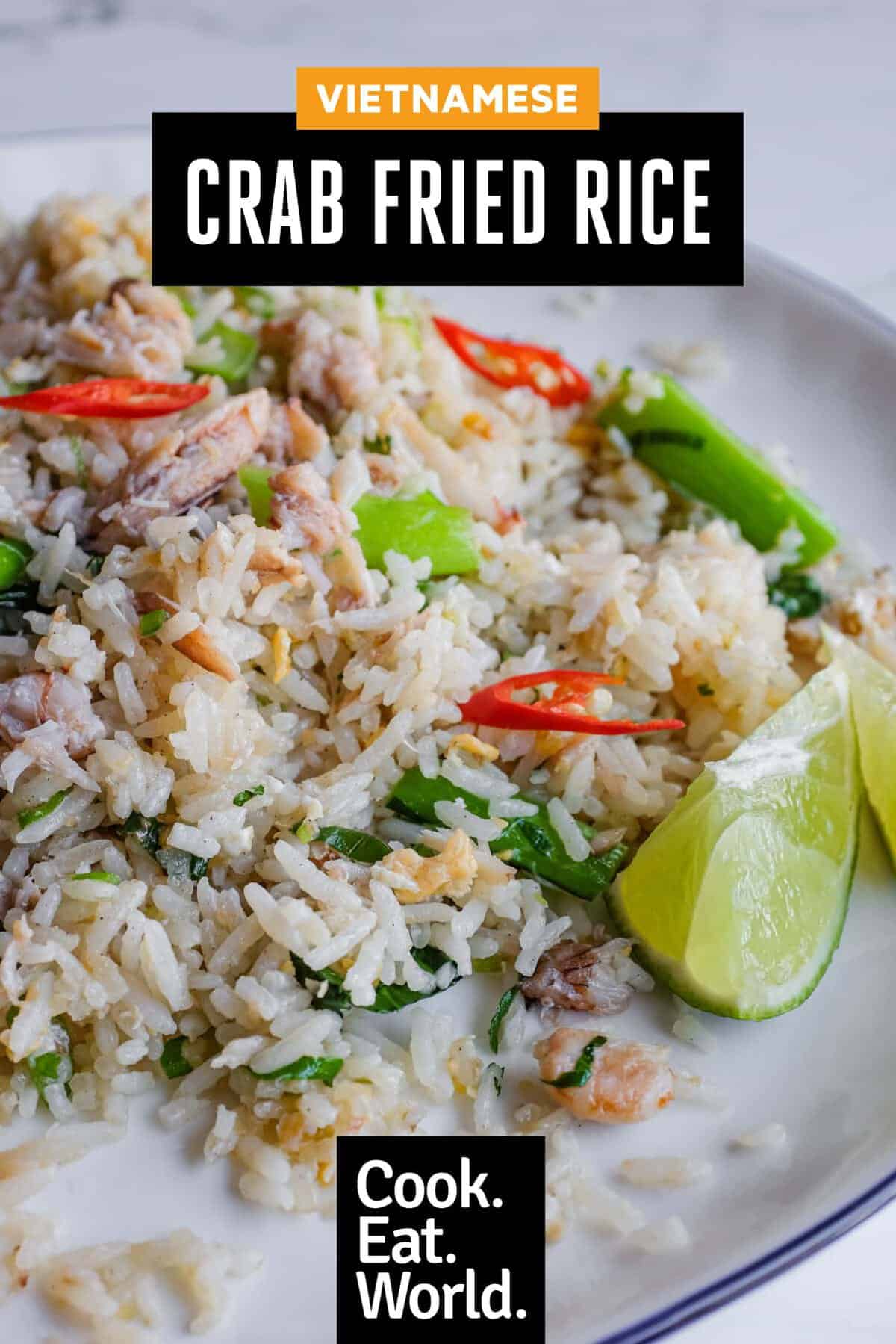

Vietnamese Crab Fried Rice
By Lee Jackson ↣ Published on: September 8, 2026
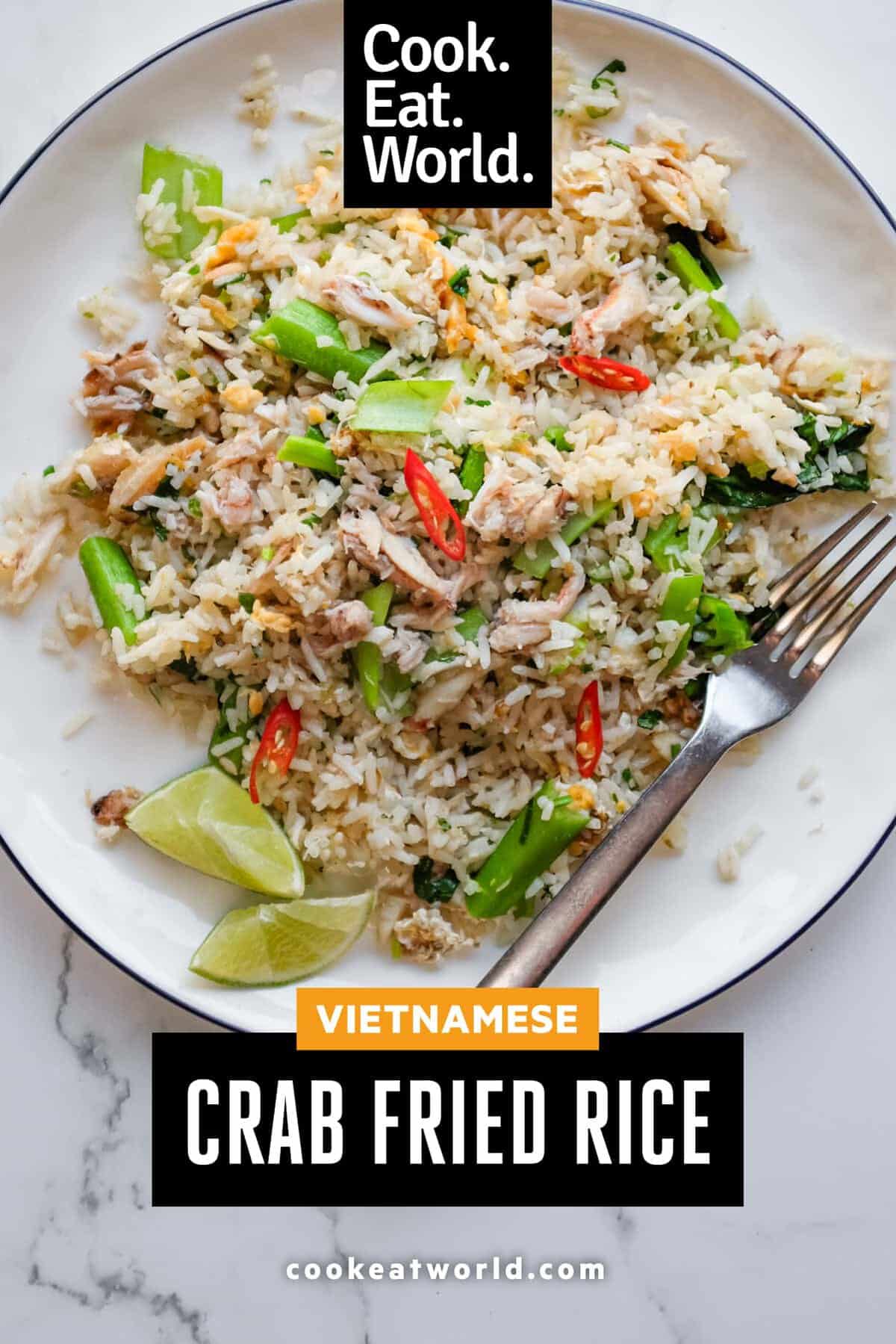
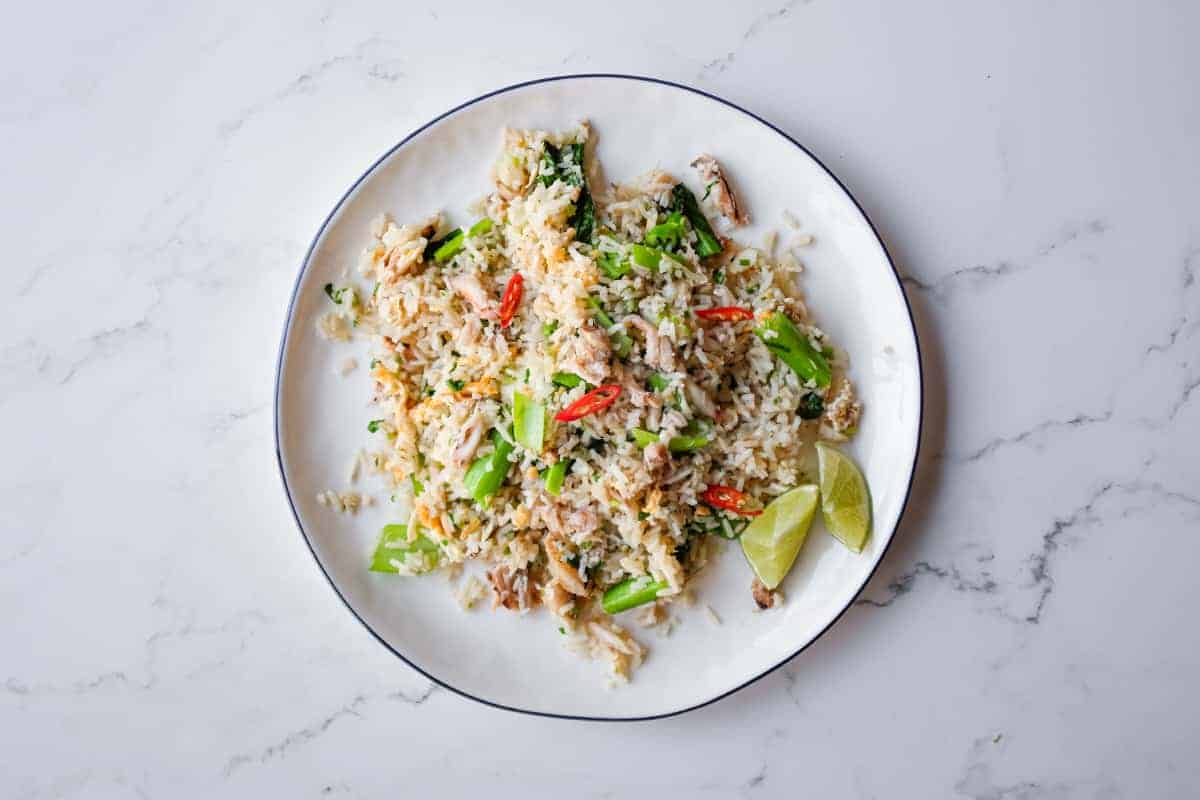
My crab fried rice dish has all the fragrance and flavour you’d associate with Vietnamese cuisine. Light, bright and aromatic. The delicate crab takes centre stage with the fluffy rice with notes of ginger and salty fish sauce. It’s a quick, easy and very special way to serve leftover rice.
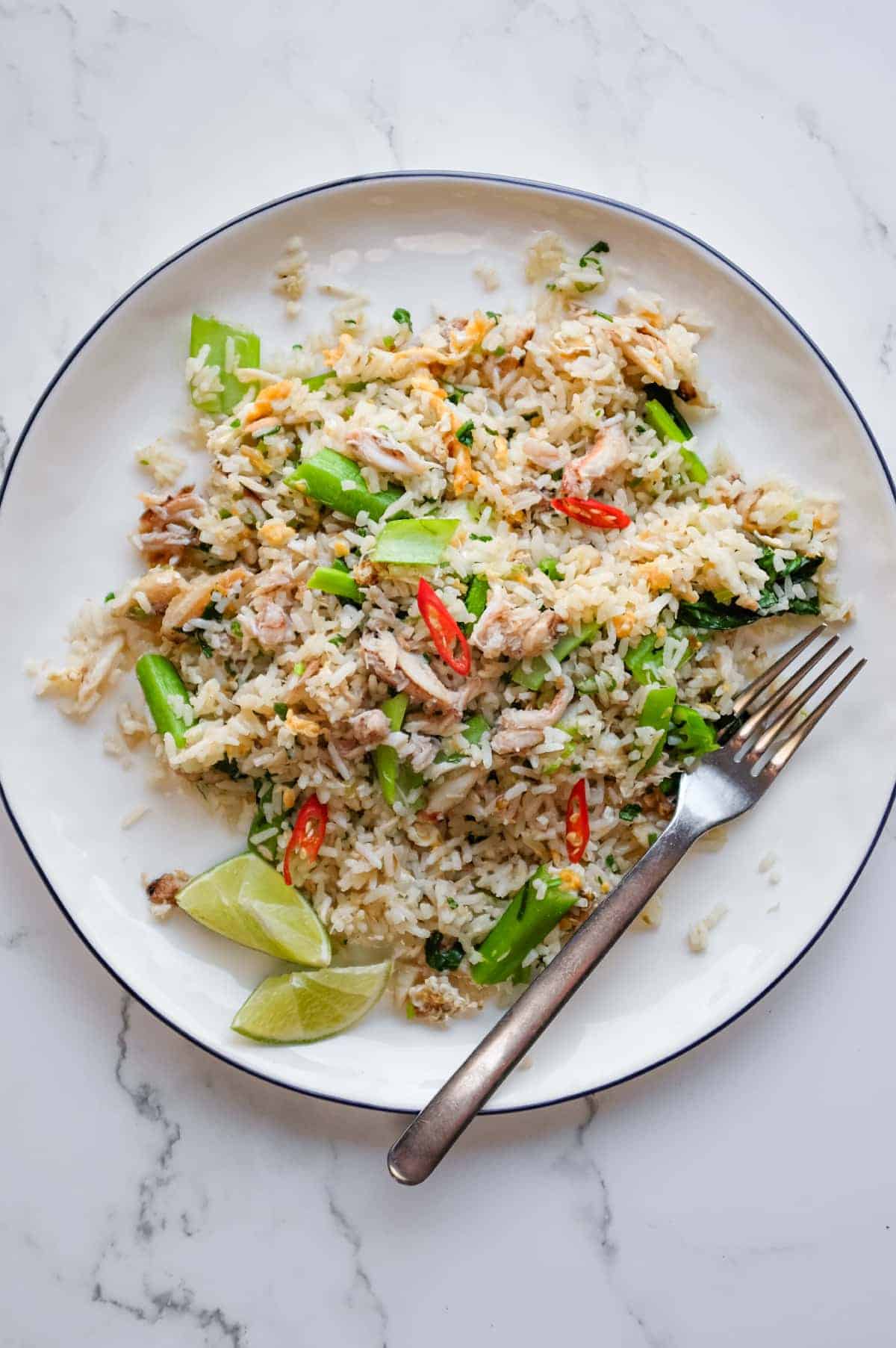
I just love all kinds of fried rice, from a simple Chinese egg fried rice, a fragrant and spicy nasi goreng to a complex and funky Kimchi Fried Rice - they're all dishes I can't get enough of.
Fried rice is always on my mind and I often add more rice to the rice cooker, knowing there'll be leftovers, which means I can create a fried rice the next day. Fried rice works best with day-old rice. I don't know what the science is behind that, but it just does. In fact, I'd go as far as to say it's essential!
This Vietnamese crab fried rice is one of the most special. I first ate this at my favourite Vietnamese restaurant in Sydney, most likely around 2005 - I've been cooking it for so long now and have no idea if it resembles the original recipe, but it's developed over time into my version - it's always reserved for a special treat - crab isn't cheap, and it might seem decadent to use it for such a humble dish, but honestly, I can't think of a better way to highlight the delicate crab meat - it's so good! It feels luxurious and decadent every time.
This delicious recipe belongs to my curated Asian Collection and my Noodles & Rice Hub, where you'll find more tasty Asian dishes.
What's Ahead?
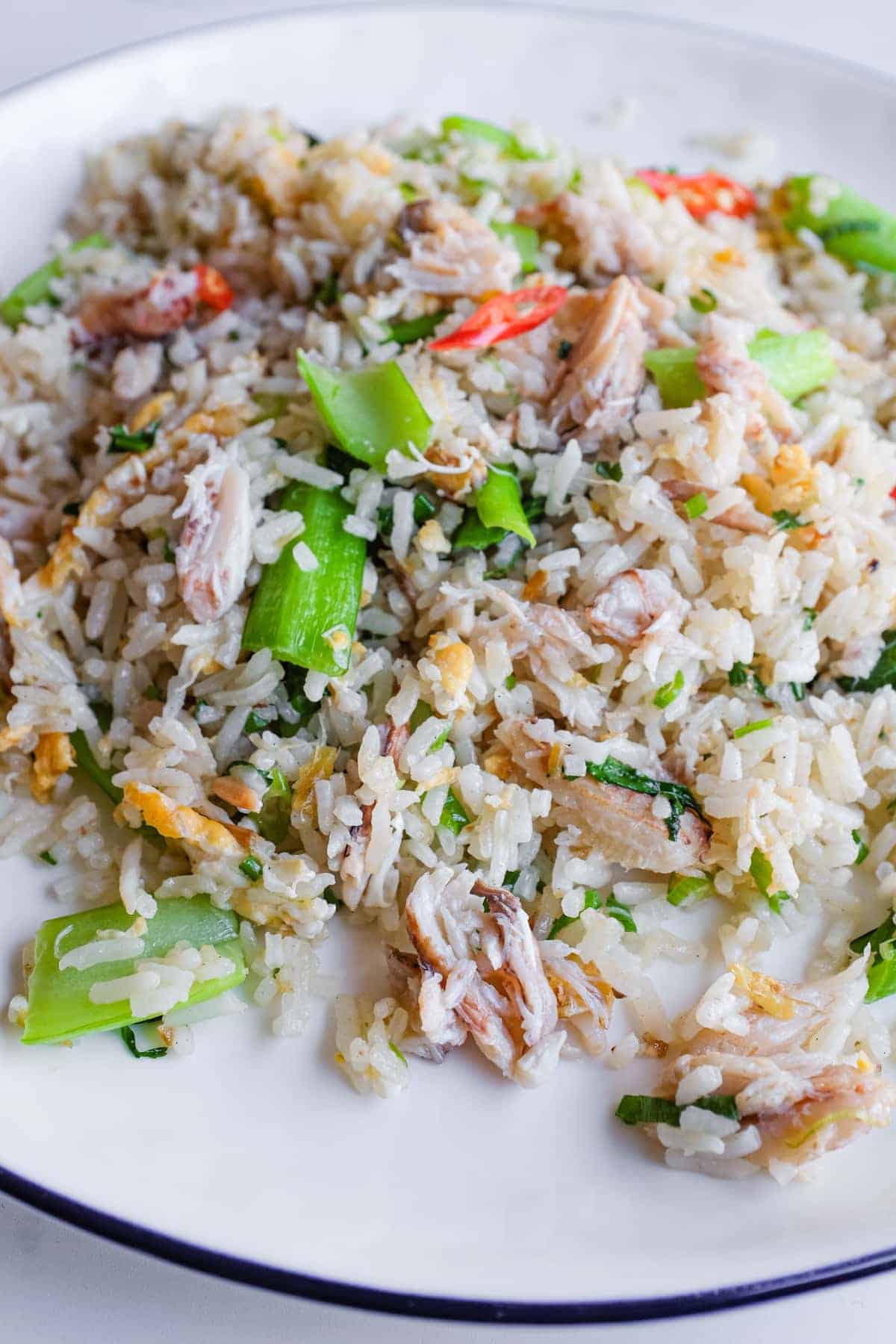
What is Cơm chiên cua?
My recipe is inspired by a Vietnamese dish from way back when. I always order it when I see it on the menu. I've eaten versions in Thai and Filipino restaurants, but this recipe is most like the Vietnamese version.
Cơm chiên cua is a simple Vietnamese crab fried rice. Cơm chiên means fried rice and cua means crab—and that’s essentially what you get! Rice is, of course, a huge part of Vietnamese food, and with so much coastline, seafood plays its part too. This dish brings the two together in a quick, no-fuss stir-fry with egg, garlic and spring onion. Fish sauce adds its unmistakable Vietnamese savouriness, but the seasoning is kept light so that the sweet crab stays front and centre. You’ll find versions all over Vietnam, especially in coastal areas and seafood restaurants.
Why You'll Love it
- It's quick and easy - this fried rice is ready in a matter of minutes. It's a satisfying meal in itself or a wonderful side dish for other Southeast Asian dishes.
- A great way to use leftover rice - whether you make rice beforehand especially for this recipe, or make use of leftover Jasmine rice.
- It's a special treat - Rice is rice, but with the addition of sweet crab meat, it's elevated into something very special.
- It's light and fragrant over rich and spicy - Vietnamese cuisine focuses on fresh, light and fragrant flavours over rich and spicy - this ensures the crab is the hero, as it should be.
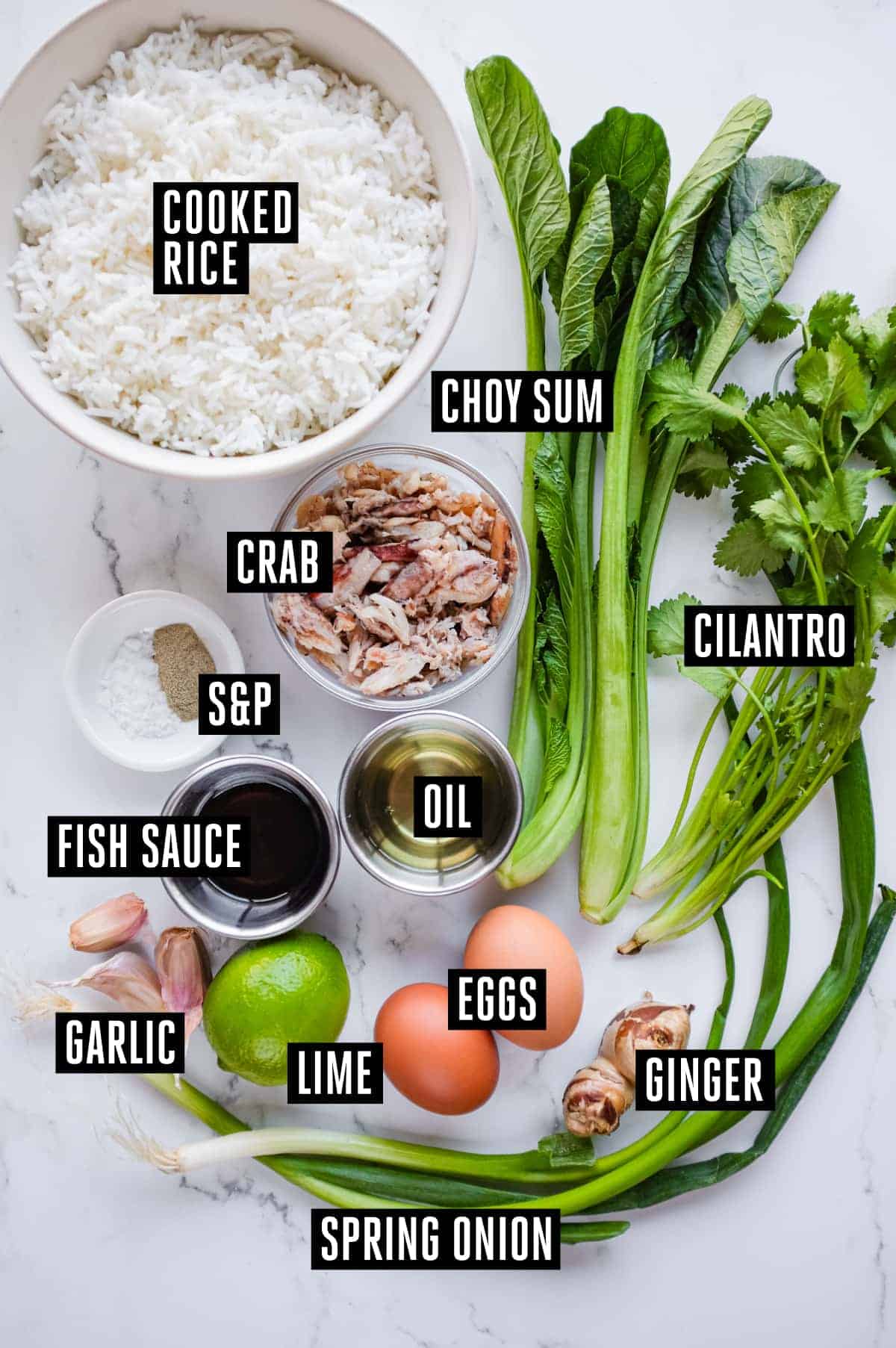
Ingredients You'll Need
Ingredients are easy to find, simple, uncomplicated. Nothing taxing at all.
- Crab - I buy canned, cooked crabmeat - usually white lump meat or a mix of white and brown. Never use imitation crabmeat or crab sticks.
- Cooked jasmine rice - the jasmine rice has a fragrance of its own that brings a unique authentic Vietnamese note to the dish. It really should be leftover rice, which has a firmer texture and doesn't turn to mush when being fried.
- Garlic, ginger, cilantro stalks and spring onion (white parts) - finely chopped, they become the fragrant backbone to the fried rice.
- Fish sauce, white pepper, salt and lime juice - act as the seasonings to give the distinctive salt and sour notes.
- Eggs - soak up the flavours while adding that unmistakeable texture to a good fried rice.
- Asian greens - I use choy sum or pak choy for a little crunch.
- Cilantro leaves and spring onion (green parts) - are the final Asian fragrance to the fried rice.
Step by Step
Making the fried rice is a fast and furious affair, be sure to pre-prep all the ingredients so you're not rushing around while cooking.
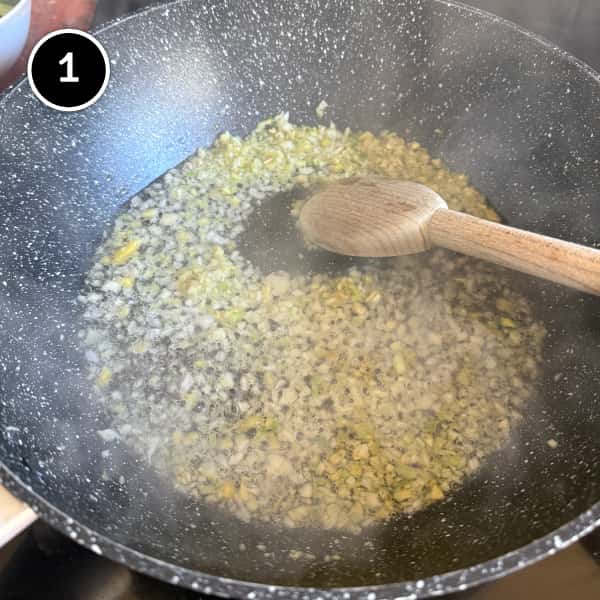
- Step 1 - Heat the oil in a wok over a high heat until just hot. Add the ginger, garlic, cilantro stalks and spring onion whites and stir for about 30 seconds.
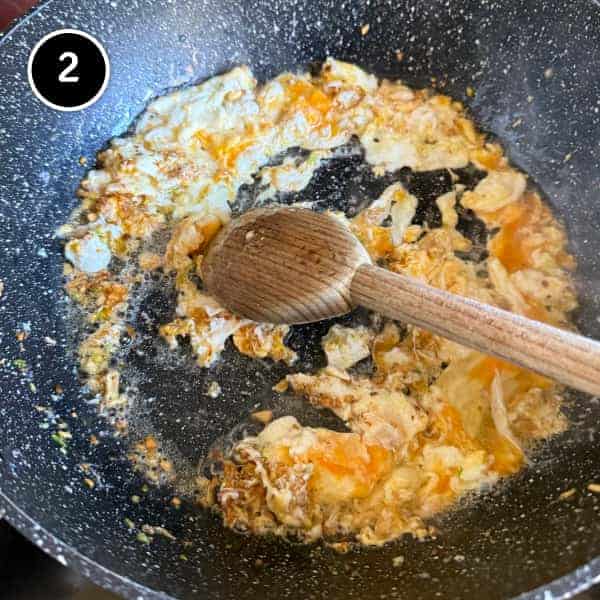
- Step 2 - Add the eggs and break up then scramble into the mix.
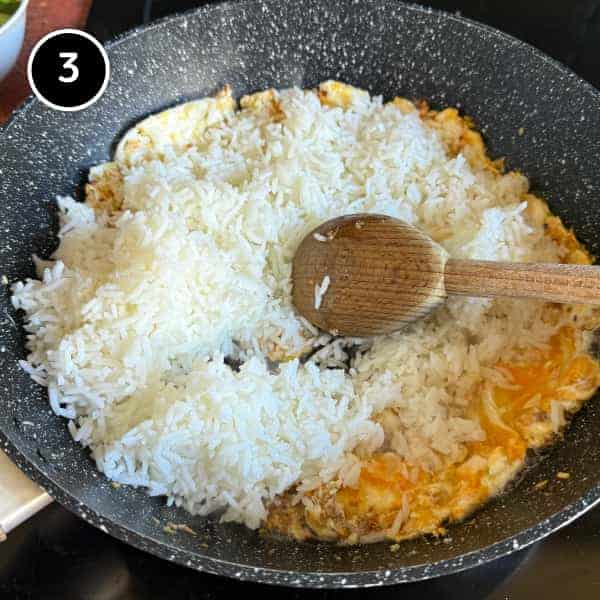
- Step 3 - Add the rice and stir well to combine everything. Use the back of your spoon to break up any clumps of rice to ensure even coverage.
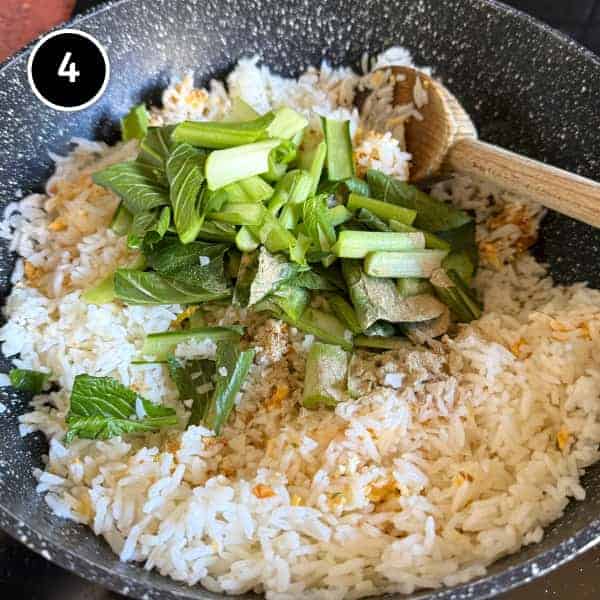
- Step 4 - Add the greens, salt, pepper and fish sauce and stir well. Flatten the rice out and let it fry untouched for 1 minute to get a light char on the bottom (to mimic restaurant style rice), then stir fry again. Fry for about 3-4 minutes in total until hot.
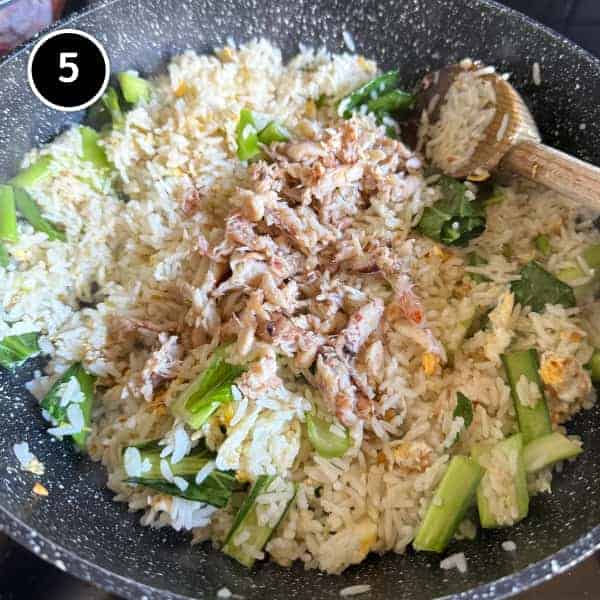
- Step 5 - Add half the crab and stir for 1 minute then remove from the heat.
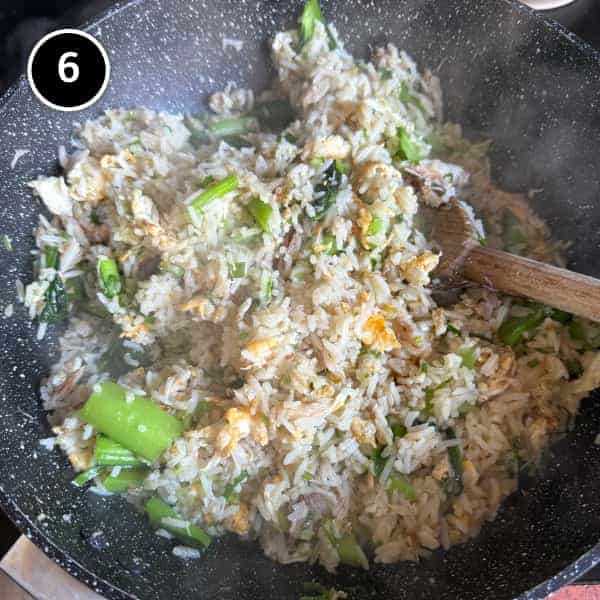
- Step 6 - Fold in the remaining crab and squeeze over the lime juice and serve immediately.
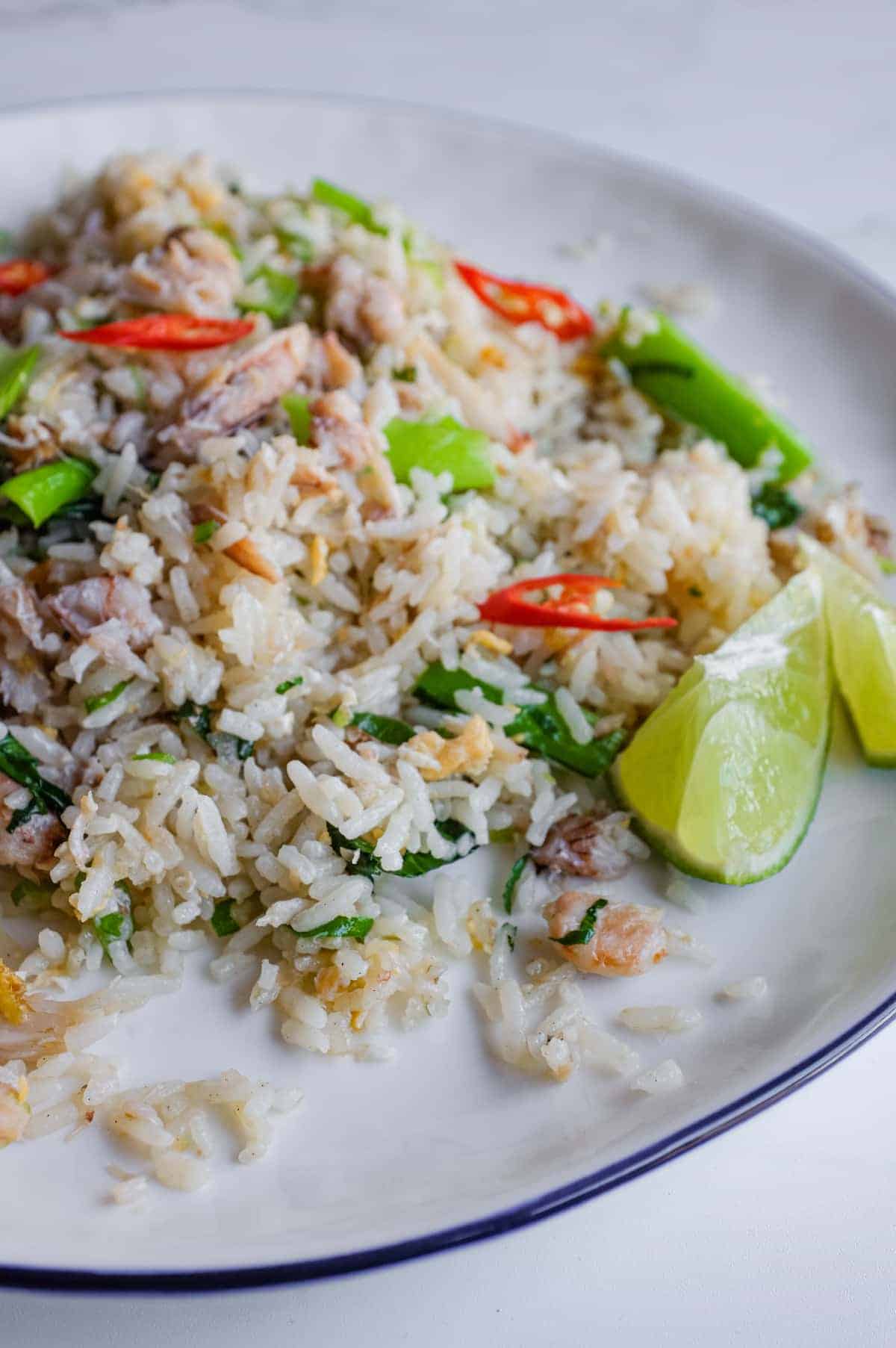
Pro Tips - Things I've learned
- Leftover rice! I can't stress this enough. Get organised and make it the night before or order extra when you get takeout and freeze. At a push, make 1-2 hours before you need and cool completely in a single layer on a baking sheet in the fridge (covered).
- The breath of the wok - this is the pro-style wok cooking that adds a level of smokiness or char to the ingredients that home cooks can't really achieve. I like to flatten out the rice as it cooks and leave untouched until it catches and burns lightly, then mix it back through the rice.
- No crab? - this rice is also great with a mix of shrimp, scallops and calamari. Fry them first, lightly seasoned, in the oil until cooked, then remove and stir through at the same time as the crab in the recipe.
Serving & Storage Suggestions
- Serving immediately is the best - all the ingredients are at their best direct from the pan. If you do have leftovers, the rice will be good for 1 day in the fridge and is OK reheated in the microwave. Don't over-reheat as you'll lose the delicate crab flavour.
- I don't recommend freezing the rice.
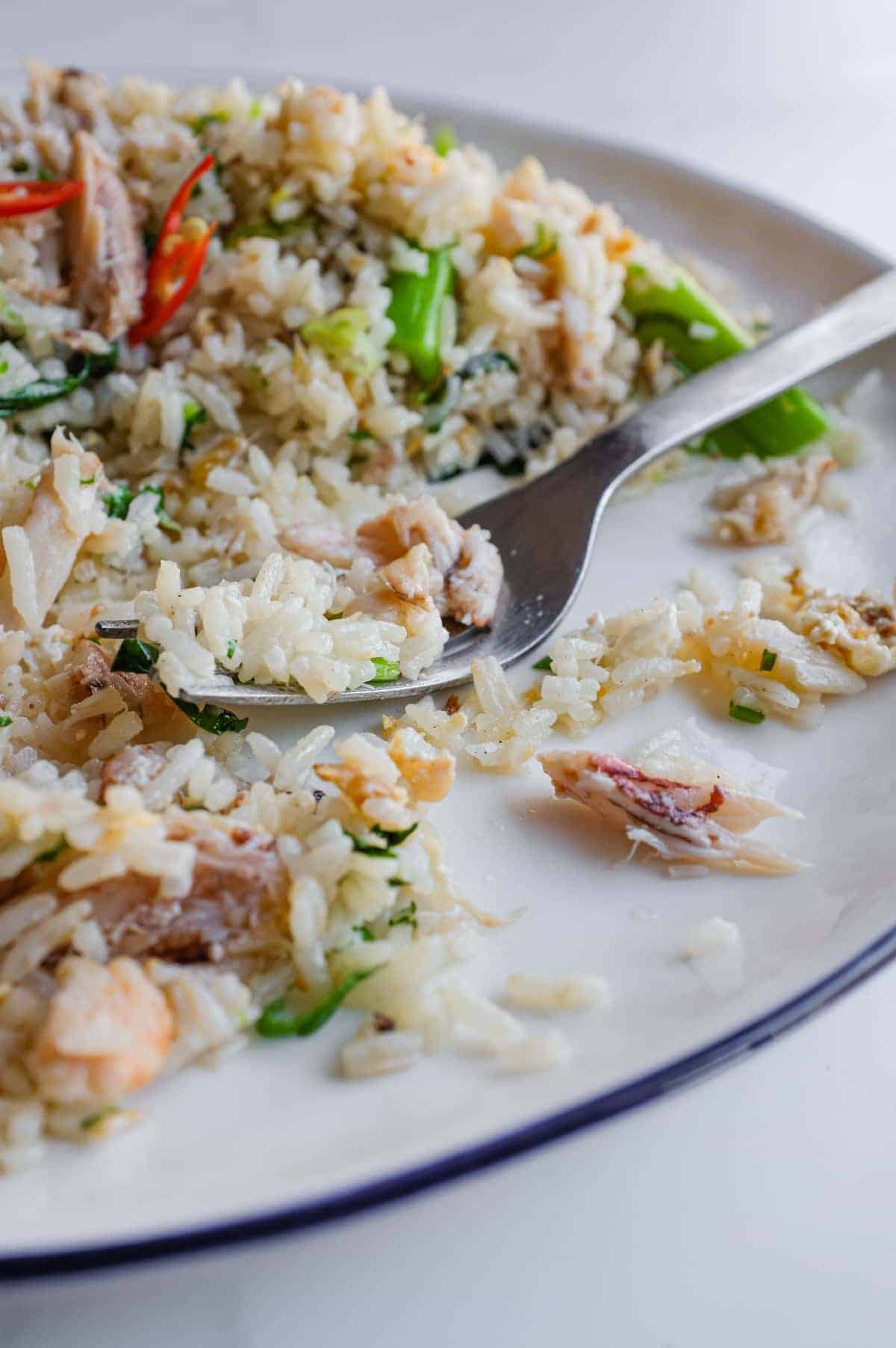
Ready to get cooking?
I can honestly say that this is one of my favourite fried rice dishes. I reserve it for special occasions or when there's nobody else at home, so I don't need to share. I can eat a whole three-person portion to myself if left unattended! This really is one of those dishes that garners a small round of applause when brought to the table - that's why I've been serving it for over 20 years! I'm sure you'll love it too.
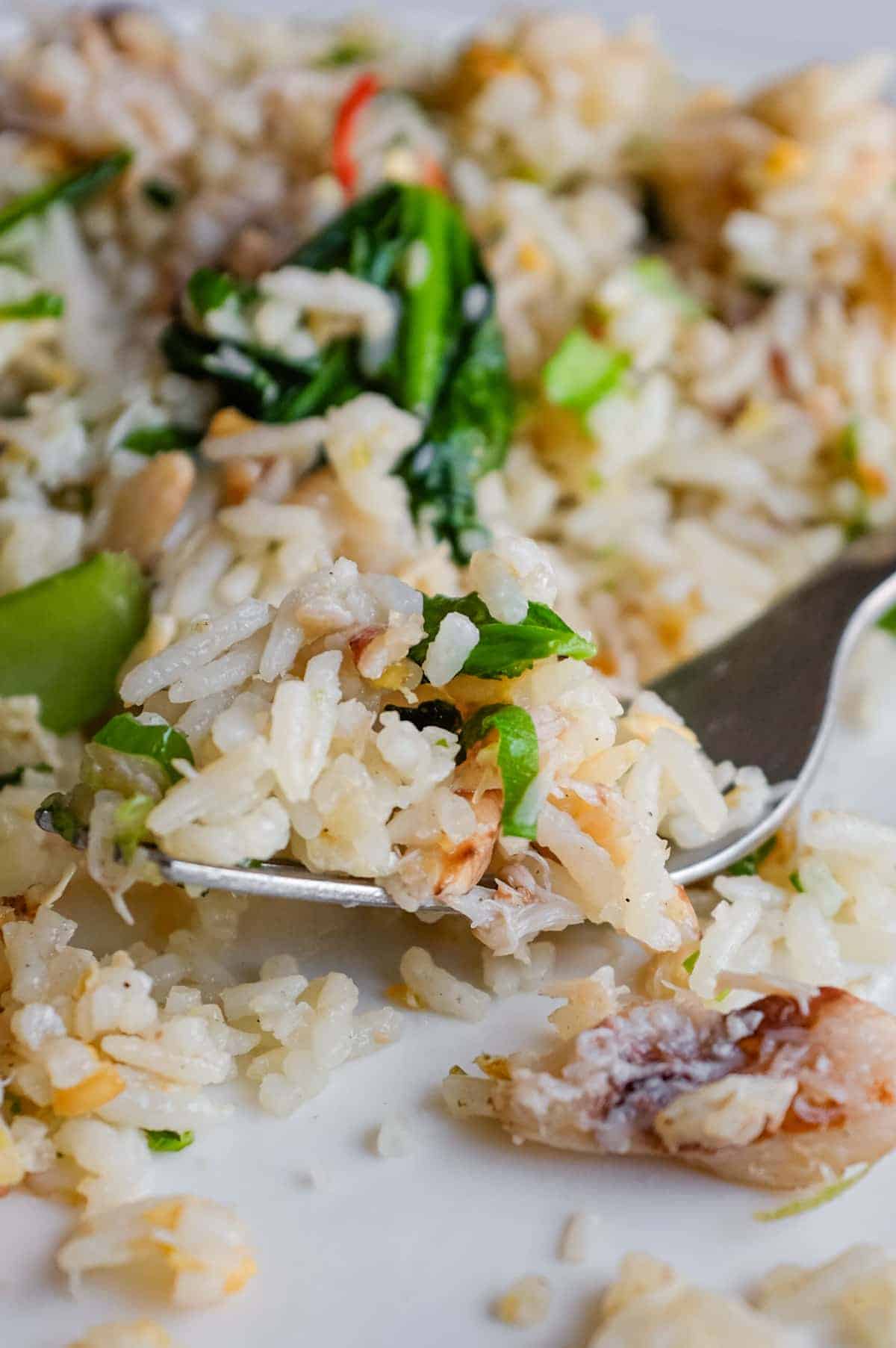
More Delicious Vietnamese recipes
If you liked this recipe, I'm sure you'll love more of my favourite Vietnamese recipes.
This recipe uses affiliations and may receive a commission based on your activity (link clicks). Learn more.
Ingredients
- 2 spring onions divided into white and green parts, both sliced
- 1 tbsp ginger finely chopped
- 3 garlic cloves chopped finely
- 6 cilantro stems chopped finely
- 3 tbsp vegetable oil
- 2 eggs
- 4 cups cooked jasmine rice kept in fridge overnight
- 1 cup Asian greens choy sum, pak choy etc.
- ½ tsp sea salt
- ¼ tsp white pepper
- 2 tbsp fish sauce
- 225 g fresh or canned crab meat white or brown
- ½ cup extra cilantro stems & leaves, chopped
- 1 lime
Instructions
- Heat the oil in a wok over high heat. Add the ginger, garlic, cilantro stalks and spring onion whites, then stir-fry for 30 seconds until fragrant.
- Add the eggs and stir quickly, breaking them up as they scramble into the aromatics.
- Add the cooked rice and toss everything together. Use the back of your spoon to break apart any clumps so the grains are evenly coated.
- Add the greens, salt, white pepper and fish sauce and stir well. Spread the rice across the wok and leave it untouched for 1 minute, allowing it to catch and lightly char underneath. Toss again and continue stir-frying for 3–4 minutes in total, until piping hot.
- Add half the crabmeat and gently stir-fry for 1 minute, then remove the wok from the heat.
- Gently fold in the remaining crabmeat, squeeze over the lime juice and serve immediately.
Notes
- Use cold, day-old rice. I can’t stress this enough! Chilled rice is firmer and drier, so the grains separate and fry properly instead of turning soft and mushy. If you’re short on time, spread freshly cooked rice over a tray and refrigerate until completely cold.
- Choose good crabmeat. Freshly picked white crabmeat is wonderful, but I generally use good-quality canned lump crabmeat. White meat is sweet and delicate, while a little brown meat brings a richer crab flavour. Drain it thoroughly and check carefully for any pieces of shell.
- Get everything ready first. Fried rice is a fast and furious affair, so chop and measure every ingredient before heating the wok. Once you start cooking, the whole dish comes together in minutes.
- Use plenty of heat. Let the wok become properly hot before you begin, then keep everything moving. I spread the rice across the hot surface and leave it untouched for a minute. This creates a lightly charred, restaurant-style flavour without drying out the rice.
- Add the crab in two stages. Stir half into the hot rice to spread its flavour throughout, then fold in the rest after taking the wok off the heat. This keeps some larger, juicy pieces intact and stops the delicate crabmeat from overcooking.
- Serve it straight away. This fried rice is at its absolute best piping hot from the wok. Refrigerate leftovers within two hours, keep them for no more than two days and reheat only once, until steaming hot throughout. For the best crab flavour and texture, I recommend eating leftovers the following day.
- No crab? No problem. Shrimp, scallops or calamari make excellent alternatives. Cook them briefly in the hot oil first, remove them from the wok, then return them at the same stage as the crab.
Leave A Comment