
Hyderabadi Haleem
By Lee Jackson ↣ Published on: June 2, 2026
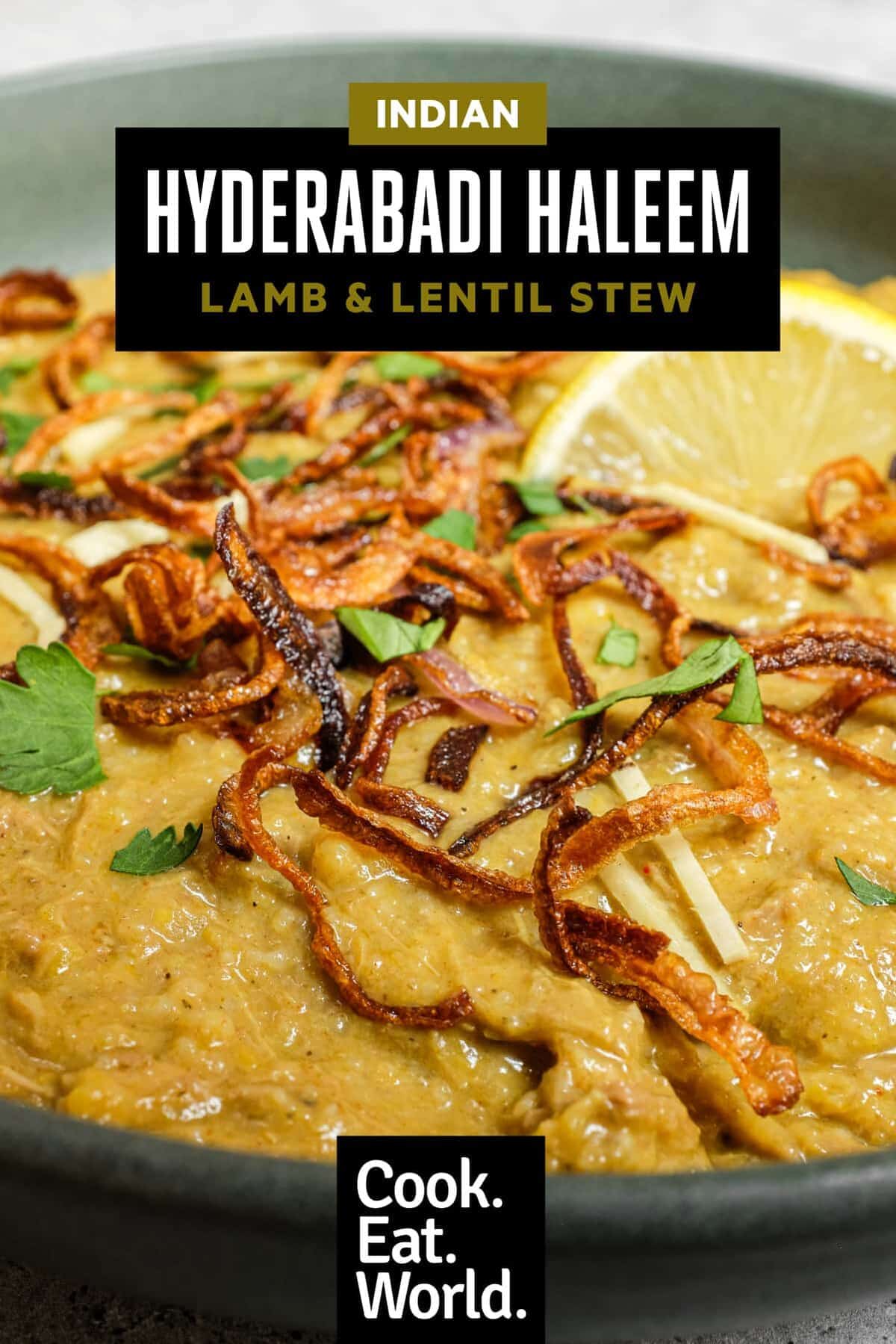
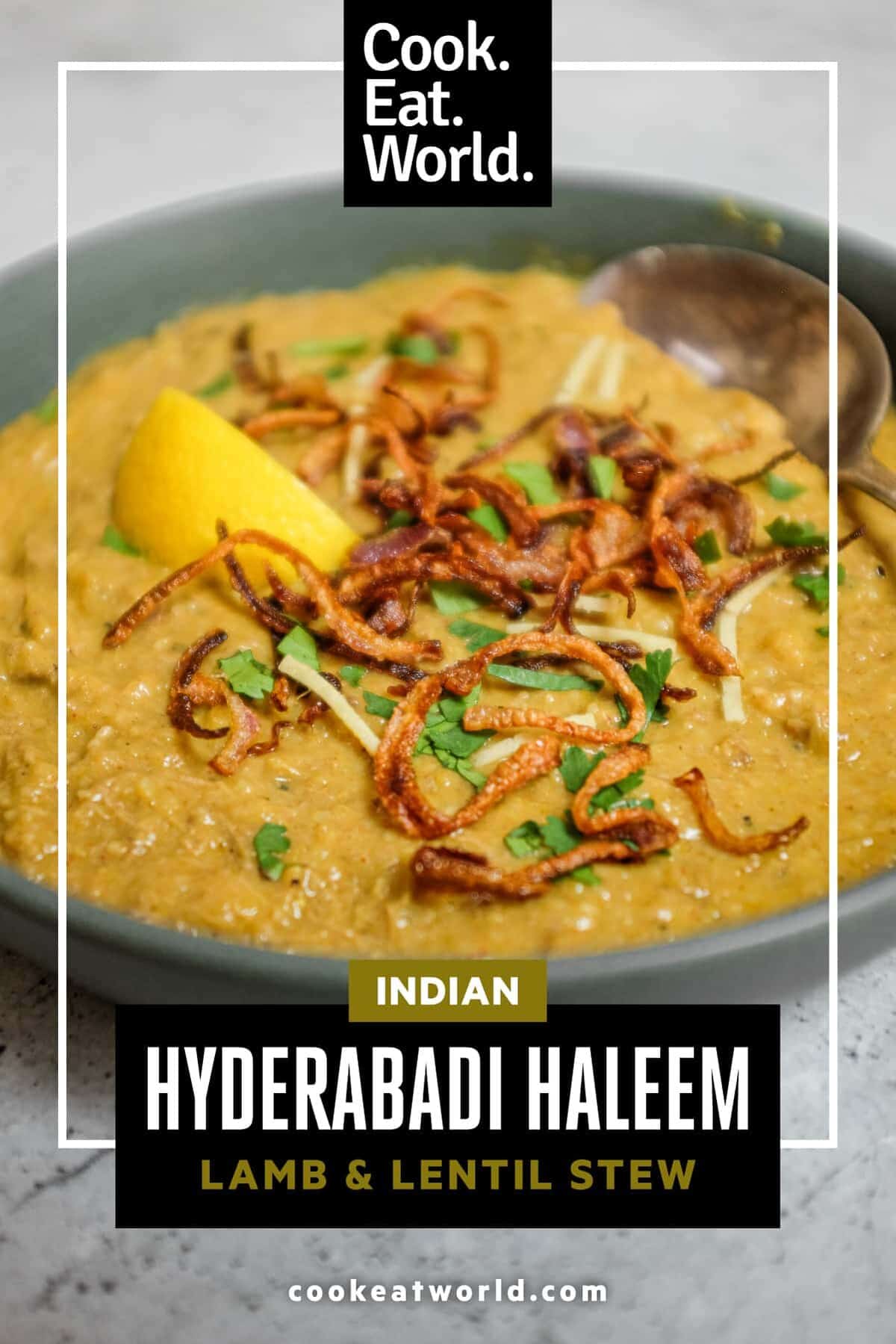
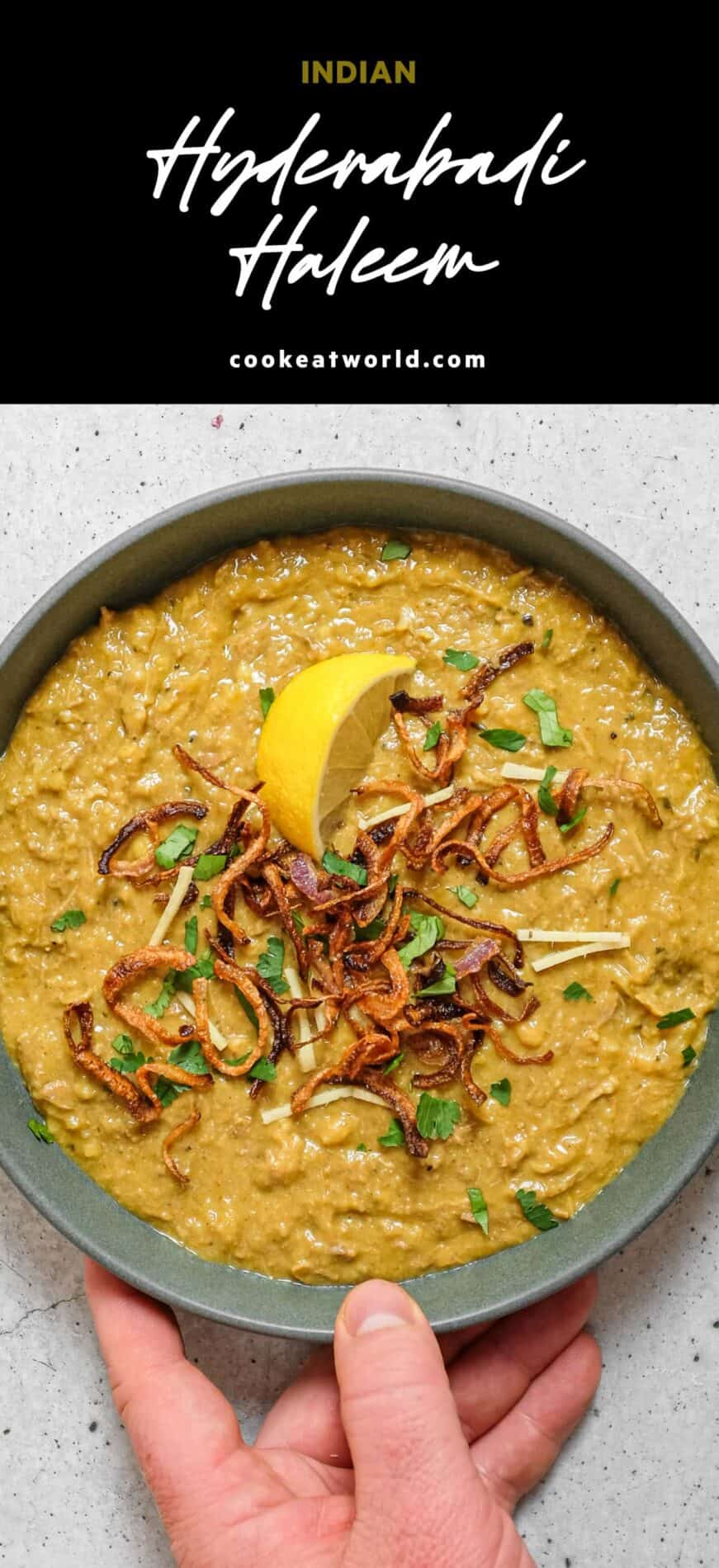
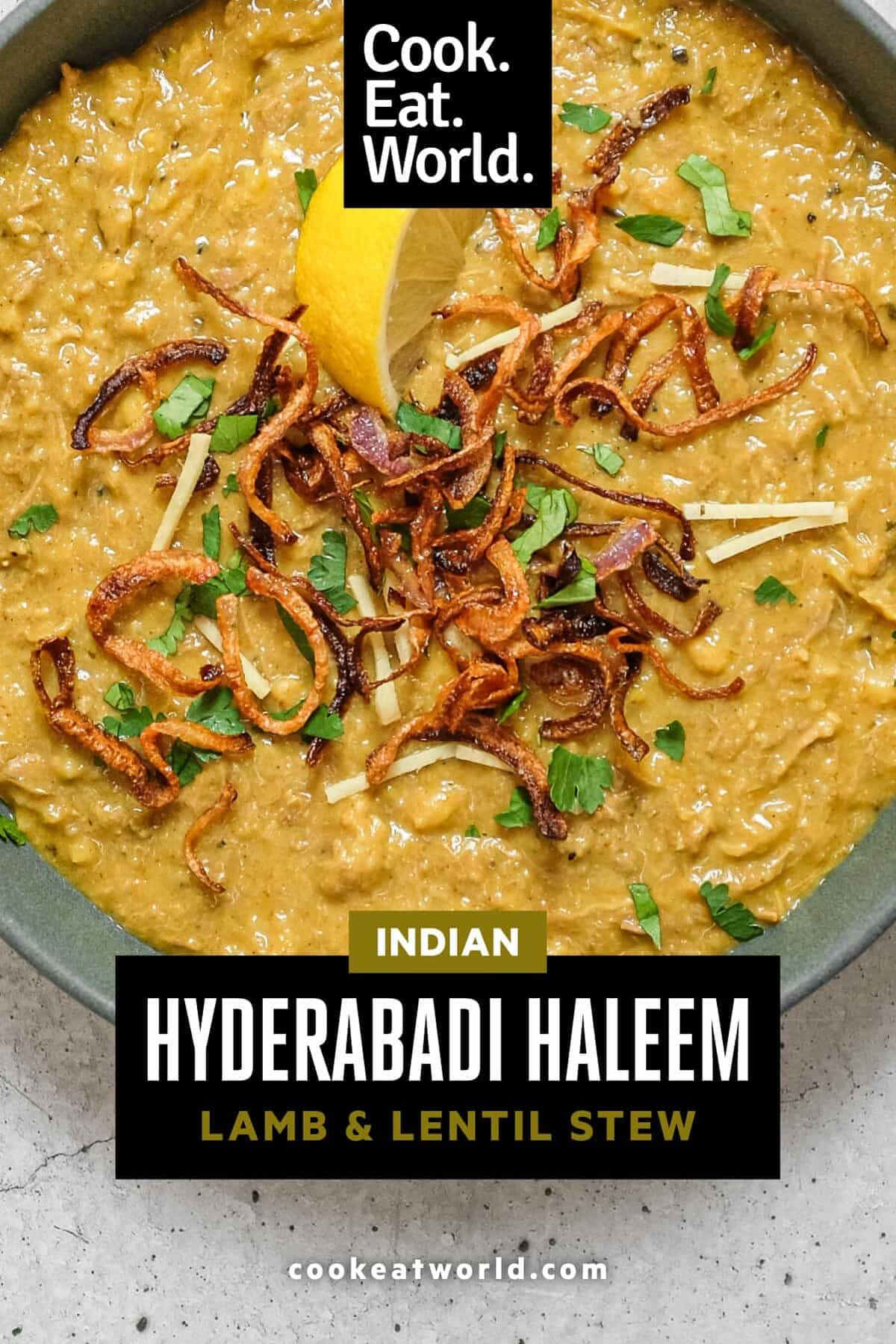
Rich, slow-cooked and complex, my Hyderabadi haleem recipe is a luxurious blend of tender lamb and lentils cooked until silky and thick. A beloved staple of Hyderabad, it’s especially enjoyed during Ramadan for its comforting, deeply nourishing character.

I first tasted Hyderabadi Haleem over 20 years ago in Hyderabad itself, and it’s stayed with me ever since. It was unlike anything I’d experienced before — a rich, slow-cooked dish of mutton (goat) which I've replaced with lamb, stewed with lentils and wheat - simmered for hours until everything breaks down into a thick, silky consistency. There are layers of flavour and the most luxurious texture! I don't make haleem every week, or month for that matter, but for the last 20 years I've made it at least once a year to remind myself how magical it is.
What makes Haleem so special is its texture as much as its taste. The meat breaks down with the lentils and wheat and transforms into a thick porridge-like consistency. It’s hearty, comforting and something very special indeed.
It's a true labour of love, where complexity of flavour is built over a slow cook to create a rich, bold and truly unique dish that's part stew, part porridge, part curry. There's nothing quite like Haleem!
This haleem recipe is a key recipe from my World Cuisine Recipe Collection and a South Indian regional speciality from my Indian Recipes Hub. You'll find so many delicious Indian classics there.
What's Ahead?
What is Haleem?
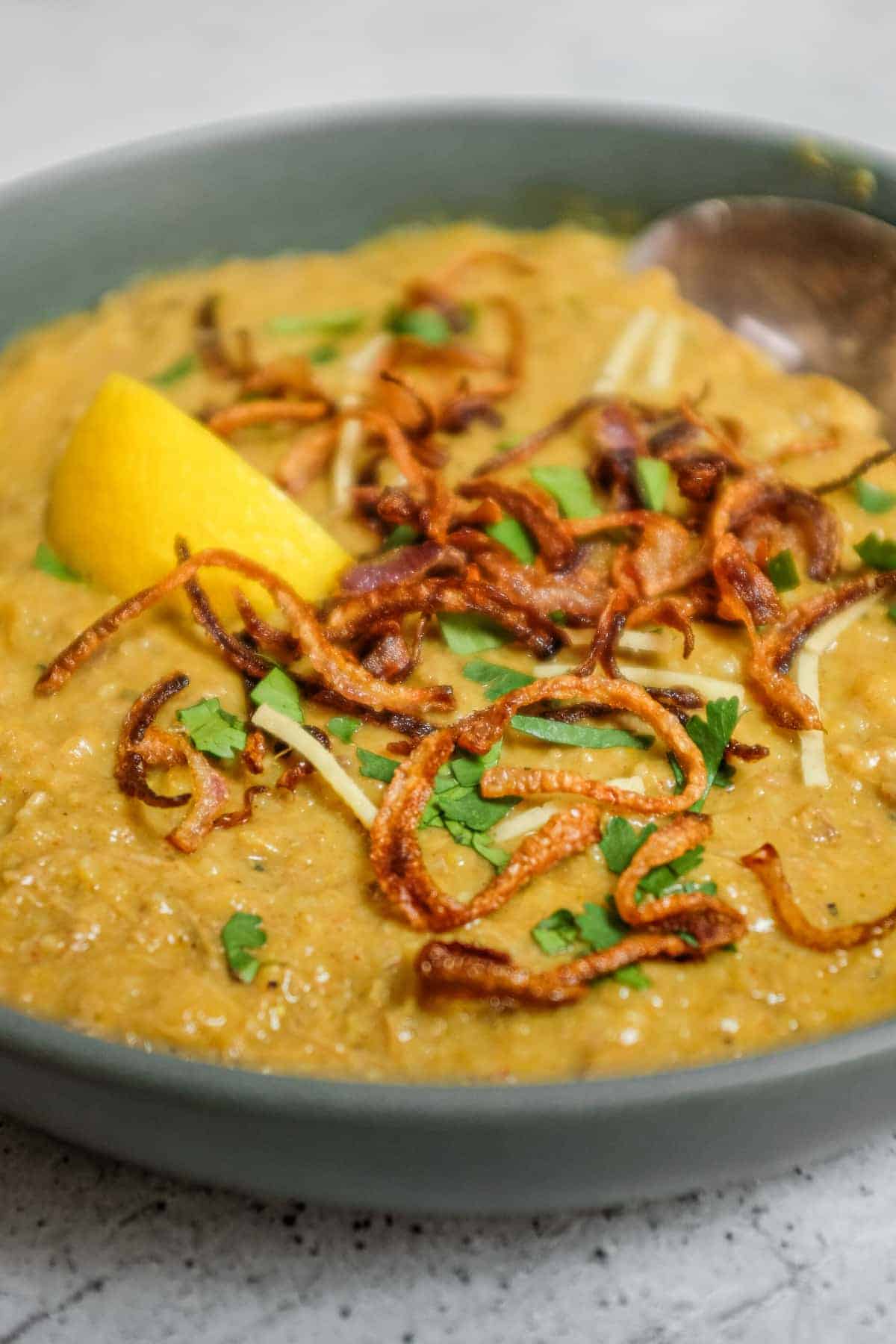
Haleem is a rich, slow-cooked dish of meat, lentils and wheat, simmered until everything breaks down into a thick, silky, creamy consistency. The meat is softened and worked into the grains, creating a porridge-like texture that’s comfort food at its best. In Hyderabad, in India's South, it’s most often made with mutton (goat) or lamb and finished with crisp fried onions, herbs, lemon and ghee.
The dish traces its origins to the Middle Eastern harees, a simple wheat and meat preparation that spread to the Indian subcontinent during the Mughal era. The name “haleem” is linked to the Arabic halīm, meaning “patient”, reflecting the long, slow cooking process.
A similar version is popular across Pakistan, where haleem is often a little looser in texture and more robustly spiced. Both are especially significant during Ramadan, when they are prepared in large batches and enjoyed as a nourishing, celebratory meal.
Why Haleem works So Well
- Layers of flavour – slow cooking creates incredible depth with the warm spices. It's not a spicy hot dish, more mellow but so complex and fragrant.
- Silky texture – it's quite a unique dish in that it's so thick and smooth, but incredibly moreish!
- Authentic and traditional – a true Hyderabadi classic, that you don't see on many menus (unless it's Ramadan), making it something truly unique to make at home.
- Surprisingly simple – while it's a long cooking process, it's not a difficult one, and it really pays off.
- Perfect for sharing – a little haleem goes a long way. It's rich, hearty, and filling so a large pot of haleem will feed more people than a regular curry or stew when served with rice or Indian breads.
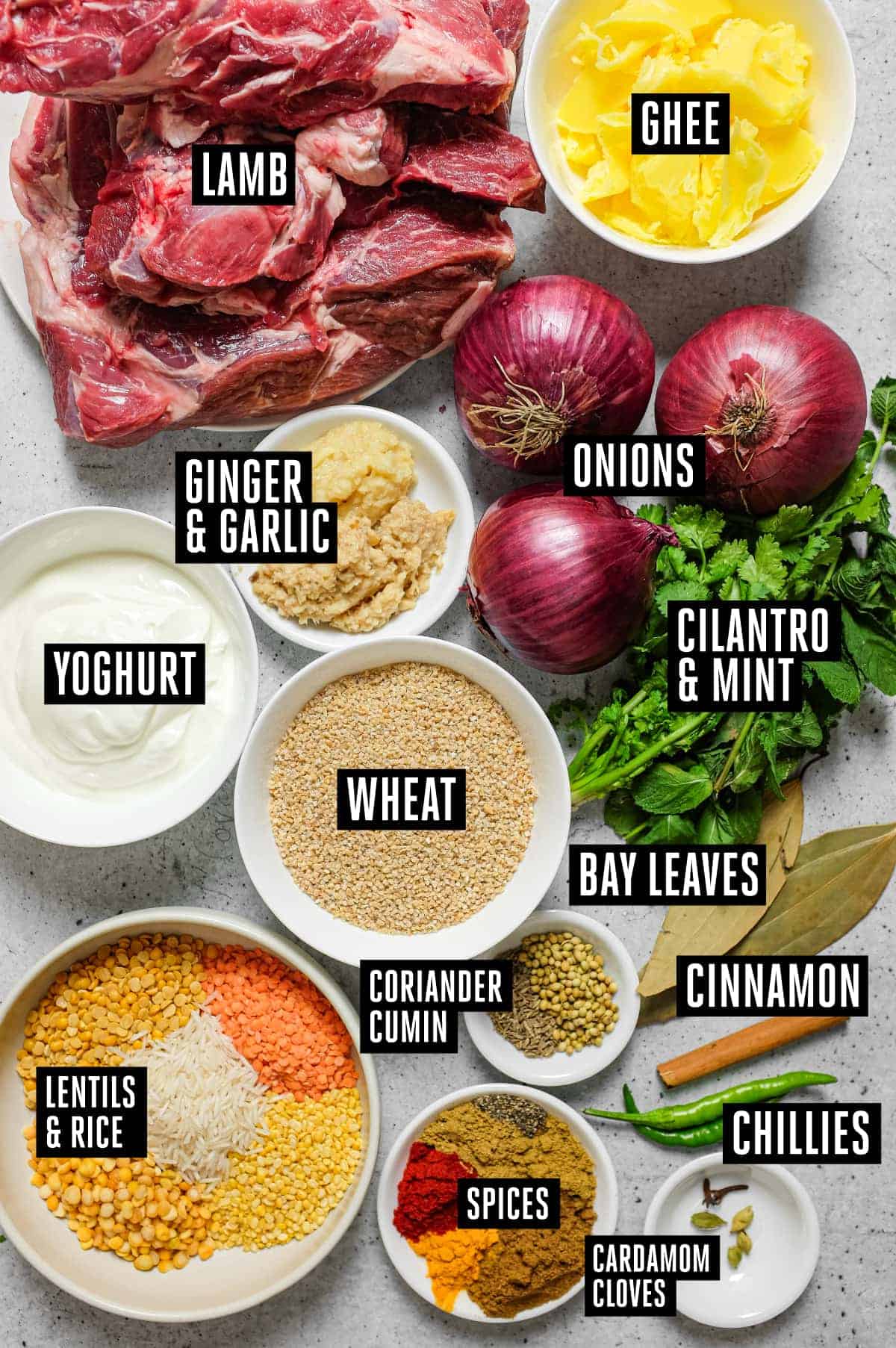
Ingredients You'll Need
The roll-call of ingredients is impressive, but so is the flavour of this curry so it's little wonder there are a few ingredients. If you cook Indian food a lot, you should have most of the ingredients in your store cupboard. None of the ingredients are hard to find at most supermarkets.
- Lamb - a key ingredient. I used shoulder and removed the bone and cut into large pieces. I kept the bone and cooked along with the lamb for extra flavour.
- Lentils & rice - more key ingredients that make haleem special. There are four types of lentils (moong, masoor, chana and toor) mixed with a little basmati rice. They act not only for flavour, they'll give the rich and thick texture to the haleem too.
- Wheat - a key ingredient to haleem is cracked wheat. Daliya is the name of the wheat used and can be found in most Indian stores. You can also use coarse bulgur as a substitute which is a close match.
- Onions - The onions are cooked until crisp to give a rich, deep sweetness to the stew.
- Garlic and ginger - for more depth of aromatic flavour
- Spices - both whole and ground add the distinctive flavours: Cumin, coriander, turmeric, chilli powder, garam masala, cardamom, cinnamon, cloves, bay leaves and pepper,
- Aromatics - chillies, cilantro and mint bring a fresh and fragrant lift to the haleem.
- Ghee - much of the richness comes from ghee and often a light drizzle at the end adds even more nutty decadence.
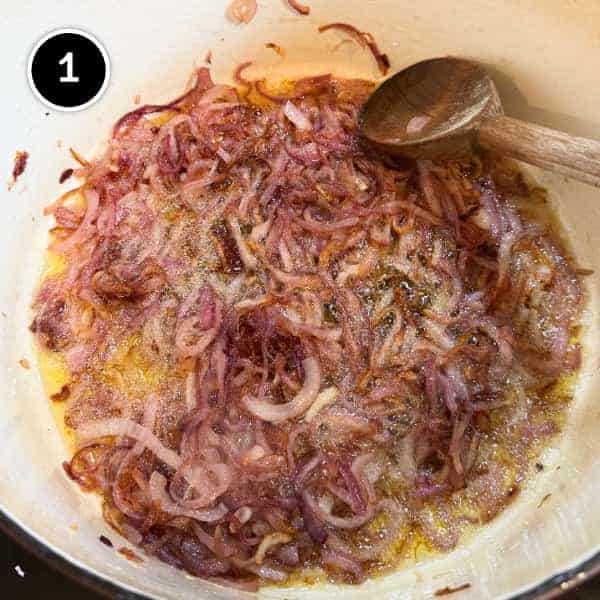
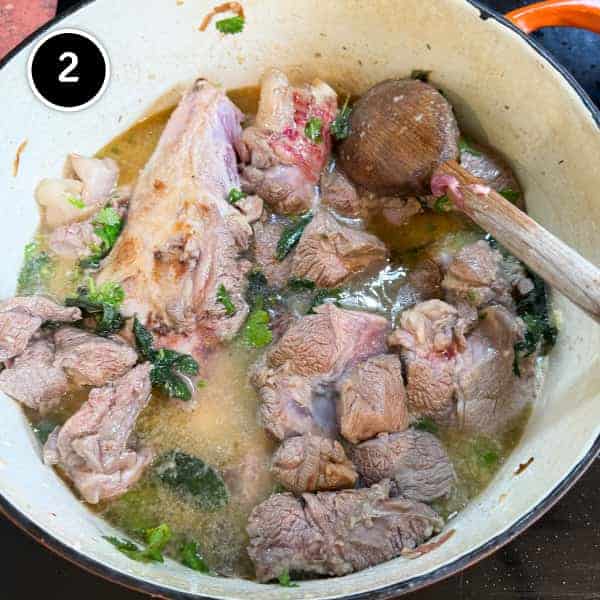
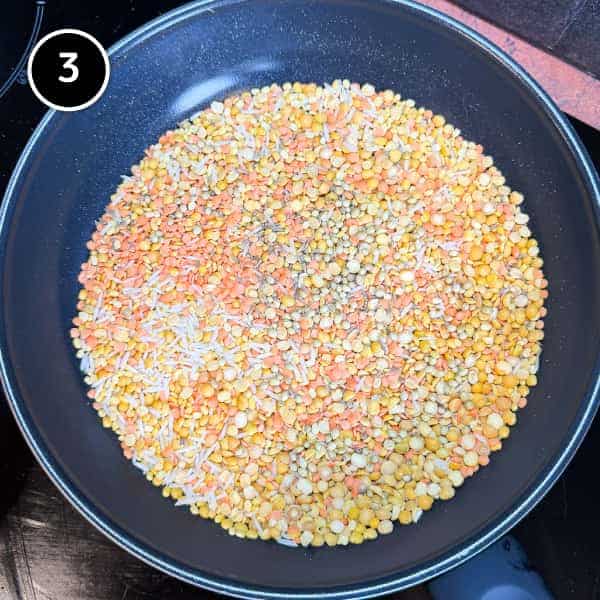
Step by Step
Don't feel like my Hyderabadi haleem recipe is too complicated to make at home. It may have a few steps, but it's all really simple to follow and not taxing in the slightest. Here's how your magical pot of haleem comes together.
- Fry the sliced onion in ghee until dark and crisp, then remove and set aside.
- In the same pot, brown the lamb and bones, then add garlic, ginger, chillies, mint and cilantro.
- Add 2 cups water, cover and simmer for 2 hours until very tender, then mash the meat.
- Toast the cracked wheat, lentils, rice, cumin and coriander seeds for 1–2 minutes,
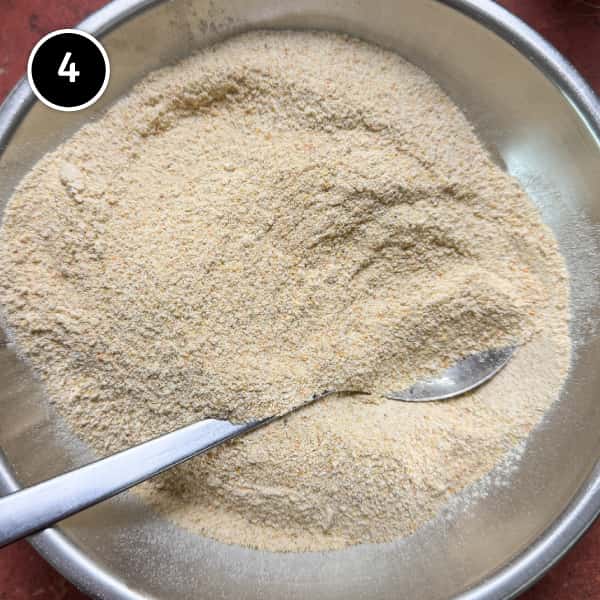
- Using a spice grinder, grind the toasted lentils and spices to a fine powder.
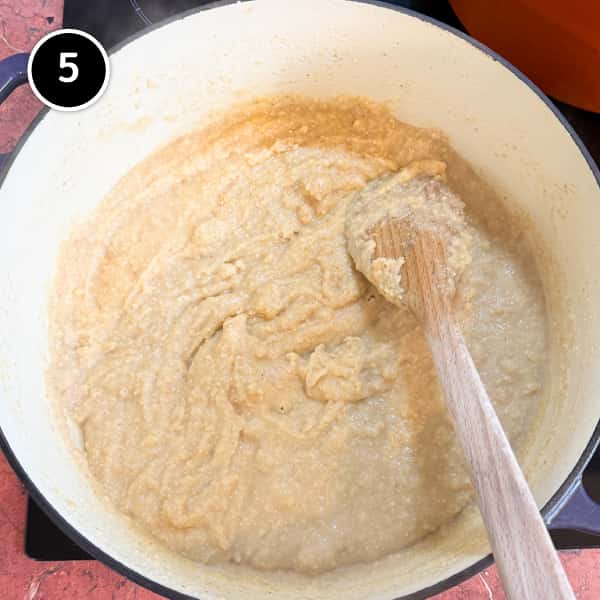
- Cook the lentil mix - In another pot, heat ghee, add the ground mixture with 6 cups water and cook, stirring, until thick.
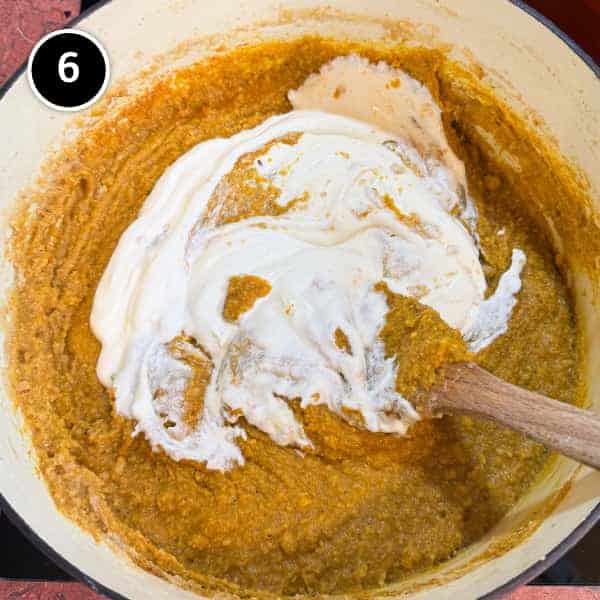
- Stir in the spice mix, remove from heat and mix in the yoghurt, then set aside.
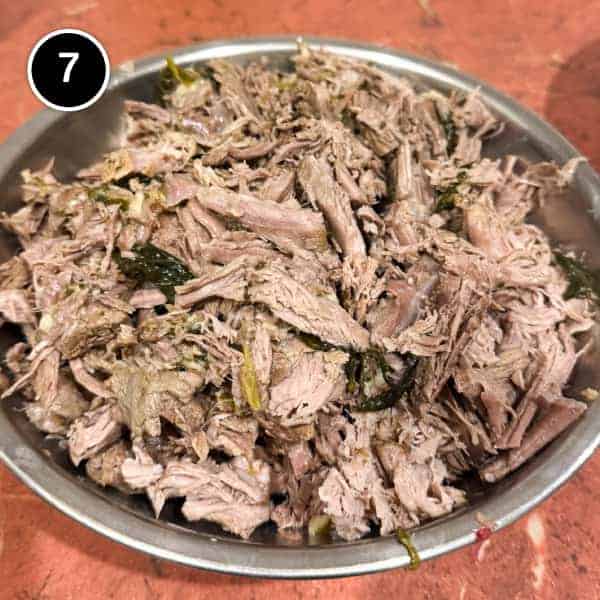
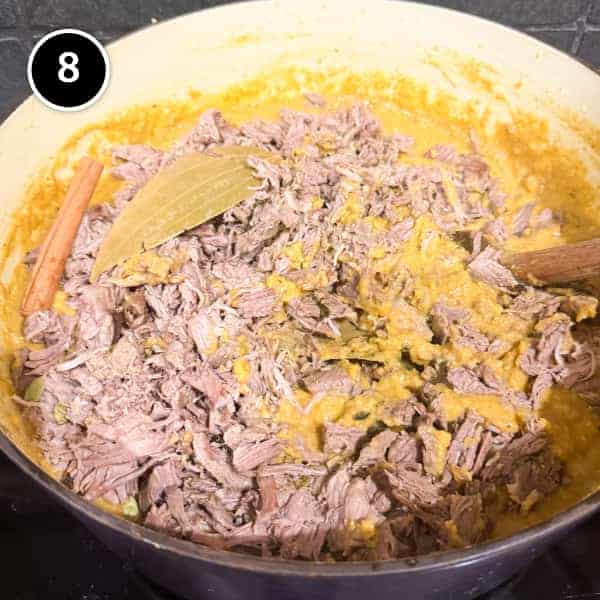
- Shred the cooked lamb, discarding the bones, then add it with its cooking liquid to the lentil mixture and stir well.
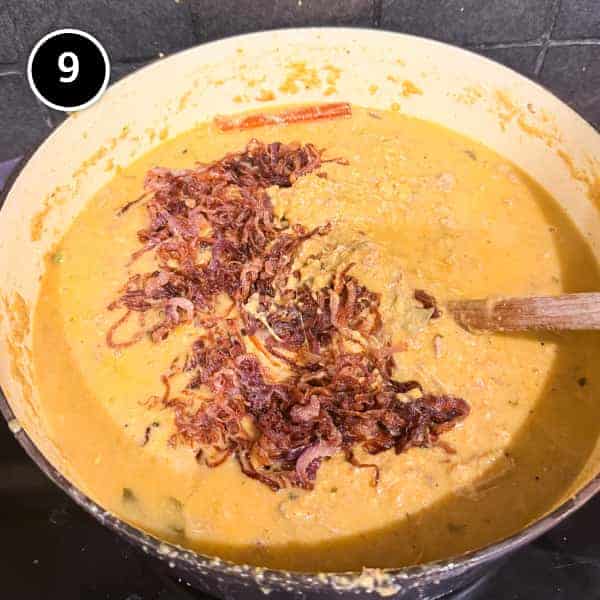
- Add half the fried onions and the whole spices, then simmer with extra water for about 45 minutes until thick, stirring regularly.
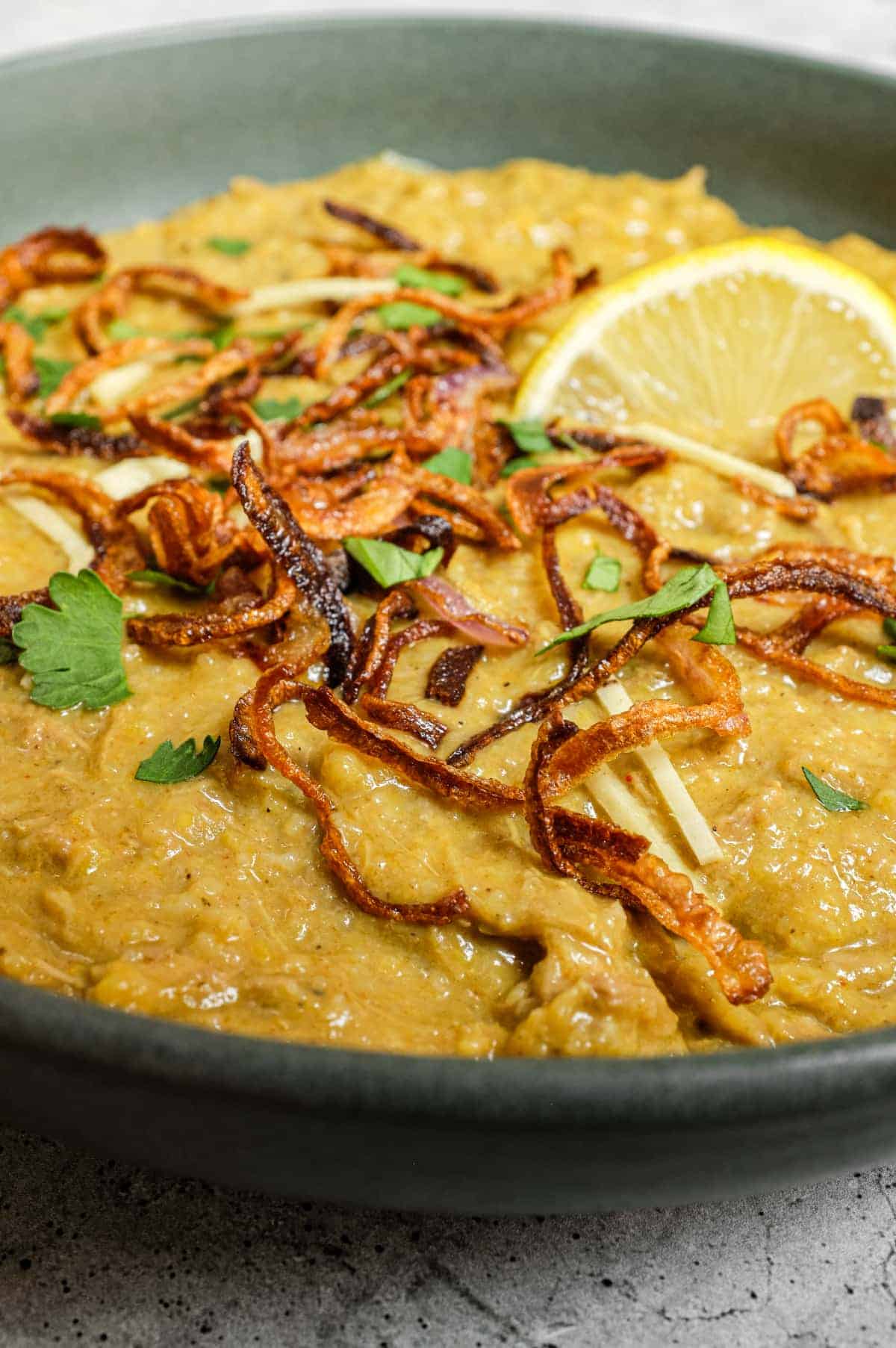
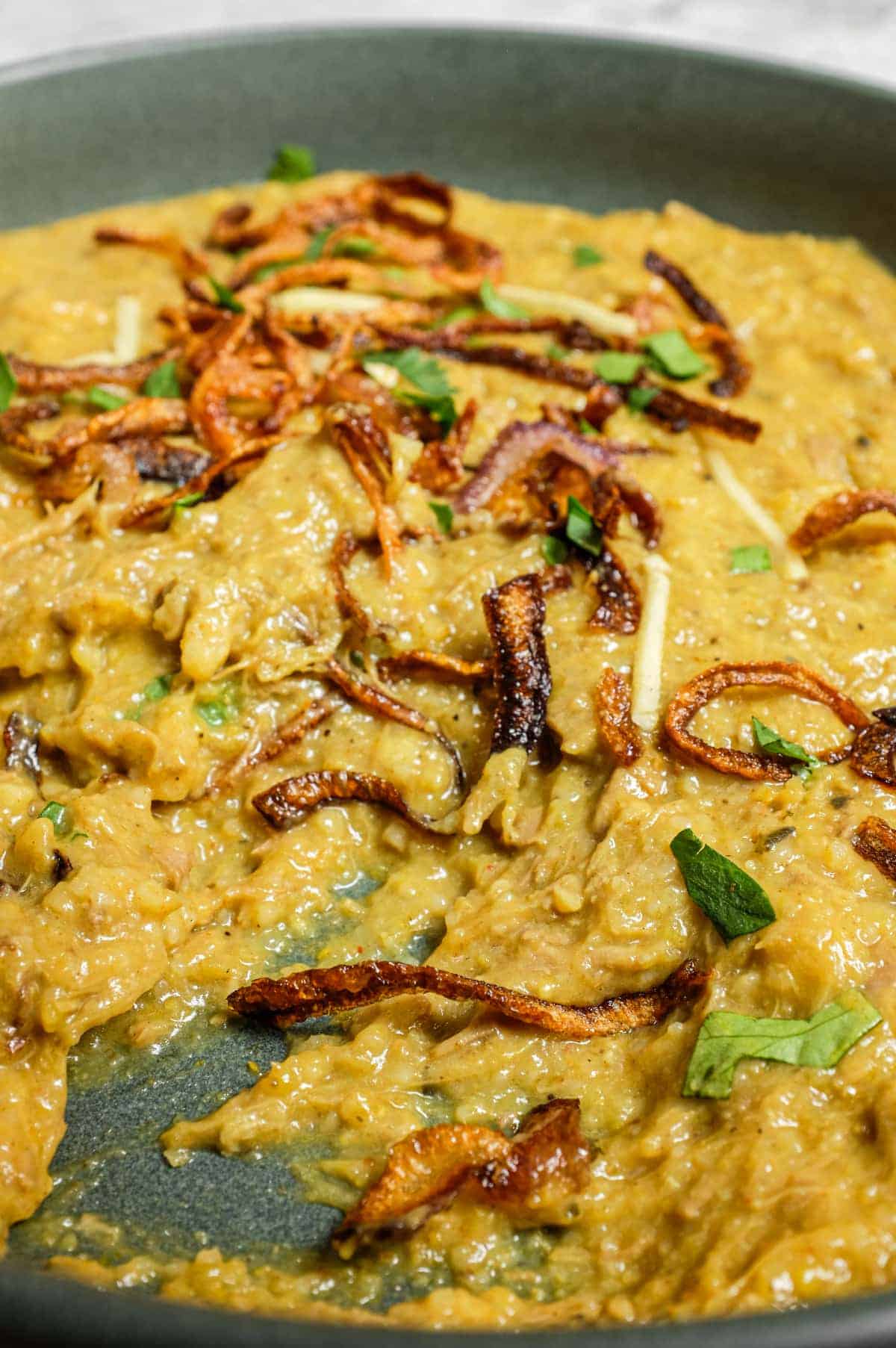
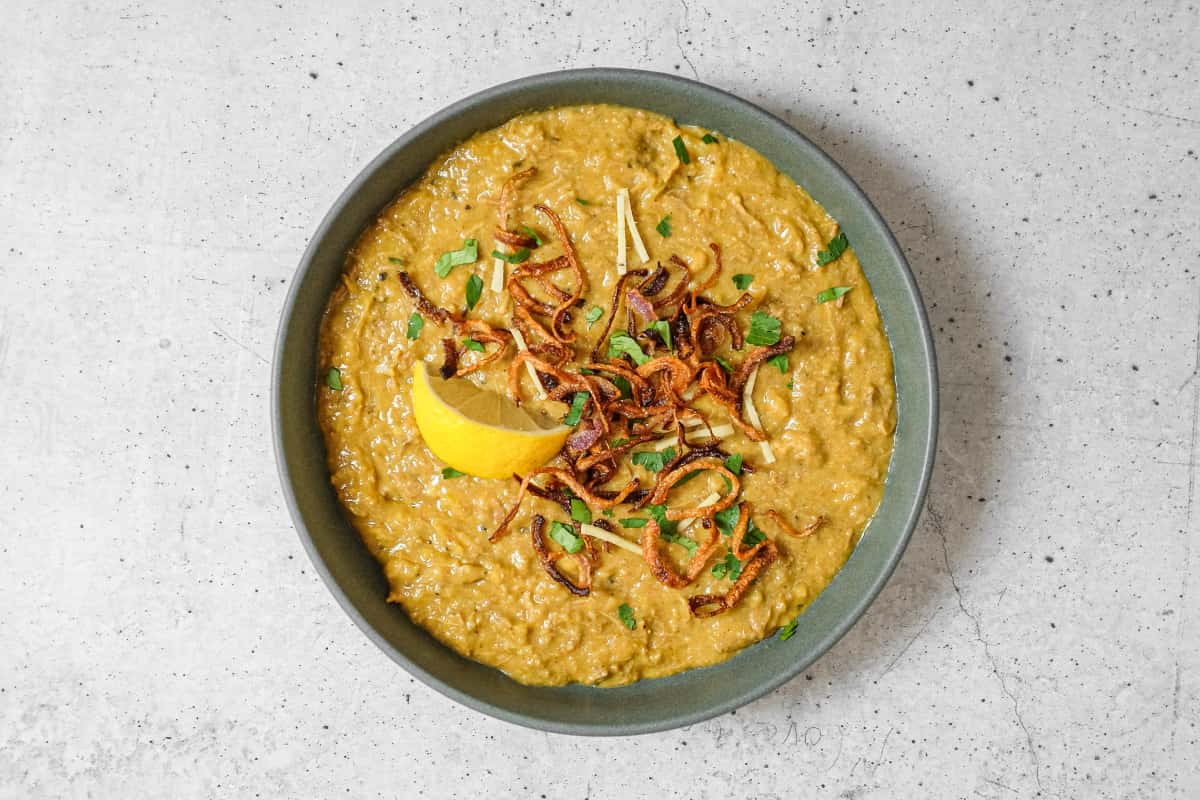
To serve, remove the whole spices, beat well for a smooth texture (the ghota stage), rest briefly, then serve scattered with fresh mint and cilantro, finely sliced ginger, the remaining fried onions and a wedge of lemon. You can also add a light drizzle of melted ghee for an extra decadent flourish.
Pro Tips
- Use bone-in lamb for deeper flavour and richness
- Cook low and slow – the longer it cooks, the better the texture
- Mash or shred the meat well for that signature silky consistency
- Stir regularly to prevent sticking, especially as it thickens
- Add water gradually to control thickness and avoid it becoming too dense. Aim for the consistency of thick porridge. The recipe is a guide only - you may need more water than outlined.
- Don’t rush the toasting of grains – it builds a deeper flavour base, cooking too hard may burn and cause bitterness.
- Finish with the ‘ghota’ (vigorous stirring) for a smooth, emulsified texture, similar to making a risotto!
- Let it rest before serving for 10-20 mins – it thickens and improves as it sits. Let it rest overnight in the fridge for even more flavour.
Serving & Storage Suggestions
- Serve hot in bowls, finished with fresh cilantro, shredded ginger and crispy fried onions
- Add a squeeze of lemon just before eating to lift the richness
- Drizzle with a little melted ghee for an authentic finish
- Great served with naan or flatbread, or simply on its own
- Store in an airtight container in the fridge for up to 3 days
- Reheat gently on the stove, adding a splash of water to loosen as it thickens
- Stir regularly while reheating to prevent sticking
- Freezes well for up to 2 months — defrost and reheat slowly for best texture
Ready to get cooking?
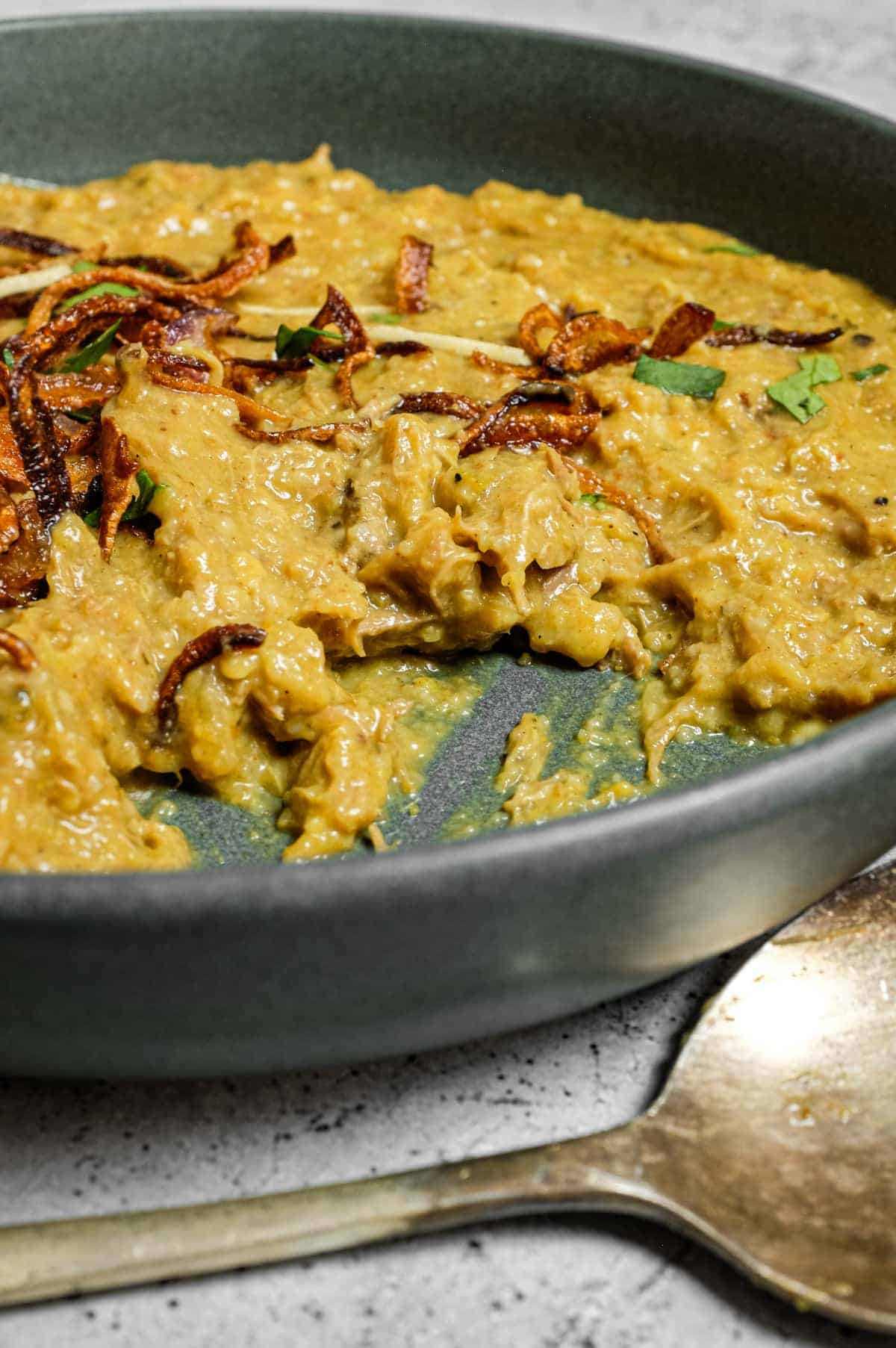
My Haleem recipe opens the door to a wonderful, authentic taste of Hyderabadi cuisine. It's a dish I make once a year for a select few, those who I know will appreciate the effort and most of all flavour. It never fails to impress. It looks so humble, yet the flavours are so complex. It's a treasure for sure and one your friends and family will love too! Hope you enjoy!
More South Indian recipes
If you liked this recipe for Hyderabadi Haleem, I'm sure you'll love some more of my South Indian recipes.
(FAQ) Questions
Have a question about Hyderabadi Haleem? Let me know in the comments.
What is haleem made of?
Haleem is made with meat (usually lamb), lentils, wheat (cracked wheat/daliya) and a blend of spices, all slow-cooked until thick and silky.
Is haleem a curry or a stew?
It's closer to a stew, but thicker and more cohesive — almost porridge-like in texture rather than a sauce-based curry.
Can I make haleem without wheat?
Yes, you can substitute with extra lentils or rice, but traditional haleem includes wheat for its signature texture.
What cut of lamb is best for haleem?
Bone-in cuts like shoulder or shank work best, as they add flavour and break down beautifully during long cooking.
Why is my haleem too thick?
Haleem thickens as it cooks and rests, so simply add a little water while reheating or cooking to loosen it.
How long does haleem last?
It will keep in the fridge for up to 3 days and actually improves in flavour over time.
Can I freeze haleem?
Yes, haleem freezes well for up to 2 months. Thaw and reheat gently, adding a little water to restore the texture.
This recipe uses affiliations and may receive a commission based on your activity (link clicks). Learn more.
Ingredients
Crispy Onions
- 1 cup ghee
- 3 onions halved and thinly sliced
Braised Lamb
- ½ cup fresh mint chopped
- ½ cup fresh cilantro chopped
- 1 tbsp ginger minced
- 2 green chillies chopped
- 2 tbsp garlic minced
- 2 lamb bones
- 1 kg lamb meat cut into large chunks
Haleem Powder
- 1 tsp cumin seeds
- 1 tsp coriander seeds
- 1 tbsp basmati rice
- ¼ cup chana dal split yellow dal
- ¼ cup split moong dal
- ¼ cup masoor dal split red lentils
- ¼ cup toor dal split pigeon peas
- 1 cup broken wheat Dalia
Spice Mix
- 1 tsp chilli powder
- 1 tsp turmeric
- 1 tsp ground coriander
- 1 tsp ground cumin
- 1 tbsp garam masala
- 1 tsp ground black pepper
Other
- 2 cloves
- 4 green cardamom pods lightly bruised to open up
- 1 cinnamon stick
- 2 bay leaves
- 1 cup yoghurt
Garnishes
- ½ cup fresh mint chopped
- ½ cup fresh cilantro chopped
- ½ cup unsalted toasted cashew nuts (chopped)
- The remaining fried onions
- Lemon wedges
Instructions
- In a large pot, fry the onion in the ghee over a medium heat until dark brown and crisp. Remove from the pan and drain on paper towels.
- Fry the lamb and lamb bones in the same ghee until browned, then add the garlic, ginger, chillies, mint and cilantro. Stir well, then pour in 2 cups of water (around 500ml) and bring to a simmer. Cover and cook over a medium heat for 2 hours until the lamb is very soft. Remove from the heat and mash the lamb meat to break it up.
- While the lamb is cooking, in a large frying pan, dry fry the cracked wheat, lentils and rice with the cumin and coriander seeds for 1–2 minutes until lightly toasted. Tip into a bowl and cool, then, using a spice grinder, grind into a fine powder.
- Heat 1/2 cup of ghee in a separate large pot. Add the haleem powder and 8 cups of water (2 litres). Bring to a boil and stir for 10 minutes until thick and bubbling, being careful not to let it stick to the base of the pot. Add the spice mix (garam masala, cumin, coriander, pepper, turmeric and chilli powder) and stir well.
- Remove from the heat, then stir in the yoghurt. Put on a lid and set aside.
- When the lamb is cooked, remove the meat and bones from the pan and discard the bones. Shred the lamb meat, then add this and the lamb cooking liquid to the lentil mixture and stir well to form a porridge-like consistency.
- Stir in the fried onions along with the bay leaves, cinnamon stick, cardamom pods and cloves. Turn on the heat and bring to a simmer with 3-4 more cups of water, then reduce the heat slightly and simmer gently for 45 minutes, until the haleem is thick, like porridge. Stir regularly to avoid it sticking to the bottom of the pot.NOTE: You may also need to add a little more water, as lentils can absorb varying levels. Aim for a thick consistency like porridge.
- After cooking, remove from the heat and fish out the bay leaves and cinnamon stick. Beat the haleem vigorously to emulsify further (the ‘ghota’ action), then rest for 5 minutes.
- Serve hot in small bowls, scattered with cilantro, a little shredded ginger and more crispy fried onions. Add a lemon wedge on the side to squeeze over. Optionally, drizzle over a little extra melted ghee (1–2 tsp) for an authentic finish.
Notes
- Use bone-in lamb for the best flavour and richness
- Cracked wheat (daliya) is traditional, but bulgur can be used as a substitute. It's being ground so there's little to no difference in the final product.
- Cook low and slow to achieve the signature silky texture
- Mash or shred the meat well so it blends into the mixture
- Stir regularly, especially towards the end, to prevent sticking
- Add water as needed to control the thickness
- Add yoghurt off the heat to avoid splitting
- The final vigorous stirring (ghota) helps create a smooth, cohesive finish
- Haleem thickens as it rests, so loosen with a little water when reheating
- Serve hot in bowls, topped with fresh cilantro, shredded ginger and crispy fried onions
- Add a squeeze of lemon to balance the richness
- Drizzle with a little melted ghee for an authentic finish
- Great served on its own or with naan or flatbread
- Store in an airtight container in the fridge for up to 3 days
- Reheat gently on the stove, adding a splash of water to loosen
- Stir regularly while reheating to prevent sticking
- Freeze for up to 2 months, then thaw and reheat slowly for best texture
Leave A Comment