
Tsukune (Japanese Chicken Meatballs)
By Lee Jackson ↣ Published on: October 6, 2026
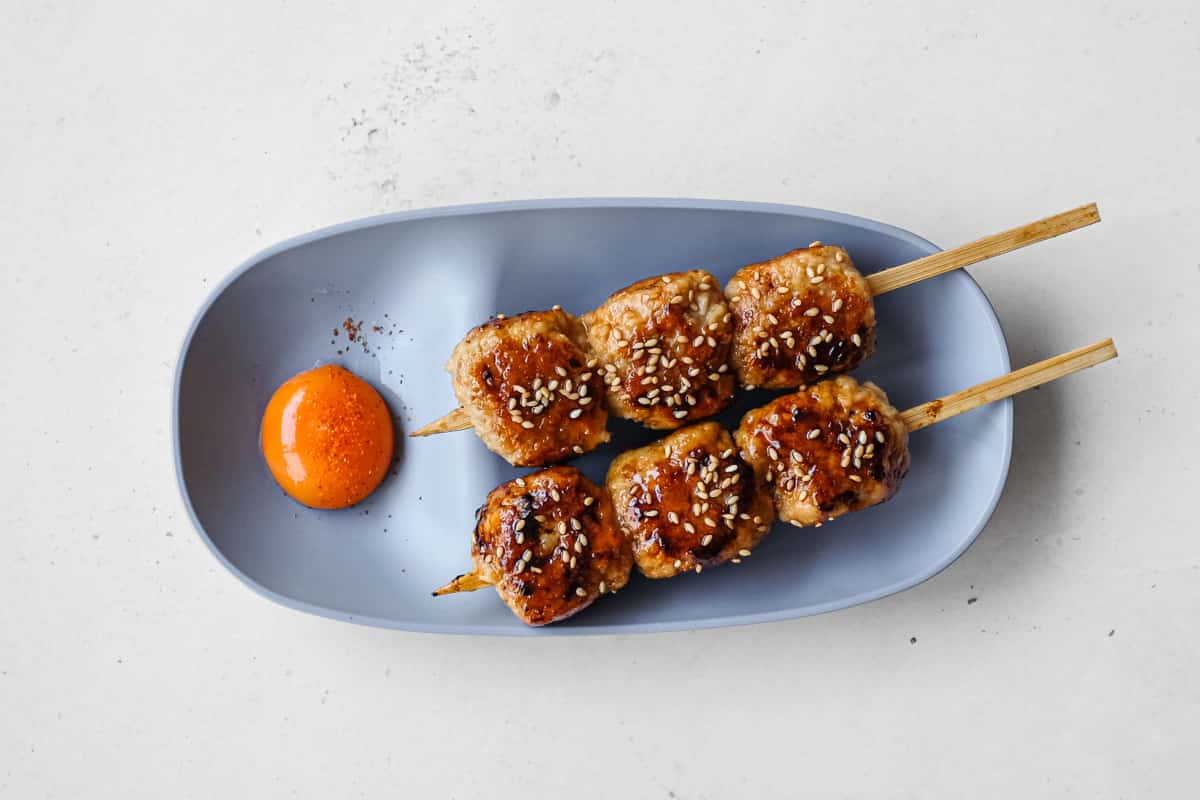
Inspired by the tsukune I ate in Tokyo, these tested Japanese chicken meatballs are juicy, fragrant and beautifully glazed. They’re simple to prepare and perfect as an appetiser or part of a larger yakitori feast.
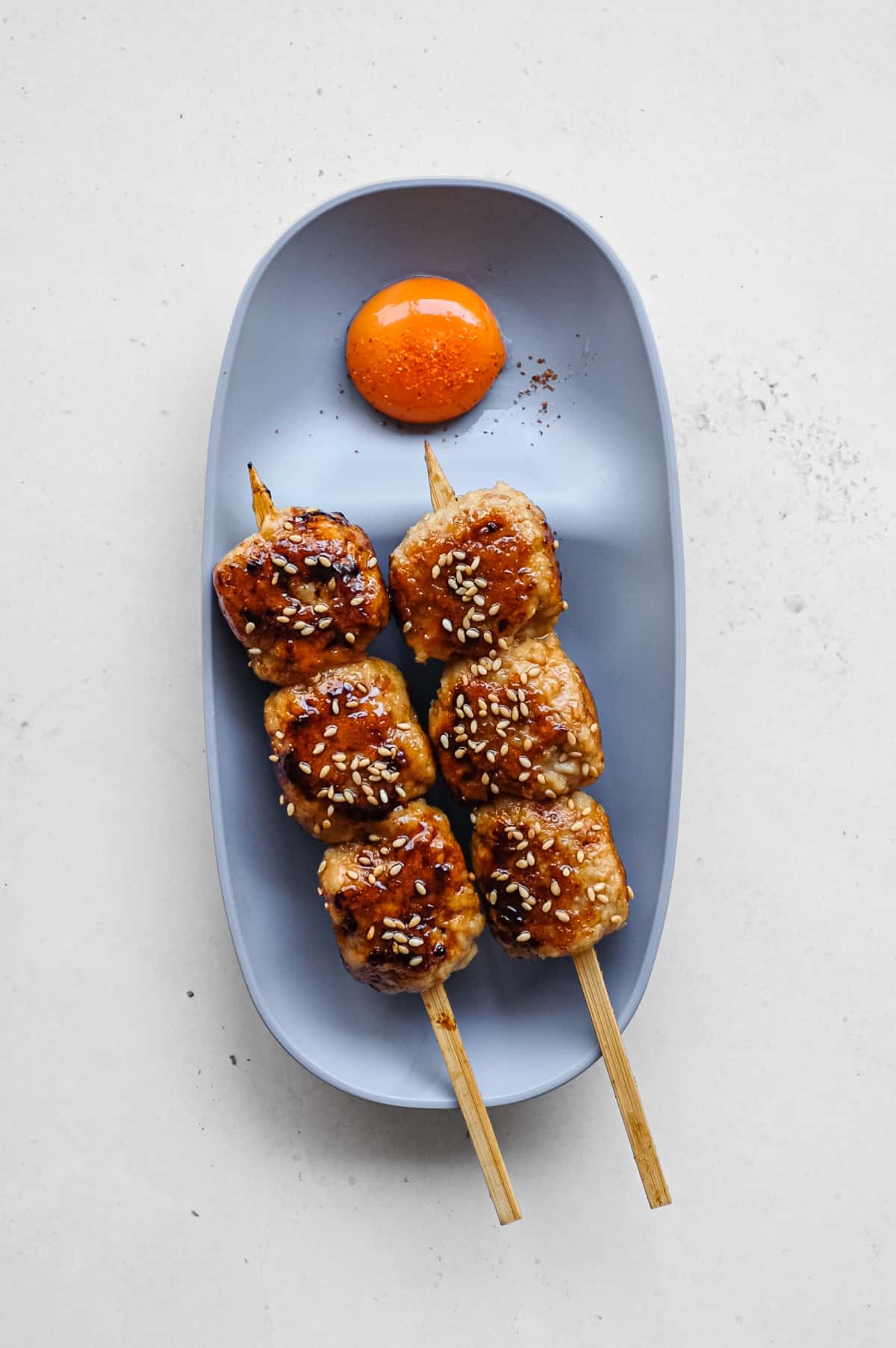
Tsukune! These really are one of my favourite Japanese snacks or light bites. Juicy ground chicken is mixed with a few aromatics, then cooked—usually over hot coals—and basted with a sweet, salty and umami-rich sauce. They’re simple, flavourful and completely addictive.
In Tokyo a few years back, I ate at the most amazing yakitori restaurant—a rough-and-ready place that was buzzing with patrons, all enjoying countless beers accompanied by endless skewers of food. As a tall, lumbering Westerner, I had comically struggled and prised my way into a sunken seat, so I wasn’t moving again unless it was an emergency—this meant I just hunkered down for a feast. There were so many amazing courses, one of which was this tsukune, served simply with an egg yolk. Talk about a revelation!
In the past, I might have turned my nose up at the thought of a chicken meatball, but I must confess that the flavour of the humble tsukune really blew me away. I knew it would become a regular at home, so I’ve adapted the dish to suit my regular Western kitchen—without the need to fire up the BBQ. My version is still tasty and super easy!
This recipe belongs to my Asian Hub and curated Asian Street Food Collection, where you'll find many delicious recipes from all across Asia.
What's Ahead?
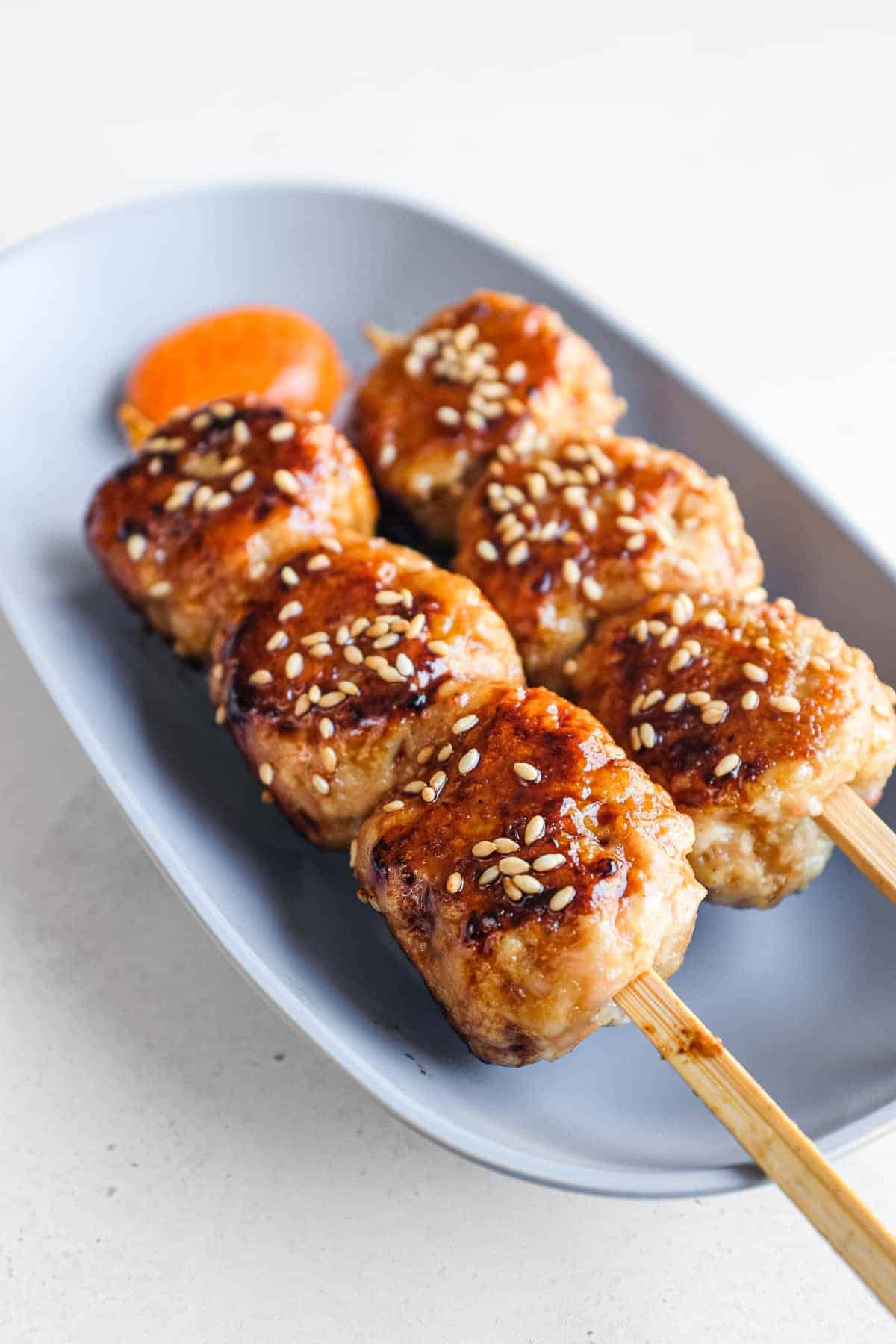
What is Tsukune (つくね)?
Tsukune (つくね) are Japanese meatballs made by mixing ground meat—most commonly chicken—with simple seasonings and aromatics. In yakitori restaurants, they’re shaped onto skewers, grilled over hot coals and often glazed with a glossy, sweet and salty tare sauce. The version I ate in Japan came simply served with an egg yolk for dipping, and it completely changed my opinion of chicken meatballs (and raw egg yolk!). Humble they may be, but tsukune are juicy, umami-laden and dangerously easy to keep ordering!
Why My Recipe?
-
They’re authentically delicious – I’ve adapted the restaurant version for cooking in a pan, as it delivers really good results. I often use a BBQ too, which adds a wonderful smoky element to the meatballs. I don’t own a hibachi grill (a small tabletop grill), so I can’t offer up that version of the dish, but rest assured, my pan version is just as delicious.
- You can make a meal of tsukune – I often create a more substantial plate by making tsukune don: a rice bowl with the chicken meatballs, spring onion, furikake, pickled ginger and an egg—either poached, onsen-style (gently cooked in its shell) or simply a raw yolk.
- They’re great for crowds – If I have a group of people over, I’ll include tsukune alongside a bunch of other skewered options and drip-feed everyone over a few hours—until they tell me to stop!
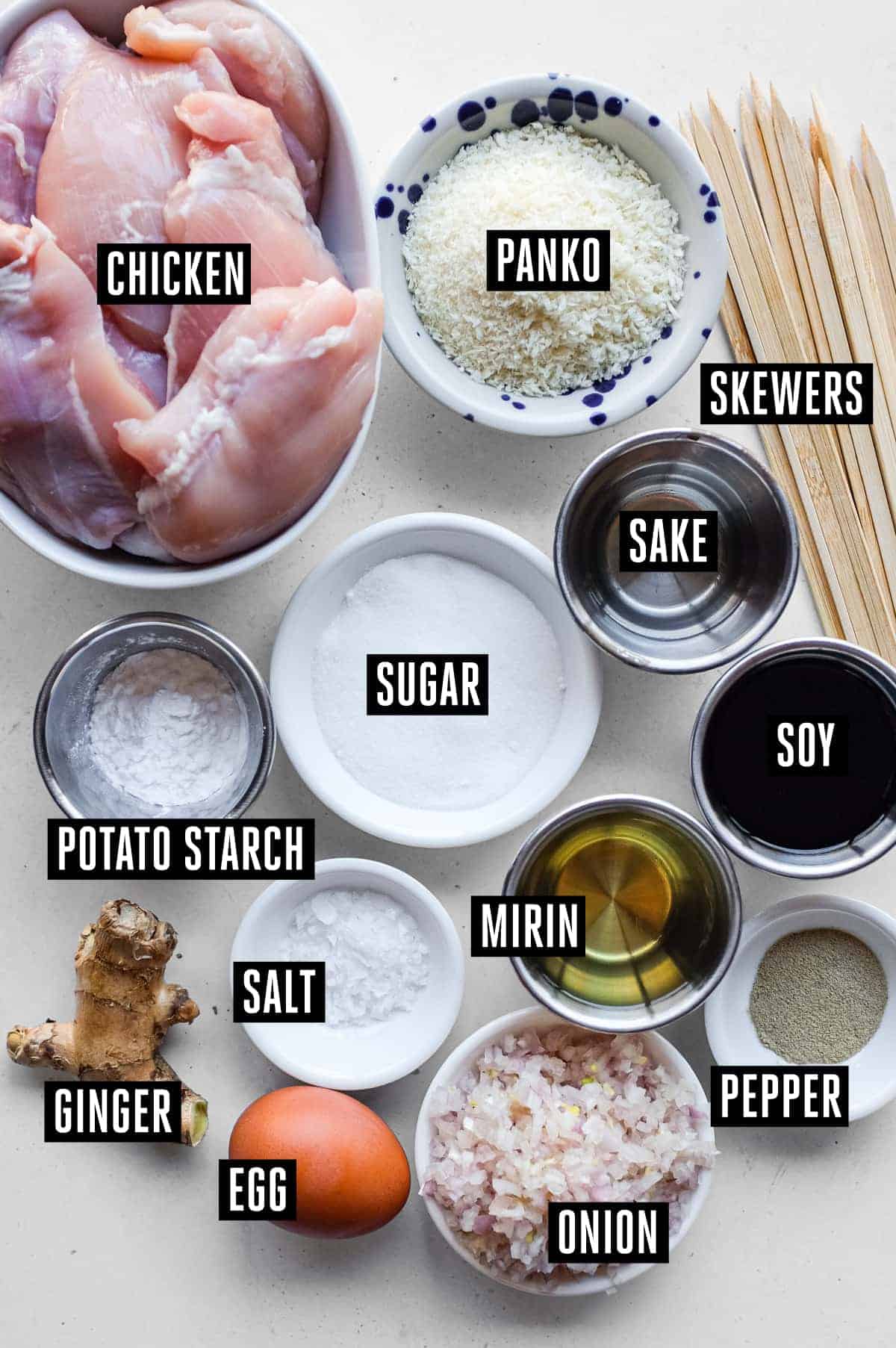
Ingredients You'll Need
Pantry staples are the go for this simple tsukune recipe. Here's what you'll need.
- Chicken - For the best and juiciest results use chicken thighs. You can buy pre ground chicken, but it tends to be breast meat which can often be a little dry. It's fine, but for the juiciest results, use thighs.
- For the meatballs - finely chopped onion, egg, panko, pepper, soy sauce, salt, sake, and potato starch (or cornflour) are all blended with the chicken to form a rough paste.
- For the tare sauce - fresh ginger slices, light soy sauce, mirin, sake and sugar, bring their savoury and sweet umami flavours.
Step by Step
Here's how I make my juicy tsukune at home. It's really easy.
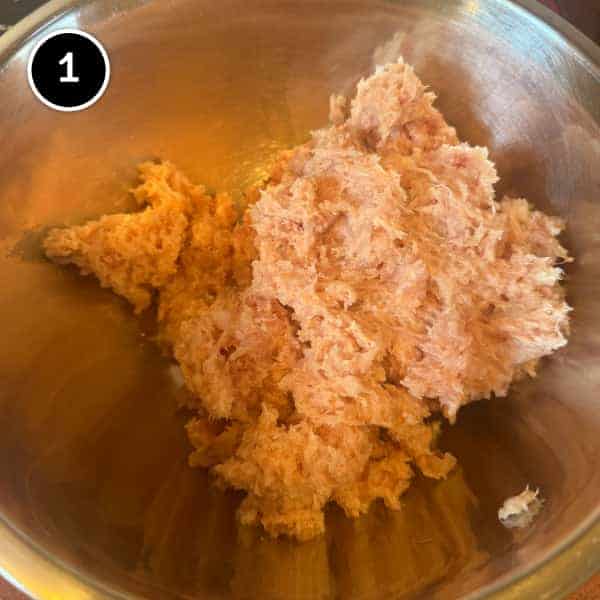
- Mince the chicken - using a food processor, I pulse blend the chicken thighs (cut into chunks) until I have a rough paste. A few lumps here and there, but I want it pretty well blended.
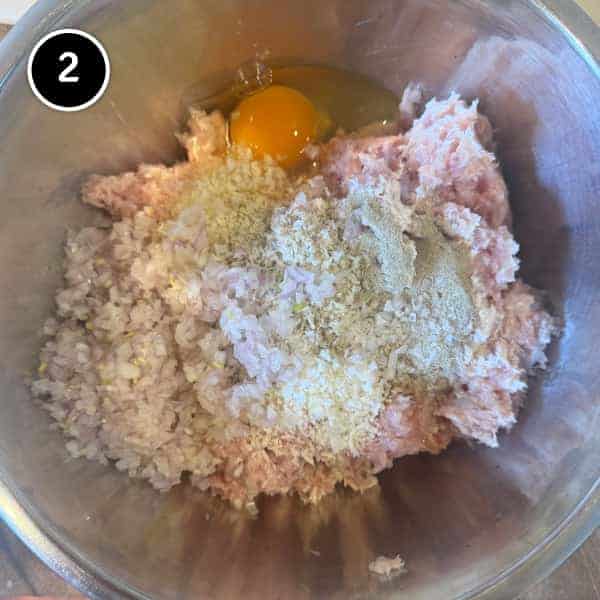
- Make the tsukune mix - I then add all the meatball ingredients and using my hands, really work them all into the mix until well incorporated. I pop it in the fridge to firm up a little.
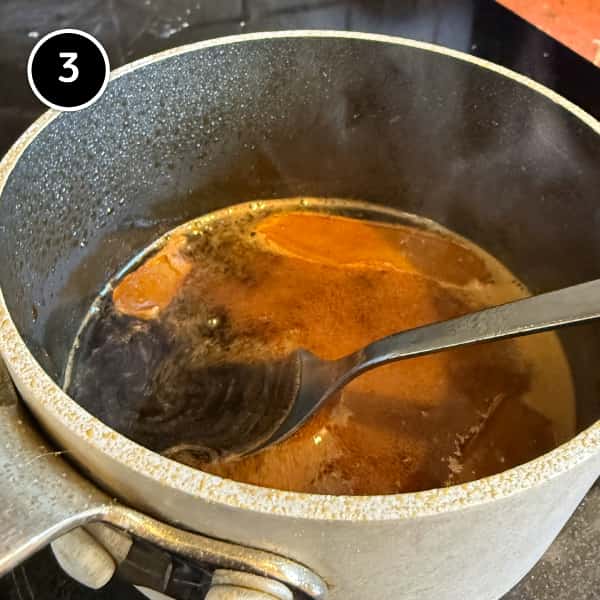
- Make the tare sauce - I then turn my attention to the tare (basting sauce). I combine the ingredients in a small pan and then simmer for 15-20 minutes until it's reduced and lightly syrupy (i.e. It stays on the back of my metal spoon in a thin, sticky layer).
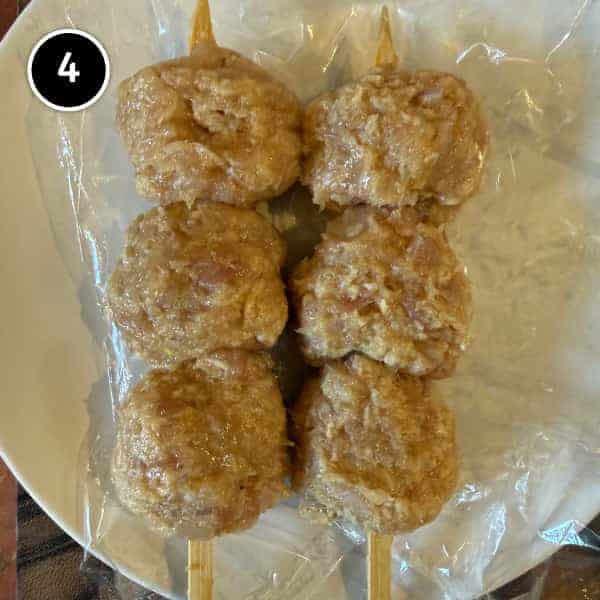
- Shape the meatballs - I mould the chicken (using damp hands, to stop it completely sticking to my hands) into approx. 30g balls. It's worth weighing them so that you get evenly sized balls and don't run short. I thread 3 balls onto each short skewer and arrange on a plate lined in plastic wrap (again, to avoid sticking). If you need to layer the tsukune, use another sheet of plastic to separate them. I'll often leave the meatballs in the fridge for an hour to firm up. This will help them keep their shape (especially on the BBQ grill).
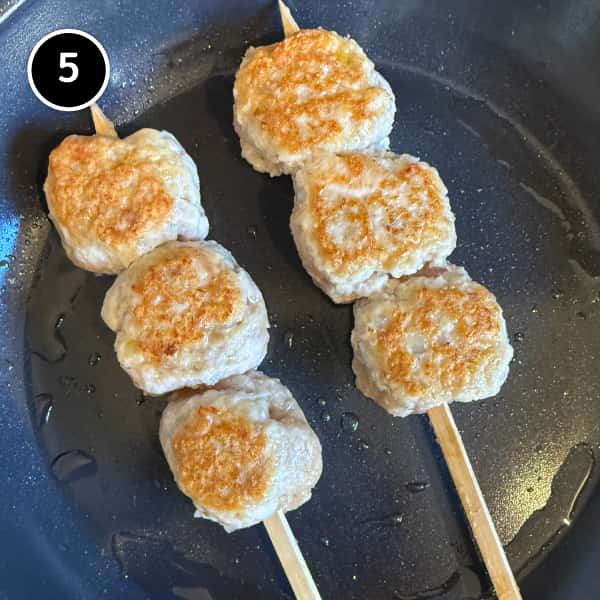
- Cook the tsukune - I heat a frying pan with a little oil for about 8 minutes, turning a few times to brown on all sides (they should reach an internal temp of 75ºC/167ºF).
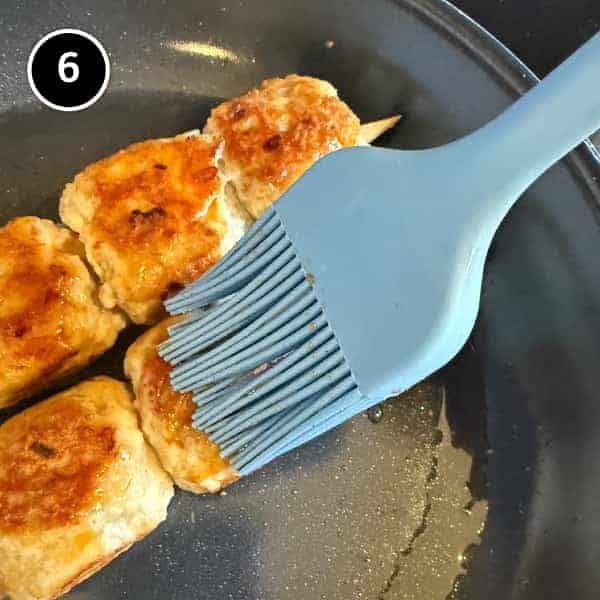
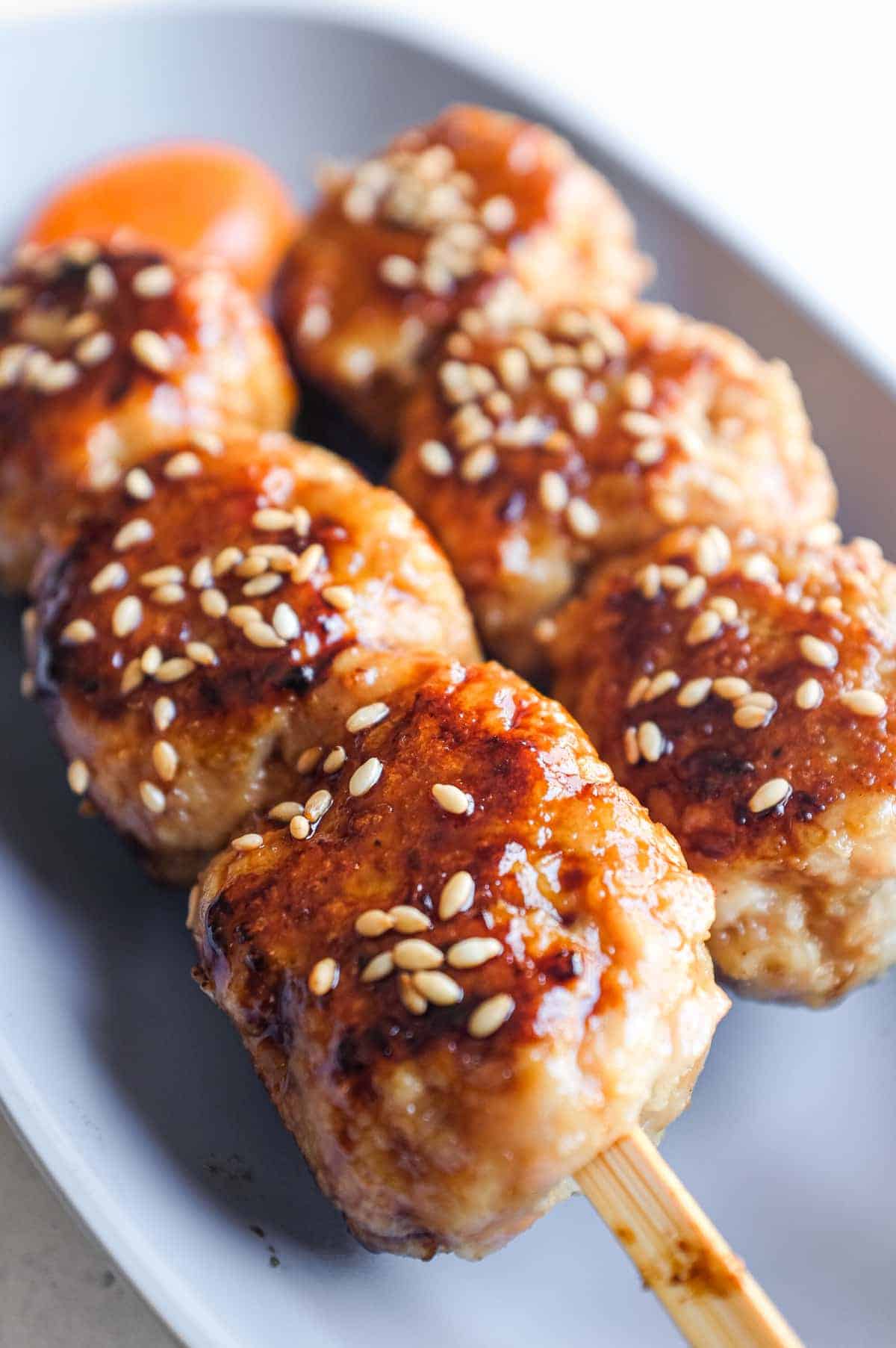
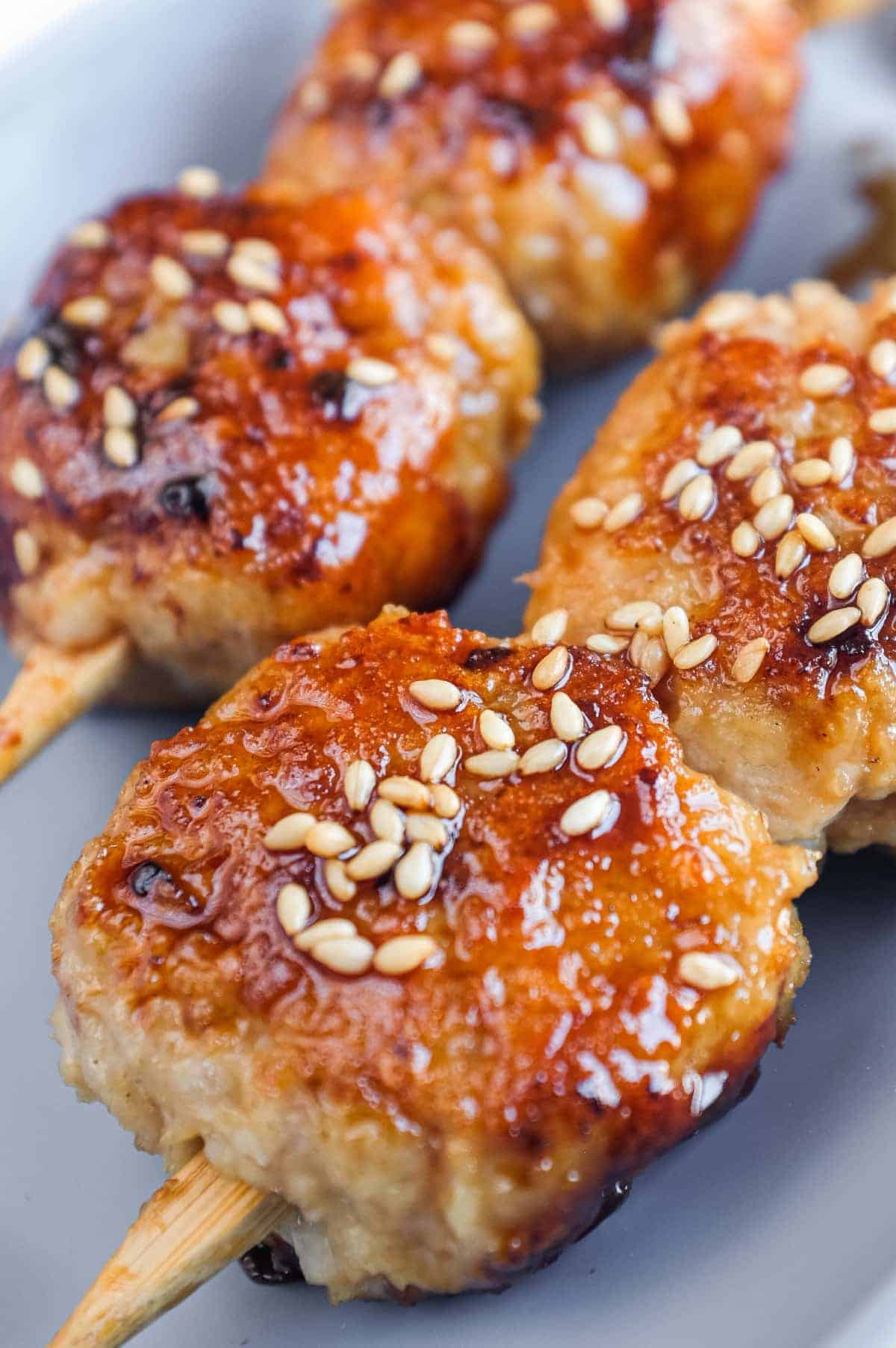
- Baste with tare sauce - lastly, I brush on some of the tare sauce on all sides and fry for 1 minute, keeping a watch to avoid the balls over-caramelising and burning. There's sugar in there, so it can catch quickly - I advise turning the heat down a little for this stage.
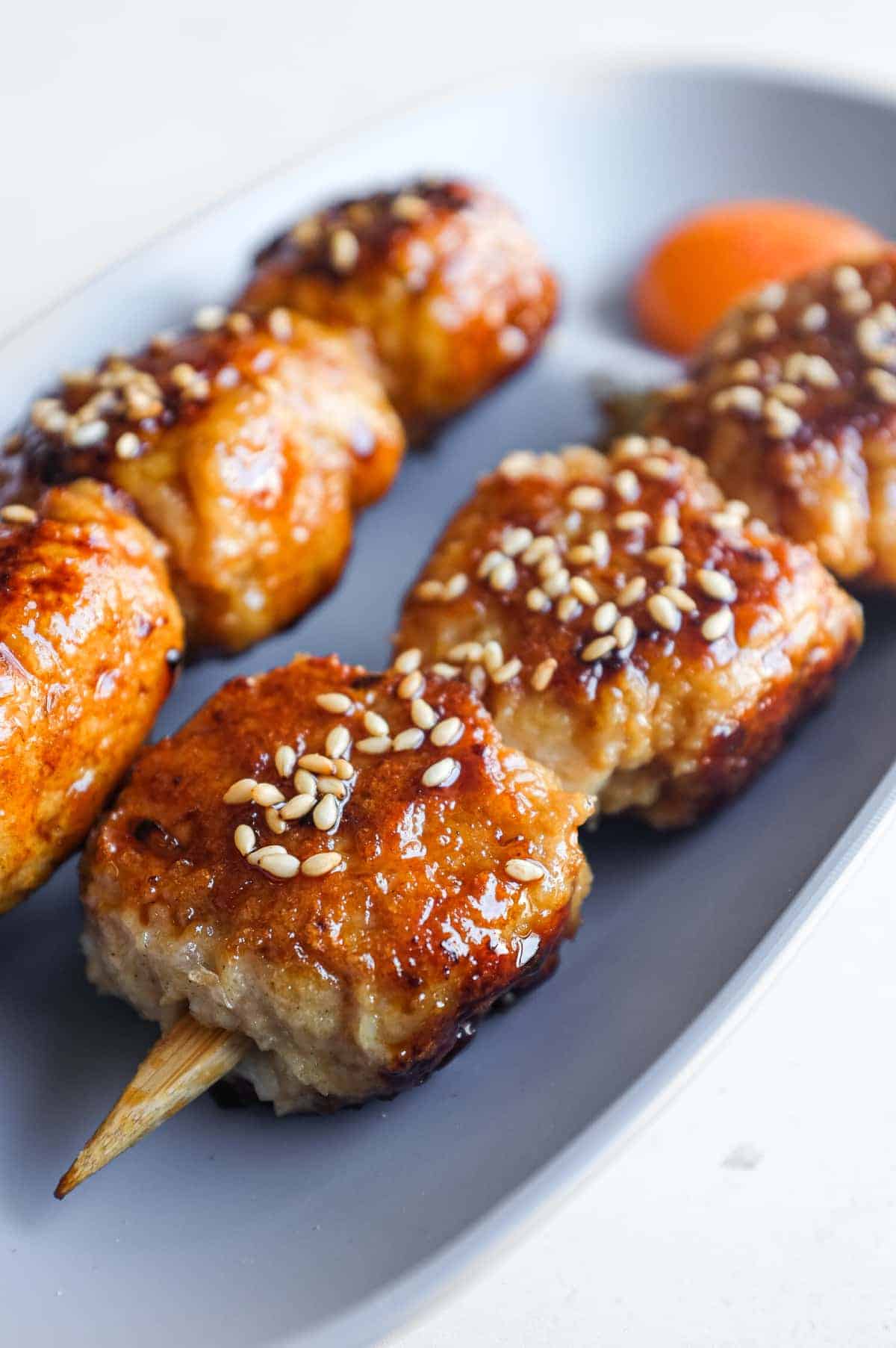
Lastly, I like to sprinkle over a few toasted sesame seeds at the end, but this is optional.
Pro Tips - Things I've learned
- Burning - in a pan, the tare can quickly overcook, be careful at this stage, turn down the heat a little to avoid burning.
- Alternative meat - I sometimes use turkey or pork as an alternative. Turkey leg meat is good, and pork with a little fat is best. You could use pre ground meat too.
- Firming the tsukune in the fridge - this helps them keep their shape when cooking.
- Leave alone when frying - for the first 1-2 minutes of pan cooking, I don't touch the tsukune. This enables the meat to cook enough to avoid the balls falling off the skewers. Then I carefully flip them and do the same. After 4 minutes, they're firm enough to move more easily.
Serving & Storage Suggestions
- Egg yolk - In Japan it's common to have tsukune served with a raw egg yolk for dipping, which is quite delicious, but maybe a little challenging for those outside Japan. I urge you to try though! I like to dust my yolk with a little hot pepper, togarashi.
- Mayonnaise - I love these tsukune with some Kewpie mayo (dusted with togarashi)
- A rice bowl - as I mentioned earlier, you can upgrade this appetizer to a rice or noodle bowl status.
- Fridge storage - the raw meatballs or meat mixture will be good for 1-2 days (covered) in the fridge. Cooked meatballs will be OK for 3-4 days and can be eaten cold or reheated.
- Freezer - the raw meat mixture freezes well as mixture or formed tsukune. It should be defrosted completely before cooking. Cooked tsukune freeze well and should be reheated in an oven or microwave.
- Cooking temperature - All reheated tsukune should reach an internal temp of 75ºC/167ºF
Ready to get cooking?
Yakitori is such a fun and interactive way of cooking and entertaining. I love to bring big trays of Japanese skewers to my table and watch the competitive eating begin! I'm always sure to hold a few back for myself as I am well known for being the most competitive of all! Hope you enjoy these delicious little Japanese morsels.
More Japanese recipes
If you liked this recipe, I'm sure you'll love more of my <category> recipes.
FAQ
Have a question? Let me know in the comments.
What is tsukune?
Tsukune (つくね) are seasoned Japanese meatballs, most commonly made with minced chicken. In yakitori restaurants, they’re usually shaped onto skewers, grilled over hot coals and basted with a sweet and savoury tare sauce. The version I first ate in Tokyo was served with a raw egg yolk for dipping—a simple combination that completely changed my opinion of chicken meatballs!
Can I cook tsukune without a grill?
Absolutely. While charcoal gives tsukune their traditional smoky edge, I’ve tested this recipe many times in a frying pan and it produces wonderfully juicy, caramelised meatballs. Let them cook undisturbed for the first couple of minutes, then turn them carefully. Add the tare towards the end and reduce the heat so its sugar doesn’t burn.
Why are my tsukune falling apart?
Tsukune can fall apart if the mixture hasn’t been worked enough or is too warm and wet. Mix it thoroughly until sticky, then refrigerate it before shaping. Damp hands make the mixture easier to handle, while evenly sized 30g balls cook consistently. Once they’re in the pan, leave them alone for 1–2 minutes before attempting to turn them.
Can I prepare or freeze tsukune in advance?
Yes. I often shape the tsukune ahead and refrigerate them so they firm up before cooking. To freeze them, arrange the uncooked meatballs separately on a lined tray; once solid, transfer them to an airtight container. Thaw completely in the refrigerator before cooking. Cooked tsukune can also be frozen and reheated to 75°C/167°F internally.
Is it safe to serve tsukune with raw egg yolk?
Raw egg yolk is a classic accompaniment to tsukune in Japan, but raw eggs carry a food-safety risk. Use a fresh, clean, uncracked egg—or preferably a pasteurised egg—and keep it refrigerated until serving. Pregnant people, young children, older adults and anyone with a weakened immune system should avoid raw egg and choose a pasteurised yolk or fully cooked egg instead.
This recipe uses affiliations and may receive a commission based on your activity (link clicks). Learn more.
Ingredients
Meatballs
- 650 g chicken thighs
- ½ tsp white pepper
- 1 tsp salt
- 1 tsp soy sauce
- 1 tbsp sake
- 1 tbsp potato starch (or cornstarch/cornflour)
- 25 g panko breadcrumbs
- 1 egg
- 80 g onion (finely minced)
Other Ingredients
- 2 tbsp vegetable oil (for frying the tsukune)
- sesame seeds (optional)
Instructions
Prepare the tsukune mixture
- Using a food processor, pulse blend the chicken pieces to make a thick, rough paste.
- Mix in all the other meatball ingredients with your hands until it's very well combined. Refrigerate while you make the tare sauce.
Make the tare
- Combine the ginger, sugar, sake, mirin and soy sauce in a small saucepan.
- Stir and bring to a gentle simmer. Cook gently uncovered for 15-20 minutes, until reduced and lightly syrupy.
- Remove the ginger. Set the sauce aside—it will thicken further as it cools.
Portion and shape
- Dampen your hands and, weigh out around 30 g per meatball and roll into compact balls. You should get approximately 28.
- If using skewers, thread three meatballs per skewer, slightly flattening them.
- Arrange on a platter that is lined with plastic wrap. If you layer the tsukune place a sheet of plastic wrap between to avoid sticking. Refrigerate for 1 hour.
Cook and glaze
- Heat a lightly oiled frying pan over a medium heat until hot.
- Carefully place the meatballs in the pan (you may need to cook in batches). Leave undisturbed for 2 minutes before carefully flipping. Leave for a further 2 minutes then, cook for a further 4 minutes turning frequently.
- Turn down the heat and brush over a thin coating of tare and continue cooking and turning for another 1 minute, being careful to not let the tsukune burn (the sugar in the sauce can caramelise quickly).
- Serve immediately with extra tare on the side. Optional: Add a light sprinkling of toasted sesame seeds.
Notes
- Chicken thighs give me the best results – I’ve made tsukune with both thigh and breast meat, and thighs consistently produce the juiciest, most flavourful meatballs. Pre-ground chicken still works, but is often leaner and a little drier.
- Really work the mixture – I mix it firmly with my hands until it becomes well combined and sticky. I’ve found this develops the characteristic springy texture and helps the meatballs stay together.
- Damp hands make shaping much easier – The mixture is naturally sticky, so I keep a small bowl of water nearby and lightly wet my hands between meatballs.
- I weigh the portions – Around 30g per meatball gives me approximately 28 evenly sized tsukune that cook at the same rate.
- Chilling makes a noticeable difference – I refrigerate the shaped tsukune for an hour. They become much easier to handle and hold their shape better, especially on skewers or the BBQ.
- Leave them alone at first – I don’t touch the frying tsukune for the first 2 minutes on each side. Once the exterior has firmed up, they’re much easier to turn without sticking or falling apart.
- Add the tare at the very end – I learned quickly that its sugar can burn before the chicken cooks. I reduce the heat, apply a thin coating and turn the tsukune continuously for the final minute.
- Cook in batches when needed – Overcrowding my pan causes the meatballs to steam rather than brown, so I leave a little space around each one.
- Use a thermometer for certainty – I check the centre of one of the largest meatballs and make sure it has reached at least 75°C/167°F.
- The BBQ adds another dimension – My pan version is the one I cook most often, but when the BBQ is already fired up, the extra smokiness is absolutely worth it.
Leave A Comment