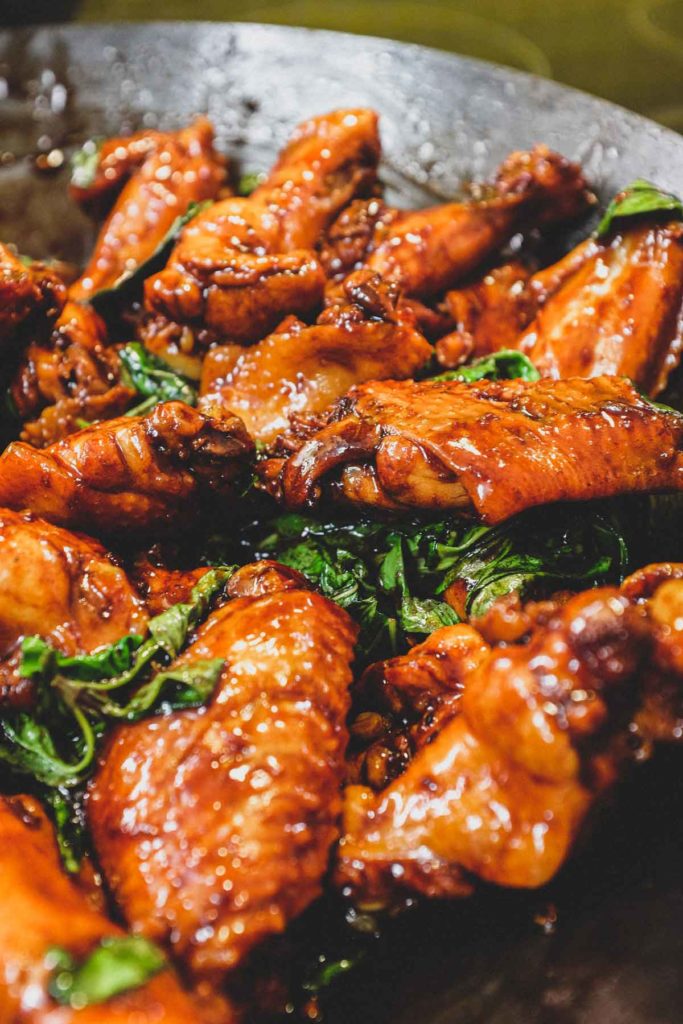

Three Cup Chicken (San Bei Ji) – Sticky, Aromatic Taiwanese Classic
By Lee Jackson ↣ Published on: October 16, 2020
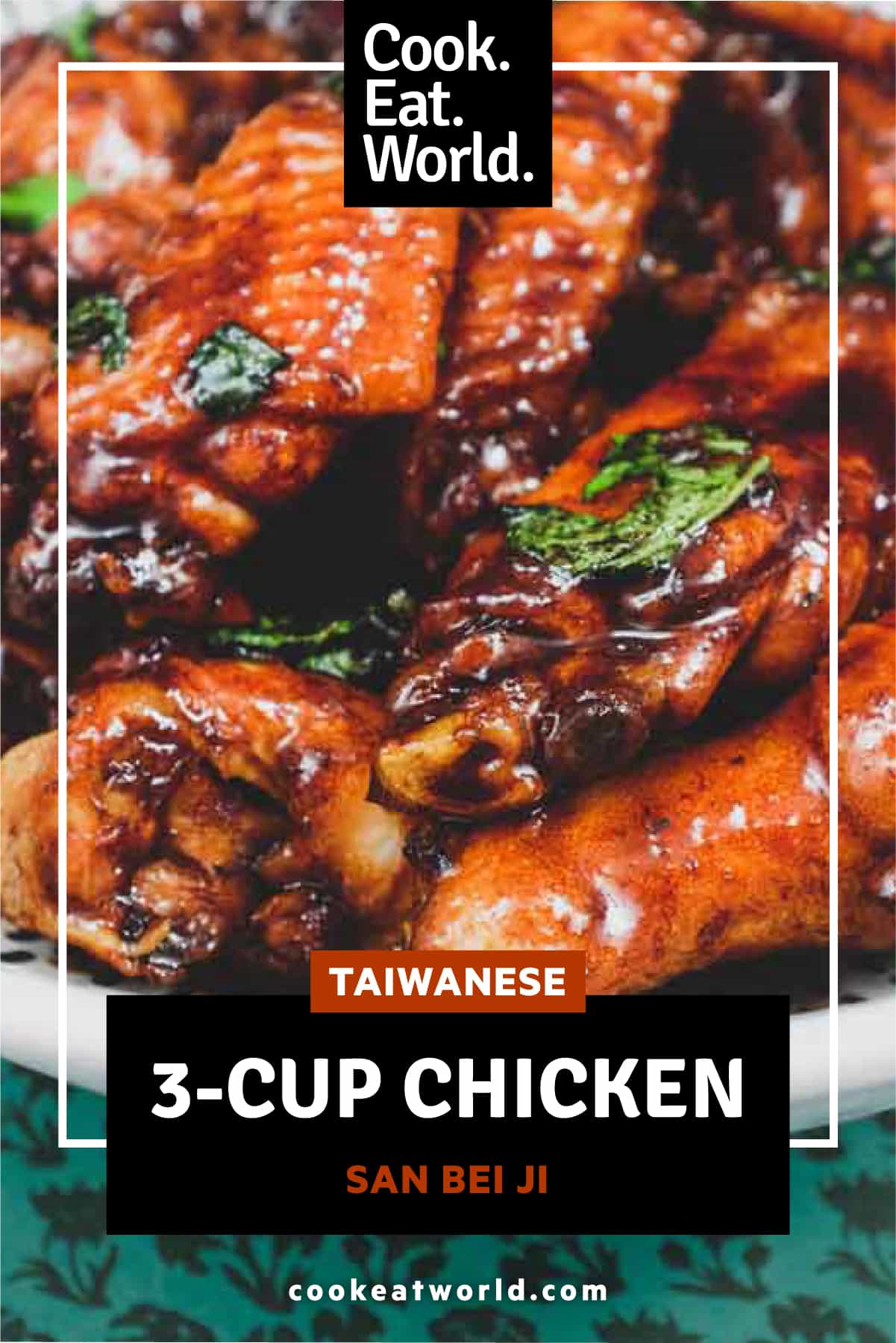
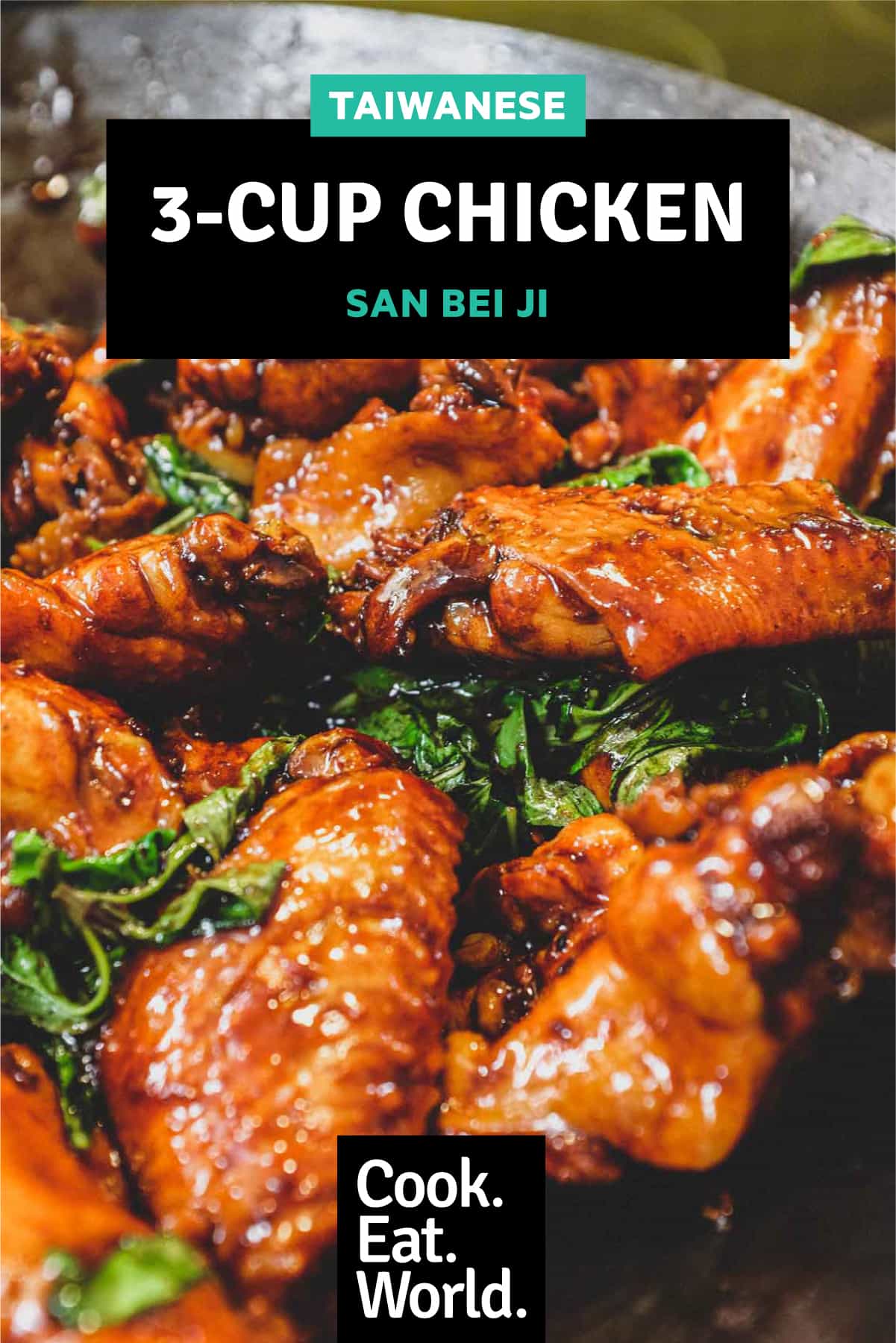
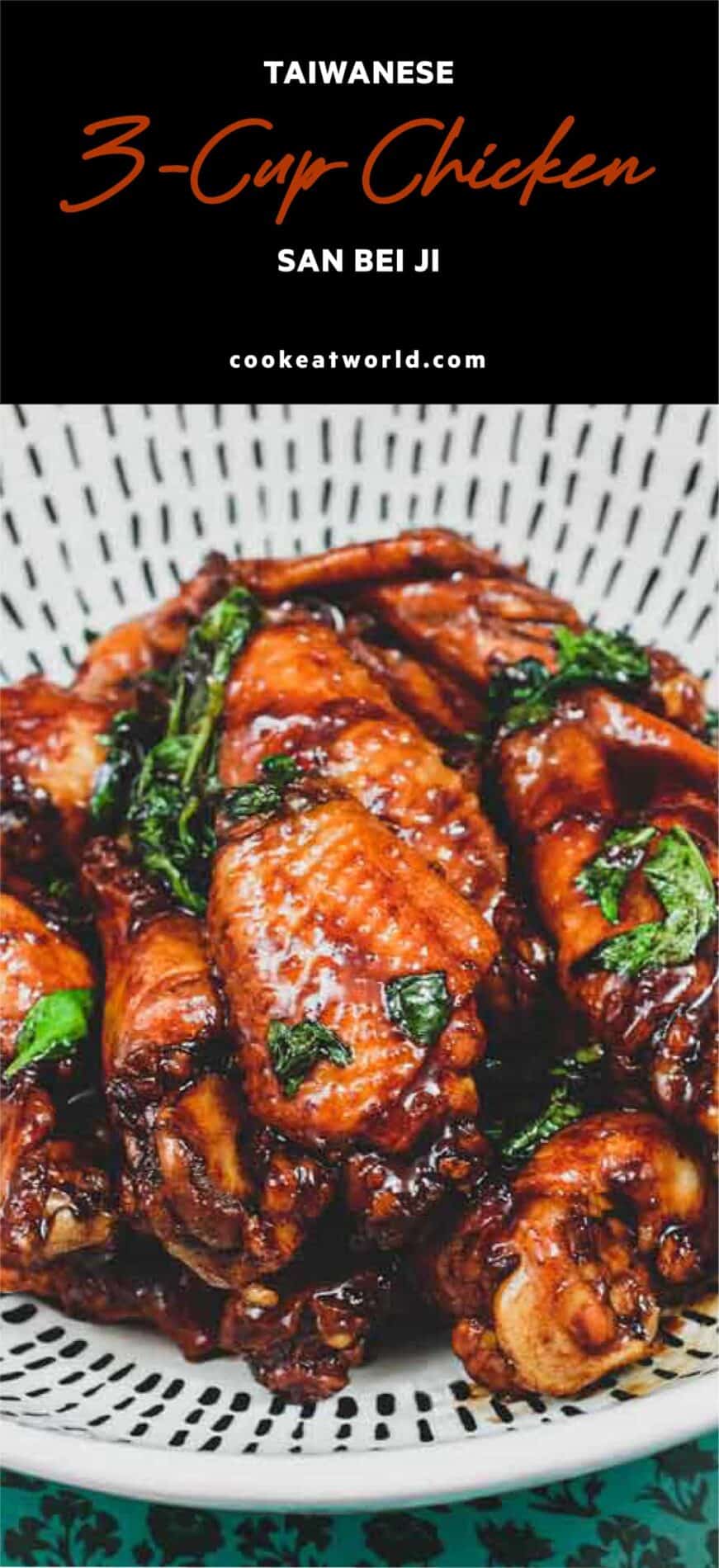
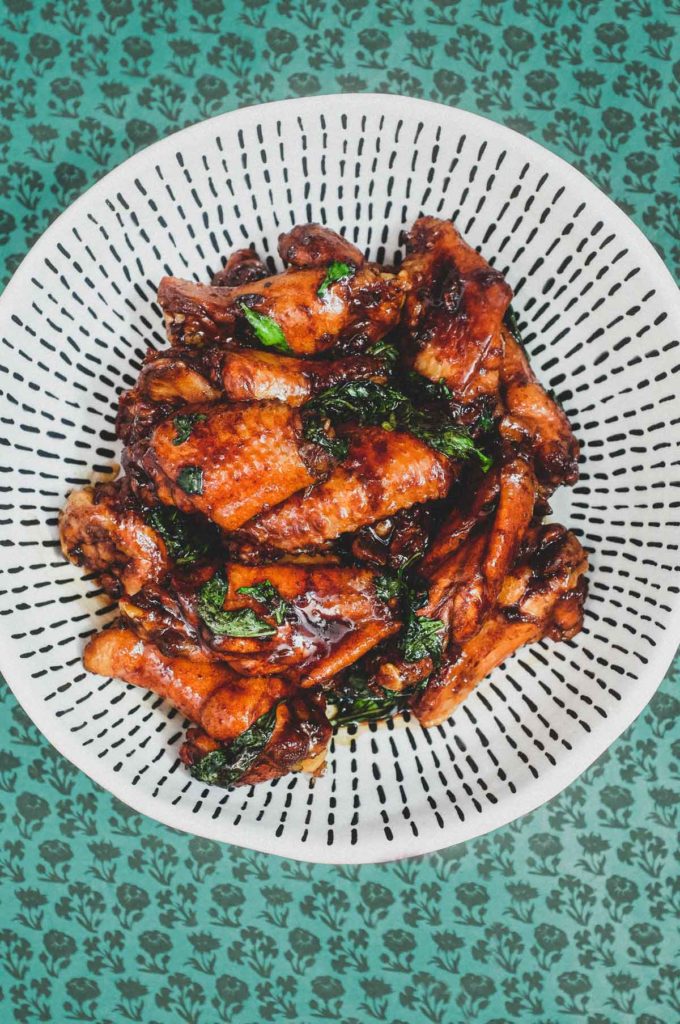
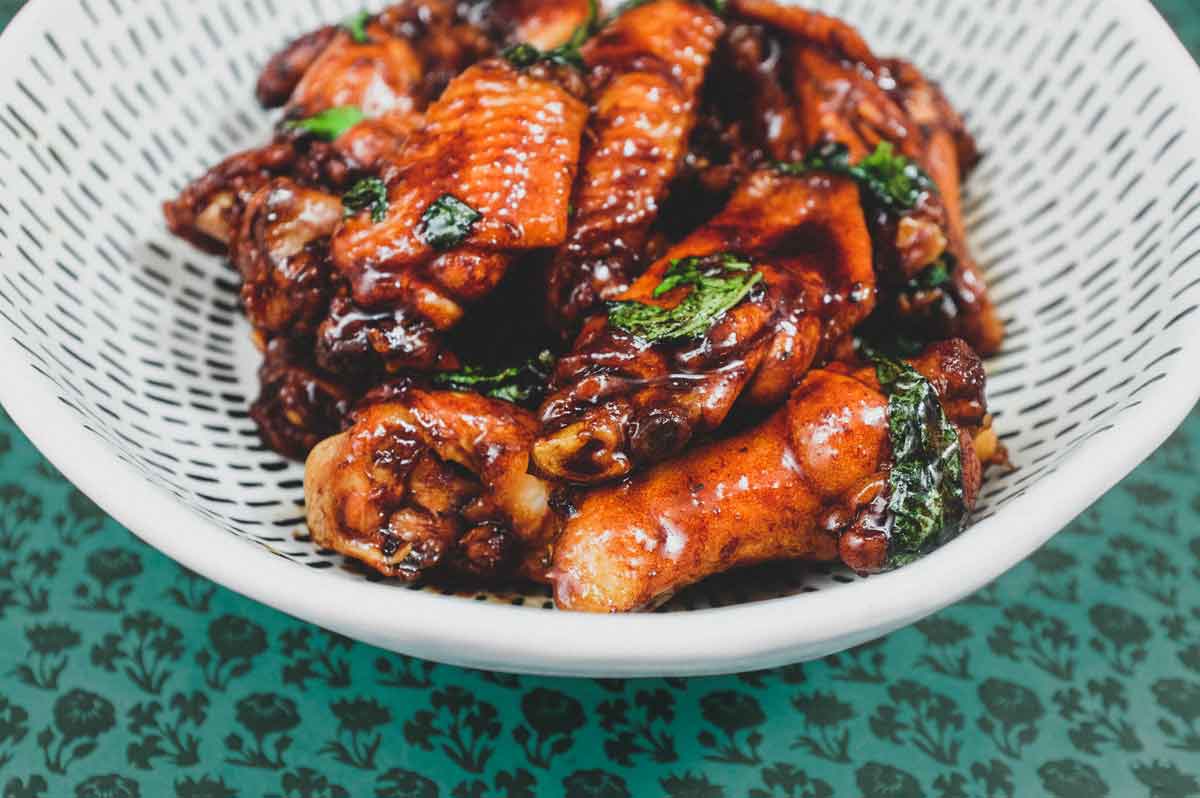
Three Cup Chicken (San Bei Ji) is one of Taiwan’s most iconic dishes — glossy, aromatic and deeply savoury. Chicken is cooked with soy sauce, rice wine and sesame oil, then finished with garlic, ginger and basil. It’s bold, sticky and completely addictive — fast, simple and packed with flavour.
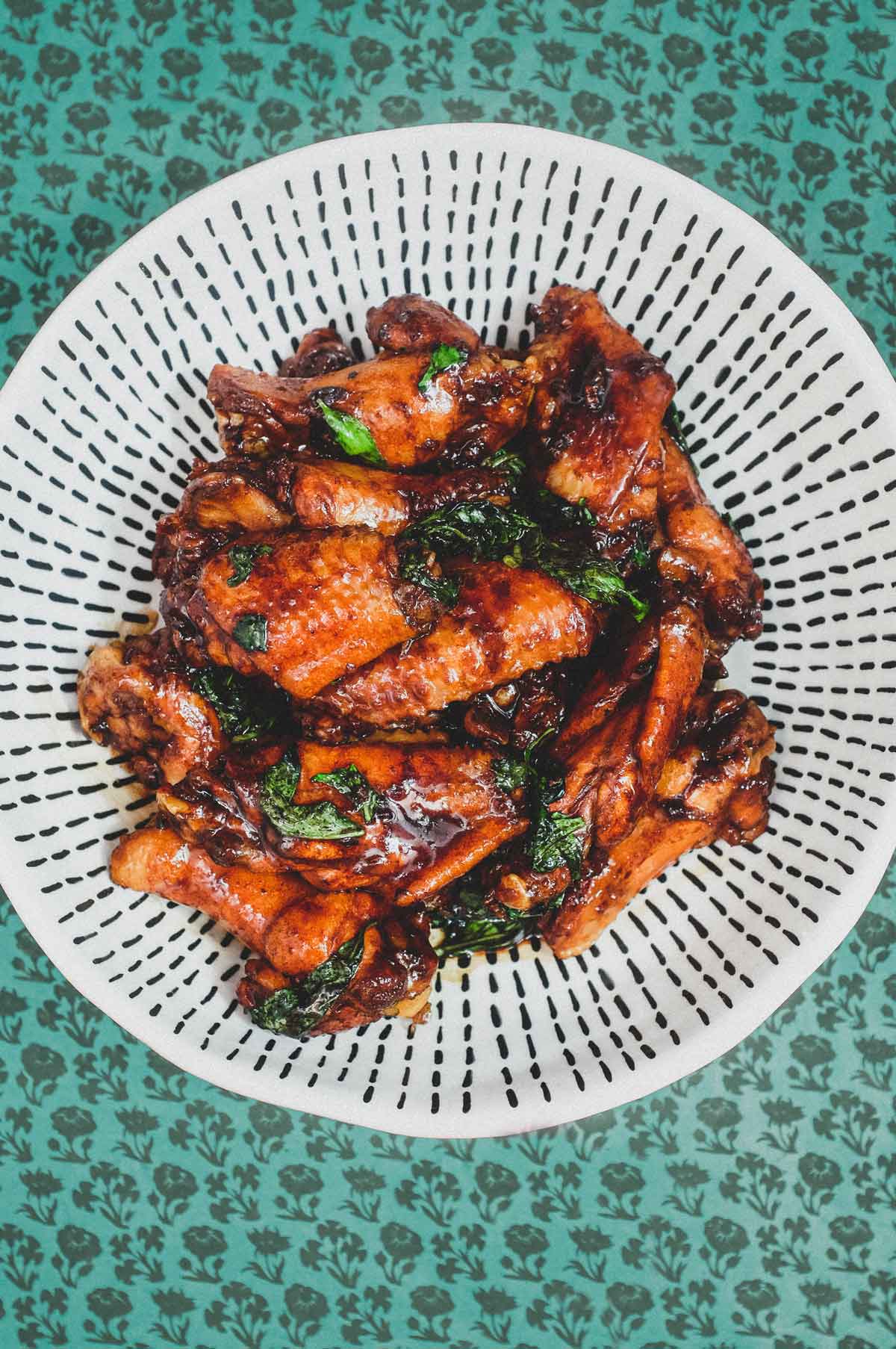
This Taiwanese classic delivers big flavour with very little effort. Everything cooks in one pan, no marination required, and the result is rich, glossy chicken coated in an intensely savoury sauce.
I like to use wings and drummettes here — they cook quickly and soak up all that flavour — but you can also use thighs or chopped bone-in pieces for a more traditional feel.
Serve it as part of a larger spread, or just pile it into a bowl and get stuck in. Either way, expect a bit of a mess — and not much left over.
What's Ahead?
What is Three Cup chicken?
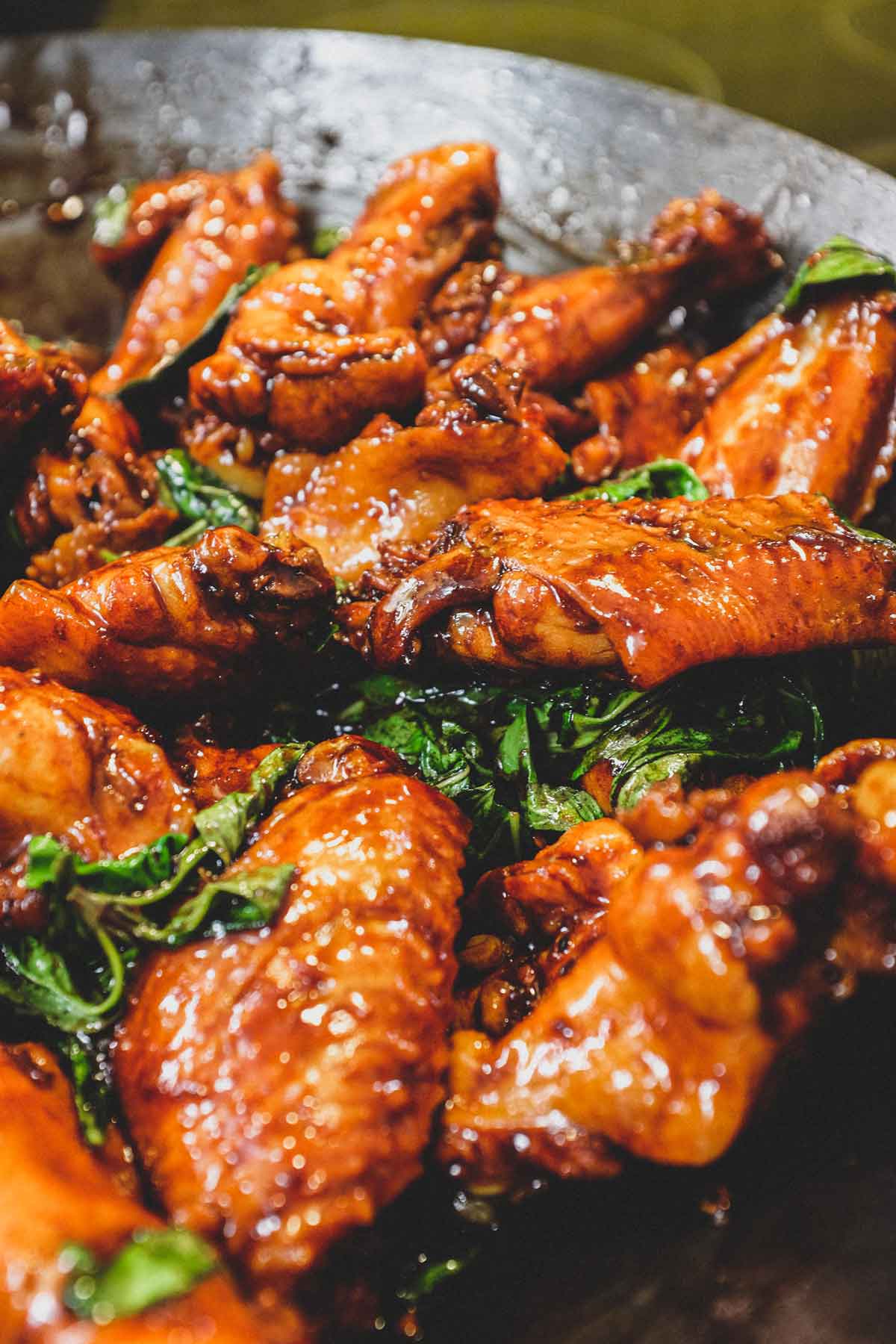
Three Cup Chicken, or San Bei Ji (三杯鸡), is a classic Taiwanese dish known for its rich, glossy sauce and bold, savoury flavour.
The name comes from the traditional ratio of three key ingredients — soy sauce, rice wine and sesame oil. While modern recipes don’t always stick to exact equal quantities, it’s the balance of these three elements that defines the dish. Although its roots trace back to Jiangxi in China, it’s in Taiwan where the dish really found its identity — often cooked in a clay pot and finished with basil.
This recipe is part of my Asian and Asian Stir Fry collections, where you’ll discover more fragrant favourites.
What makes this version work?
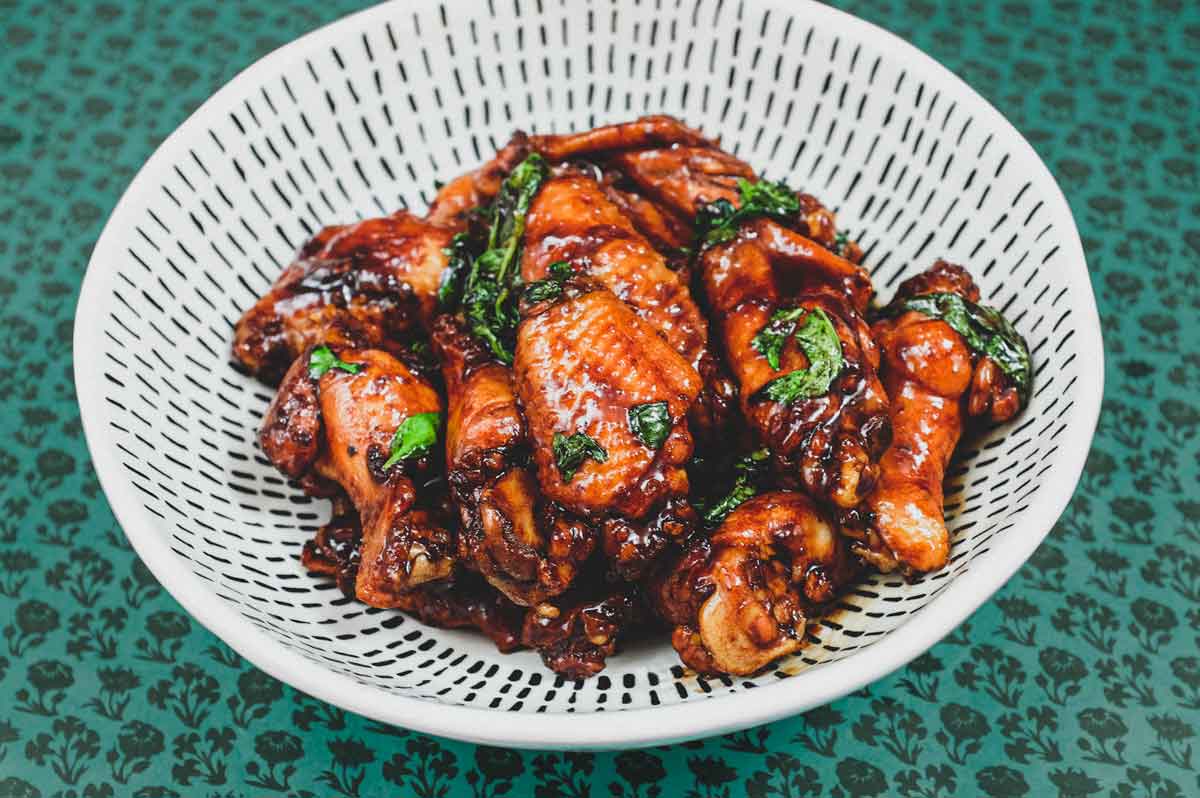
The key is reducing the sauce until it’s thick and glossy — it should cling to the chicken, not sit watery in the pan. Balance matters too. Too much soy and it’s salty, too much sesame oil and it’s heavy. When it’s right, it’s rich, savoury and just slightly sweet.
The basil at the end lifts everything — fresh, fragrant and essential.
Authentic v modern
Traditional Three Cup Chicken is cooked with chopped bone-in chicken, often in a clay pot, with the sauce reduced into a rich glaze.
At home, it’s more flexible. Wings, thighs or drumsticks all work — and most recipes adjust the “three cup” ratio for better balance. This version keeps the bold, traditional flavours, but makes it easy to cook any night of the week.
Why you'll Love 3-Cup Chicken
- Deep, savoury flavour – soy, sesame and rice wine create a rich, umami-packed base
- Sticky, glossy sauce – reduced down until it clings to every piece of chicken
- Fast and simple – no marination, everything cooks in one pan
- Fresh lift at the end – basil cuts through the richness and brings everything together
INGREDIENTS You'll Need
Three Cup Chicken is all about a handful of big flavours working together. Nothing complicated — just the right balance.
-
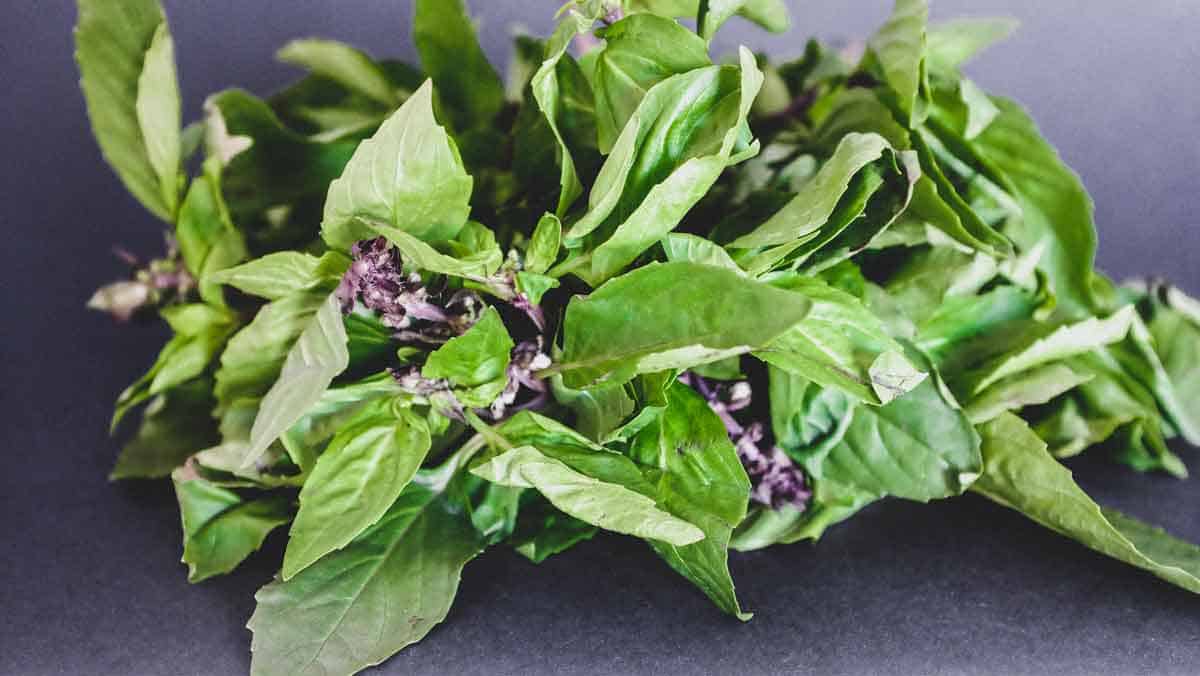
Thai Basil (or Holy Basil) –
This is what gives the dish its signature aroma — slightly peppery with a hint of aniseed.
- Chicken wings / drummettes – I like using wings as they cook quickly and soak up the sauce. Thighs or chopped bone-in chicken work just as well — just allow a little extra time.
- Garlic & Ginger – The backbone of the dish. They infuse the oil and build the base flavour.
- The sauce – A combination of sesame oil, soy sauces, Shaoxing wine, sugar and a touch of spice. Simple, but incredibly effective.
Step by Step
Making Three Cup Chicken is quick and straightforward — everything happens in one pan.
-
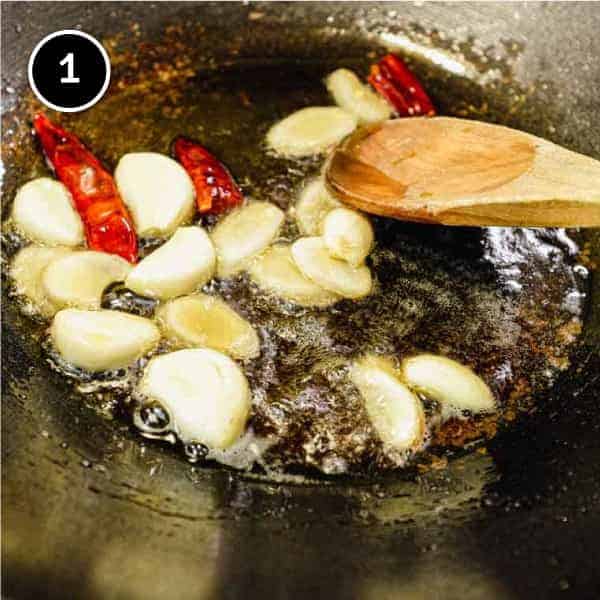
Step 1 / Build the base -
Heat the sesame oil, then add the ginger, garlic and dried chillies. Let them gently sizzle and infuse the oil — this is where the flavour starts.
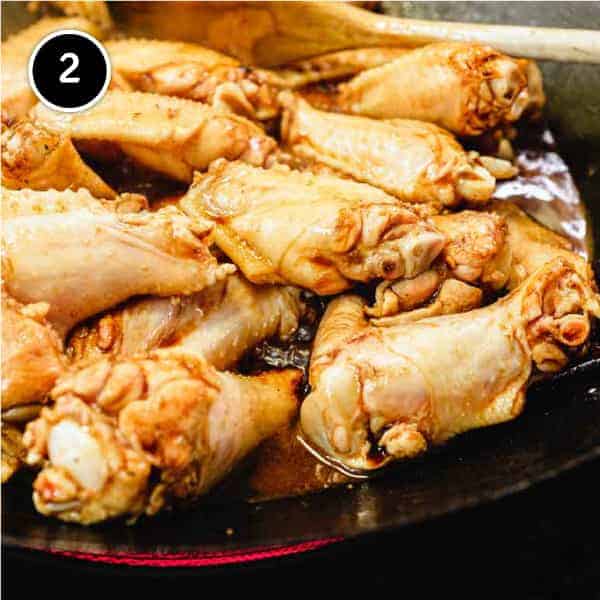
- Step 2 / Add the chicken - Add the chicken and let it take on a little colour, then pour in the soy sauces, rice wine and sugar. It won’t look like much yet — give it time.
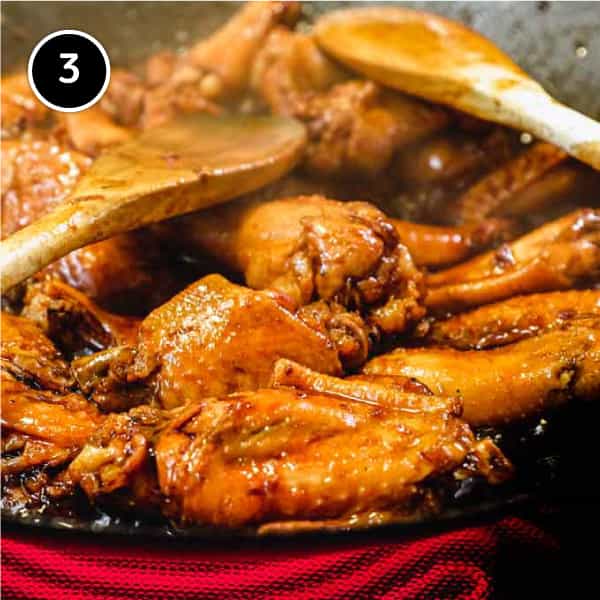
- Step 3 / Simmer and reduce - Let everything simmer until the chicken is cooked through, then uncover and reduce the sauce until it becomes thick, glossy and coats the chicken. This is the key step — don’t rush it.
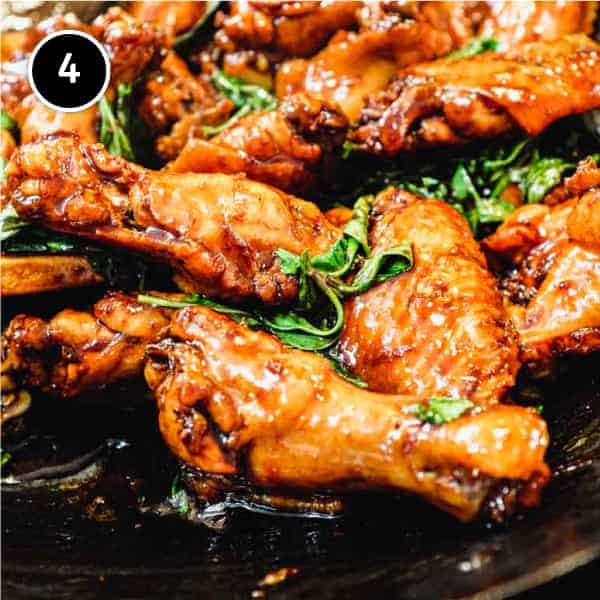
- Step 4 / Finish with basil - Stir through the basil right at the end. It wilts instantly and lifts the whole dish with a fresh, fragrant hit.
Pro Tips
- Reduce the sauce properly – this is what gives you that sticky, glossy finish
- Use bone-in chicken if you can – better flavour and texture
- Have everything ready – once you start, it moves quickly
- Don’t skip the basil – it’s not optional, it defines the dish
COMMON MISTAKES (AND HOW TO AVOID THEM)
- Not reducing the sauce enough — it should be thick and glossy, just give it time.
- Too much sesame oil — it quickly overpowers, so a little goes a long way.
- Skipping the basil — it defines the dish, and it's not the same without.
- Overcrowding the pan — stops proper reduction, so use a big pan.
Serving & Storage Suggestions
- Serve with plain steamed rice to soak up the sauce. It works as part of a larger spread, but it’s just as good on its own — straight from the bowl.
- If you’re going the wings route, expect a hands-on, messy, finger-licking situation.
- Leftovers keep for 3–4 days and reheat well. Best eaten fresh.
OVEN-BAKED cooking method
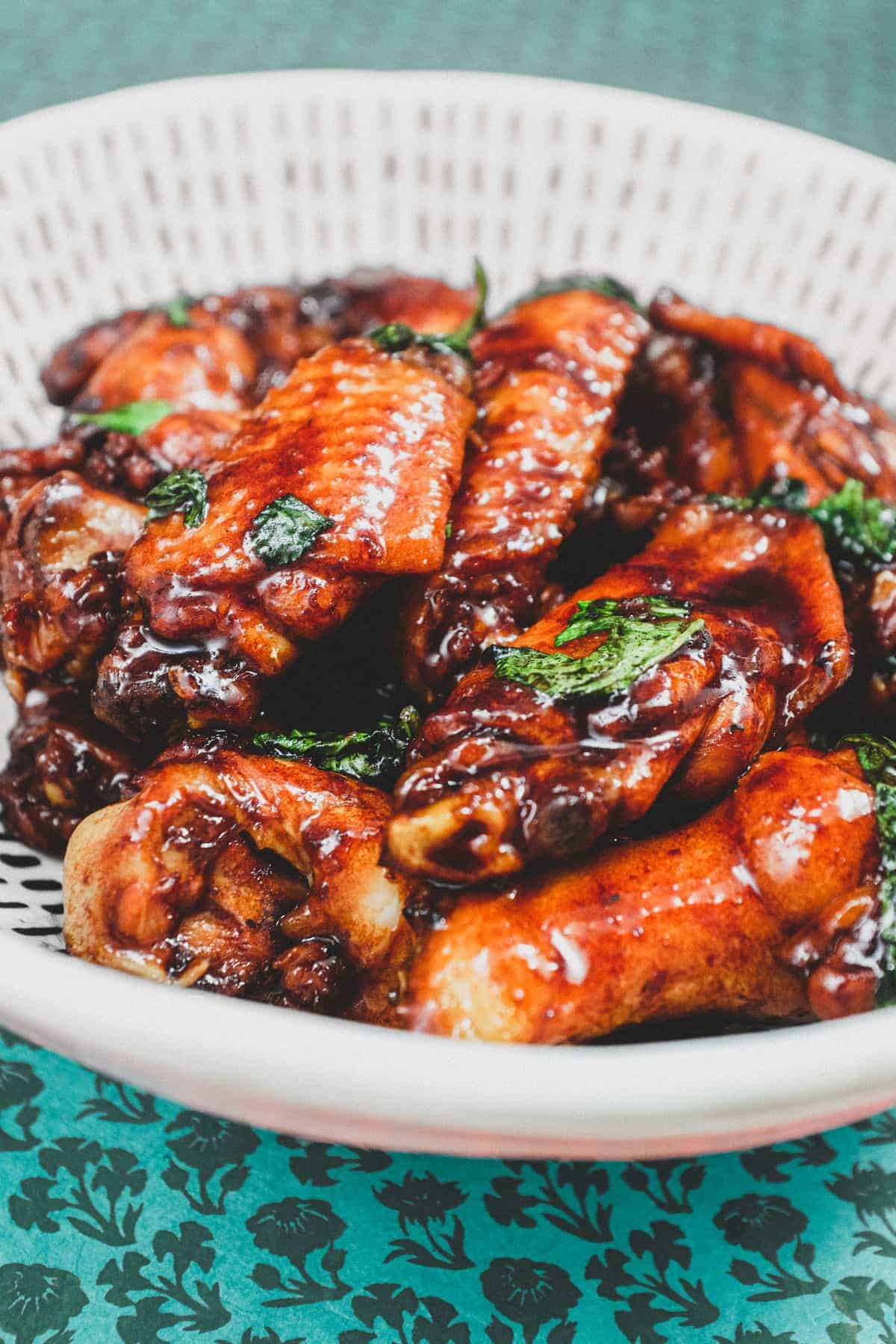
Mix everything together (except the basil), spread onto a tray and roast at 200°C / 400°F for 30–40 minutes, turning occasionally, until sticky. Stir through the basil at the end.
Ready to get cooking?
Three Cup Chicken punches well above its weight — simple ingredients, big flavour, minimal effort. It’s a recipe I come back to again and again. Easy to scale, perfect for sharing, and it disappears fast.
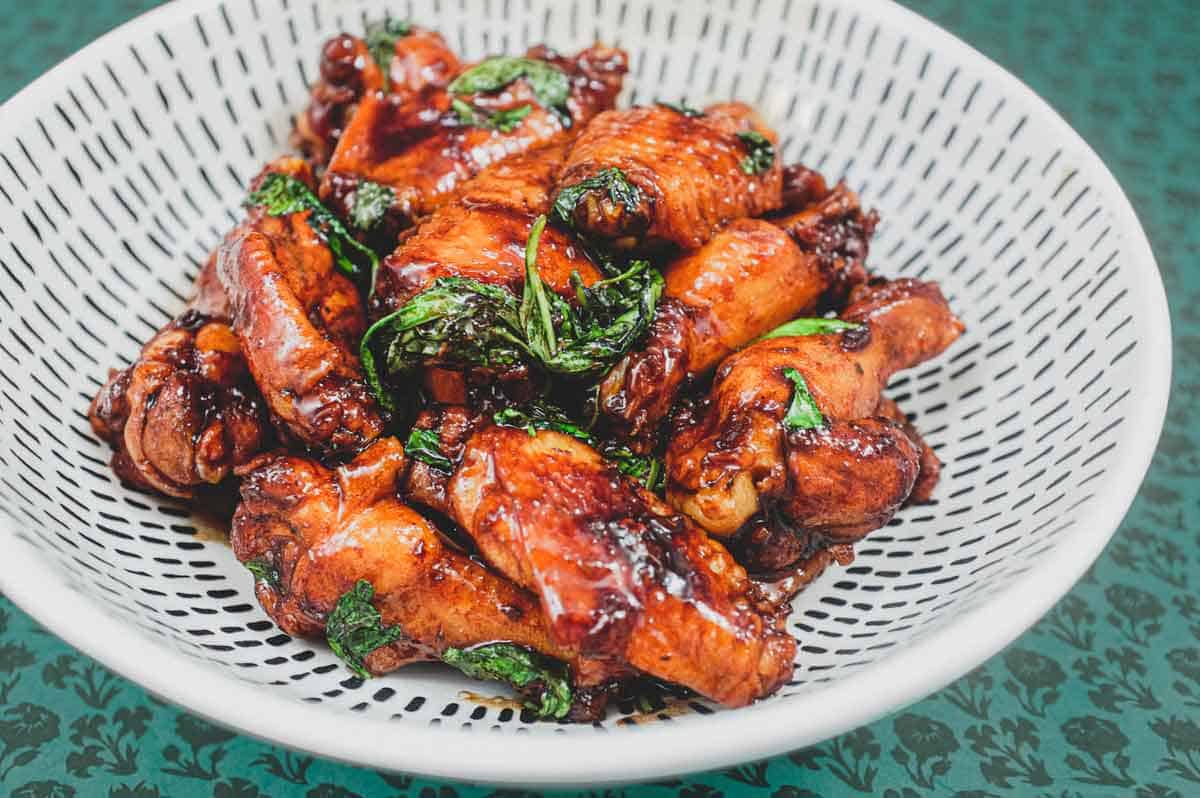
More delicious Taiwanese & Chinese recipes to make at home.
If you liked this san bei ji three cup chicken, then you'll also love more of my Chinese and Taiwanese offerings. Make them all!
Any Questions? (FAQ)
Have a question about San Bei Ji, Three Cup Chicken? Let me know in the comments.
“San Bei Ji” literally translates to “Three Cup Chicken” — referring to the three key ingredients used in the sauce: soy sauce, sesame oil and rice wine.
While the dish has roots in Jiangxi, China, it’s most closely associated with Taiwan, where it’s become a hugely popular and widely recognised classic.
This recipe uses affiliations and may receive a commission based on your activity (link clicks). Learn more.
Ingredients
- 3 tbsp sesame oil (dark, premium quality)
- 6 slices ginger (fresh)
- 6 garlic cloves (peeled and left whole)
- 2 dried red chillies (optional)
- 4 tbsp dark soy sauce
- 1 tbsp light soy sauce
- 1 tbsp brown sugar
- 3 tbsp Shaoxing cooking wine
- pinch white pepper
- 1 bunch Thai basil leaves (removed from stem - stems discarded)
- 2.2 lb Chicken drummettes / wings combined (1kg)
Instructions
- Over a high temperature, heat the sesame oil in a wok or Chinese clay pot until hot. Add the ginger, garlic and chillies and stir fry for 2 minutes.
- Add the chicken and stir fry for another 2-3 minutes to get the pan nice and hot again. Add ½ cup water, the dark soy, light soy, sugar, Shaoxing and pepper and stir well.
- Reduce the heat to low/medium, pop on a lid and let the chicken simmer gently for 20 minutes until cooked through.
- Remove the lid and turn up the heat to reduce the sauce, so that it’s rich, glossy and sticks to the meat. Then remove from the heat.
- Stir in the basil and let it wilt in the hot sauce before serving. Serve hot!
Notes
- Be prepared - Have all your ingredients at the ready, everything happens fast, so have it all at hand to avoid a frenzied search for anything.
- Change the chicken - Substitute chicken wings for thighs or legs. You will need to cook them for longer, so may need to splash in a little extra water. 25-30 minutes should be enough time.
- No Thai Basil? - Instead of Thai basil, use regular basil - you won't get the same fragrant basil experience, but it's pretty damn close.
- Pair it with plain boiled rice for a satisfying meal. I personally enjoy serving it as a delightful addition to a Chinese or Taiwanese feast. Alternatively, it can be served as a finger-licking snack or appetizer, standing alone. Simply place the bowl in the center of the table, and you'll witness it vanish within minutes.
- If you have any leftovers, they can be stored in the refrigerator for 3-4 days. They can be enjoyed either cold or gently heated in the microwave. While it is possible to freeze the leftovers, I would recommend consuming them soon after cooking for the best taste, so freezing may not be the ideal option in this case.
- I have also prepared this recipe using identical ingredients, but instead of cooking it on the stovetop, I opted for the oven method at a temperature of 200ºC/400ºF. To start, I combined all the ingredients, excluding the basil, and poured the mixture onto a baking sheet. I roasted it for approximately 30-40 minutes, turning it a few times throughout, until it achieved a sticky consistency. Finally, I added the basil, mixed it through, and served the dish.
Leave A Comment