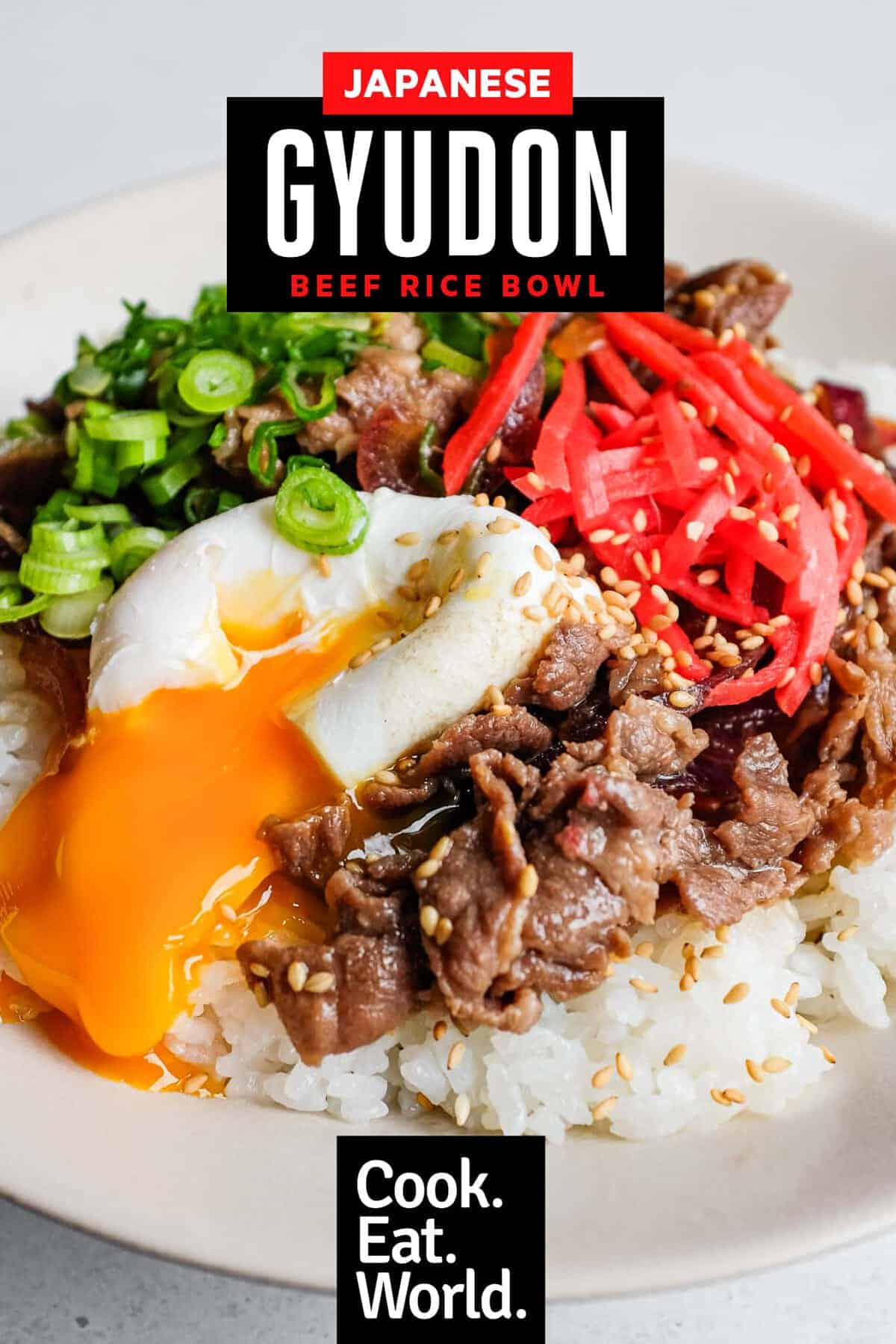

Gyudon (Japanese Beef Rice Bowl)
By Lee Jackson ↣ Published on: November 17, 2026
As Japanese rice bowls go, this beef bowl is one of the tastiest. Paper-thin beef is cooked in the most umami-laden sauce ever. Salty, sweet and savoury, Gyudon is a powerhouse of a dish. Deeply comforting and hearty, it’s my go-to for comfort food all year round.
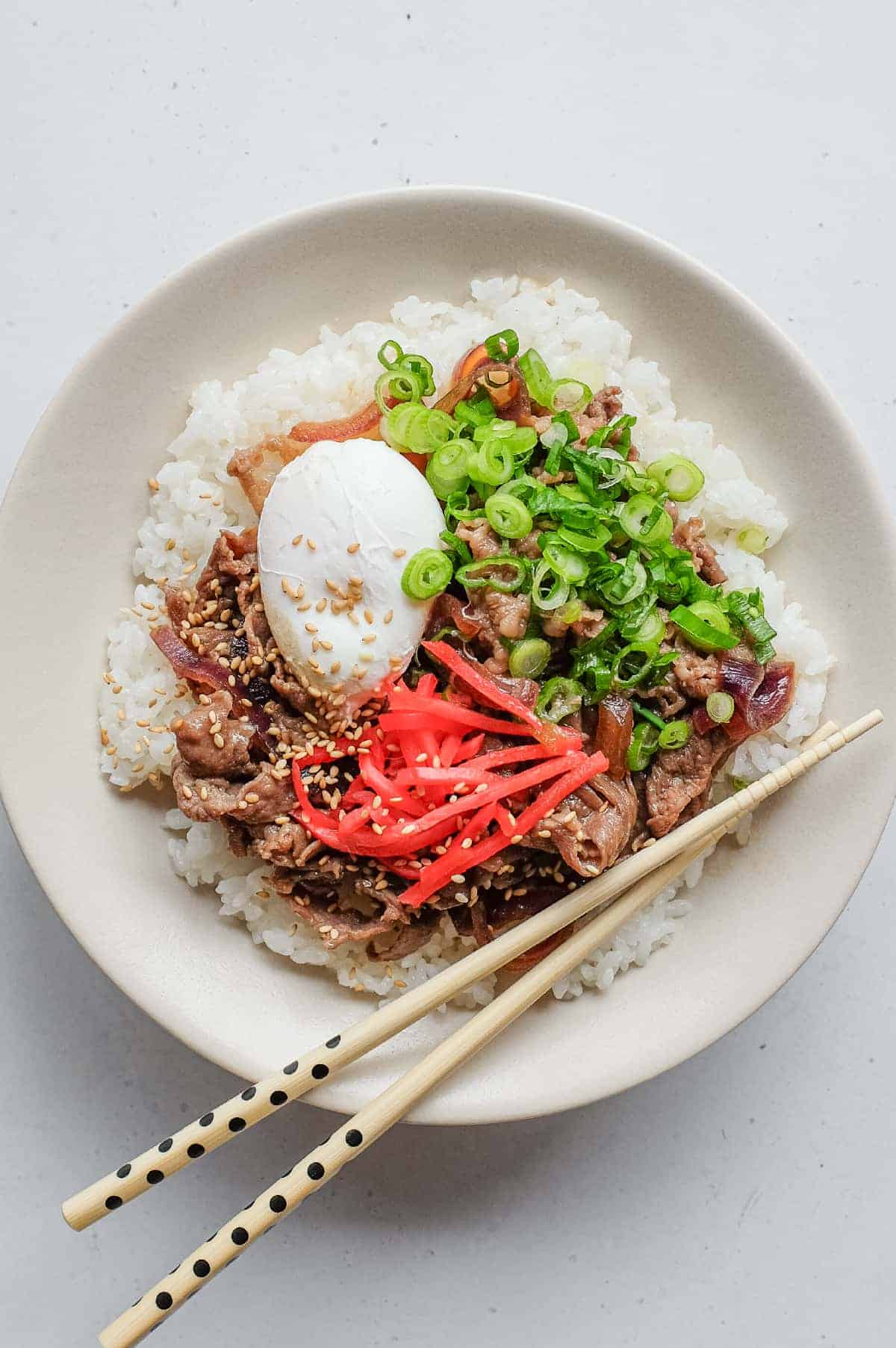
I am a relative newcomer to the delights of the Japanese beef bowl 'Gyudon' - I only learned about it a few years back in Japan where at the airport in Tokyo I sampled my first. I couldn't quite fathom how tasty this unassuming rice bowl turned out to be.
Firstly, the thin beef is the perfect vehicle to soak up as much of the intensely flavourful sweet umami broth. Each mouthful is a burst of flavour, and when combined with the soft rice is just heavenly. Since then, I've experimented with my own recipes and have settled on this one as my best and most authentic to the original.
It's a really simple dish to put together and the perfect contender for a lunch or dinner. It's a regular serving in my household and shares duties with both my Chashu Don (pork) and Katsudon (chicken or pork). There isn't a week that goes by without one or the other being served.
This recipe belongs to my curated Asian Hub, where you'll find many like-minded Japanese recipes.
What's Ahead?
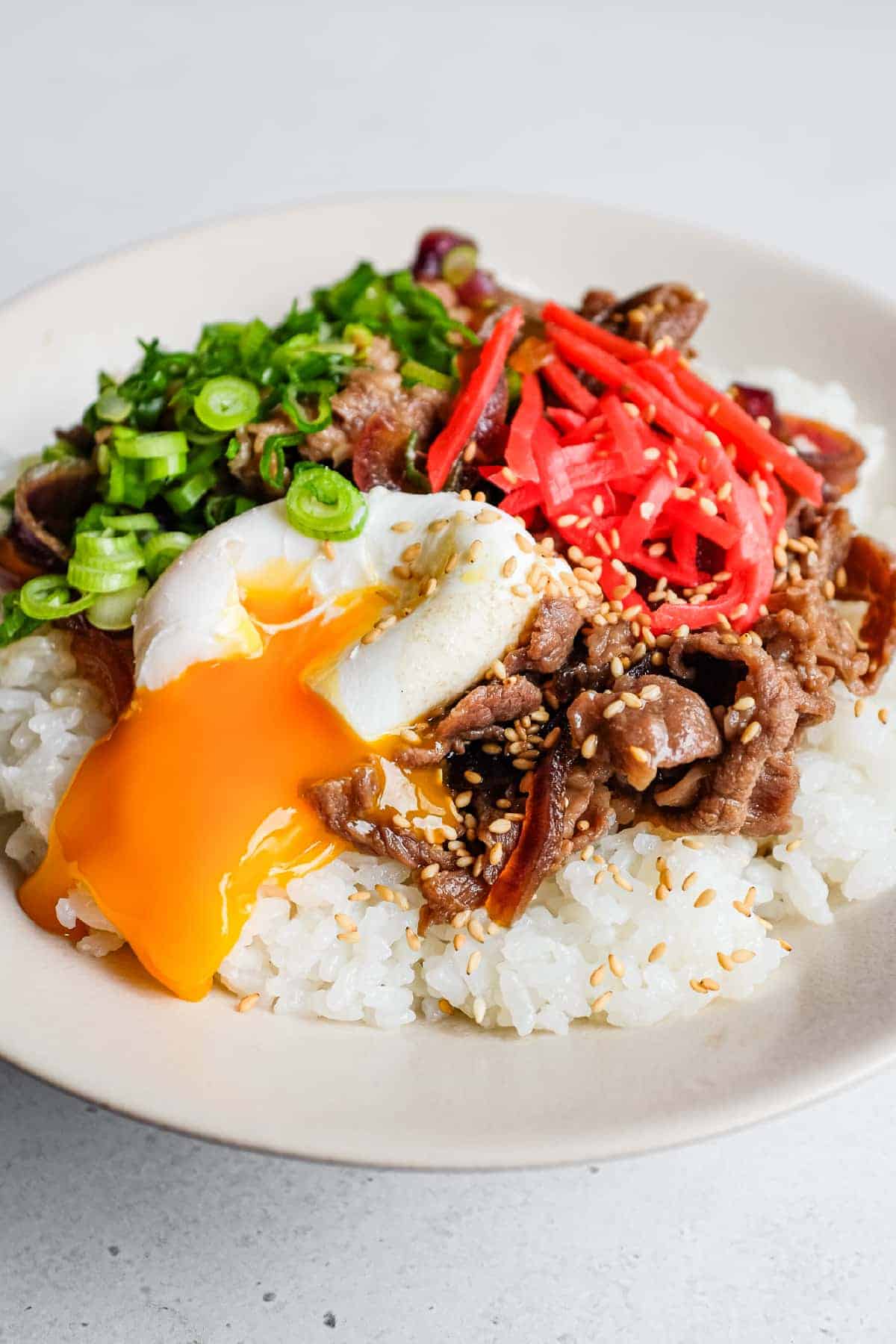
What is Gyudon? (牛丼)
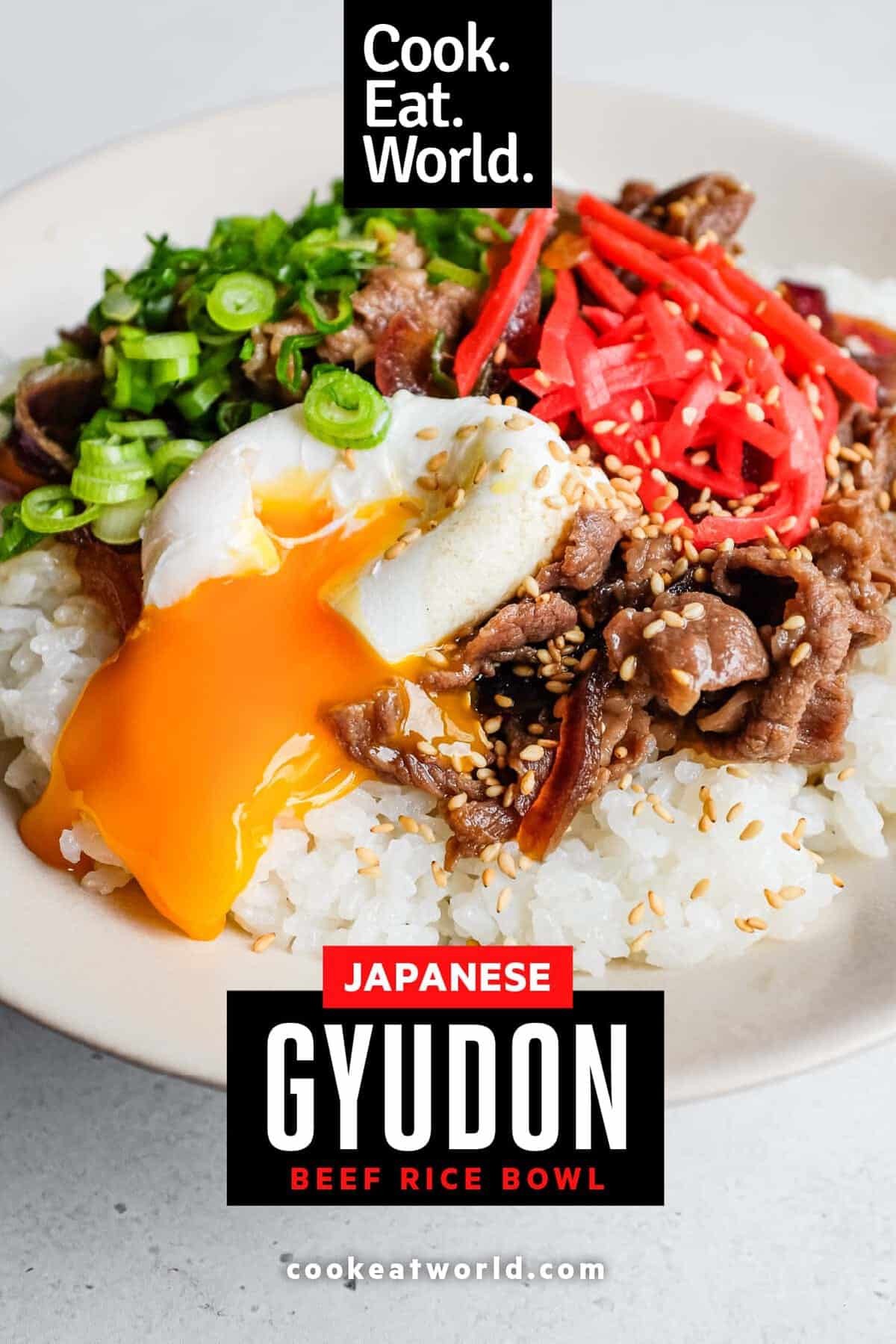
Gyudon (牛丼), meaning "beef bowl", is one of Japan's most popular comfort foods. Thinly sliced beef and onions are gently simmered in a sweet and savoury broth of soy sauce, mirin, sake, sugar and dashi, then served over a bowl of steamed Japanese rice.
It's a simple, everyday meal enjoyed across Japan, from family kitchens to specialist restaurants. Despite its humble appearance, gyudon is packed with rich umami flavour, with the tender beef soaking up the fragrant broth. It's often finished with sliced spring onions, Japanese pickled ginger (beni shoga 紅しょうが) and a poached egg, soft egg or raw egg yolk.
Why You'll Love it
- It's quick and easy - this is one of the easiest Japanese rice bowls to put together. It's a simple braising sauce made up of store cupboard items that the beef gently simmers in.
- It's authentically tasty - the dish is exactly how I ate it in Japan - sweet, savoury and umami!
- Comfort food to the rescue - this will warm and nourish any time you want a hearty hug in a bowl.
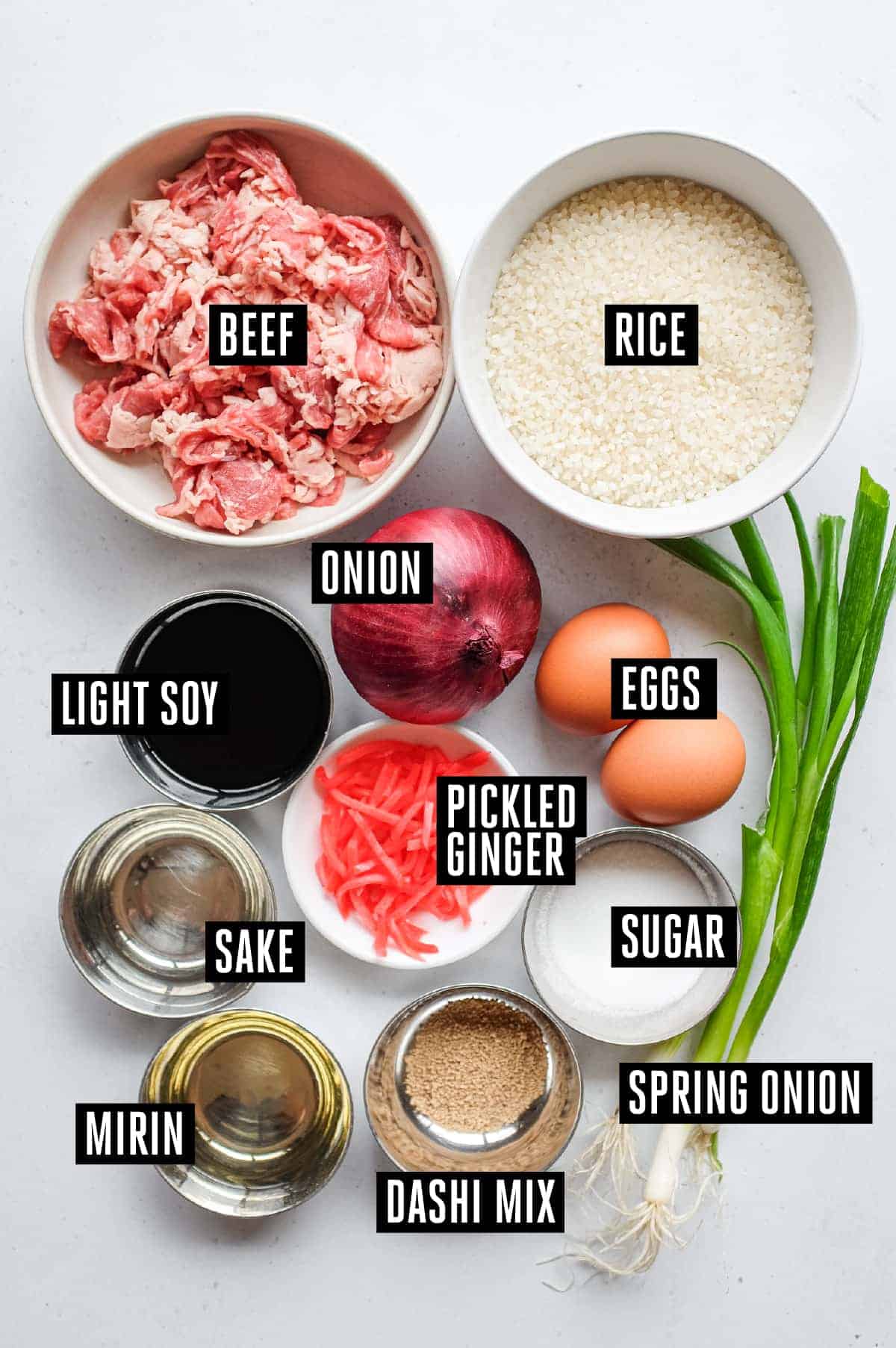
Ingredients You'll Need
My recipe keeps things simple, while adding all that Japanese flavour required for the perfect gyudon bowl. Here's what goes into my delicious recipe.
- Thin beef - this is essential for any good gyudon. If you can't find any, see my guide to making your own at home below.
- Broth - the broth is made up of Japanese pantry staples; light soy sauce, cooking sake, mirin, sugar, and dashi mix (Instant Japanese stock seasoning made from bonito and kombu)
- Onion - red or brown/yellow onion brings a little sweetness to the sauce
- Rice - a short grain Japanese rice is best
- Garnishes - spring onion, egg and pickled ginger (beni shoga)
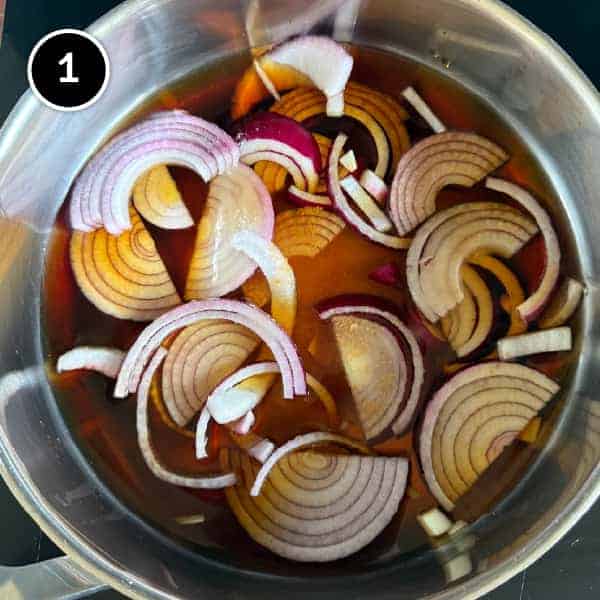
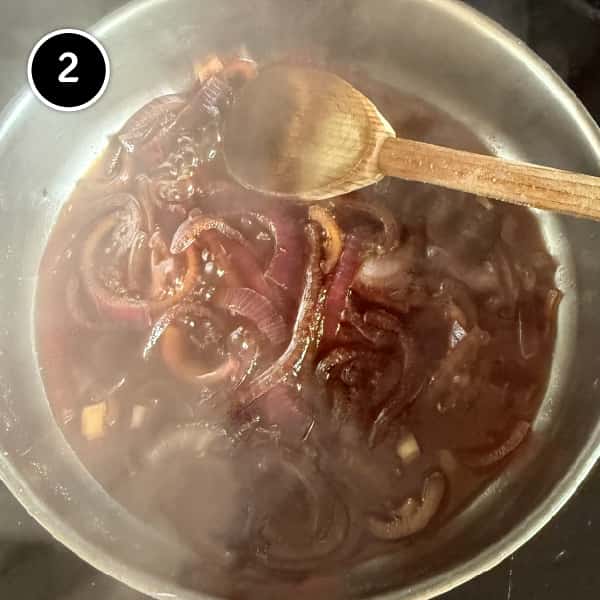
Step by Step
Here's how simple gyudon is to make yourself at home. First things first, cook your rice and have it waiting in the pan/rice cooker while you prepare the beef.
- Step 1 - Mix together the soy, mirin, sake, sugar and dashi mix with around a cup of water and pour into a pan. Halve the onion and cut into thick slices (2cm). Turn on the heat and bring to a simmer.
- Step 2 - Reduce the heat to low and simmer for around 10 minutes.
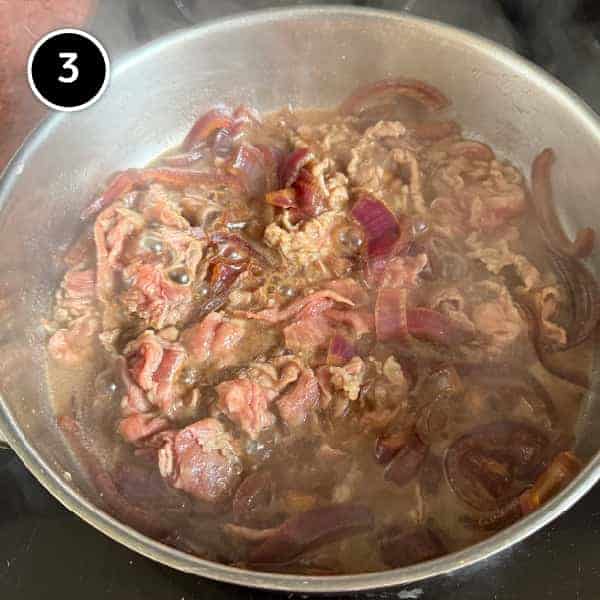
- Step 3 - Add the beef and cook for around 4-5 minutes until fully cooked. While the beef is simmering, poach your eggs for 3-4 minutes.
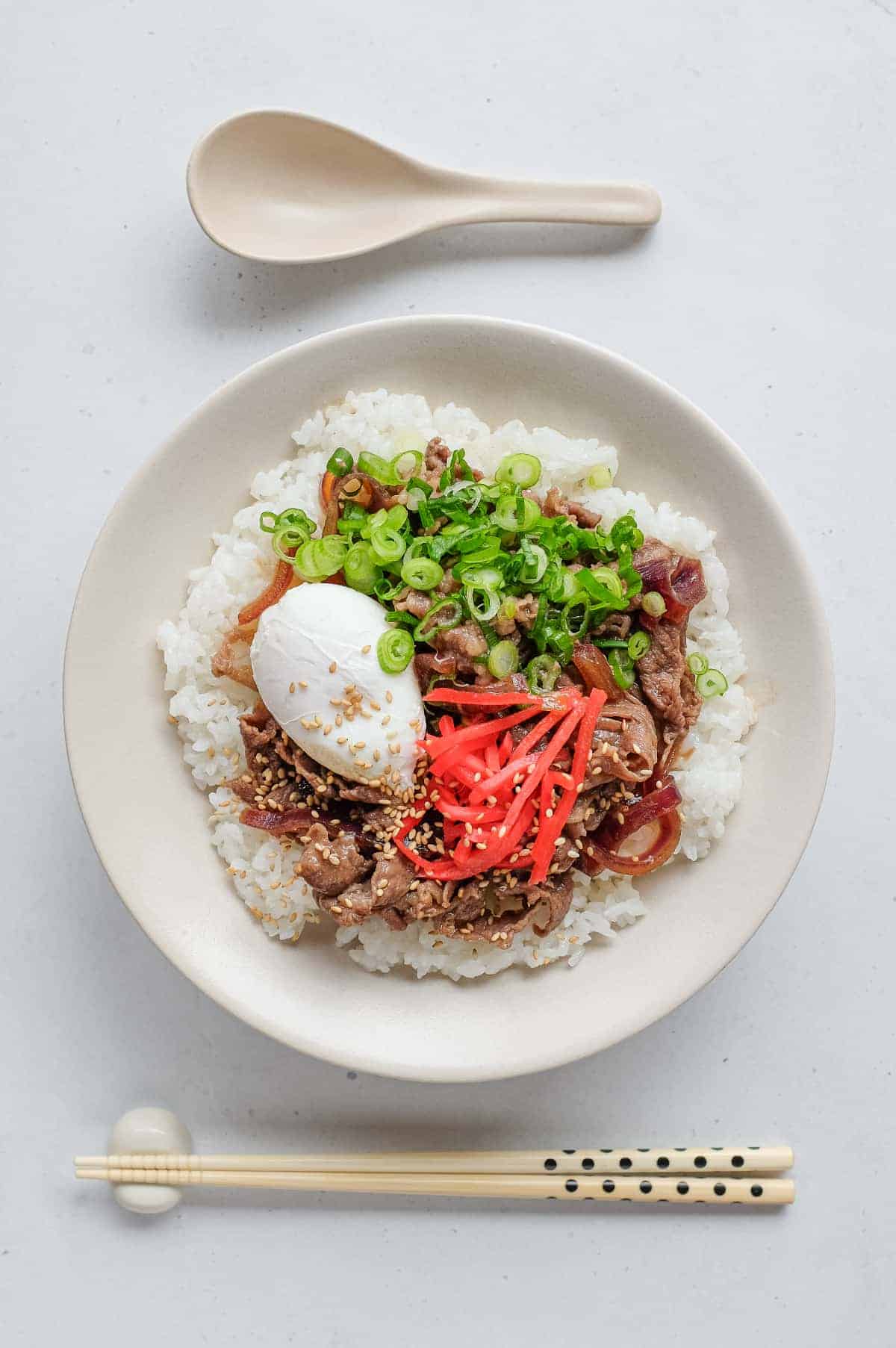
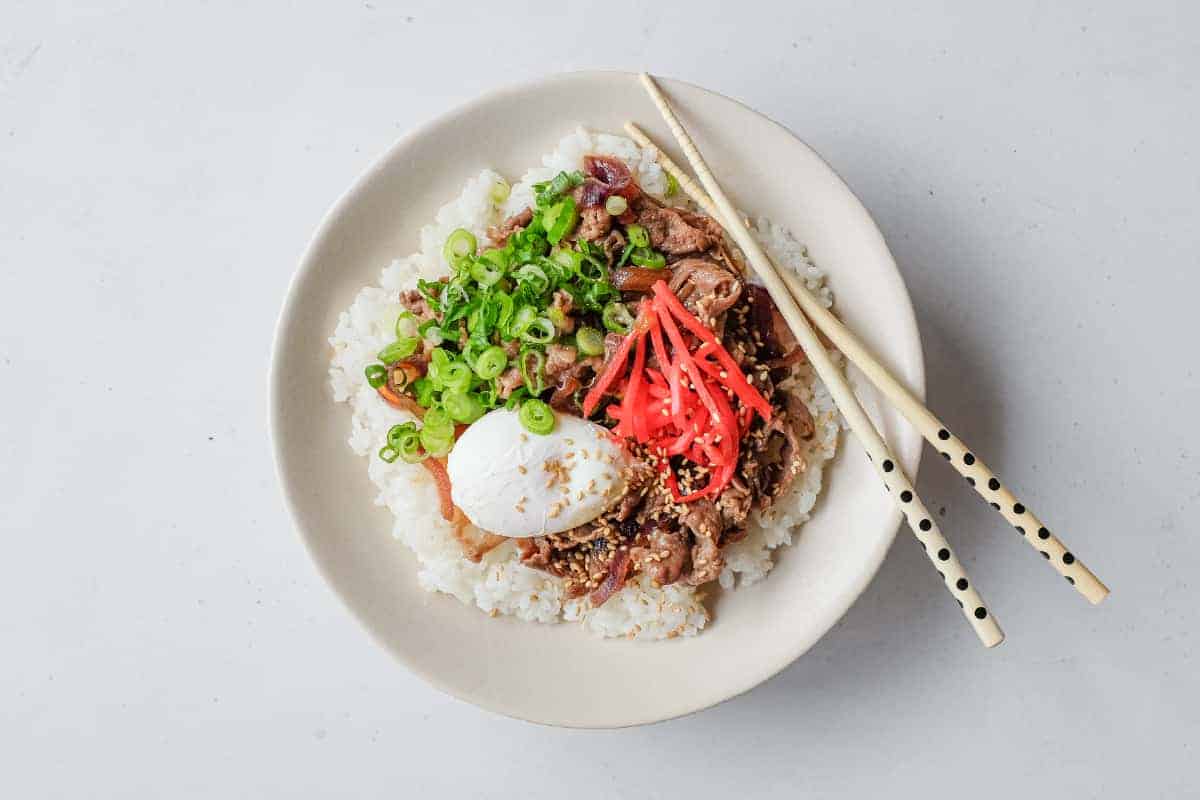
Now it's a matter of assembly. Make a bed of rice and top with some beef and sauce. Garnish with the spring onion and pickled ginger and finally the poached egg. Serve immediately.
Pro Tips - Things I've learned
- Thinly sliced beef - I've found that Korean stores are more likely to stock the thinly sliced beef that you'll need for this recipe - fresh or frozen is fine. That said, I've also found it at my local supermarket. Just keep your eyes peeled.
- Making your own thin beef slices at home - If you can't find shaved beef, buy a small piece of brisket and place in the freezer for 1 hour to firm up. Then, using a chef's knife, cut slices as thin as you can. If they're still too thick, use a mallet or rolling pin to gently flatten the slices between pieces of plastic wrap. You're looking for 2-3mm thickness.
- Eggs - I prefer poached for this recipe, but sunny-side up fried eggs are fine too. If you want to be super Japanese about things, use a raw egg yolk instead.
Serving & Storage Suggestions
I like to serve my beef rice bowl with some fragrant spring onion/scallions, finely sliced, some Japanese pickled ginger 'beni shoga', and an egg. It's a self-contained meal in a bowl.
- For leftovers, it's best to store then reheat the beef and rice separately (without garnishes) so you'll have the best texture. 3 days in the fridge, 3+ months in the freezer.
- Meal prep - This is a great option for meal prep (refrigerated for up to 3 days) and can be eaten cold or reheated in the microwave (without the garnishes). I wouldn't recommend freezing meal-prep for gyudon.
Ready to get cooking?
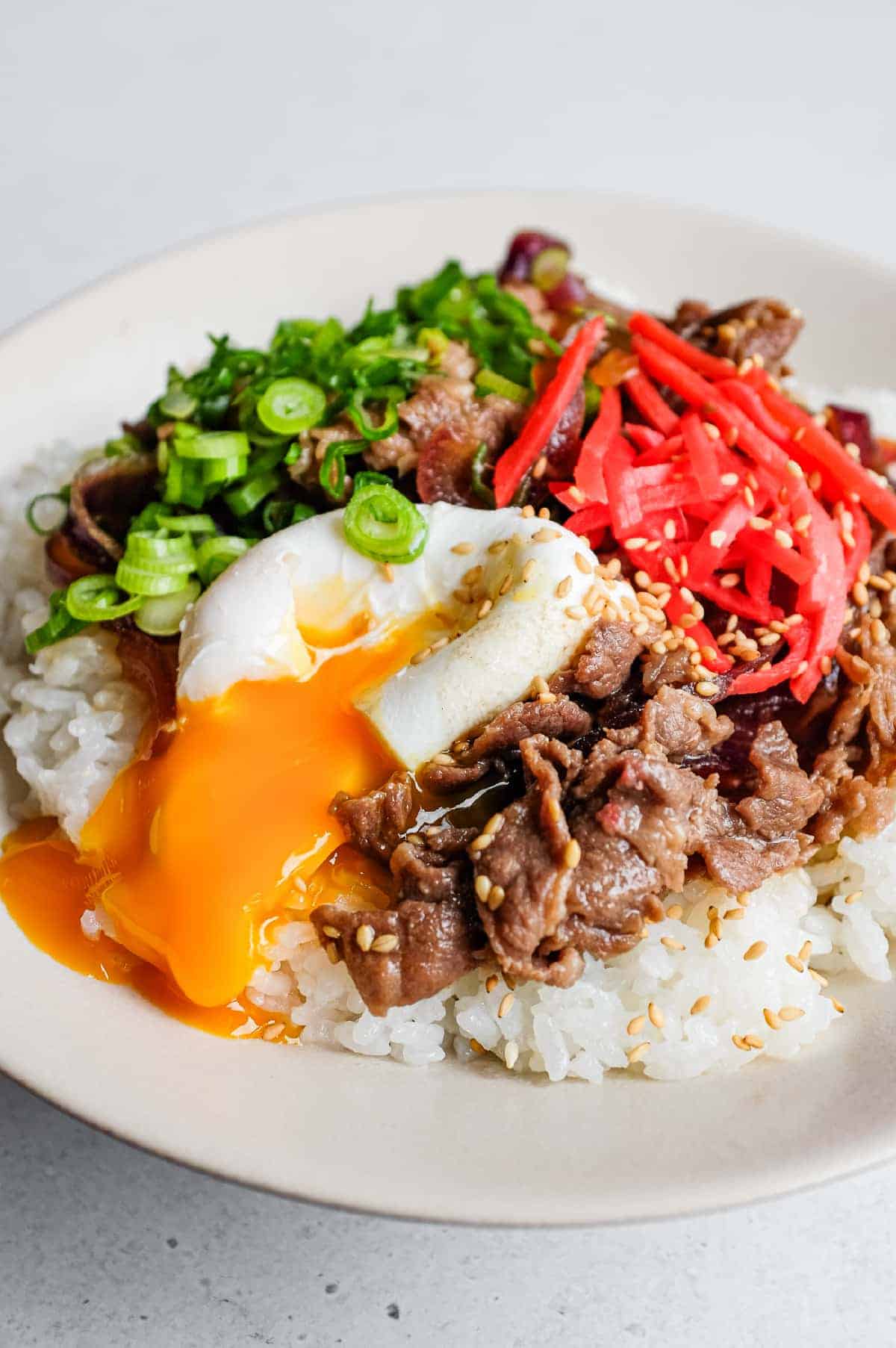
Gyudon is one of those dishes I return to again and again because it's just so unassuming yet satisfying. It never fails to amaze me just how much flavour it has and lots of interesting textures too. It's definitely one of my favourite comfort food dishes of any cuisine and a worthy member of my 'World of Flavour', the recipes that shape the way I cook (and eat). I hope you enjoy as much as I do.
More Japanese recipes
If you liked this recipe, I'm sure you'll love more of my favourite Japanese recipes.
FAQ
Have a question? Let me know in the comments.
What cut of beef is best for gyudon?
Thinly sliced beef chuck, brisket or ribeye are all excellent choices. The key is slicing the meat very thinly (around 2–3mm) so it cooks in just a few minutes and absorbs the sweet, savoury broth. If you can't find pre-sliced beef, partially freeze a piece of beef before slicing it yourself.
What's the difference between gyudon and sukiyaki?
Both dishes use beef simmered in a sweet soy-based sauce, but gyudon is a simple everyday rice bowl served over steamed rice. Sukiyaki is a shared hot pot meal that usually includes tofu, mushrooms, vegetables and noodles, with diners cooking ingredients at the table.
Can I make gyudon without dashi?
Yes. Dashi gives gyudon its signature depth of flavour, but you can substitute a light beef or chicken stock if needed. The result won't be quite as authentic, but it will still be delicious thanks to the soy sauce, mirin and sake.
What toppings are traditionally served with gyudon?
Classic gyudon is often finished with sliced spring onions and Japanese pickled ginger (beni shoga). Many people also add a poached egg, soft-cooked egg, onsen egg or simply a raw egg yolk, which melts into the hot beef and rice to create an even richer dish.
Is gyudon healthy?
Gyudon can be a balanced meal when enjoyed as part of a varied diet. It provides protein from the beef, carbohydrates from the rice and can easily be paired with vegetables or a bowl of miso soup. Choosing lean beef and serving with plenty of spring onions or other vegetables makes it an even lighter option.
This recipe uses affiliations and may receive a commission based on your activity (link clicks). Learn more.
Ingredients
- ¼ cup light soy sauce
- ¼ cup mirin
- ¼ cup cooking sake
- 1 tbsp dashi granules
- 2 tbsp sugar
- 1 medium onion halved and sliced
- 250 g thin beef slices roughly cut or torn into pieces
- 1 cup rice 200g
- 2 spring onion finely sliced
- 2 tsp pickled ginger beni shoga
- 2 eggs poached or fried
- Sesame seeds for garnish, (optional)
Instructions
- Cook the rice and keep warm
- While the rice cooks, mix together the soy sauce, mirin, cooking sake, dashi, sugar and 1 cup water. Add the sliced onion to a pan and pour over the liquid.
- Turn on the heat and let it come to a boil. Reduce the heat to medium/low and simmer gently for 10 minutes.
- Add the beef and pop on a lid. Let this simmer for 4 minutes until just cooked through then remove from the heat.
- Arrange rice in a bowl and then top with some beef and a little of the cooking liquid.
- Garnish with an egg, spring onion, pickled ginger and sesame seeds (if using).
Notes
- If you can't find thinly sliced beef, partially freeze a piece of brisket or chuck for about an hour before slicing it as thinly as possible. Gently flatten thicker slices with a rolling pin if needed.
- Don't overcook the beef. Thin slices only need around 4 minutes to become tender while soaking up all the flavour from the broth.
- Cook Japanese short-grain rice while you prepare the beef so everything is ready at the same time.
- A poached egg, sunny-side up egg or even a raw egg yolk are all authentic toppings that add richness to the bowl.
- Leftover beef keeps well in the fridge for up to 3 days or in the freezer for 3 months. Reheat gently and serve with freshly cooked rice for the best texture.
Leave A Comment