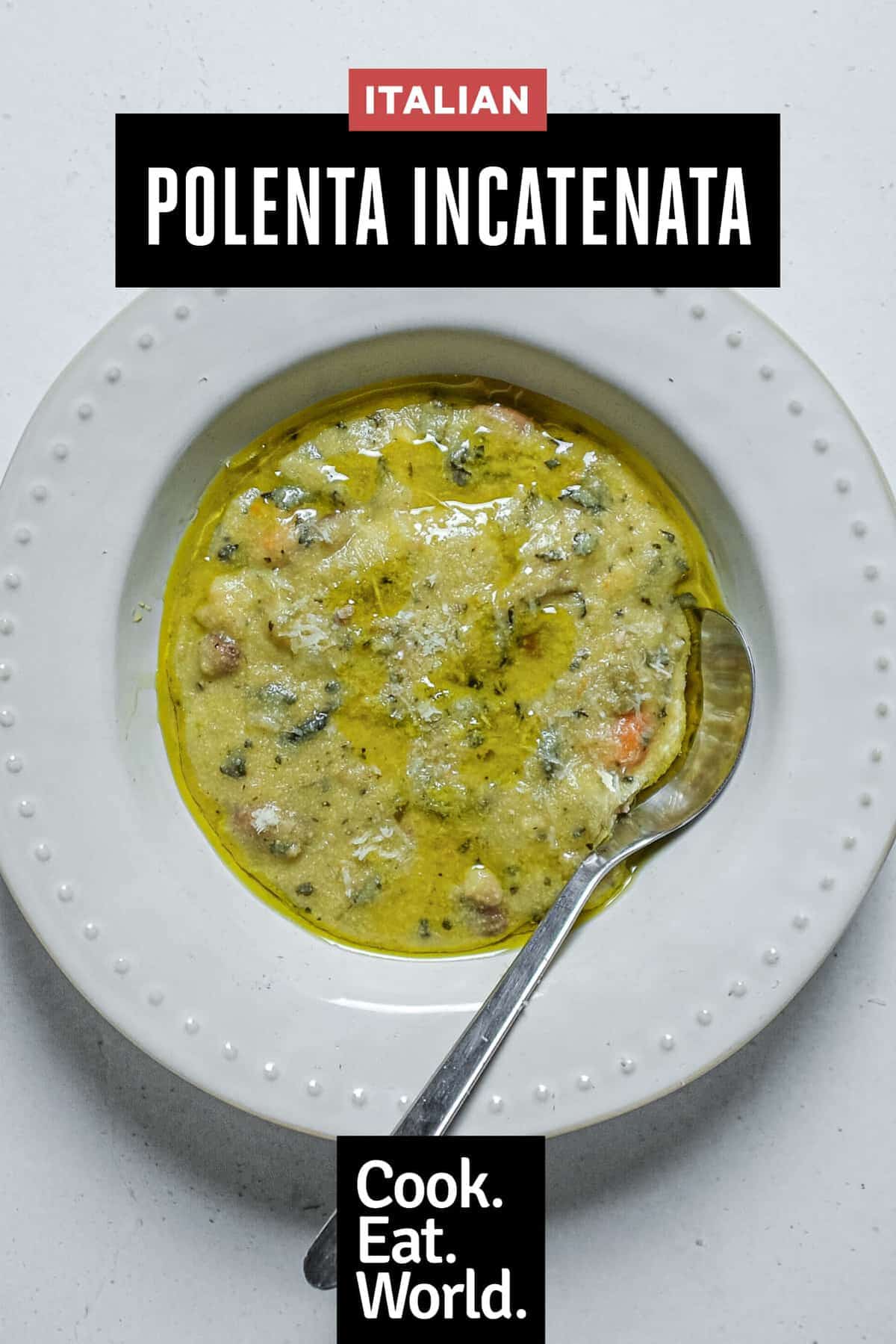
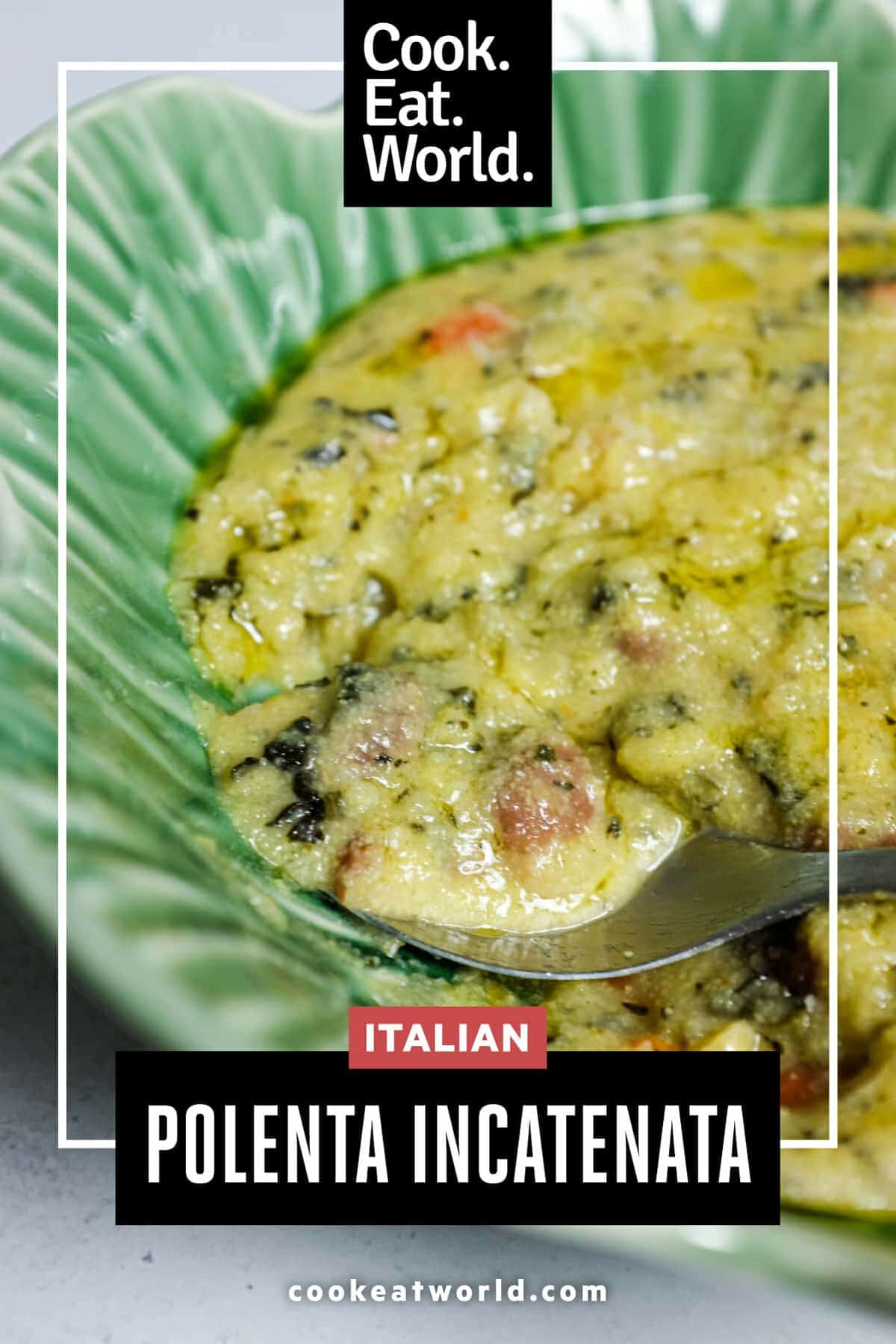
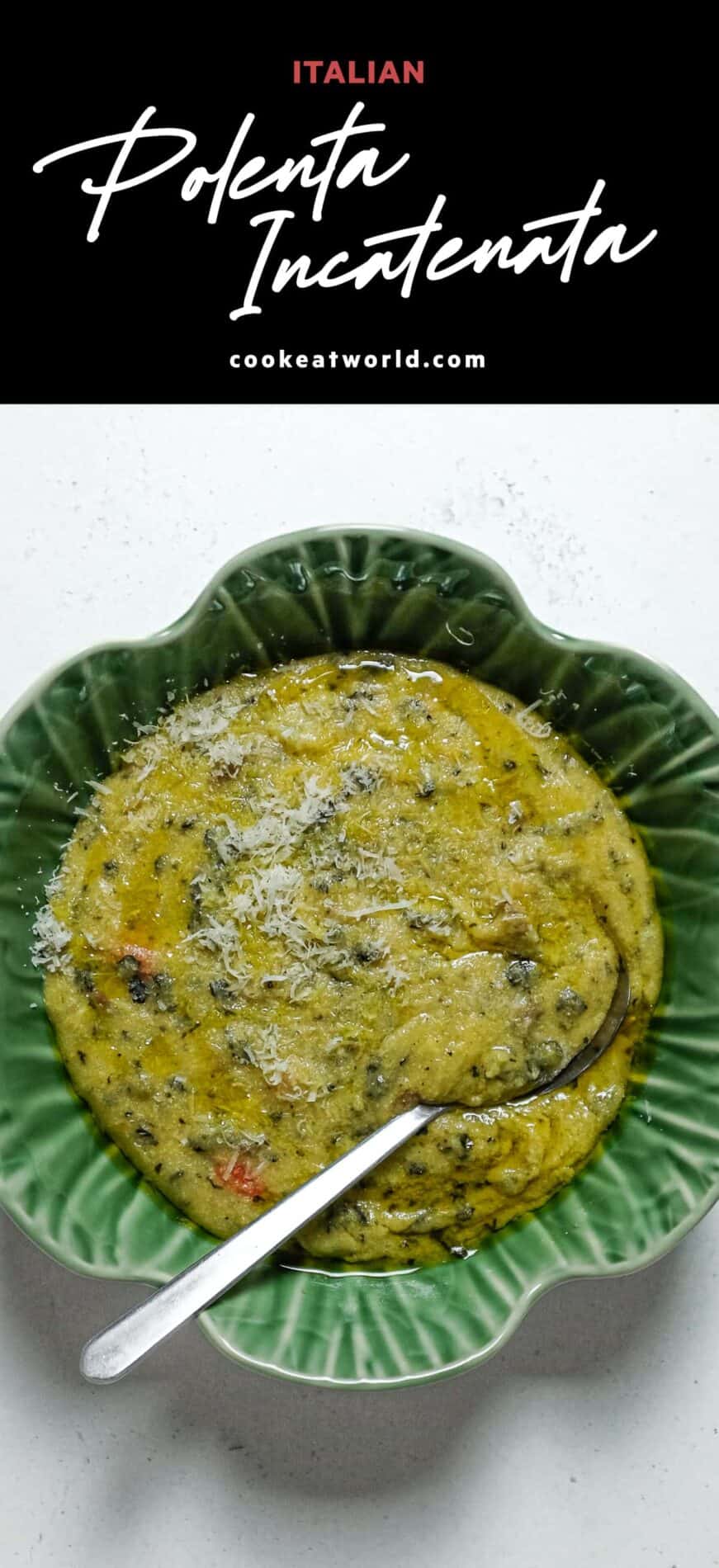

Polenta Incatenata
By Lee Jackson ↣ Published on: November 10, 2026
Polenta Incatenata is a hearty Tuscan classic that combines creamy polenta, tender beans and cavolo nero into one comforting dish. A perfect example of Italian cucina povera, it’s humble, rustic cooking at its very best.
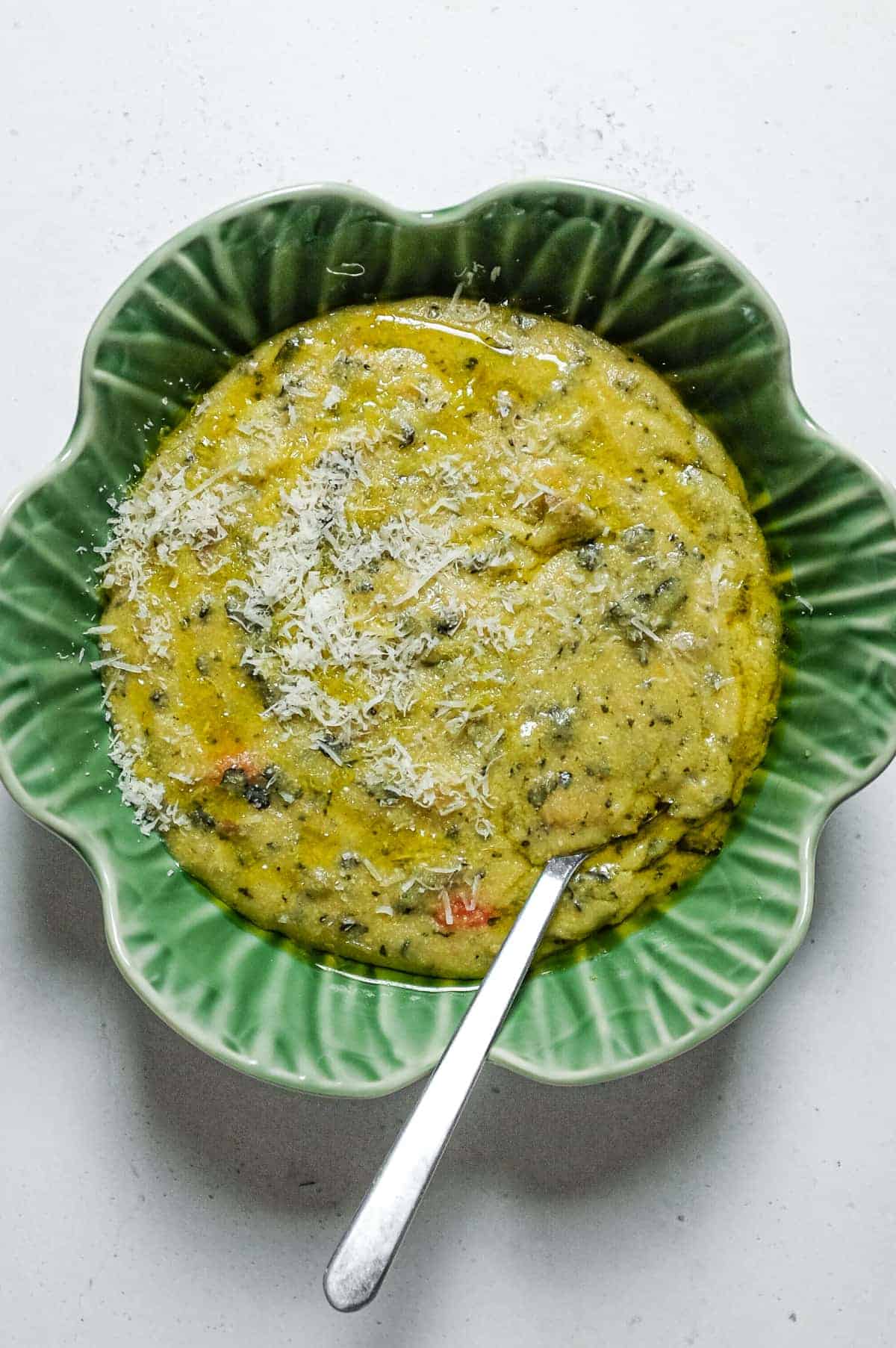
I love polenta at the best of times, but I especially love a softer porridge-like polenta. It's the perfect side dish, appetiser or indeed meal on its own. When I first tasted this Tuscan recipe I couldn't quite believe how delicious it was. That was back in 2012, and I've been cooking my own version of this classic recipe ever since.
I love to visit Italy in the wintertime, fewer tourists and a whole new menu of tasty treats you won't find in the summer season. Tuscany's cuisine is hearty, rustic and of course delicious, so when I first sampled Polenta Incatenata at a trattoria in a town called Massa on the border of Tuscany and Liguria - I was astonished at a) how delicious it was and b) how full of food a human can feel after just one bowl!
If I remember rightly, mine was served with some kind of pork stew (a mere spoonful), but it was the polenta itself that was framed as the star attraction. And rightly so.
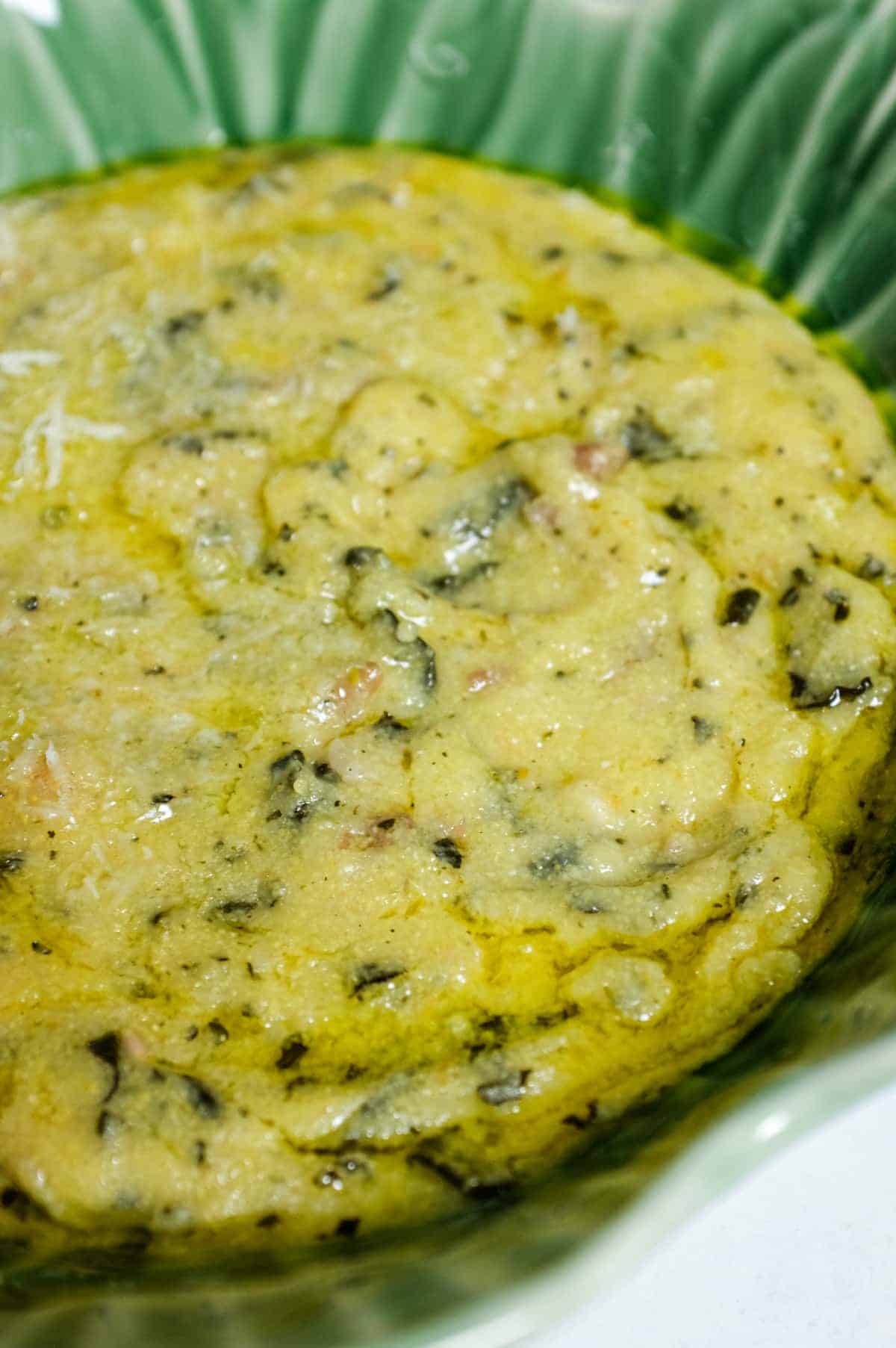
The rich creaminess of the corn polenta combined with potatoes, beans and leafy greens made for a textural sensation - it was cheesy, buttery and just plain delicious. I remember panicking and thinking 'I can't possibly finish this bowl', but at the same time being unable to stop. Greed obviously took over and I polished it off, but was groaningly full. To this day, that dish has stayed with me — I cook it every autumn or winter at least once, usually on its own without any meat and operate an open-house situation where a bunch of people magically and conveniently show up when they know it's on the menu.
What's Ahead?
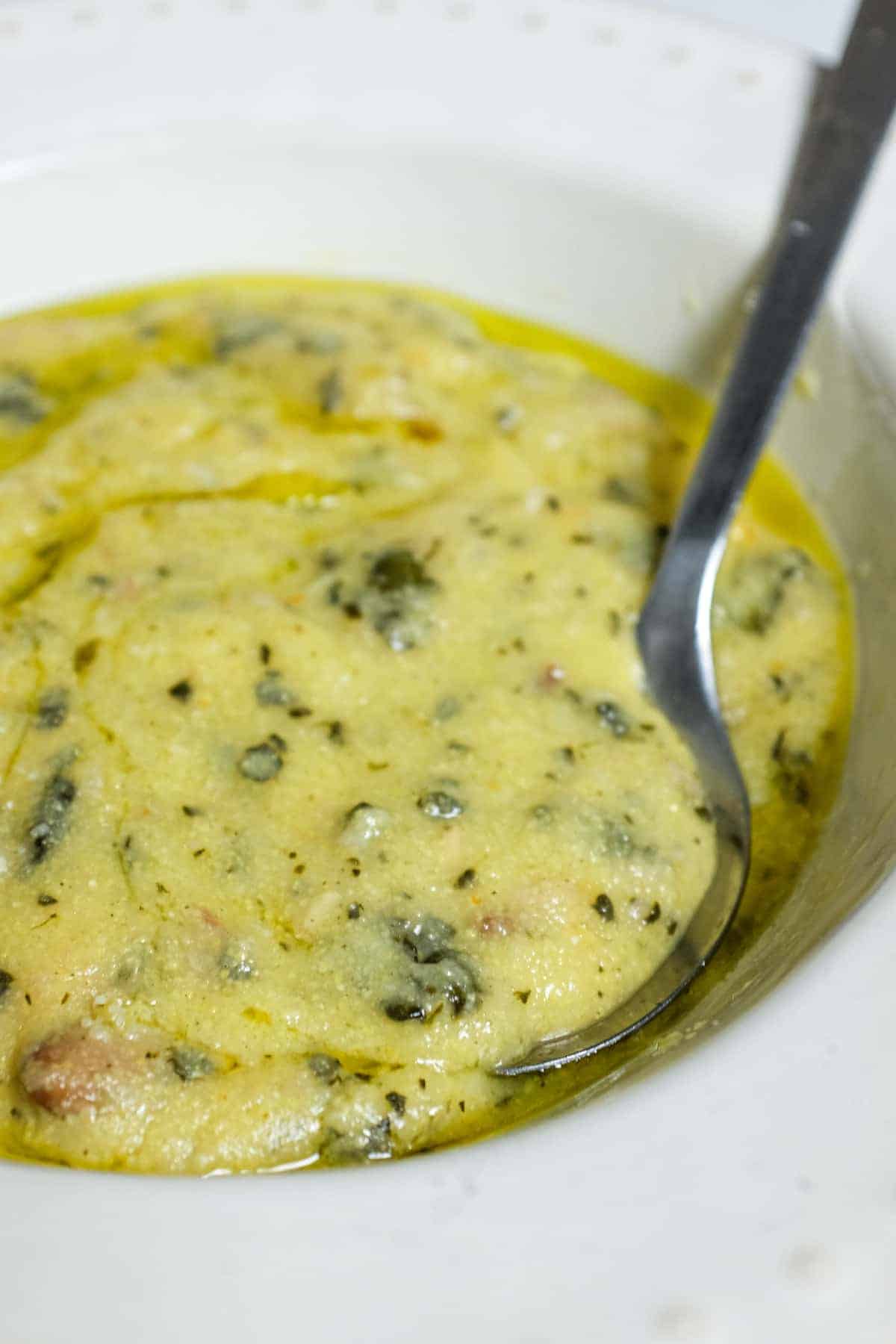
What is Tuscan Polenta Incatenata?
Polenta Incatenata is a traditional Tuscan dish from northwestern Italy, particularly associated with the areas around Lunigiana and Garfagnana. It's a hearty combination of creamy polenta, tender beans and leafy greens, typically cavolo nero (Tuscan kale), cabbage or Swiss chard.
The word incatenata translates as 'chained' or 'linked together', referring to the way the ingredients are bound together by the thick polenta.
A classic example of Italian cucina povera (peasant cooking), this humble dish transforms inexpensive, everyday ingredients into something special. Traditionally enjoyed during the colder months, it can be served as a meal in its own right or alongside grilled sausages and other hearty meat dishes.
Why You'll Love it
- It's a one-pot self-contained recipe - All the magic happens in one large pot, coming together as a thick, homogeneous mass of flavour. Like a creamy mashed potato.
- It's vegetarian - My veggie friends have been some of the loudest fans of polenta incatenata, it's packed with vegetables and can easily be made vegan by using oil instead of butter.
- It's a crowd pleaser - last winter I hauled a pot of this to a family get together and it fed at least 15 people as a small appetiser.
- It's versatile - you can easily switch up ingredients or serve it as a side dish, appetiser or main course.
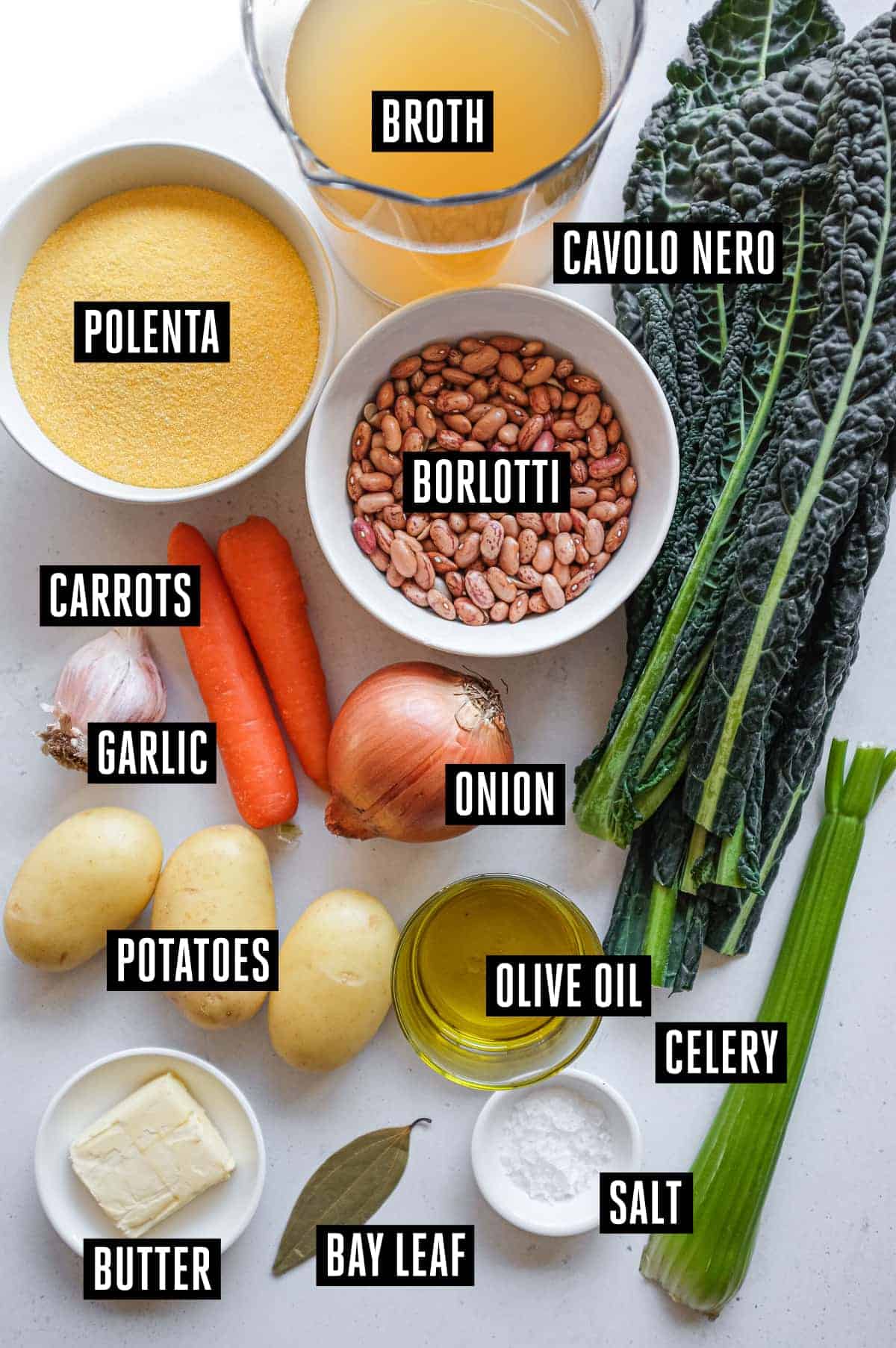
Ingredients You'll Need
There are no hard to find ingredients for this recipe - I have most of these hanging around all the time, so can make it without any fuss. You can use dried beans, or canned too for ease.
- Beans - I typically use borlotti beans (cranberry), or cannellini or butter on occasion.
- Polenta - I use fine polenta for the best texture. Use regular polenta and not the 'quick-cook' variety.
- Carrots, onion, celery and garlic - form the backbone of flavour to the dish - a classic combination.
- Potatoes - add a little more heft to the dish. They mostly break up during cooking, but you'll still encounter a few creamy bites.
- Cavolo nero - Tuscan kale as it's also known is the most used leafy green and it's flecked throughout the finished dish.
- Bay leaf - this is the only herb I use in my recipe, but you can also add fresh rosemary, sage, oregano or marjoram to add to the fragrance.
- Broth - I use vegetable broth, but if I know there are no vegetarians, I'll use chicken broth on occasion too.
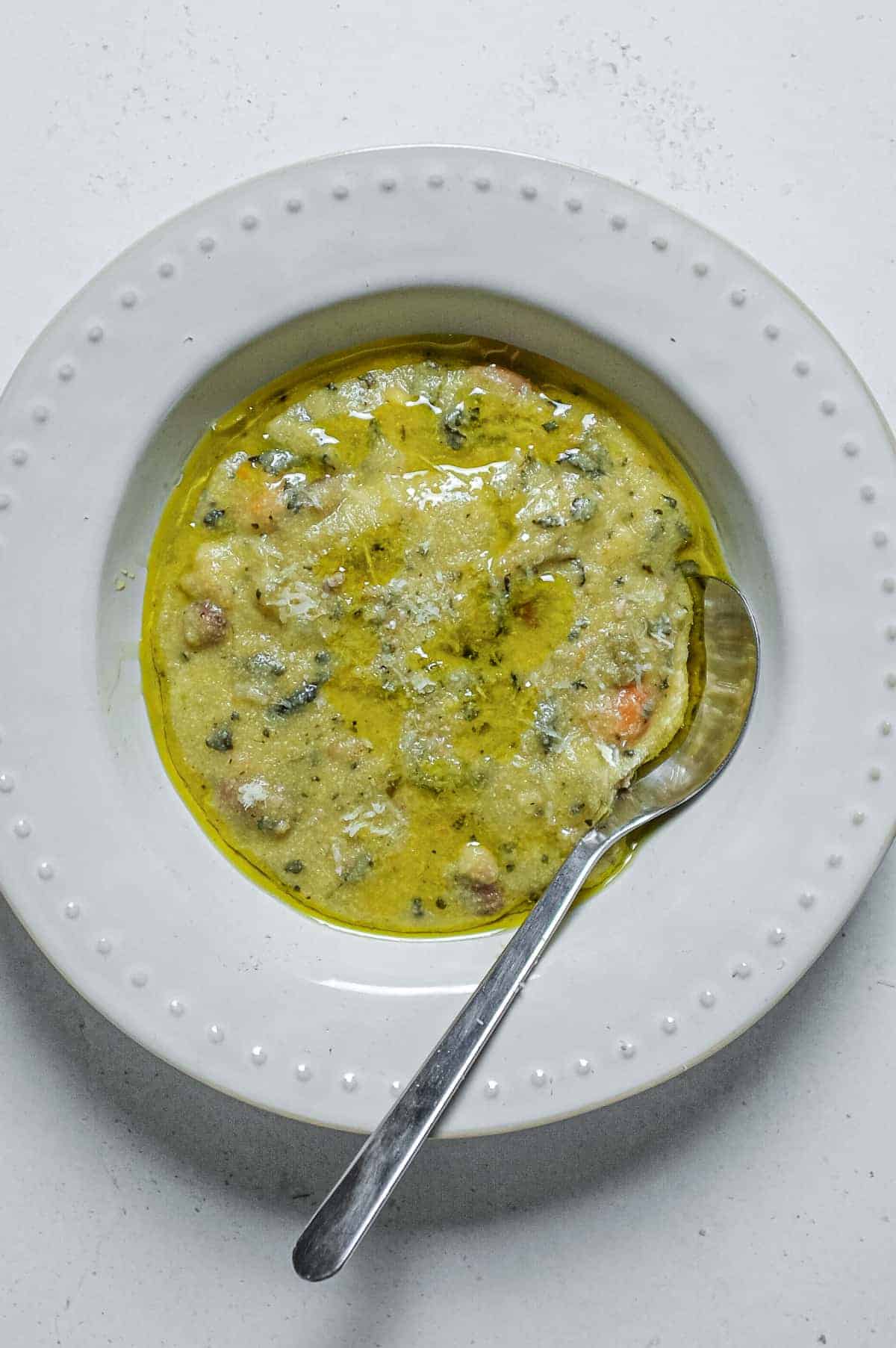
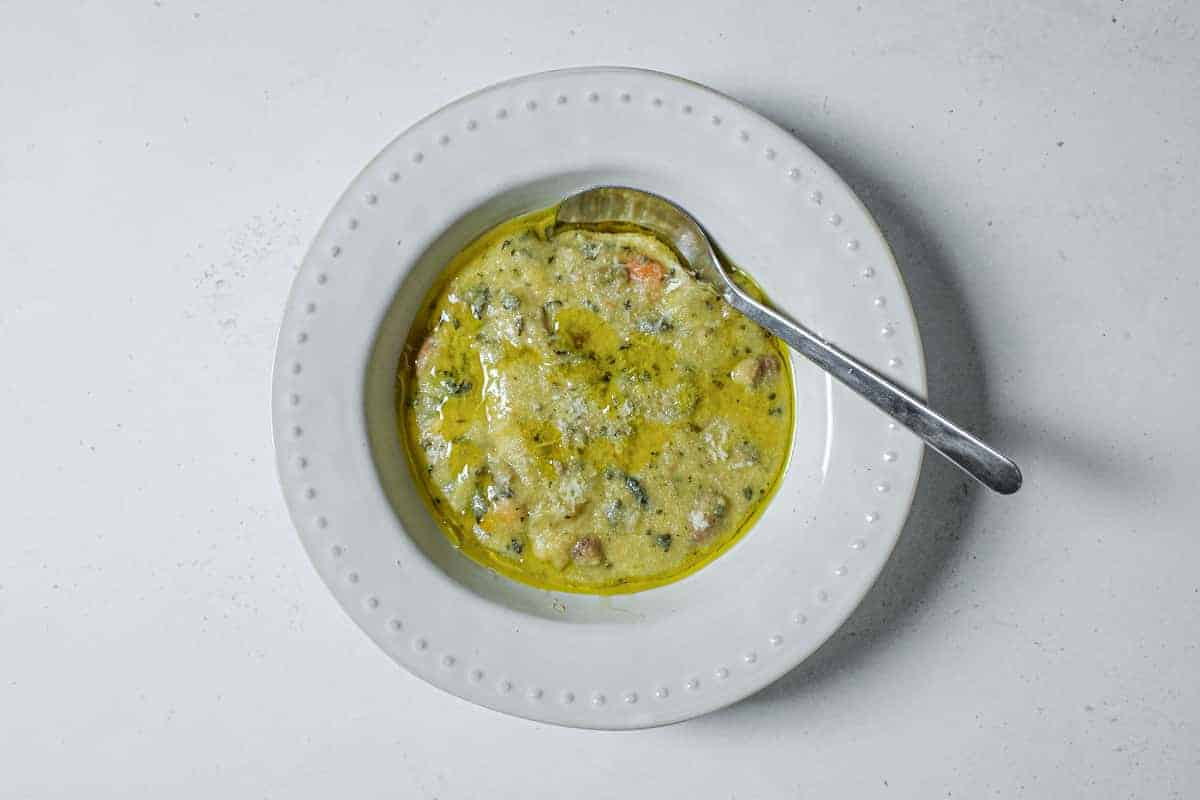
- Butter and cheese - Although not completely essential (officially), a nice dollop of butter beaten into the polenta at the end gives a splendid texture and taste. And I love to finish a bowl with a healthy covering of finely grated Parmigiano Reggiano cheese and a hearty glug of extra virgin olive oil.
Step by Step
Making polenta incatenata is not difficult, but it does require your presence around the pot. Polenta has a tendency to catch on the bottom of the pan, so you need to dutifully stir to ensure it doesn't burn.
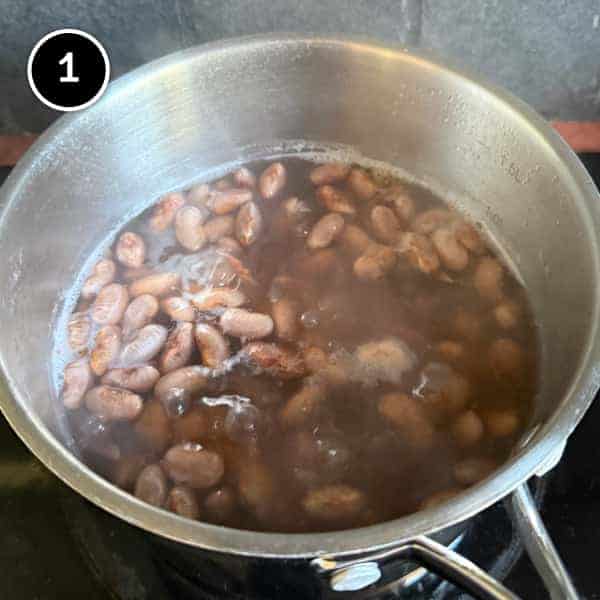
- Prepare the beans - Soak the beans for 12 hours in plenty of cold water, then drain and cook for 45-60 minutes in more cold water until cooked, then drain. If you're using canned beans, you can obviously skip this step and save yourself 13 hours by draining a couple of cans of beans!
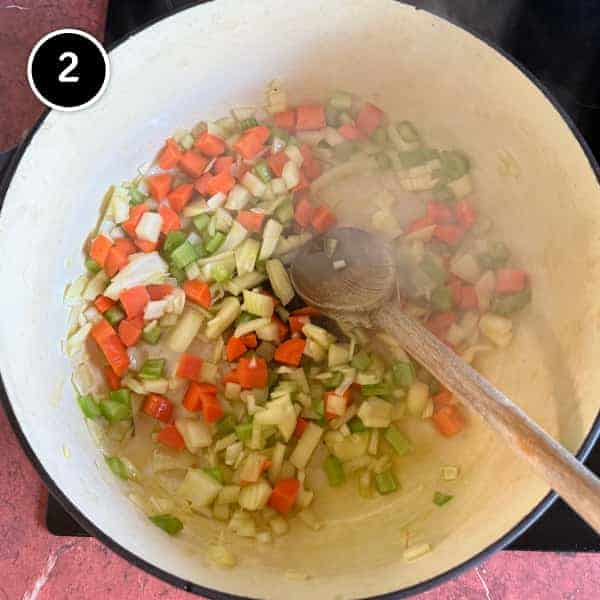
- Sauté the vegetables - In a little oil, gently fry the onion, celery, carrot, bay leaf and garlic for a few minutes until soft,
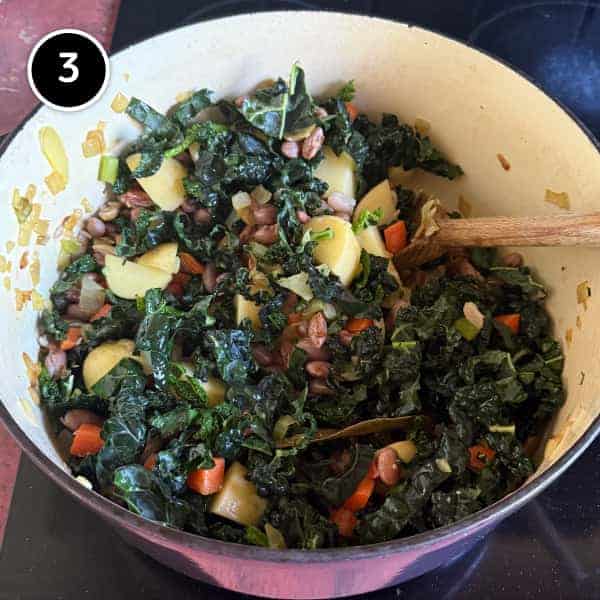
- Add the vegetables and beans - strip the cavolo nero from its stems and add to the pot along with the beans and cubed potatoes. Sauté for a few minutes until the cabbage is wilted.
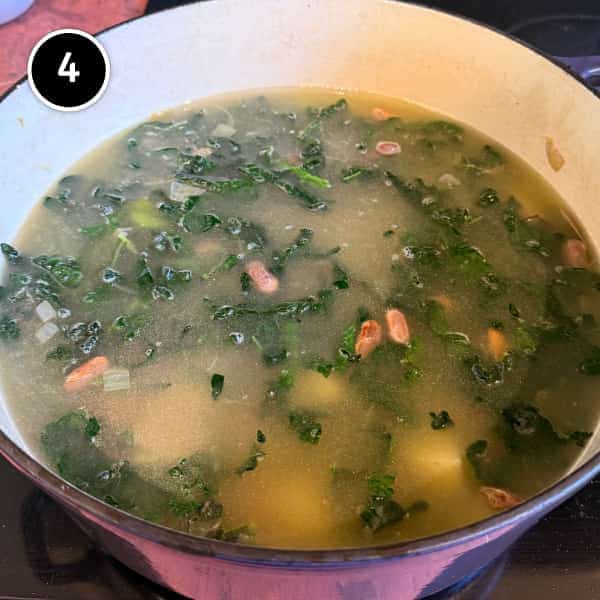
- Add the vegetable broth and 1.5 litres of water and bring to a simmer.
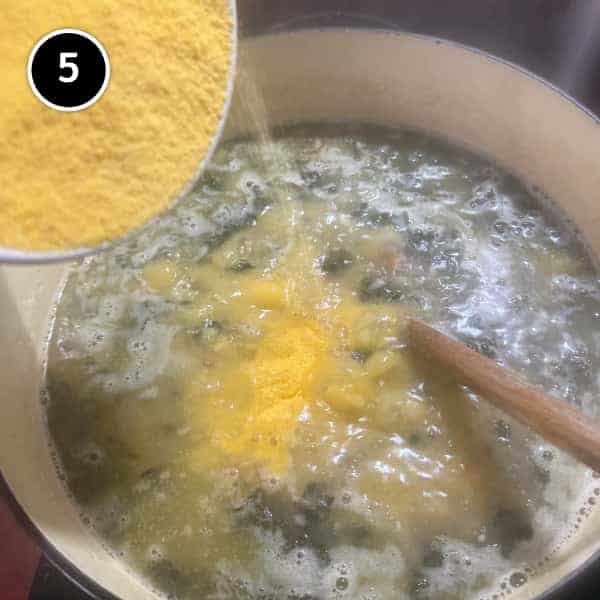
- Add the polenta - in a light stream, slowly pour in the polenta, stirring all the while to avoid it forming clumps. Stir until it begins to bubble. Season generously with salt & pepper.
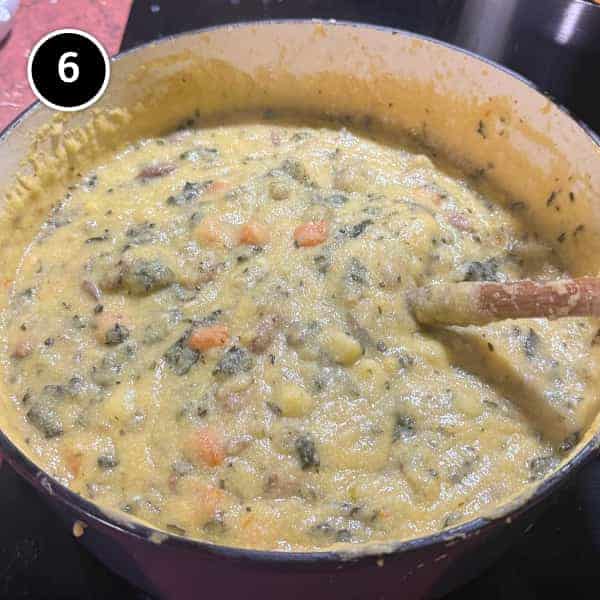
- Turn down the heat to medium/low and let it bubble gently, stirring regularly to avoid it catching on the bottom of the pot. If the polenta becomes too thick, add more water, a little at a time. NOTE: the polenta can become quite challenging as it becomes thick. It can often splutter and spit from the pot so beware of molten polenta! Cook for around 45 minutes until you have a homogeneous porridge-like soft polenta.
I like the final 'Mantecatura' stage at the end is traditional where butter or cheese (or both) is vigorously beaten into the polenta to form a silky appearance. In my recipe I use butter, but will often add finely grated Parmigiano Reggiano too (around 1 cup).
Pro Tips - Things I've learned
- Liquid levels - Polenta can absorb different amounts of liquid, so you may need to add more water or broth - don't be alarmed if you need to add a lot more liquid. Look for a creamy soft texture at the end - like creamy mashed potato.
- Mantecare - To get a great texture at the end, beating butter into the polenta gives an excellent result. You can leave this stage out if you're serving vegans or use a vegan butter for similar results.
- Substitutions - I mostly use dried beans, but canned beans are perfectly fine too. Borlotti are my go-to bean, but cannellini or butter beans are good too. As for the greens I've used kale and chard too. I've also added chopped fennel on occasion.
- Cheese - this is the unofficial ingredient that I pretty much always include - I always offer up a large bowl when serving and people generally douse their portion with a lot! It's Italy, it's like salt & pepper!
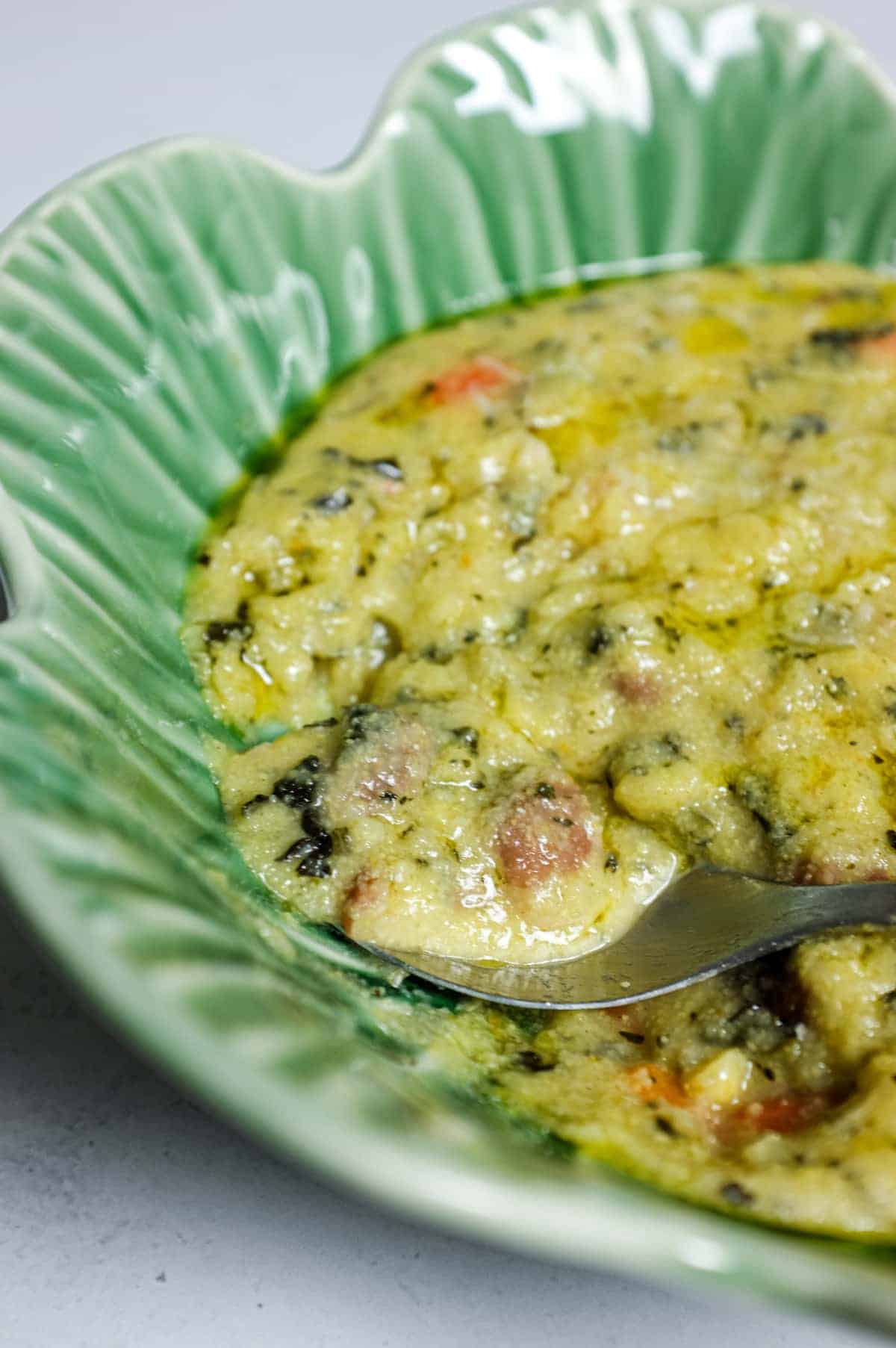
- Extra virgin olive oil - Just like cheese, this is a fabulous condiment for polenta incatenata, I'll add a generous drizzle to the top, which pools rather than being absorbed. Tasting it alongside the polenta is special!
Storage Suggestions
This polenta won't completely solidify like regular recipes, but it will partially solidify when cool. Once it's reheated it will relax a little, but can be returned to a smooth texture by adding a little more water or broth. Wait until it's hot before adding more liquid. It might turn a bit lumpy when reheating, but the flavour is unaffected.
- Fridge: Store Polenta Incatenata in an airtight container in the refrigerator for up to 3–4 days. The polenta will firm up as it cools. Reheat gently with a splash of water or stock to restore its creamy texture.
- Freezer: Freeze in small airtight containers for up to 3 months. Defrost overnight in the refrigerator, then reheat thoroughly, stirring in a little water or stock to loosen the consistency. The texture may become slightly grainier after freezing.
Ready to get cooking?
This truly is one of those recipes that stays with you. I have friends who have pre-booked this dish for the winter while we're still in the summer. They needn't have bothered, together with Chinese congee (rice porridge), polenta incatenata is guaranteed in the colder months! I'm sure you'll be a convert too... enjoy!
More Italian recipes
If you liked this recipe, I'm sure you'll love more of my favourite Italian recipes.
FAQ
Have a question? Let me know in the comments.
What is the difference between Polenta Incatenata and regular polenta?
Regular polenta is typically made with cornmeal, water and salt, creating a creamy or firm dish. Polenta Incatenata takes things further by incorporating beans, potatoes and leafy greens directly into the polenta as it cooks. The result is a heartier, more substantial dish with a wonderful combination of flavours and textures.
Can I use instant polenta for Polenta Incatenata?
I recommend using traditional fine polenta rather than instant or quick-cooking varieties. The longer cooking time allows the beans, vegetables and polenta to come together into one creamy, cohesive dish. I've found that traditional polenta gives a much better texture and flavour, and it's well worth the extra stirring!
Can I use canned beans instead of dried beans?
Absolutely! I usually use dried borlotti beans, but canned beans are a great time-saving alternative. Simply drain two 400g (14oz) cans of borlotti beans and add them directly to the pot. Cannellini or butter beans are also excellent substitutes. Using canned beans eliminates the overnight soaking and pre-cooking.
What do you serve with Polenta Incatenata?
Polenta Incatenata is substantial enough to enjoy as a meal on its own, which is how I usually serve it. Traditionally, it can also accompany grilled Italian sausages or hearty pork stews. When I first tasted it in Massa, Tuscany, it was served with a little pork stew. I love finishing mine with grated Parmigiano Reggiano and a generous drizzle of extra virgin olive oil.
Why is my Polenta Incatenata too thick or lumpy?
Polenta absorbs a surprising amount of liquid as it cooks, so don't be alarmed if it becomes very thick. Simply add more hot water or broth, a little at a time, stirring until you achieve a soft, creamy consistency similar to mashed potato. To prevent lumps, pour the dry polenta into the simmering liquid in a slow, steady stream, stirring constantly.
This recipe uses affiliations and may receive a commission based on your activity (link clicks). Learn more.
Ingredients
- 200 g dried borlotti beans cranberry beans (7oz) (or two 400g cans, drained)
- ⅓ cup olive oil
- 1 medium onion diced
- 2 carrots diced
- 1 celery stalk chopped
- 3 garlic cloves chopped
- 1 bay leaf
- 1 bunch cavolo nero cabbage around 220g/8oz (stems removed, leaves chopped)
- 2 potatoes 2.5cm/1-inch - cubed (300g)
- 1 litre vegetable stock
- 2 cups fine polenta not instant polenta (around 300g)
- 1 ½ tsp sea salt
- 50 g unsalted butter optional
- 1 cup finely grated Parmigiano-Reggiano optional, for serving
Instructions
- Soak the beans overnight in plenty of water. Once soaked, rinse well then place in a saucepan. Cover in water by about 2-inches/4cm and bring to a boil. Lower the heat and cook for around 45-60 minutes until the beans are cooked but not too soft. Drain and set aside to cool. Alternatively, you can skip this step and use 2x400g cans of borlotti, drained.
- Heat the olive oil in a large, heavy-based pot, over a medium heat, until just hot. Add the onion, celery, carrots, garlic and bay leaf and fry gently for 4-5 minutes until translucent.
- Add the beans, potatoes, cavolo nero and stir for 2-3 minutes until the cabbage is wilted.
- Pour in the stock and 1.5 litres of water and bring to a boil. Season generously with salt & pepper and simmer gently for 25 minutes, until the vegetables are tender.
- In a gentle stream, pour in the polenta, stirring constantly as you go. Bring to a simmer and cook gently for 45 minutes, stirring regularly to avoid the polenta catching on the bottom of the pot.
- At this stage, the mixture will begin to look like a thick porridge and the beans will mostly break down. If the mixture becomes too thick, add a little water or broth at a time - you should aim for a texture like creamy mashed potato.
- Beat in the butter (if using) until creamy.
- Serve alongside the grated cheese to sprinkle over along with a drizzle of extra-virgin olive oil (optional).
Notes
- Beans – Borlotti beans are my favourite for their creamy texture and earthy flavour. Cannellini or butter beans work just as well. You can also use two 400g (14oz) cans of beans, drained, to skip the soaking and pre-cooking.
- Polenta – Use traditional fine polenta rather than instant or quick-cooking varieties. The longer cooking time helps everything come together into one creamy, cohesive dish.
- Leafy greens – Cavolo nero (Tuscan kale) is my preferred choice, but regular kale, Swiss chard or cabbage are all excellent alternatives.
- Consistency – Polenta absorbs a lot of liquid during cooking. Add extra hot water or broth as needed to achieve a soft, creamy consistency similar to mashed potato.
- Stirring – Stir regularly to prevent the polenta sticking to the bottom of the pot. Be careful of hot splatters as the mixture thickens.
- Mantecatura – For an extra silky finish, vigorously beat in the butter at the end of cooking. You can leave it out or use vegan butter for a dairy-free version.
- Serving – I love serving this with plenty of grated Parmigiano Reggiano and a generous drizzle of extra virgin olive oil. It's delicious on its own or alongside grilled sausages or a hearty pork stew.
- Storage – Refrigerate in an airtight container for 3–4 days or freeze for up to 3 months. Reheat gently, adding a little water or broth to restore its creamy texture.
Leave A Comment