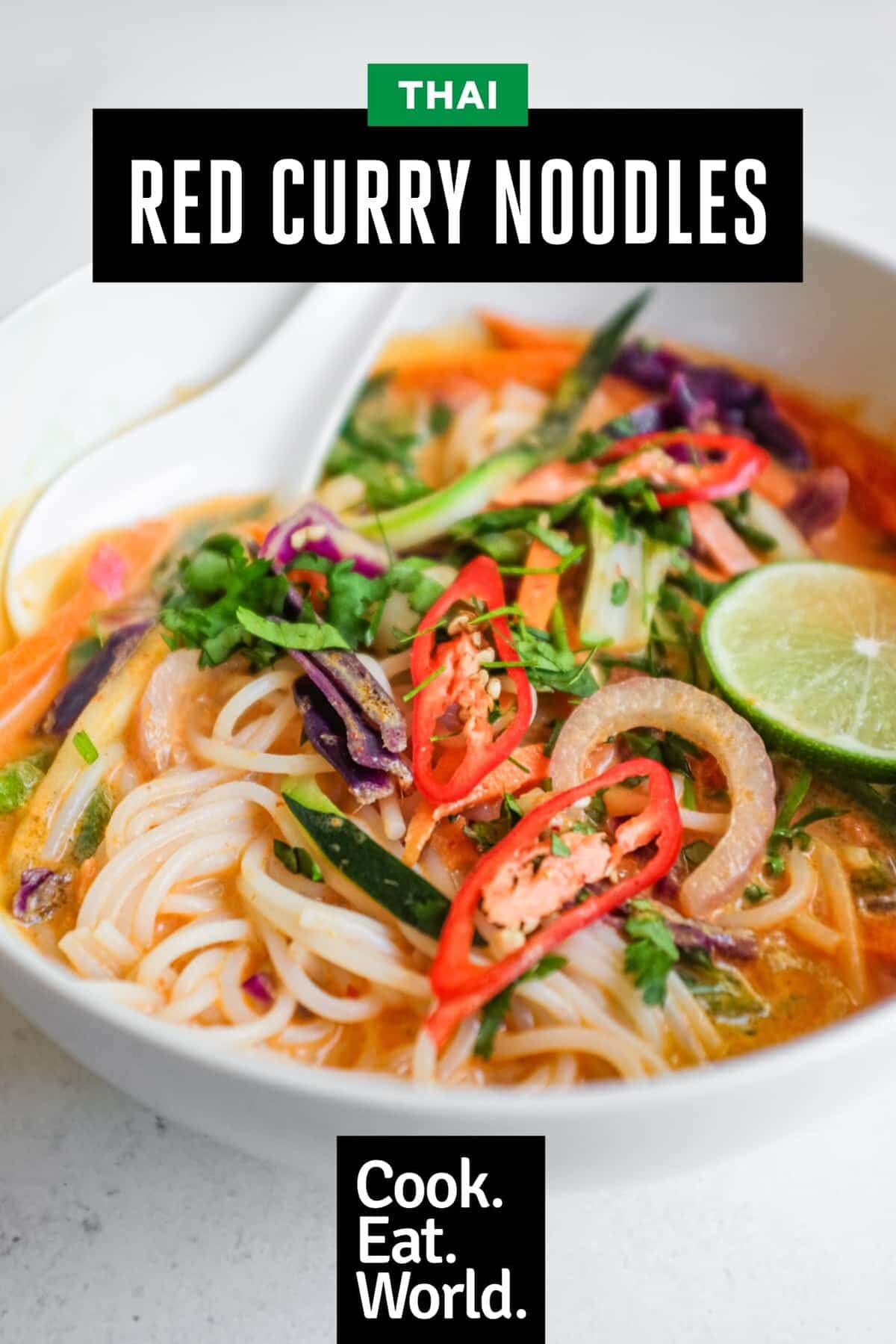

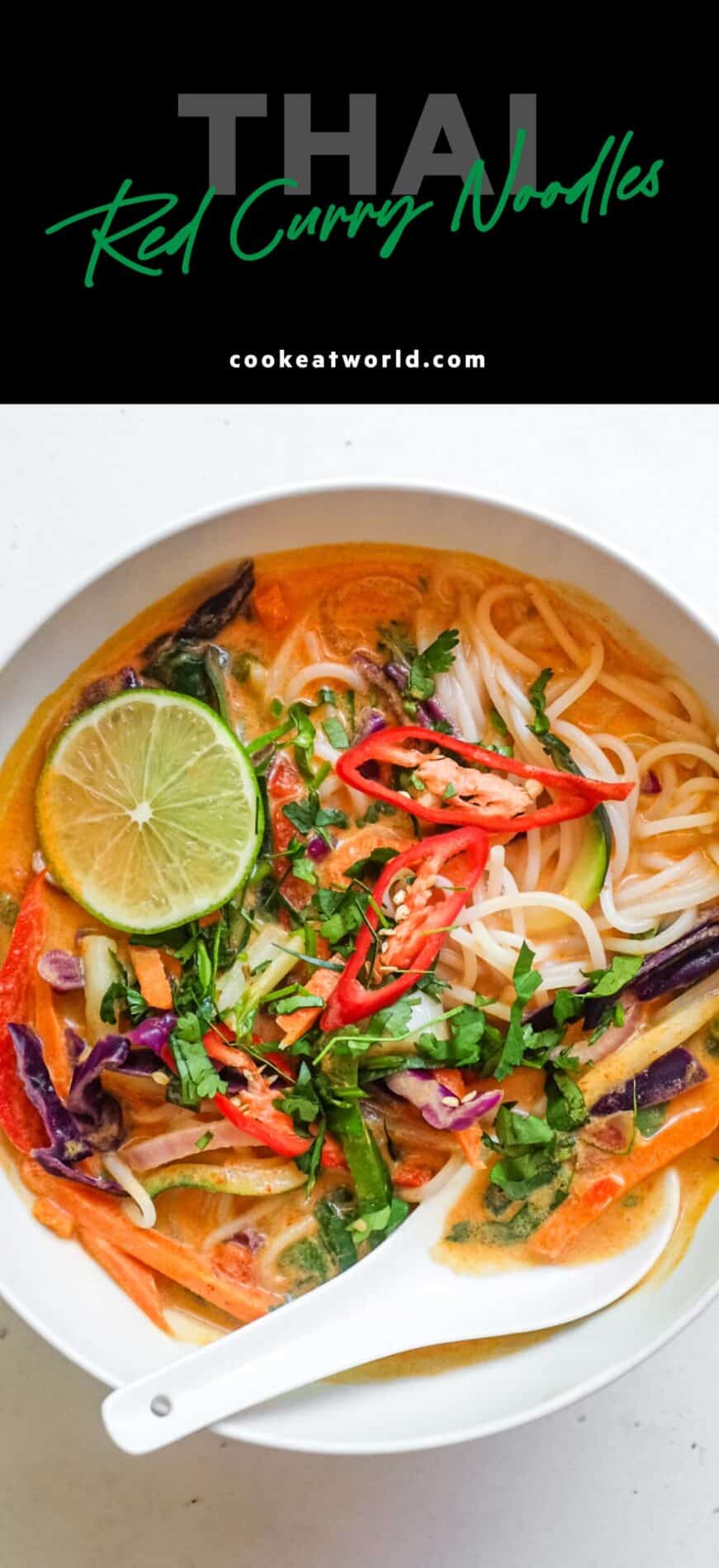

Thai Red Curry Noodles (Easy Vegetarian Recipe)
By Lee Jackson ↣ Published on: February 10, 2026
This quick and easy bowl of noodles brings all the flavour of Thai red curry in a creamy coconut broth with slippery noodles and fresh crisp vegetables. It’s versatile and satisfying with every tasty slurp.
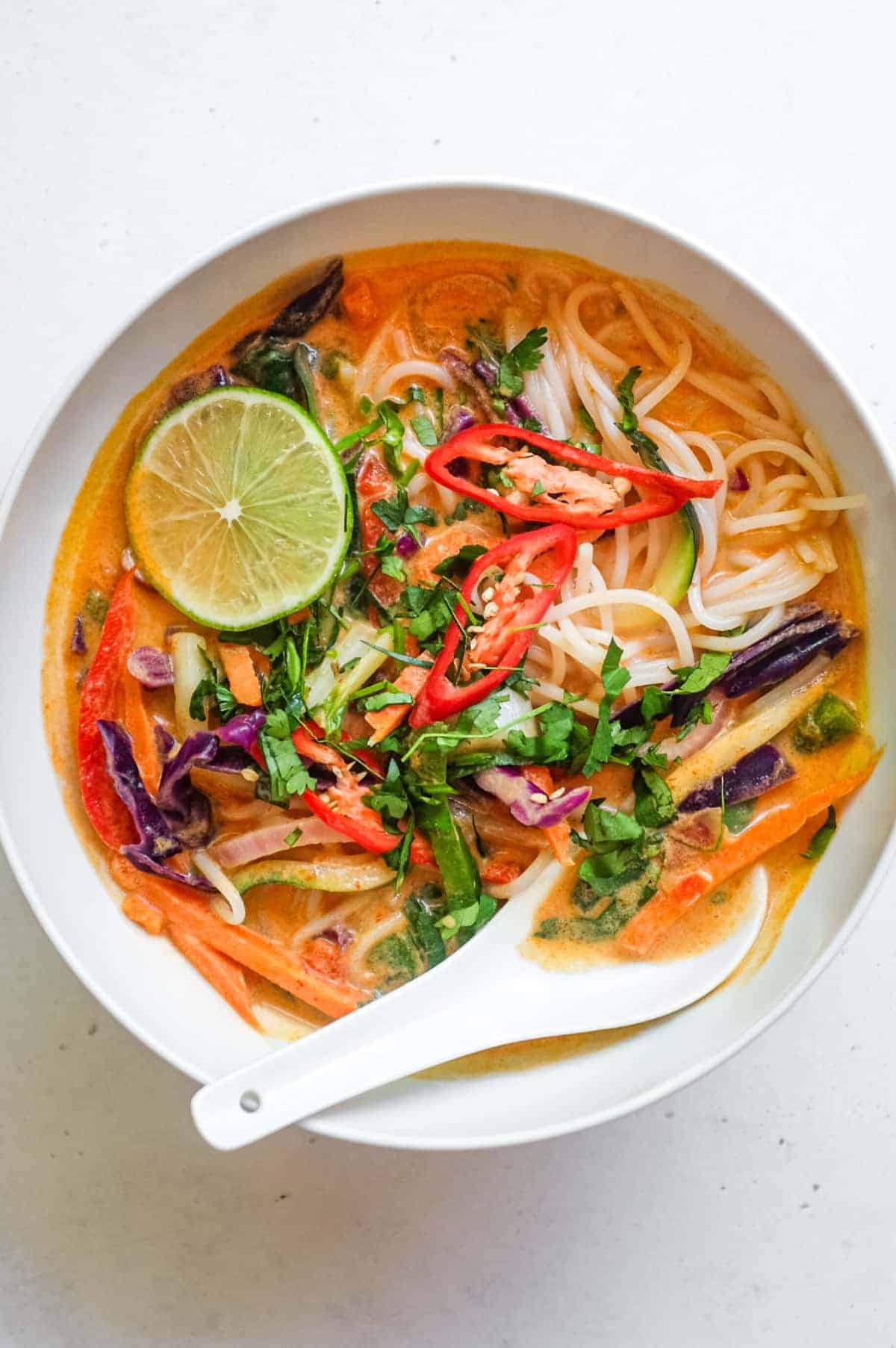
Thai red curry has a wonderful balance of savoury, spice, sour and sweet. A good paste can take you a long way and this noodle bowl which bathes rice noodles and fresh mixed vegetables is a light and bright vegetarian that's perfect to satisfy any appetite.
This recipe is my go to when I want a restaurant-style noodle bowl without any fuss of making pastes, broths or any other labour-intensive steps. Each element is already done, so it's really just a case of quickly bringing it all together into one tasty bowl of creamy coconut curry soup.
This recipe is part of of my Asian Collection and Southeast Asian Curry Collection, where you can find many delicious recipes from the region.
What's Ahead?
What is Thai red curry?
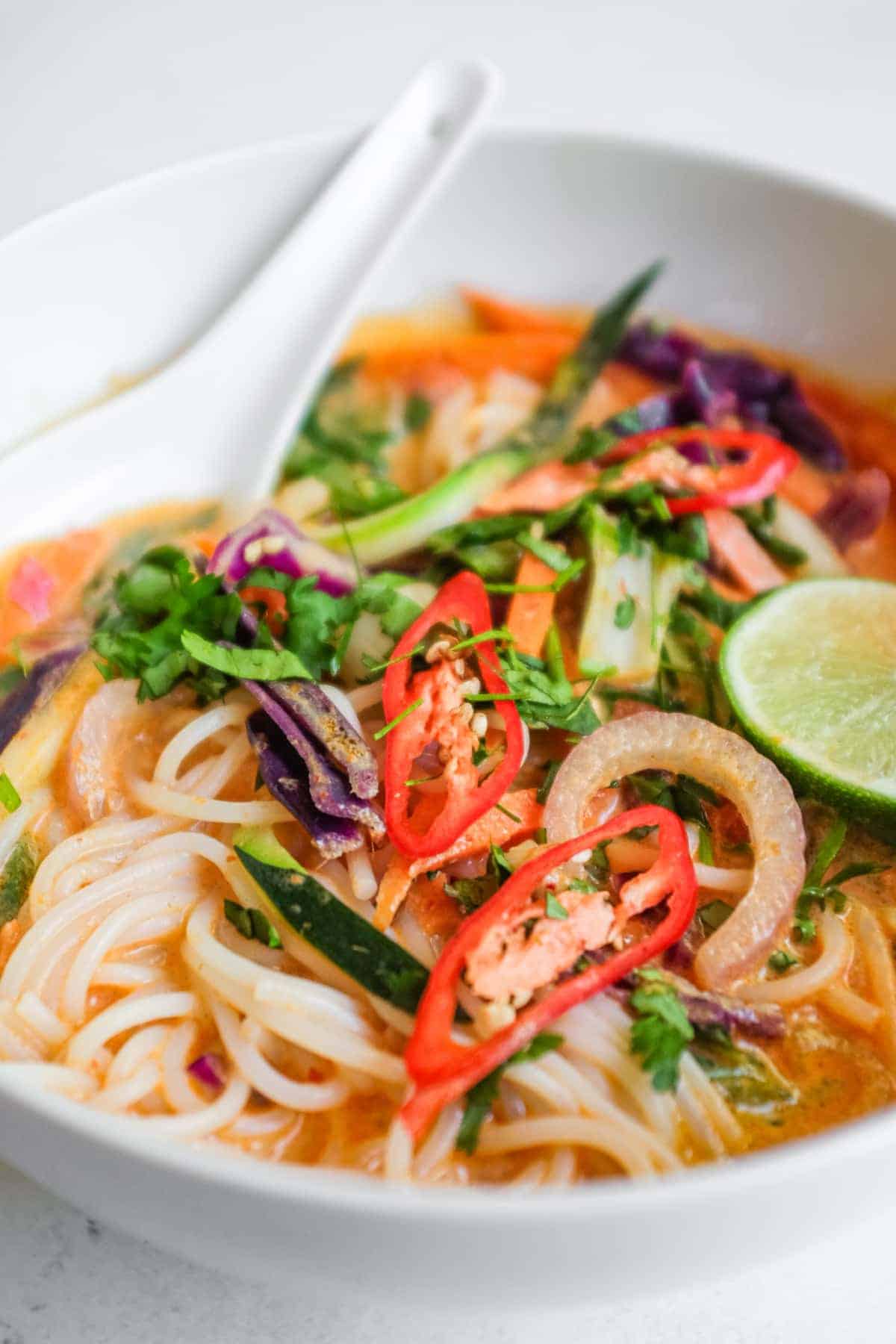
One of the cornerstone curries of Thai cuisine, red curry is the mid-spiced option between the milder yellow curry and spicier green curry. Don't get me wrong, red curry can be explosive, but typically it's milder and a little sweeter in flavour.
It's traditionally used by pounding and blending dried red chillies with regional aromatics like, galangal, garlic, shallots, lemongrass and shrimp paste amongst other things. This step is a labour-heavy procedure which, while deeply satisfying, isn't always a welcome hurdle. But there is no shame in buying a store-bought good quality red curry paste - there are some fantastic options which produce top-notch, authentic Thai red curry. My go to options are Maesri, Nam Ploy and Ayam.
Why you'll love it.
- It's vegetarian - a filling and hearty bowl of soup without the meat is a great option for anyone.
- It's quick and easy - assembly is often my favourite way to cook, ready in no time at all.
Stuff You'll Need
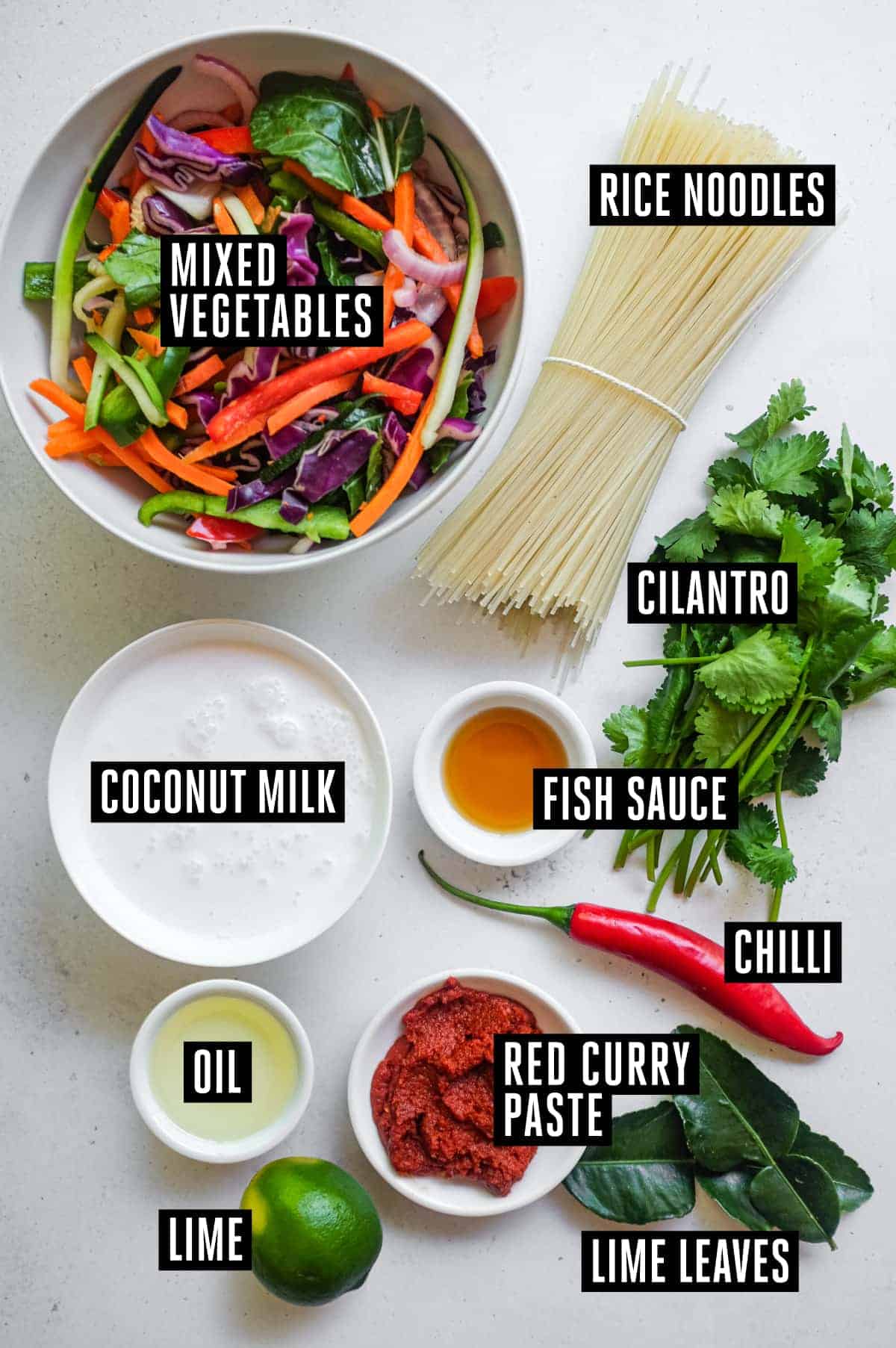
Making this Thai noodle doesn't require anything you can't easily find in most supermarkets these days. Here's what you'll need to get started.
- Red Curry Paste - buy a good quality one, try Maesri, Ayam or Mae Ploy for an authentic flavour. Most Thai curry pastes are vegan, but check the label for any use of shrimp paste.
- Coconut milk - this is key to achieve the creamy texture while tempering the spice of the curry paste.
- Mixed vegetables - either make your own or, like I do, buy a packet selection, often named 'Asian mix' or 'Stir fry mix' from the salad aisle. Ingredients can differ, but the crisp and crunchy variety is what makes this soup feel light and healthy.
- Fish Sauce - brings a depth of saltiness and umami. If you're vegan or don't eat fish you can replace with about 1tsp salt.
- Kaffir lime leaves - bring that quintessential Thai aroma
- Lime juice - adds a sour note to the final sauce
- Cilantro and Chilli for garnish and freshness




Step by Step
There are only two cooking steps in this recipe; the broth and the noodles - then it's just a matter of bringing the two together. Simple!
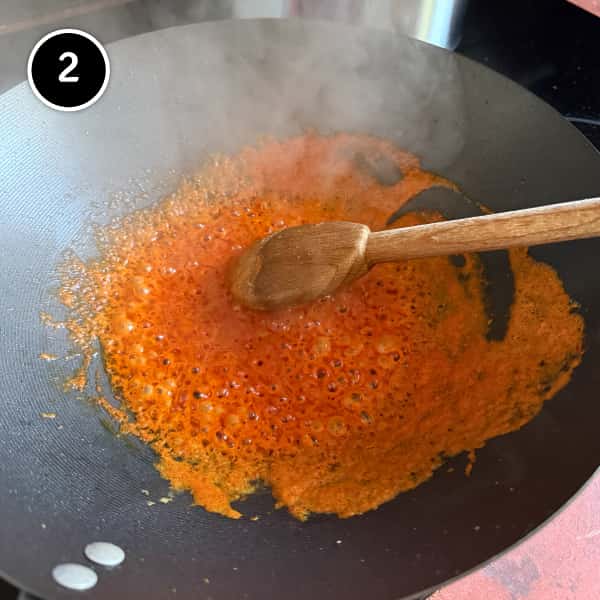
- Fry the curry paste in a little oil with a drizzle of coconut milk to stop it burning until well combined.
- Reduce the paste for a few minutes until the oil separates
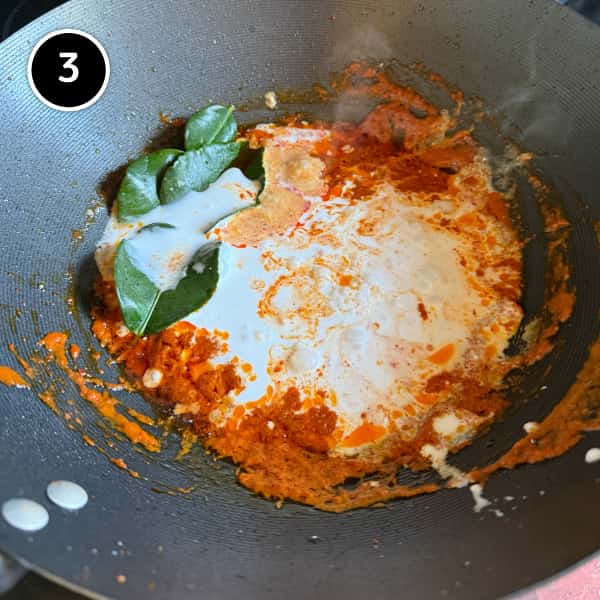
- Add the lime leaves and coconut milk and stir well to combine
- Add water and fish sauce and bring to a simmer for a few minutes
- Noodles - While the curry simmers, cook the rice noodles then drain in cold water.
- Add the vegetables to the simmering curry and cook for a couple of minutes only, we want the vegetables to still have some crunch, but the soup piping hot.
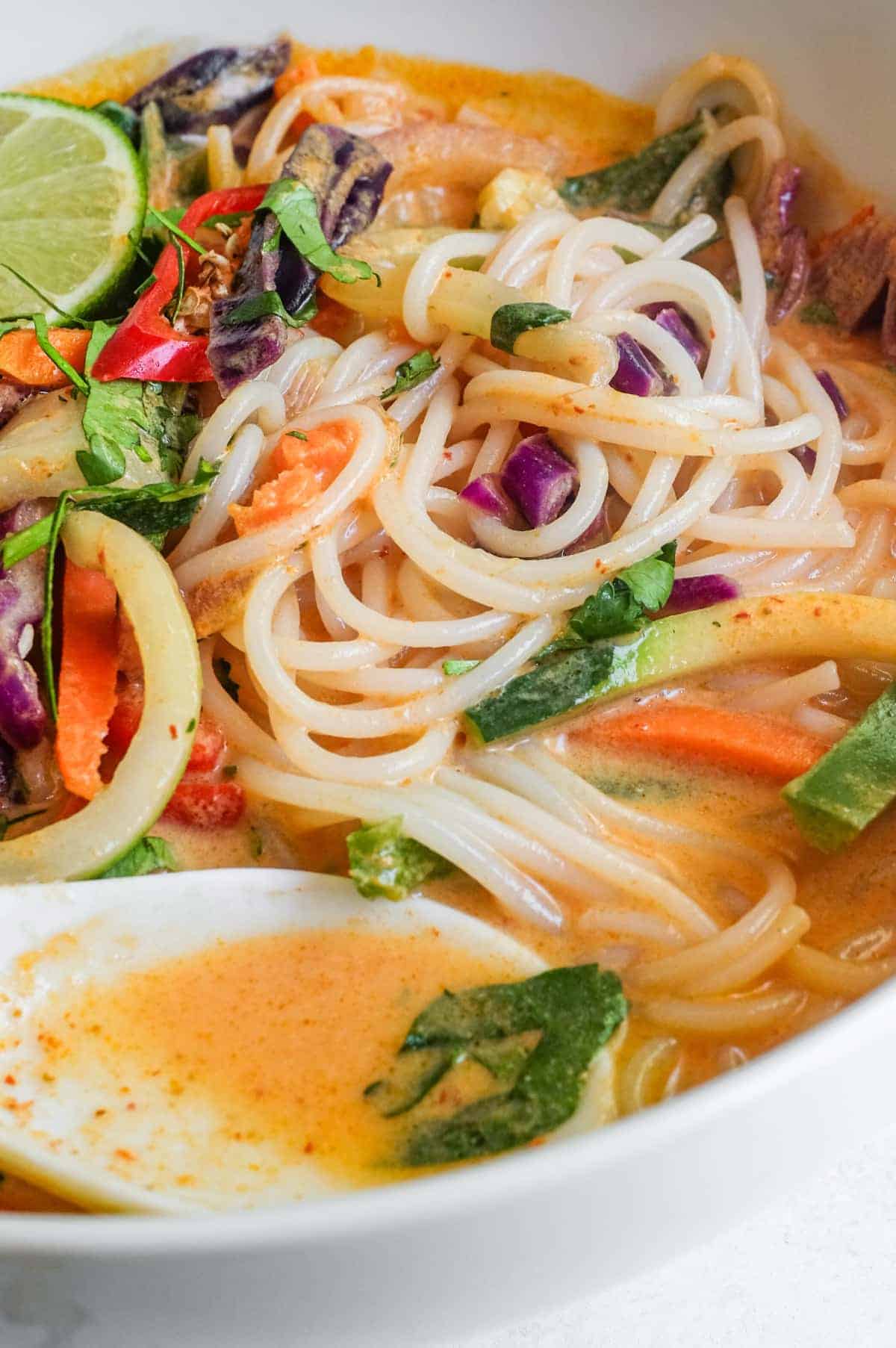
- To assemble, pour boiling water over the cold noodles, and then arrange in the bottom of soup bowls then spoon over some of the broth and vegetables. Squeeze a generous drizzle of lime juice and top with cilantro and sliced chillies and a little more fresh lime wedges of slices.
Substitutions and Variations
- Vegetables - This recipe is very flexible in what you can add to make it your own. As it stands it's a vegetarian recipe and many other vegetables can be included to whatever you like. Just be sure to check they're all done. If you add eggplant it will need longer to cook, so add it a little earlier.
- Meat or Fish - You can make this a meat or seafood soup by adding thin slices of chicken, pork and beef or some raw prawns or fish. Just ensure it's all cooked properly before serving. Thin sliced of meat will need around 10 minutes simmering in the sauce.
- Noodles - I like this soup using rice noodles, often using thick ribbons or thin vermicelli. You can also use cooked wheat, egg or glass noodles too.
- Alternative Thai curry pastes - Try this soup with the equivalent amount in a different Thai curry paste for a new flavour experience, either green, yellow or Panang.
Serving & Storage Suggestions
By its nature of being fresh and crunchy with tender noodles, this soup is best eaten right away. It doesn't really transfer well to leftovers as everything will deteriorate over time. The vegetables will become too soft, the noodles will continue to soak up the soup and become soft too.
In my opinion, fresh is best so make it and eat it right away.
With that said, you can definitely prepare the broth and cooked the noodles and chill in advance (up to 2 days in the fridge) then heat both and bring together as usual.
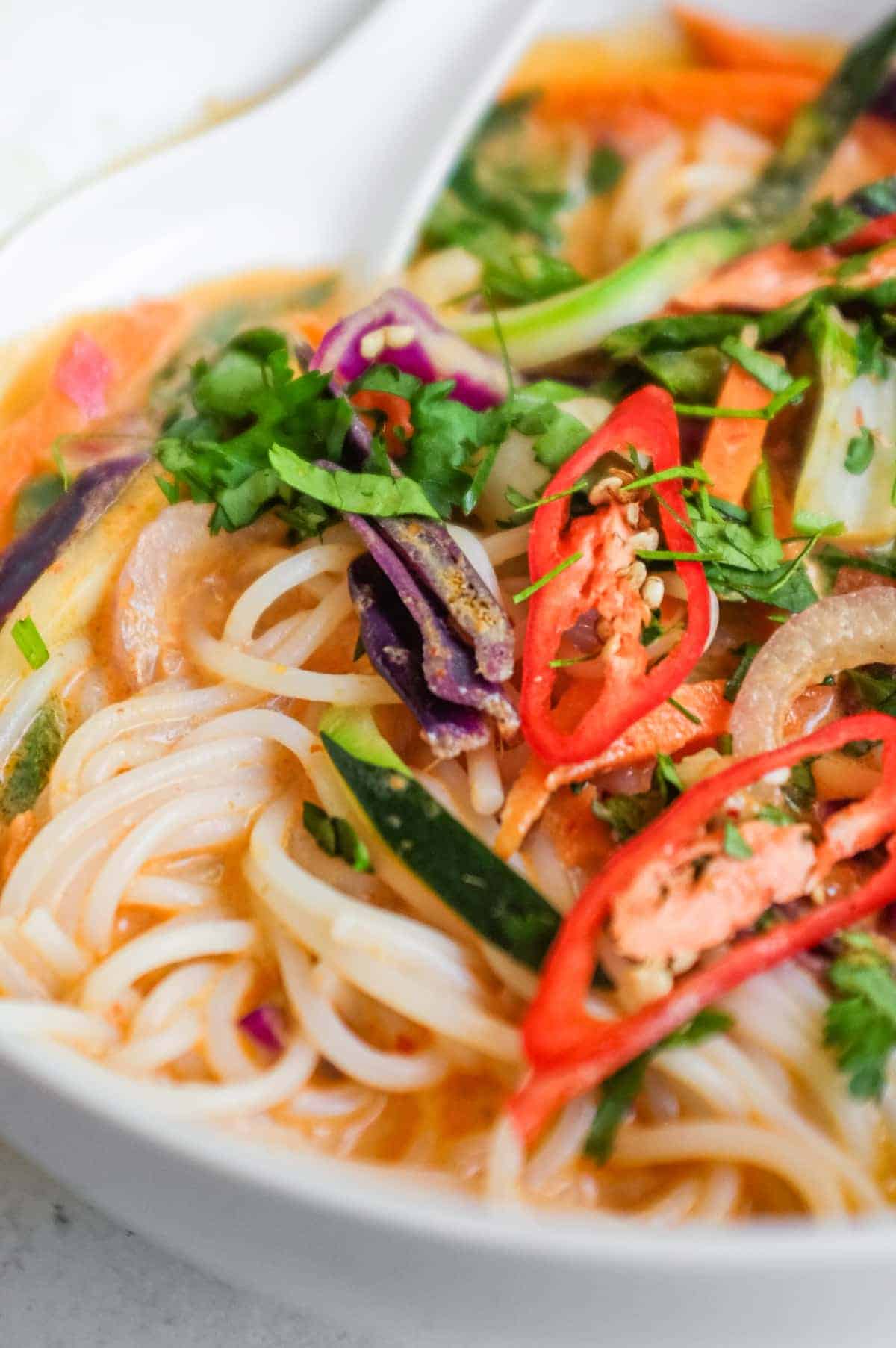
Ready to get cooking?
If you like some fast asian soup this should be your go to for sure. It's a rich and satisfying bowl of spice without all the work. It's a great dish any time of year and one that will leave you full up without feeling bloated. Hope you enjoy!
More Thai recipes
If you liked this recipe, I'm sure you'll love some more of my favourite Thai recipes.
Any Questions? (FAQ)
Have a question? Let me know in the comments.
Is this Thai red curry noodle soup spicy?
It’s gently spiced rather than fiery. The heat depends almost entirely on the curry paste you use — some brands are hotter than others — but the coconut milk keeps everything balanced and mellow. If spice IS your thing, add slightly more curry paste or some fresh chopped birdseye chillies.
Can I make this fully vegetarian or vegan?
Yes, many pastes don't contain shrimp paste making them a good option for vegans and vegetarians. Replace the fish sauce with salt to omit all fish products from this recipe.
What vegetables work best in this recipe?
Anything crisp and quick-cooking works well — think snow peas, carrots, baby corn, bok choy, or capsicum. Softer vegetables like eggplant need a little extra cooking time, so add them earlier.
This recipe uses affiliations and may receive a commission based on your activity (link clicks). Learn more.

Thai Red Curry Noodles (Easy Vegetarian Recipe)
Rate this recipe
Print Recipe Pin Recipe Save RecipeIngredients
- 2 tbsp peanut oil or vegetable/sunflower oil
- 2 tbsp red curry paste
- 400 g coconut milk
- 3 kaffir lime leaves
- 2 tbsp fish sauce (or 1 tsp salt if vegetarian/vegan)
- 400 g Mixed vegetables Julienned (Asian Stir Fry Mix)
- 300 g Rice Noodles dry
- 1 lime
- Cilantro for garnish
- 1 red chilli for garnish
Instructions
- Heat the oil in a wok until hot, then add the curry paste along with 1/2 cup of the coconut milk and stir. Let this sizzle for 2 minutes until the oil separates a little.
- Add the remaining coconut milk and lime leaves and bring to a boil, then bring to a simmer.
- Add (1 litre) water and fish sauce and bring to a boil - simmer for 5 minutes.
- Cook the rice noodles to the pack instructions and then drain rinse in cold water.
- Add the vegetables to the soup and cook for 2 minutes, then remove from the heat. Squeeze over half of the lime.
- Boil a kettle, then pour boiled water over the noodles in a colander to heat them.
- Arrange the warm noodles into 4 bowls, then top each with the hot vegetable curry soup.
- Garnish with sliced red chillies and chopped cilantro and serve with a small wedge or slice of lime per bowl.
Notes
Substitutions & Variations
- Vegetables: Very flexible — use any quick-cooking veg you like. Add slower-cooking veg (e.g. eggplant) earlier.
- Meat or Fish: Add thinly sliced chicken, pork, beef, prawns or fish. Simmer until just cooked (thin meat ~10 minutes).
- Noodles: Rice noodles work best, but wheat, egg or glass noodles are all good alternatives.
- Thai Curry Pastes: Swap red for green, yellow or Panang for a different flavour profile.
Serving & Storage Suggestions
- Best served fresh: Eat immediately for the best texture — noodles soften as they sit.
- Make-ahead option: Broth and noodles can be prepared separately and chilled for up to 2 days, then reheated and assembled just before serving.
Nutrition
Leave A Comment