
Southeast Asian Curries
Think of Southeast Asia and you can’t help thinking of delicious Curries – imagine flavour, colour and intensity by the bucket.
The unmistakable cuisine of this diverse region is amongst the finest in the food world. A cornucopia of flavours, mixing tradition with historical and colonial influences to create distinct cuisines loved the world over. The cuisine of Southeast Asia is as diverse as any but it’s perhaps the curries that we all hold in the highest esteem. Complex, spice-laden sauces that have been beguiling locals and visitors alike for centuries. We explore here only a tiny selection of The Curries of Southeast Asia – I hope you enjoy and create some yourself. This page is part of my large Asian Cuisine Collection, where you can discover recipes from every corner of Asia.
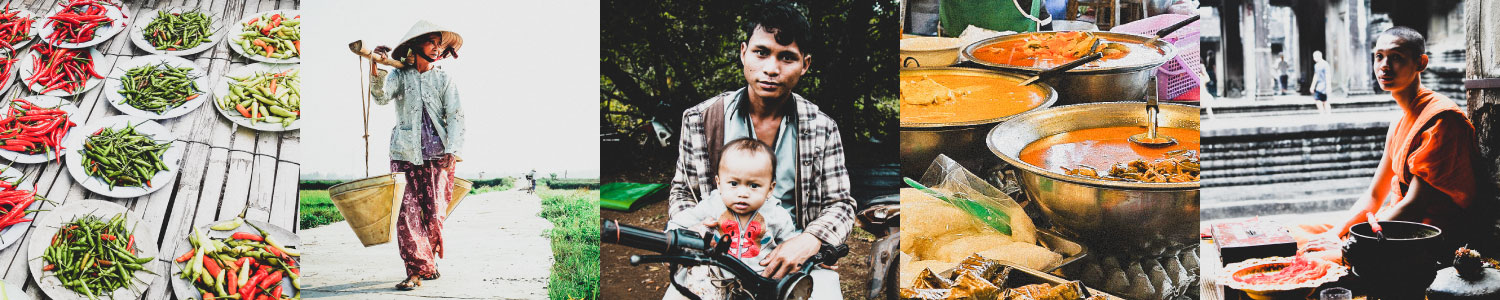
My love of spice is well documented at Cook Eat World. I use spice almost daily and think about it even more. Not an hour goes by when I don’t ponder about my next chilli or fragrant fix. Asian curries are hugely diverse, with an overwhelming array of flavours to navigate, but if we drill down a little we can discover what regional Asian food has to offer, and specifically Southeast Asia and all the colour, fragrance and spice it has to offer.
If I’m craving a spice hit, I know the sauces of Thailand, Singapore, Malaysia and Indonesia can deliver a fiery heat I’m after – but If I’m feeling more mellow, my thoughts travel to Myannmar, Vietnam, Laos and Cambodia and to their milder, fragrant stews and soups.
From Thailand, the famous green curry, red curry and yellow curries offer a virtual dial of spice tolerance – one for every mood. Staying in Thailand the Panang Curry offers a spicy hit of flavour, while the milder Massaman delivers an intensity of fragrance that is almost too much to bear!
The curries of Singapore and Malaysia are amongst my favourites. Kapitan Curry offers a fragrant, lemongrass flavour while the simple Chicken Curry that pairs with the traditional flaky Roti Canai bread strays into “last-meal” request territory!
Staying in Malaysia, we move on to perhaps one of my favourite curries, period. The Curry Laksa. Originating in Malaysia or Indonesia (nobody can agree), this is the food-stuff of dreams. A thin curry soup covers rice noodles and fried tofu and typically features seafood or chicken. It’s a taste sensation!
One curry that Indonesia can lay unequivocal claim to is the Beef Rendang. Stewed for hours using a mind boggling array of spices, The thick slick of reduced sauce clings to the melt-in-the-mouth hunks of meat. Delights!
In other regions the spice leans towards the fragrant. The curries and stews of Myanmar/Burma, Cambodia, Laos and Vietnam offer dishes for a milder palette. The classic Burmese Chicken Curry utilises ginger and lemongrass to great effect in delivering a particularly fragrant sauce.
As there are a number of former colonised countries in Southeast Asia, there are still traces of European cuisine throughout the region – most notably the Spanish influence in the Philippines which originated the Adobo (stew) – a Filipino’s beloved national dish.
Whatever your personal taste, the curries of Southeast Asia offer something for everyone.
My love of spice is well documented at Cook Eat World. I use it on an almost daily basis and think about it even more. Not an hour goes by when I don’t ponder about my next chilli fix.
So what defines a curry? Well, anything in a ‘Kari’ or sauce. Vegetables, seafood, meat and even fruit can all be found in delicious sauces from Bangkok to Jakarta – from Bali to Singapore with every tasty slurp in between.
If I’m craving a spice hit, I know the curries of Thailand, Singapore, Malaysia and Indonesia can deliver a fiery heat I’m after – but If I’m feeling more mellow, my thoughts travel to Myannmar, Vietnam, Laos and Cambodia and to their milder, fragrant stews and soups.
From Thailand, the famous green curry, red curry and yellow curries offer a virtual dial of heat tolerance – suited for every mood. Staying in Thailand the Panang Curry and Tom Yum Soup both offer spicy hit of flavour, while the milder Massaman delivers an intensity of fragrance that is almost too much to bear!
The curries of Singapore and Malaysia are amongst my favourites. Kapitan Curry offers a fragrant, lemongrass flavour while the simple Chicken Curry that pairs with the traditional flaky Roti Canai bread strays into “last-meal” request territory!
Staying in Malaysia, we move on to perhaps one of my favourite curries, period. The Curry Laksa. Originating in Malaysia or Indonesia (nobody can agree), this is the food-stuff of dreams. A thin curry soup covers rice noodles and fried tofu and typically features seafood or chicken. It’s a taste sensation!
One curry that Indonesia can lay unequivocal claim to is the Beef Rendang. Stewed for hours using a mind boggling array of spices, The thick slick of reduced sauce clings to the melt-in-the-mouth hunks of meat. Delights!
In other regions the spice leans towards the fragrant. The curries and stews of Myanmar/Burma, Cambodia, Laos and Vietnam offer dishes for a milder palette. The classic Burmese Chicken Curry utilises ginger and lemongrass to great effect in delivering a particularly fragrant sauce.
As there are a number of former colonised countries in South East Asia, there are still traces of European cuisine throughout the region – most notably the Spanish influence in the Philippines which originated the Adobo (stew) – a Filipino’s beloved national dish.
Whatever your personal taste, the curries of South East Asia offer something for everyone. If you’re feeling tempted, I urge you to investigate some of the recipes on Cook. Eat. Blog. and get your spice on!
Malaysian Curries
Rich, aromatic curries shaped by Malay, Chinese, and Indian influences, often built on coconut milk and fresh spice pastes.
← Visit the Asian hub for more delicious recipes from across the continent.
Hello,
I wanted to expand on the information that you’ve given about adobo and also curry dishes in regard to the Philippines, as a mixed Filipino person myself.
The term Adobo or adobar (Spanish: marinade, sauce, or seasoning) is the immersion of food in a stock (or sauce) composed variously of paprika, oregano, salt, garlic, and vinegar to preserve and enhance its flavor. The Portuguese variant is known as carne de vinha d’alhos. The practice, native to Iberia (Spanish cuisine and Portuguese cuisine), was widely adopted in Latin America, as well as Spanish and Portuguese colonies in Africa and Asia. (Taken from Wikipedia)
“Adobo” in the Philippines also refers to dishes that are immersed in vinegar but also with garlic and peppercorns. This method of cooking in the Philippines was developed by indigenous Filipinos without Spanish influences. When the Spaniards came to the Philippines, they named the Filipino method of cooking “adobo de los naturales ” meaning “adobo of the native peoples” because they felt it was similar to how their adobo is cooked. Unfortunately the original Filipino name of the dish was lost to colonisation and time. The Filipino adobo that many people are familiar with is known in Tagalog as “adobong itim” or “black adobo” because of the Chinese influence of soy sauce added to “adobong puti” or “white adobo” (which is meat, vinegar, garlic and peppercorns only). There are many, many different adobo variants across the Philippines.
As for curries, there is a dish in the Philippines called “kare-kare” (pronounced as “Kah-REH kah-REH”; “kare” derives from the word “curry”). Kare-kare is a thick peanut sauce stew traditionally made with oxtail (but you can use other meats like pork, beef, goat or chicken) and vegetables like eggplant, cabbage, okra, green beans or other green vegetables. Kare-kare may also be made with seafood or even fully vegetarian. It is usually eaten with bagoong (Filipino shrimp paste) and may be eaten with chili.
There is also Filipino-style chicken curry. I think it is not so different from the Vietnamese chicken curry recipe that you have shared.
Hope you get to try these dishes one day!
Wow! Thank you so much for all this information! Fascinating stuff. I can’t wait to visit the Philippines and try some of your delicious food. I lived close to a Filipino supermarket in the US and would often visit their restaurant for the grilled meats and adobo. I especially loved their crab fat rice too – so decadent. Thanks again for all the info. L