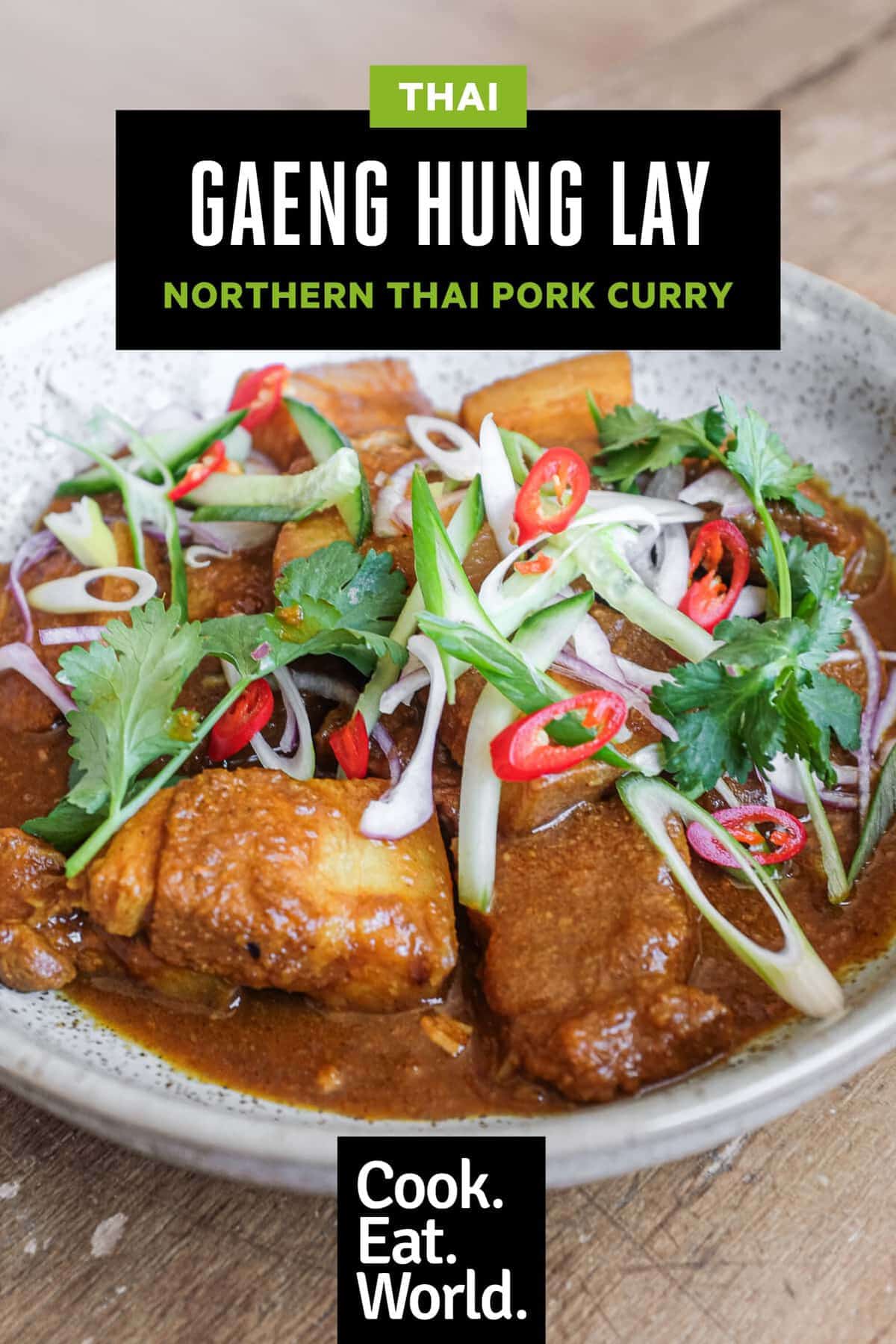
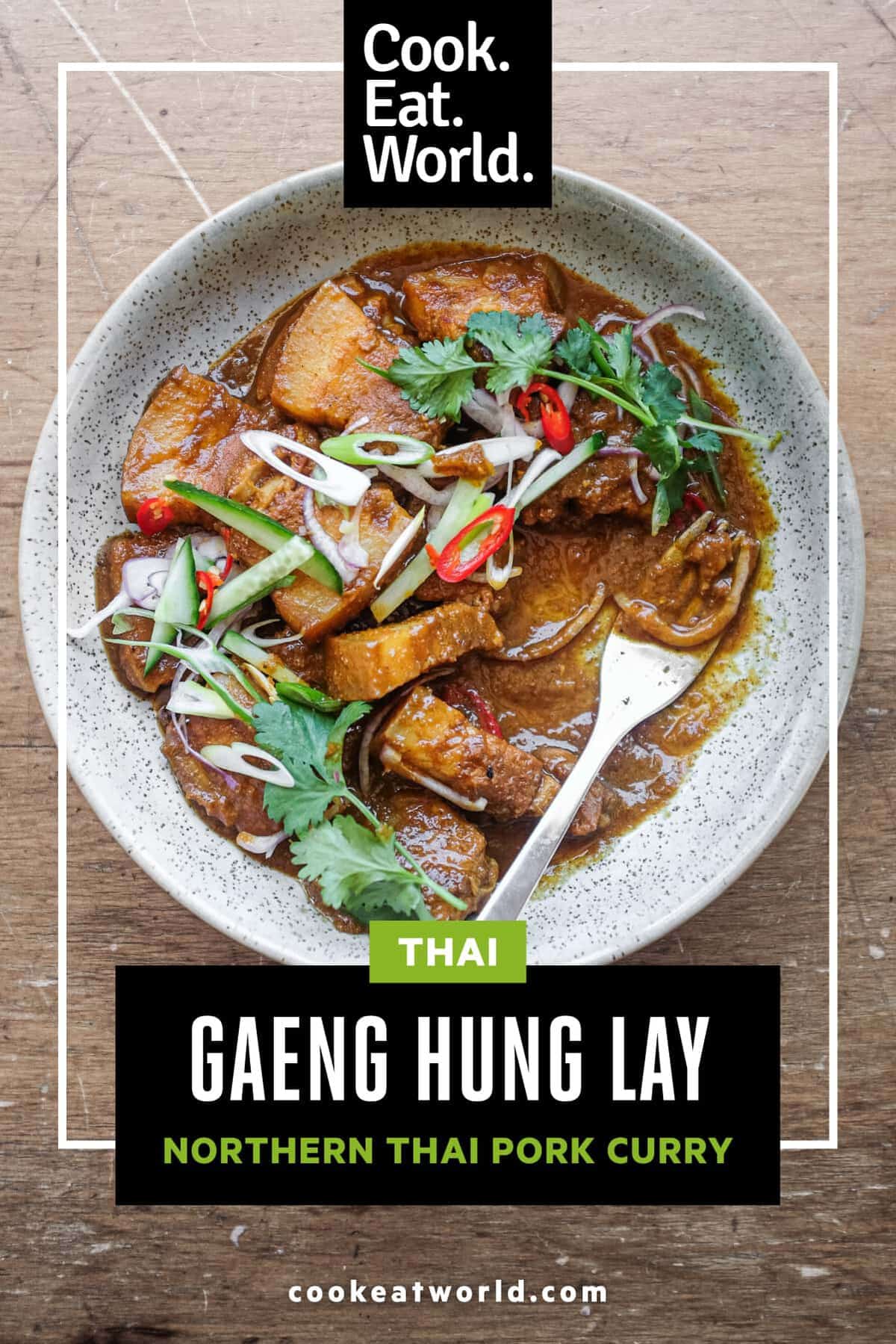

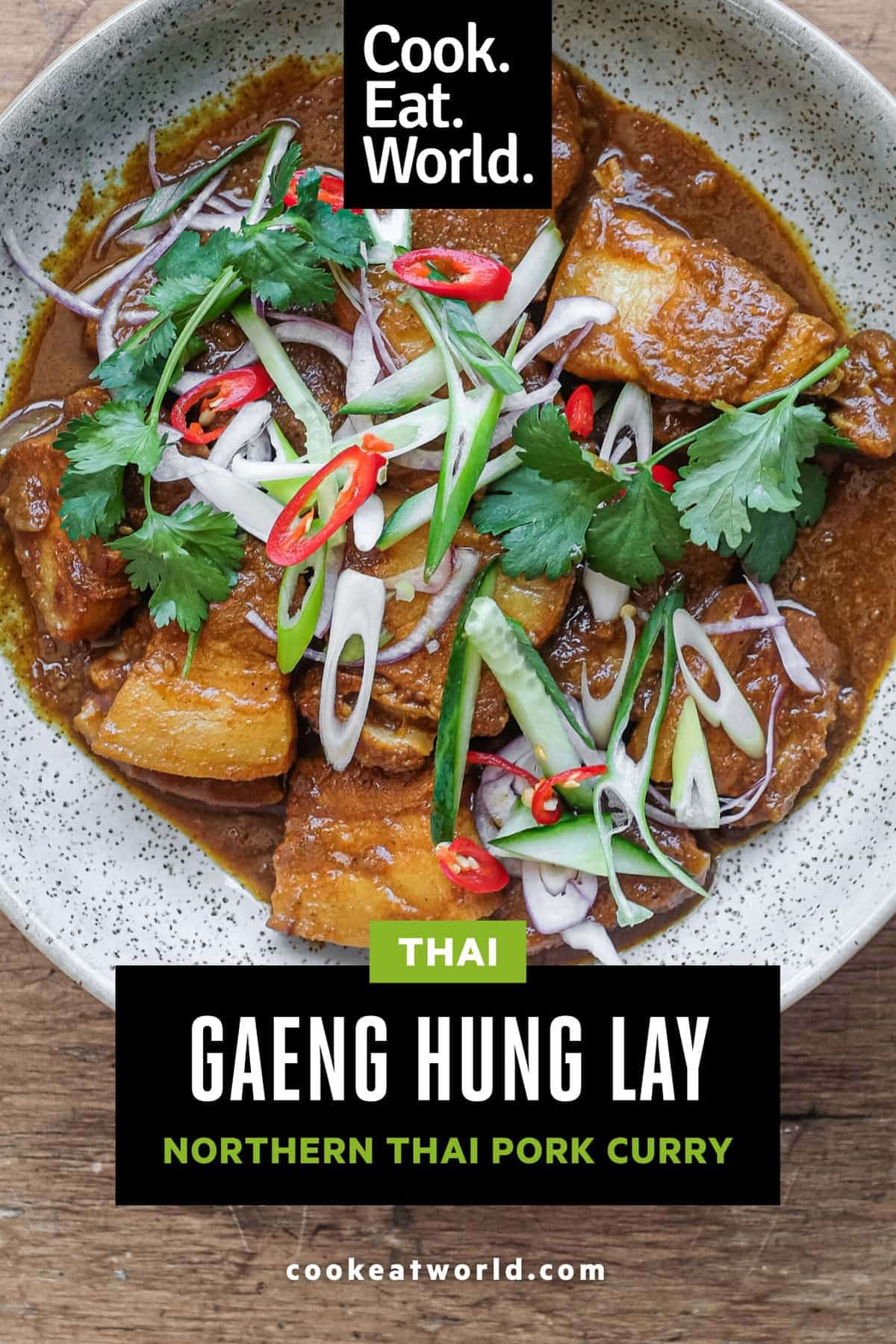
Gaeng Hung Lay (Northern Thai Pork Curry)
By Lee Jackson ↣ Published on: November 22, 2024
I love discovering new flavours! In the north of Thailand there’s a curry that’s fiery and unique. Introducing the spicy delights of Gaeng Hung Lay. Making its way from Myanmar it’s unlike any other Thai curry – tender pork belly in a fragrant, sweet, sour and spicy sauce with a little nod to India. It may just be my new favourite Thai curry…
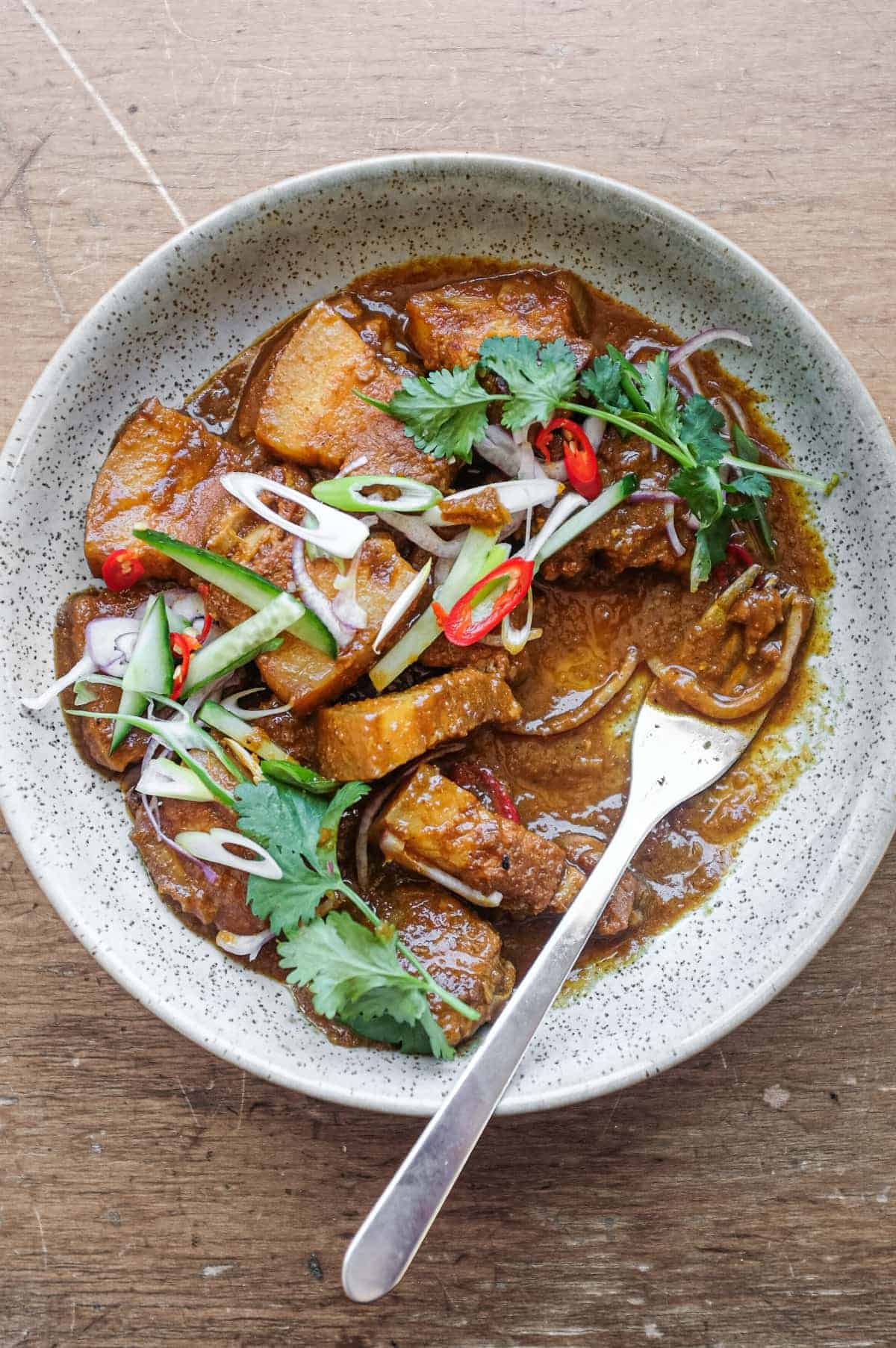
I love discovering new curries! I ate this curry a while back at a Thai restaurant in the US and have been wanting to explore it further and create my own at home. The dish I ate was so memorable in that it didn't feel like a Thai curry at all! It was somewhere between Thai and Indian - and what a marriage that is!
This recipe is part of my Asian and Asian Curries collections, where you’ll discover more flavourful favourites.
Rich, spicy and fragrant with a sweet and sour end-note. It's a unique and interesting curry to say the least. The version I ate back then was not spicy at all, but subsequently I've sampled other versions in Australia which were completely nuclear. I love a spicy curry, so my recipe errs on the side of spice, if that's not your thing, fear not - I offer a few suggestions on toning things down. Intrigued? Read on!
What's Ahead?
What is Gaeng Hung Lay?
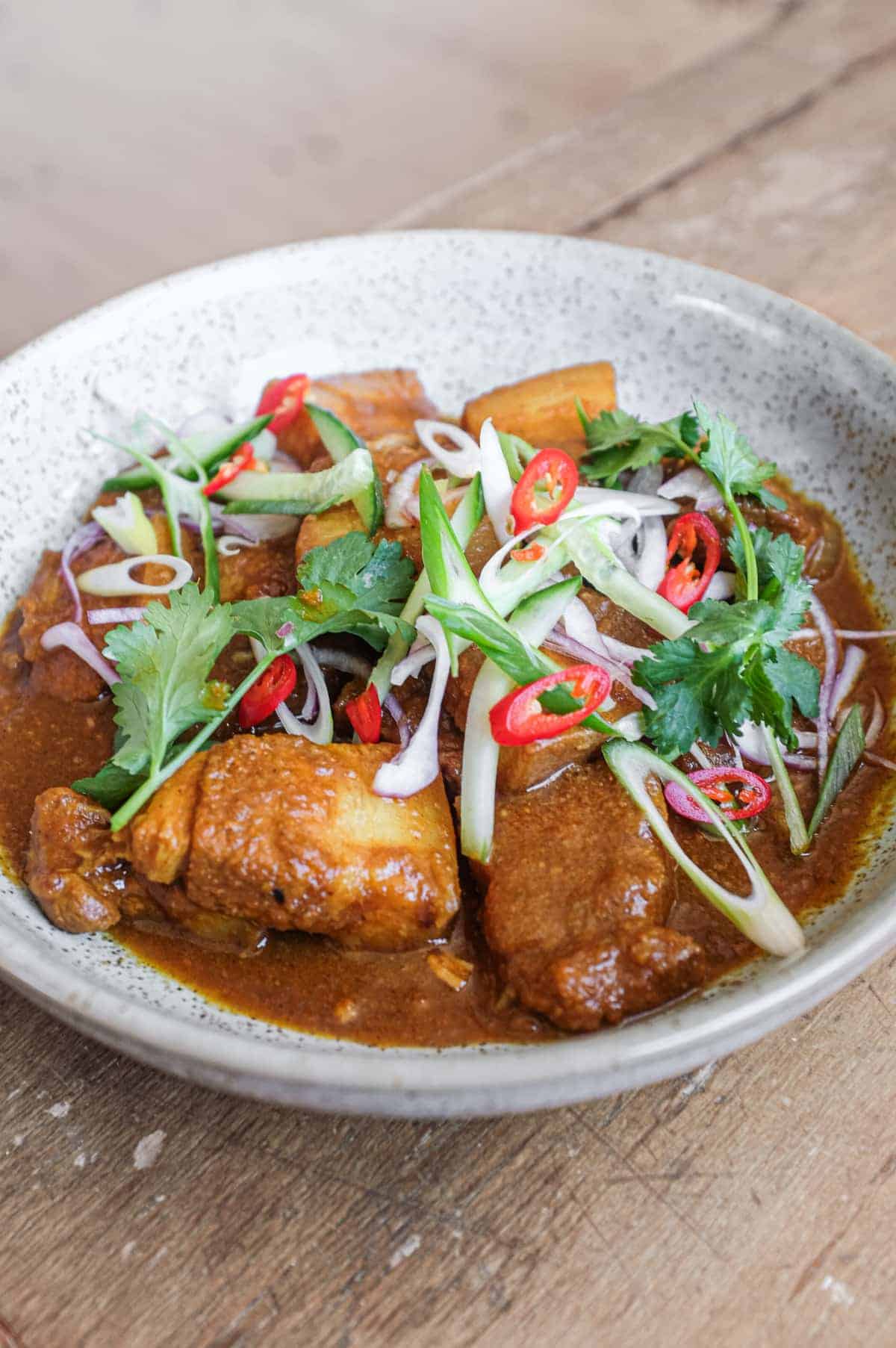
Gaeng Hung Lay (แกงฮังเล) is an iconic curry from the North of Thailand. It's a rich and aromatic sauce originating from Lanna cuisine. Known for its deep, savoury-sweet flavour, it features tender pork, usually belly, simmered in a fragrant blend of garlic, ginger, tamarind and spice. It can range from fragrant and mild to spicy and wild! My version is the latter, a heady and fiery blend that certainly awakens the palette.
Being a close neighbour to Myanmar (Burma), the recipes of Thailand's northern regions often include many spices associated with Indian cuisine, and Gaeng Hung Lay is one such dish. As a short cut to creating a spice blend, the use of Indian garam masala gives excellent results, while being quite unique for a Thai recipe.
Why it works?
It's unique - if you're tired of the standard Thai curry line up, not that there's anything wrong with those, you might want to try this traditional Northern classic. It's unlike any other Thai curry!

Stuff You'll Need
Thai curries can become a bit of a roll-call of ingredients and a little overwhelming sometimes. Thankfully, my recipe dispenses with making your own curry powder in favour of Indian Garam Masala. This is perfectly acceptable as it used many of the spices found in Hung Lay curry powders. It's not so much of a cheat, more of a short cut. It significantly cuts down on the stuff you'll need to source. Here's what else you'll need to make the magic happen.
- Pork belly (this is traditional, but you can use chunks of shoulder too).
- Garam Masala, Chilli and Turmeric - this brings spice and heat. If you want to tone down the heat, either omit the chilli powder completely or substitute with mild paprika.
- Lemongrass, galangal, garlic and shallots - bring the fresh fragrance to the curry.
- Shrimp paste, fish sauce, sugar, soy sauce, salt, tamarind and vinegar - bring the quintessential balance of salt, sweet and sour.
- Star anise - for an added element of fragrance, I just love a couple of star anise.
Step by Step
This curry is actually very easy to put together. Four simple stages is all it takes. Before cooking, simply blend together the lemongrass, galangal, half the shallots, the garlic, shrimp paste and ground spices until smooth then set aside.
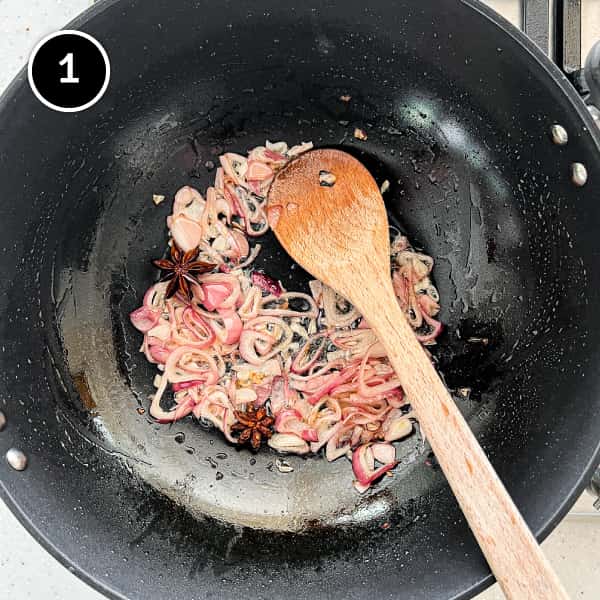
- Step 1 - Heat the oil in a wok over a medium heat until hot, then add the remaining shallots with the star anise and stir fry for a few minutes until soft.
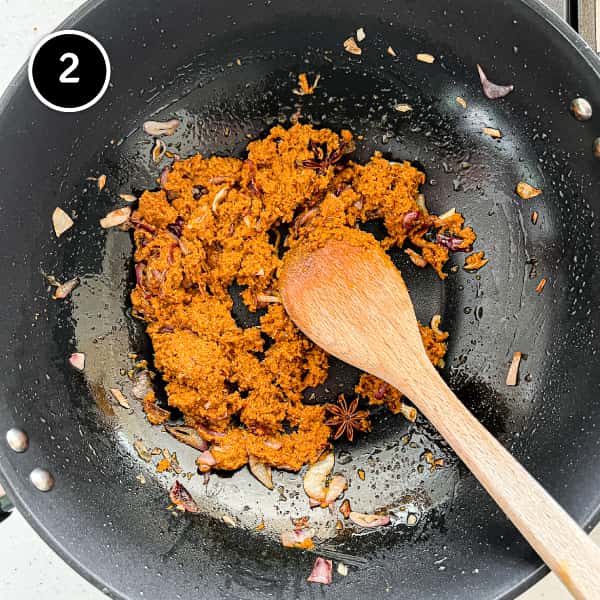
- Step 2 - Add the curry paste and stir fry for a few more minutes to cook out a little.
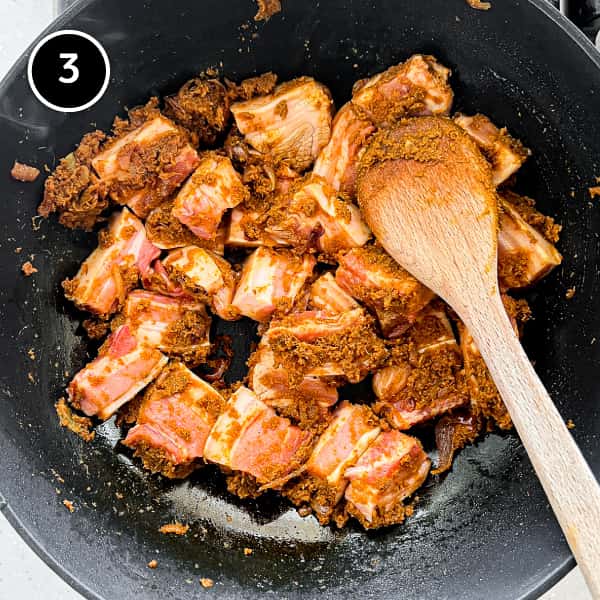
- Step 3 - Add the pork and again, cook for a few minutes until the pan is hot again and the pork beginning to cook.
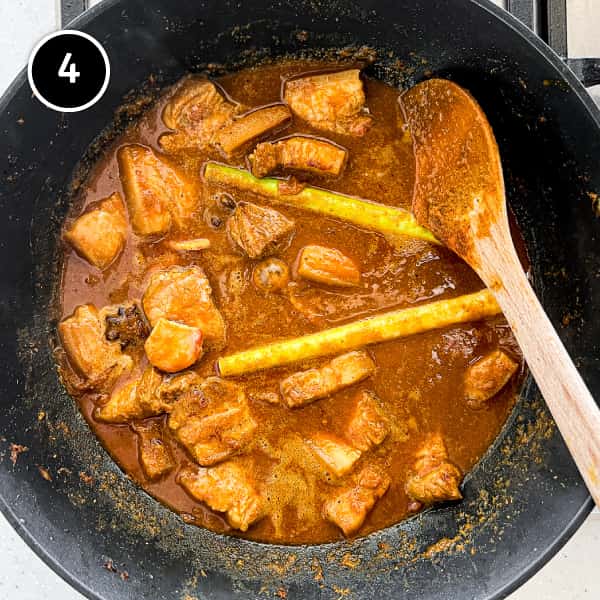
- Step 4 - Add the sugar, salt, fish sauce, tamarind, soy sauce and about 300ml/10oz water. Bring this to a simmer and then reduce the heat to low, cover the pan and gently cook for 90 minutes. After about 1 hour, remove the lid and simmer uncovered to reduce the sauce a little. Lastly, remove from the heat and stir in the vinegar. Serve with lots of fluffy jasmine rice.
Pro Tips
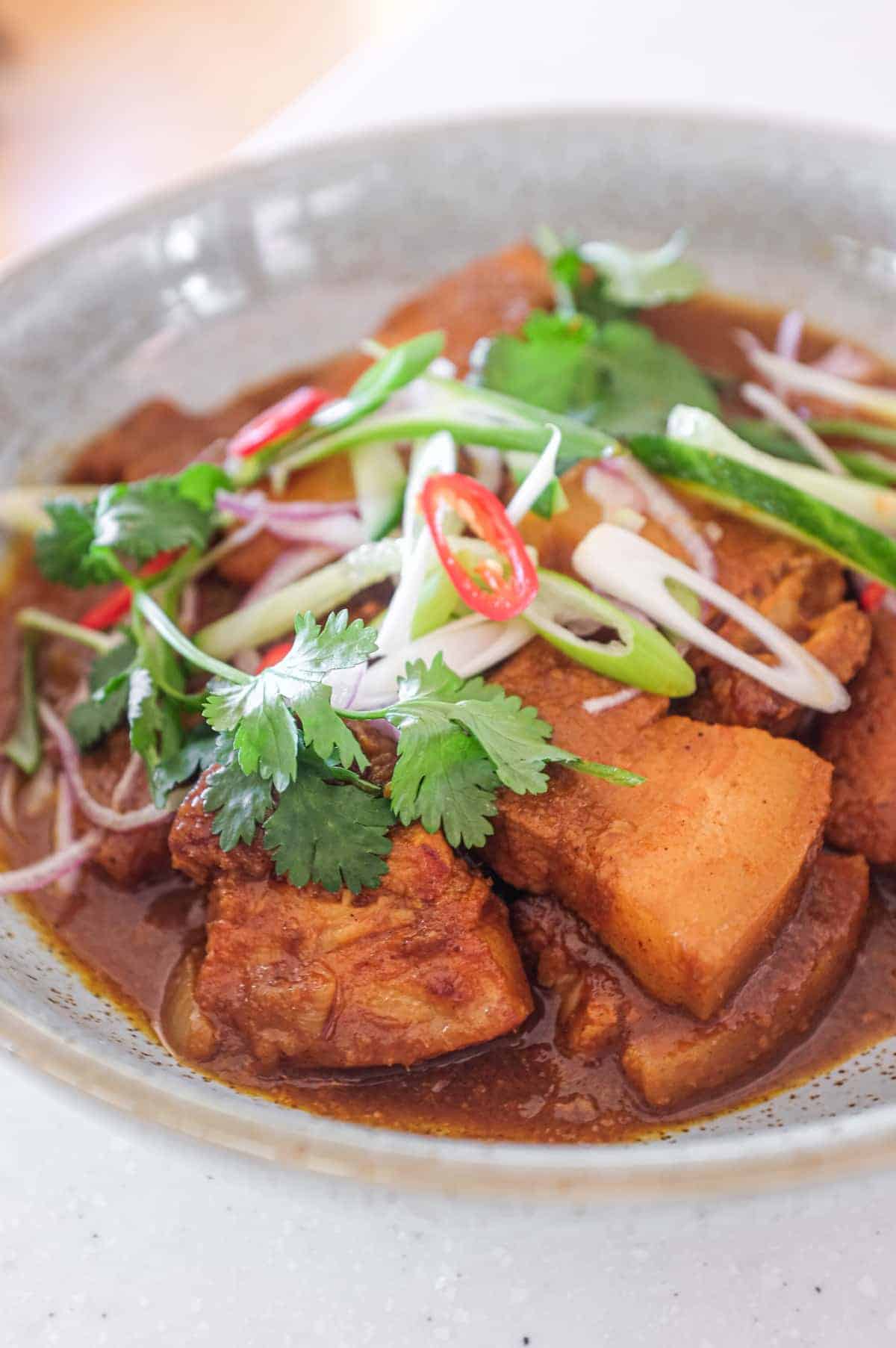
- Pickled garlic - Gaeng Hung Lay is often served with pickled garlic, but this can be tricky to find, so I simply add a little vinegar sourness at then end to mimic the pickle flavour. Coconut vinegar is the best, but cider vinegar works too. If you can find pickled garlic, omit the vinegar at the end in favour of a few pickled cloves of garlic, left whole or sliced and stirred into the curry.
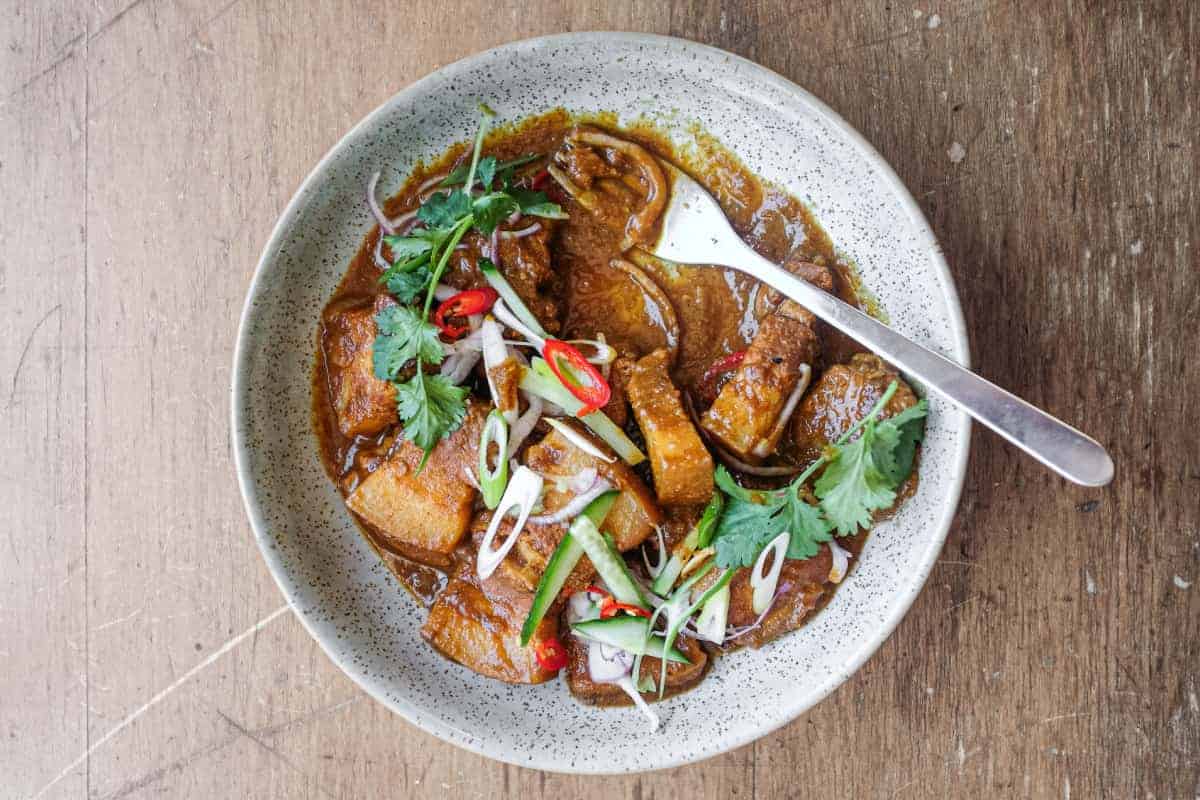
- Garnishes - As my recipe is quite spicy, I like to add a few garnishes that will act as cooling agents - cucumber is my go-to, but often I'll add fresh tomato too. Other ingredients I'll add to pretty up the presentation include sliced and lightly pickled shallots, fried shallots, spring onion (green onion), cilantro, mint, beansprouts, peanuts, cashews and sliced Thai/birdseye chillies for even more heat.
Storage Suggestions
- Fridge - This curry improves with age, and will be fine in the fridge for up to a week, stored in airtight containers. Reheat in a pan or microwave. One word of caution for microwave reheating is that pork belly can be a little tempremental when reheating. In fact, I had one piece from this very curry that exploded while I was stirring it from the microwave. Beware!
- Freezer - this dish is an excellent contender for the freezer and will be good for 3+ months. Defrost and reheat in a pan or microwave.
Ready to get cooking?
If like me you're always looking for new and interesting flavours, then this Northern Thai speciality is just for you. Packed with flavour, spice and personality it's one of the tastiest curries I've eaten in a long time. And the fact that it's actually a really simple one to put together at home makes it even more special! Hope you enjoy the recipe.
More Thai recipes
If you liked Gaeng Hung Lay, I'm sure you'll love some more of my best and tastiest Thai recipes.
This recipe uses affiliations and may receive a commission based on your activity (link clicks). Learn more.
Ingredients
Curry Paste Ingredients
- 2 stalks lemongrass white part only, finely sliced (keep the green parts if you have them)
- 4 cm galangal 1.5" - peeled, roughly chopped
- 2 shallots peeled and chopped
- 4 tsp garam masala
- 1 tsp chilli powder hot or mild
- 1 tsp turmeric
- 1 tsp shrimp paste
- 4 garlic cloves
- 1½ tsp sea salt
Curry Ingredients
- 2 tbsp vegetable oil
- 2 shallots peeled and sliced
- 2 star anise
- 1.8 lb pork belly (800g) cut into chunks
- 2 tbsp tamarind pulp
- 2 tbsp sugar
- 1 tsp dark soy
- 1 tbsp fish sauce
- 2 slices galangal
- 1 tbsp coconut vinegar or apple cider vinegar
Instructions
Curry Paste
- Place all the curry paste ingredients into a blender and blend into a smooth paste.
For the curry
- Heat the oil in a large pan until hot and then add the sliced shallots and star anise and fry for 2-3 minutes
- Add the curry paste and fry for 1-2 minutes more until fragrant.
- Add the pork and fry for another 3-4 minutes
- Add the tamarind, sugar, soy sauce, fish sauce, galangal slices and about 400ml water. If you have the green parts of the lemongrass stalks, add them at this stage too.
- Bring to a simmer and then reduce the heat to low, put on a lid and cook gently for 1 hour then remove the lid and bubble for another 30-50 minutes until the pork is tender and the sauce reduced.
- Remove from the heat, stir in the vinegar then serve. Garnish with whatever takes you fancy (see notes below)
Notes
- Pickled Garlic
Gaeng Hung Lay is traditionally paired with pickled garlic, but since it can be hard to find, I substitute a touch of vinegar at the end to replicate its tangy flavor. If you do manage to get your hands on pickled garlic, skip the vinegar and instead stir a few whole or sliced pickled cloves into the curry for an authentic touch. - Garnishes
To balance the spiciness of the curry, I like to include cooling garnishes. Cucumber is my favorite, but fresh tomato works well too. For extra flavor and visual appeal, I often add sliced, lightly pickled shallots, fried shallots, spring onions (green onions), cilantro, mint, beansprouts, peanuts, cashews, and, for those who love extra heat, sliced Thai or bird’s eye chilies. - Alternative meats
You can use shoulder or butt of pork instead of belly. You can also try this dish with beef or lamb for a different take. Any slow-cooking cut will work, preferably with a little fat to avoid it drying out. - Storage
The curry will be good in a fridge for up to a week and in the freezer for 3+ months. Keep in airtight containers and reheat in a pan or microwave until hot.
Love this curry! Gaeng Hung Lay is one of my favourite dishes. The balance of tamarind and ginger is key – most people don’t realise it’s actually a Burmese influence. I also add a touch of peanut butter to thicken it up. Great recipe!
Thankyou. Love it too. Glad you approve!
Lovely recipe. Very simple to follow.
Thankyou, so glad you enjoyed this delicious curry.