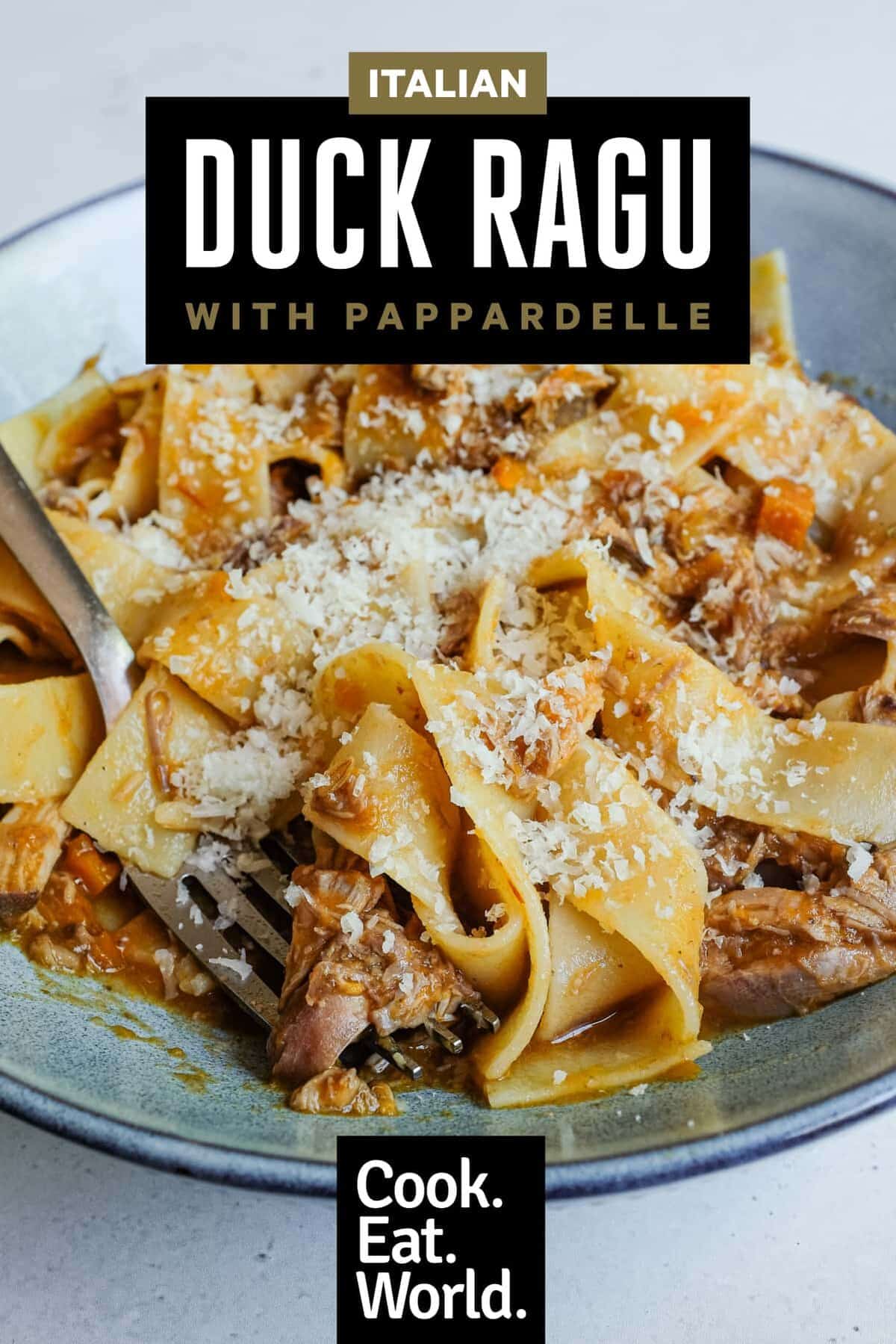
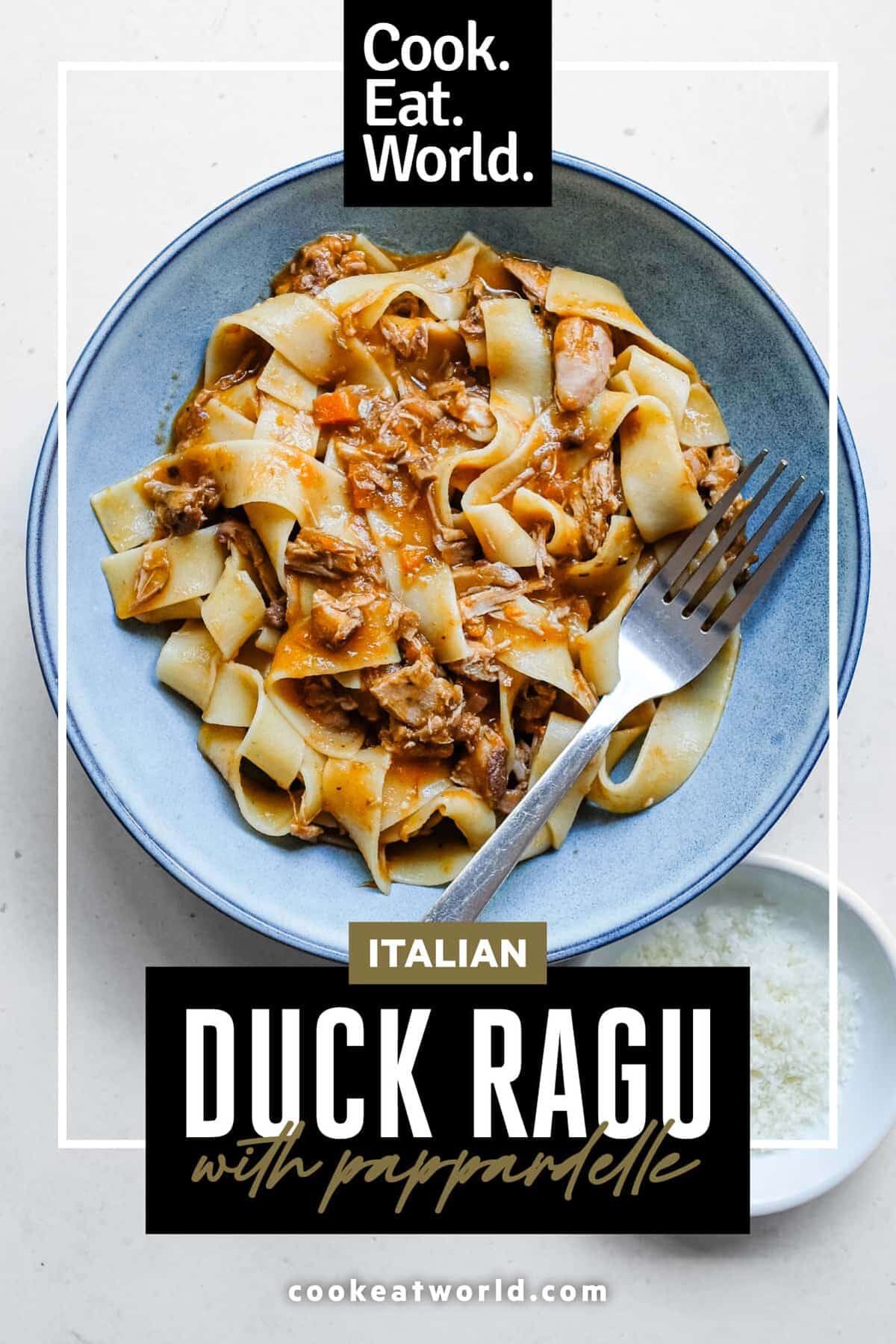
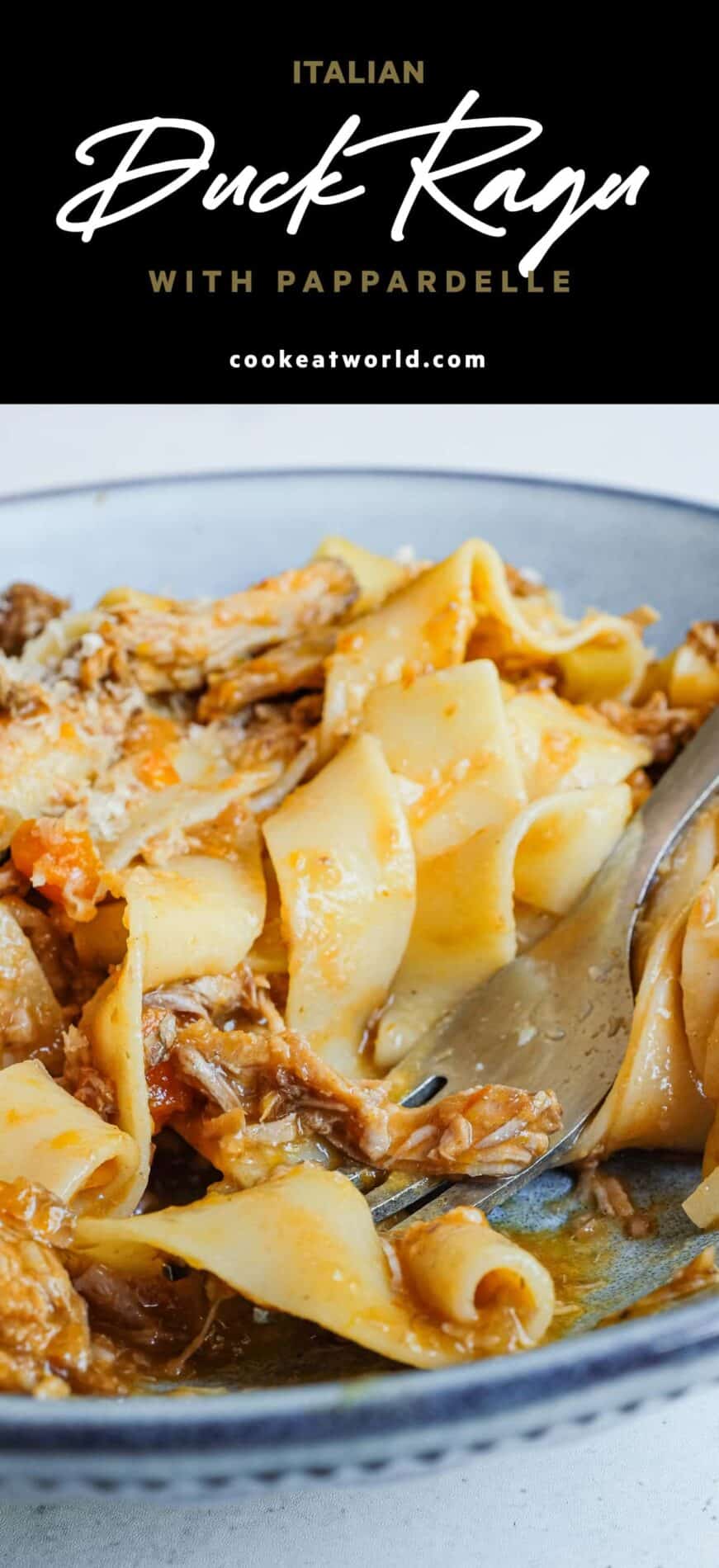
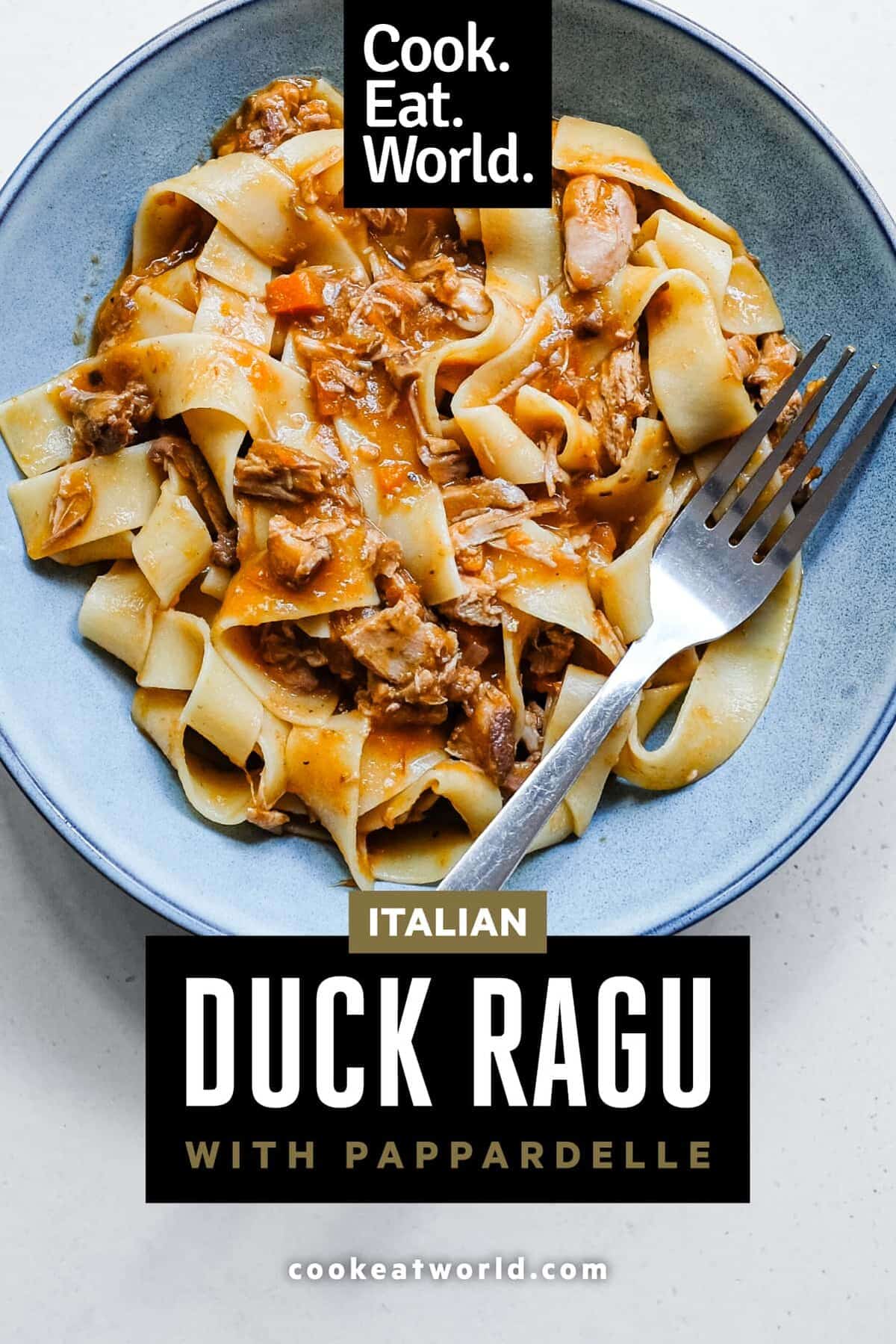

Duck Ragù with Pappardelle
By Lee Jackson ↣ Published on: March 10, 2026
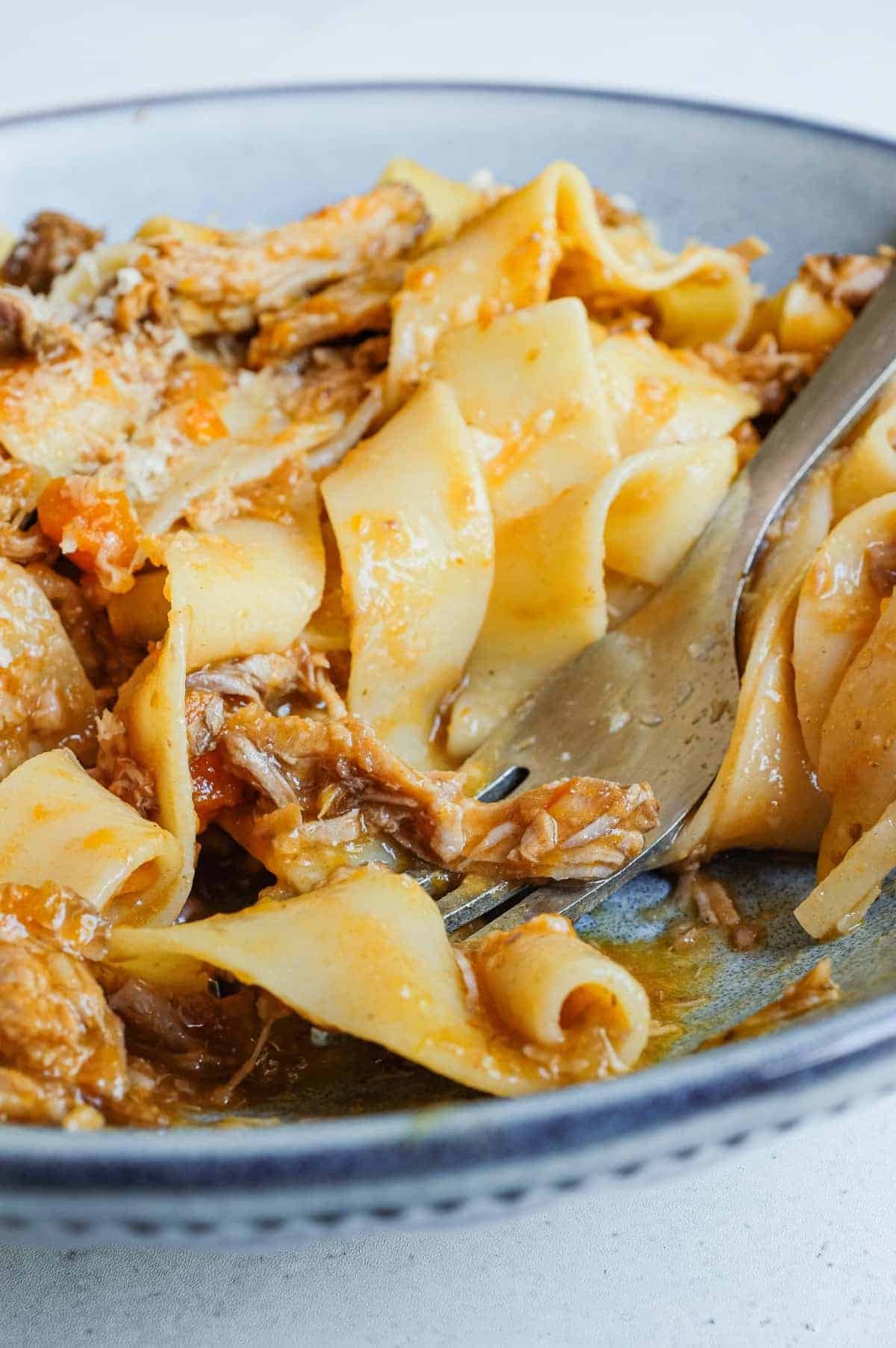
Slow-cooked and warming, my duck ragù with silky pappardelle pasta is a stand-out dish if ever there was one. The fragrant sauce clings to the pasta and the whole thing feels so luxurious and decadent.
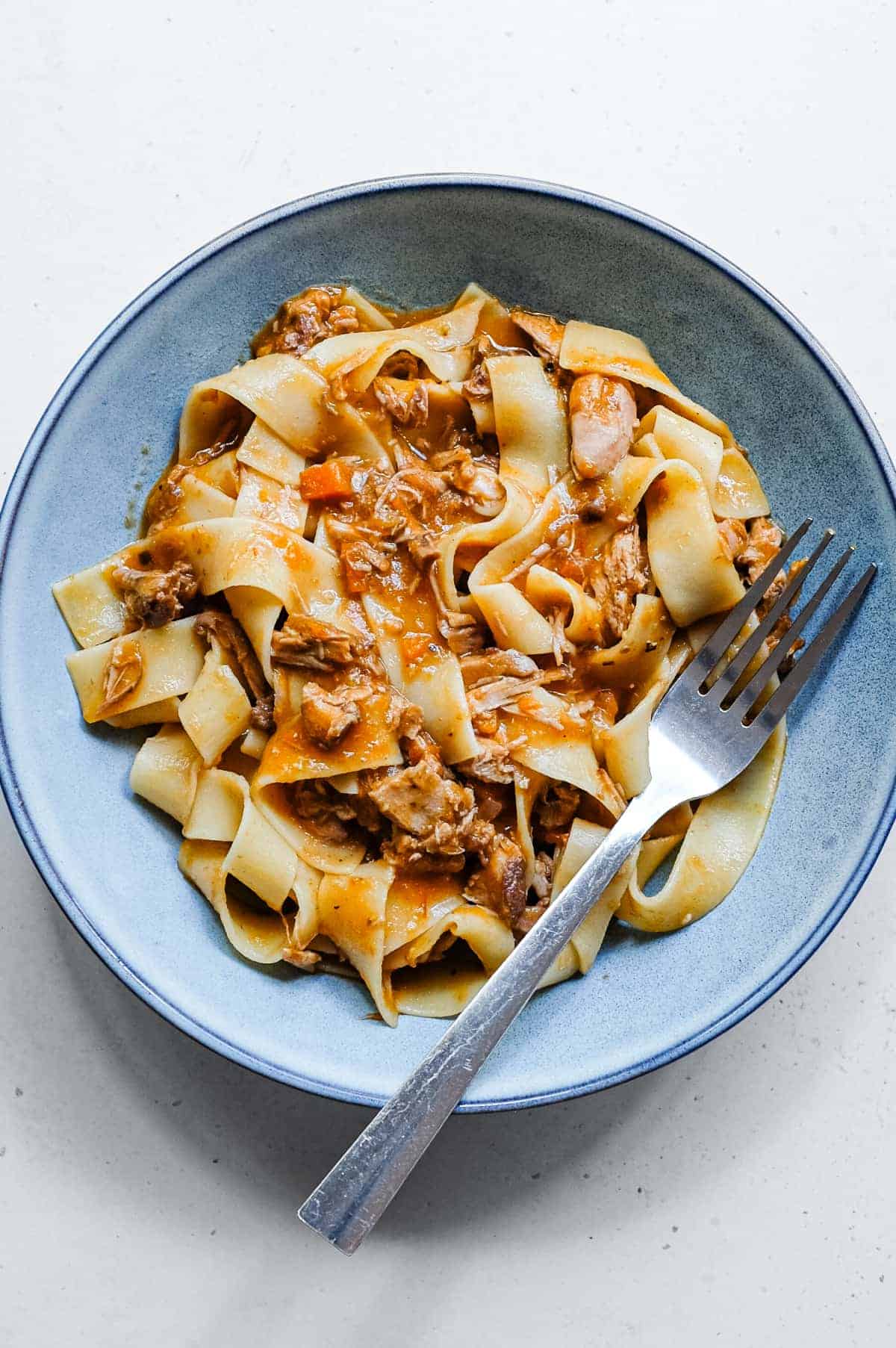
Duck Ragù is widely eaten in Central Italy in Tuscany and Umbria where game and poultry was more accessible than beef. In the age-old tradition of what is commonly accepted as 'ragù', the sauce is cooked low and slow until the meat is fall-apart tender and the sauce thick and rich — a little goes a long way.
Commonly it's eaten with a ribboned pasta like pappardelle, fettuccine or tagliatelle, but any pasta works to be honest. I'll often eat mine with a ridged penne or rigatoni to capture all that delicious sauce.
This recipe is part of my curated Italian Collection and also my Italian Comfort Food page, where you'll find many more of my favourite Italian dishes.
What's Ahead?
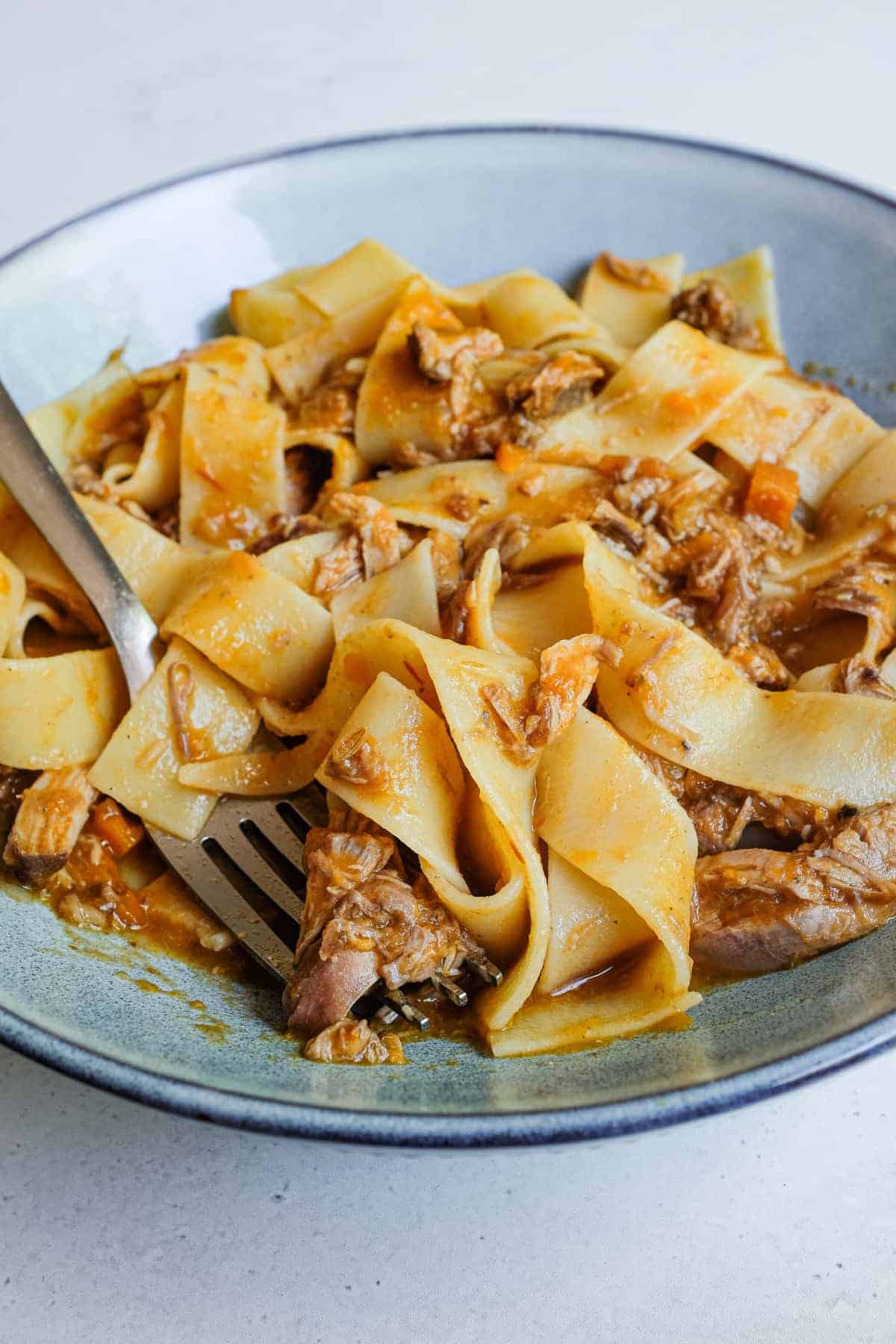
What is Duck ragù?
Ragù means 'sauce' in Italian, but we generally imply slow-cooked sauces when we refer to it. There are many varieties of ragù in Italy and many techniques and regional specialities throughout the country. 'Ragù di Anatra' (duck ragù) is commonly eaten in the central regions of Tuscany and Umbria, where the game birds are plentiful.
I first sampled duck ragù in the lovely town of Macerata in the Central Marche region, over 15 years ago and have been making one version or another ever since. There are many varieties of the dish, some more tomato heavy than others. My tried and tested version is more of a Northern-style ragù which, while it contains tomato, isn't reliant on them for all the flavour. Instead the sauce is a combination of tomato, red wine, and chicken stock—the results are bold without the dominant tang or sweetness of a tomato-rich sauce.
Why You'll Love it
- It's simple to make - the ragù is really easy to pull together, using humble ingredients.
- It's tried and tested - I've perfected this recipe over the years and this is the most stripped back, guaranteed delicious version.
- Pappardelle is the perfect pasta - this glossy sauce sticks to the thick ribbons of pasta beautifully. There's a reason this style of ragù works so well!
- Duck is a great alternative - slow cooked meats like beef and lamb are fabulous, but duck just feels special—and it is!
Stuff You'll Need
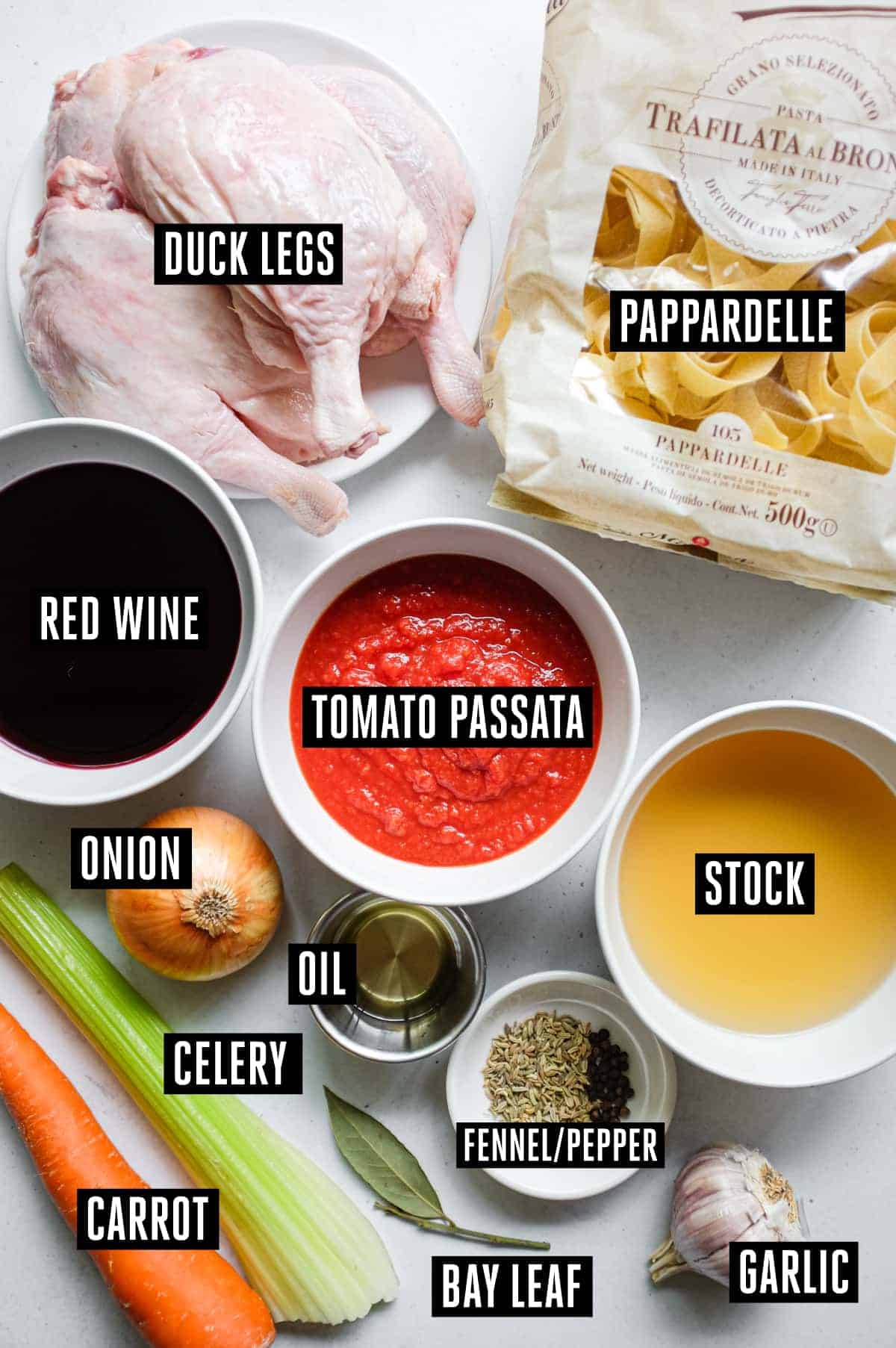
Other than duck, all the ingredients are simple, pantry staples. If you're struggling to find duck legs in your regular supermarket, I find that Asian supermarkets stock them either fresh or frozen.
- Duck legs - the leg cut is essential for this ragù. Duck breasts are not suitable as they will dry out.
- Aromatics - Carrot, onion, celery and garlic give the sauce its body.
- Red wine - for a rich ragù I use red wine, but if you like it a little lighter, use a dry white wine which will give excellent results.
- Tomato passata - I use only a little, so that the sweetness and colour is there, but not overpoweringly so.
- Chicken stock - instead of water will give more depth of flavour.
- Fennel, pepper and bay leaf - add their floral fragrance and earthiness to the sauce.
Step by Step
This is a low and slow dish, so while it takes a long time to cook, to get started is really easy. Take a look at how the magic happens.
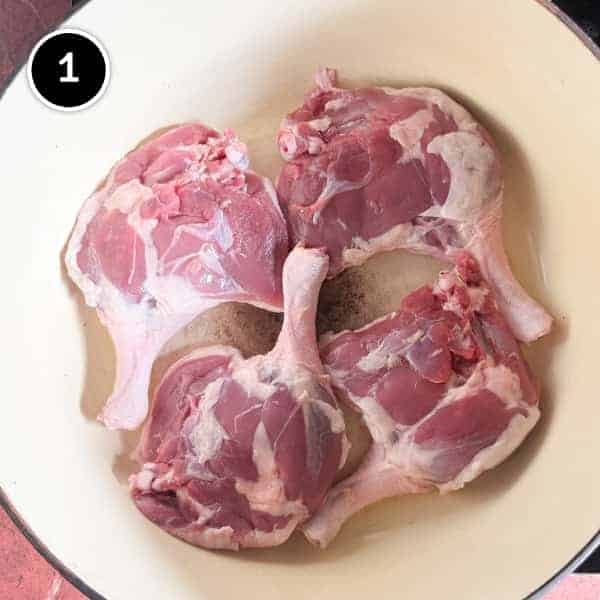
- Add the duck legs to a cold pan and then gently bring to a heat to render off the excess duck fat. Most of this is poured away for the next step.
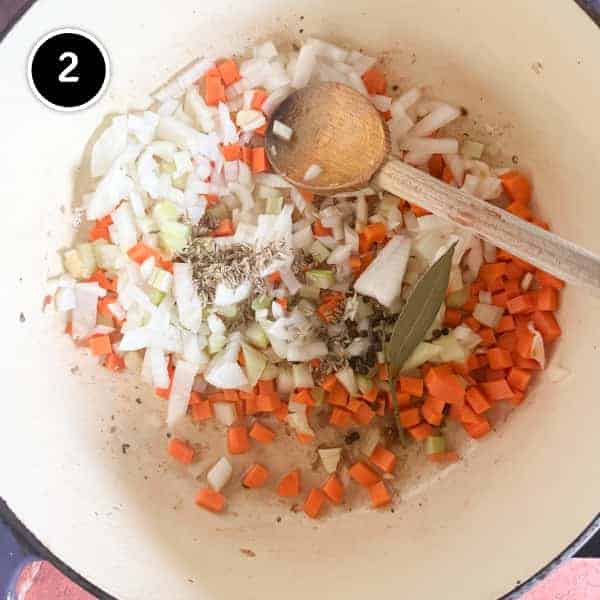
- Add the onion, carrot, celery, garlic, pepper, bay leaf and fennel to the pan and fry for a few minutes to soften.
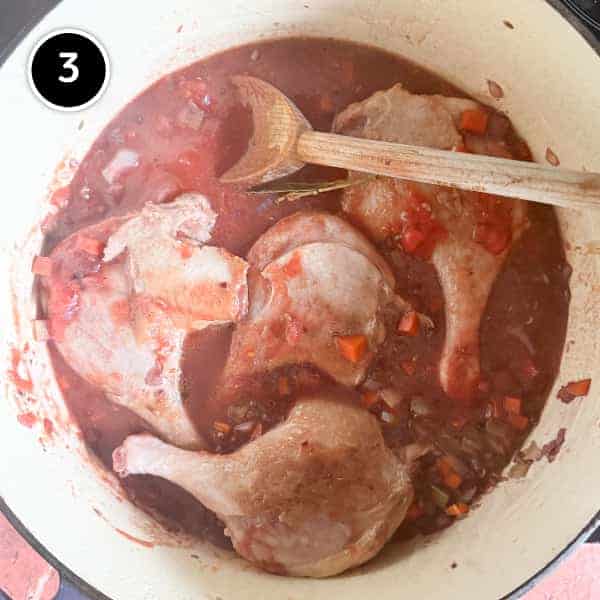
- Add the red wine, sizzle briefly and then add the stock and tomato passata and bring to a simmer.
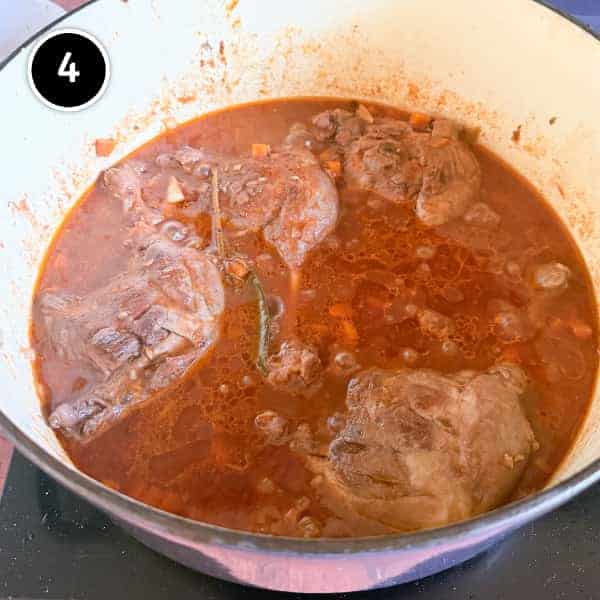
- Cook for 2½ - 3 hours until the duck is soft. Season with salt to taste.
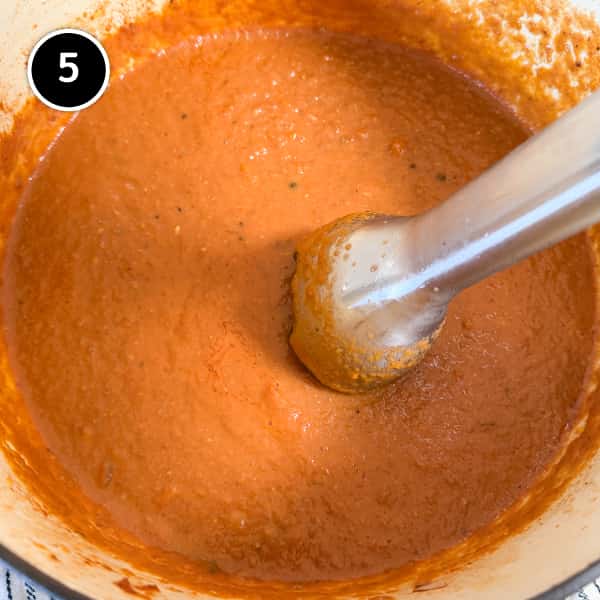
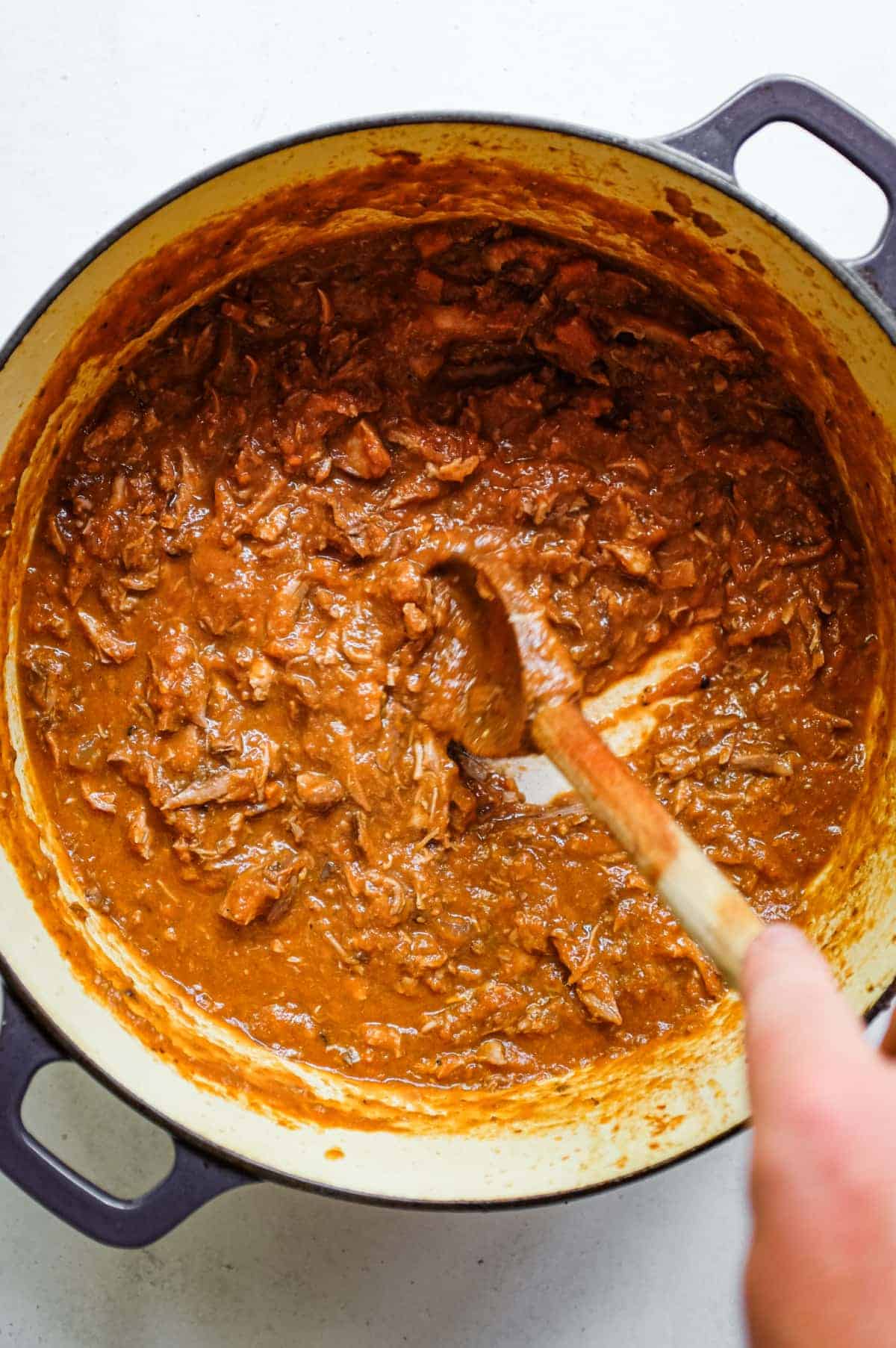
- Remove the duck and bay leaf and then using an immersion blender, blend the sauce until smooth.
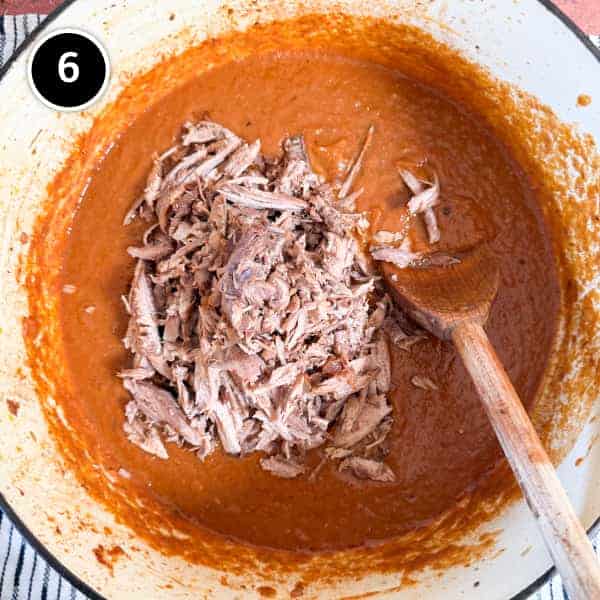
- Remove the duck meat and discard the skin and bones. Chop this duck roughly and return it to the pan. That's it! The ragù is done.
Now all that's needed is to cook the pasta and toss the two together, remembering to add a little pasta cooking liquid to the pan to loosen and help emulsify the sauce.
Substitutions and Suggestions
- No duck? This recipe works well with other meats like chuck-steak, osso buco, beef short ribs or lamb shanks.
- Herbs - fresh herbs work well in this dish, I often tie up sprigs of thyme, rosemary, sage, oregano and marjoram to make a 'bouquet garni' which adds a splendid floral fragrance.
- Red or white wine - Use red for a deeper flavour, white for a lighter touch.
- Southern Italian style sauce - For a more tomato forward dish, omit the red wine altogether and use around 600ml of tomato passata instead - then add a tied small bunch of fresh basil instead of fennel seeds (fish out at the end).
- Pasta shapes - A ribboned pasta like pappardelle is traditional, but try others like fettuccine, tagliatelle, paccheri as the sauce sticks well. You can, of course, use any pasta YOU like!
Serving and Storage
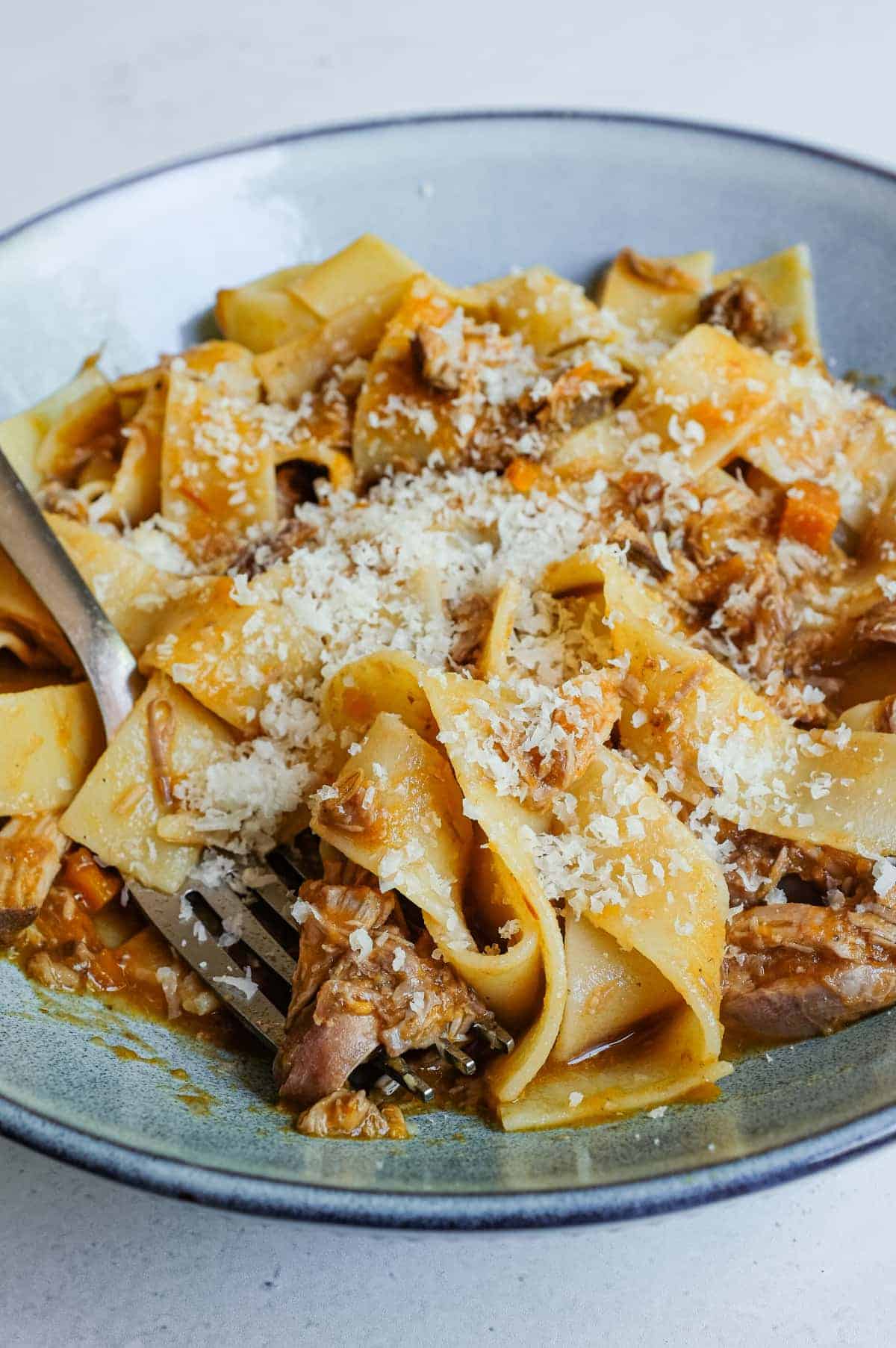
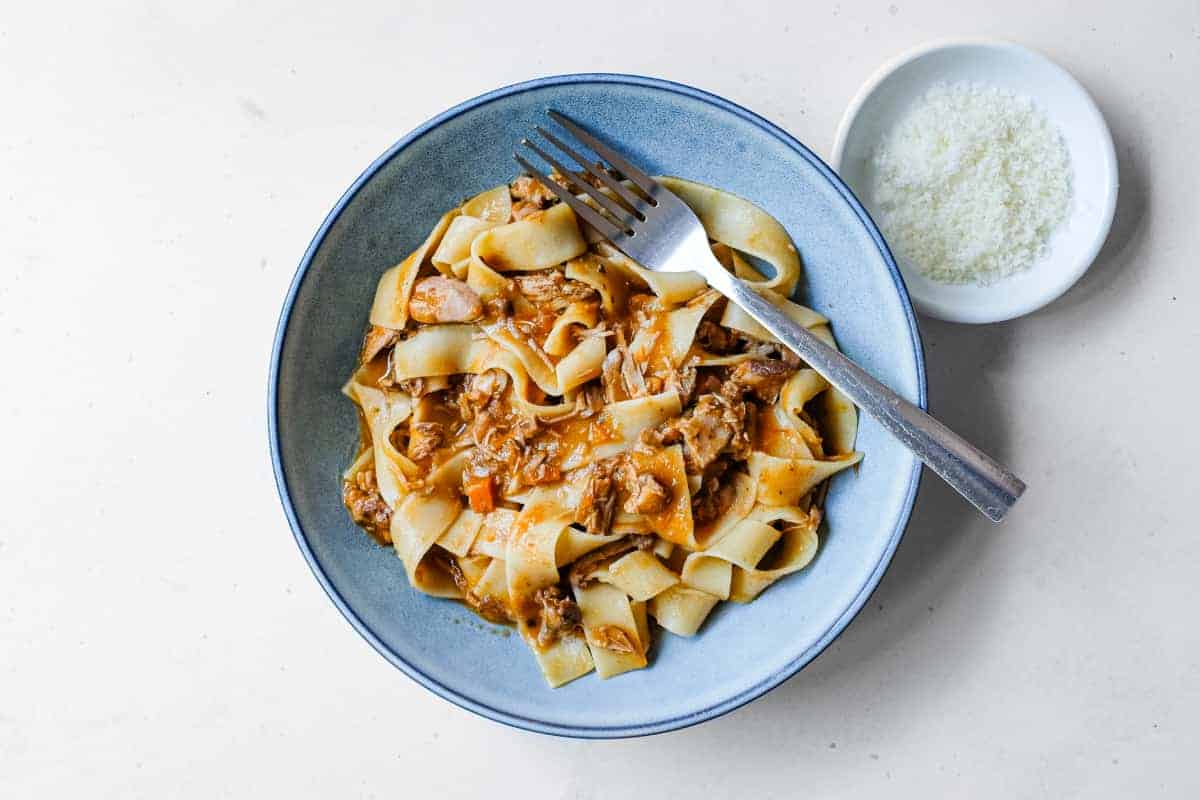
- Serving - Serve with a little Parmigiano Reggiano or pecorino to sprinkle over.
- Fridge - The ragù will be good in the fridge for 4-5 days in an airtight container.
- Freezer - The sauce freezes well on its own. Just portion into airtight containers or bags and they'll be good for 3+ months.
Ready to get cooking?
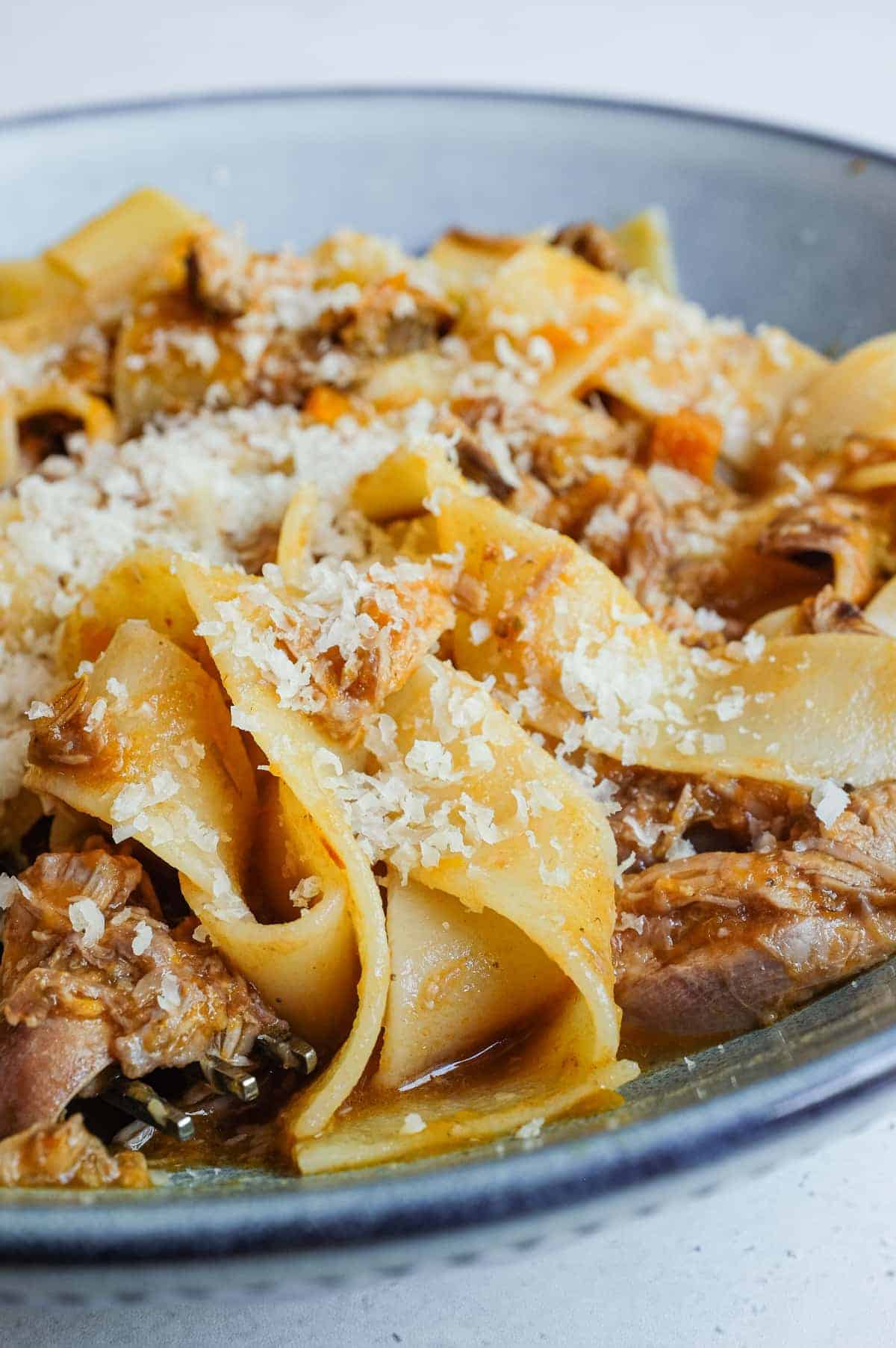
This duck ragù is a wonderful option for those who want something a little different, that offers the familiar warmth of Italian comfort food. A silky, rich sauce that delivers on flavour, texture and aroma. This is regional Italian at its very best - hope you enjoy!
More ragù recipes
If you liked this ragù recipe, I'm sure you'll love some more of my favourite Italian sauce suggestions.
Any Questions? (FAQ)
Have a question? Let me know in the comments.
Can I make duck ragù ahead of time?
Yes. Duck ragù actually improves with time. You can make it 1–2 days in advance and store it in the fridge. Reheat gently and toss with freshly cooked pasta before serving. You can also freeze the sauce for 3+ months.
Can I use duck breasts instead of duck legs?
No, duck legs contain more connective tissue and fat, which break down during slow cooking. Duck breasts are much leaner and will dry out in a long-simmered ragù. They're not for use in this recipe.
What's the best pasta to serve with duck ragù?
Wide ribbon pastas like pappardelle, tagliatelle, or fettuccine are ideal. Their broad surface helps catch the rich sauce, though ridged shapes like rigatoni or thick bands like paccheri also work well.
This recipe uses affiliations and may receive a commission based on your activity (link clicks). Learn more.
Ingredients
- 4 duck legs trimmed of excess fat
- 1 tsp olive oil
- 1 onion chopped
- 1 carrot chopped
- 1 celery stalk chopped
- 3 garlic cloves chopped
- ½ tsp peppercorns
- 1 tsp fennel seeds
- 1 bay leaf
- 1 cup red wine
- 1 cup tomato passata
- 1½ cups chicken stock
- Salt
- 600 g Pappardelle pasta
Instructions
- In a large Dutch oven or casserole pan, add the oil. Place the duck legs, skin side down and turn on the heat to medium/low. Let them sizzle and render off their fat for around 8 minutes. Remove the duck and pour out half the oil.
- Add the chopped onion, carrot, celery, garlic, fennel, peppercorns, and bay leaf, and fry gently for 5 minutes until softened.
- Add the red wine and let it sizzle for 1-2 minutes to burn off the alcohol before pouring in the tomato and stock. Let this come to a simmer, then reduce the heat to low and partially cover the pan.
- Let this simmer gently for 2½ - 3 hours until the duck is tender. Remove the duck pieces from the sauce to cool.
- Remove and discard the bay leaf, and then using an immersion blender, blend the sauce until smooth.
- Slide the duck off the bone, discarding the skin and bones and chop the meat roughly. Return this to the sauce and stir through.
- Cook the pappardelle to the packet instructions in generously salted water. Drain, retaining about 1 cup of the cooking liquid.
- Add the pasta back to its pan along with around ¾ of the sauce and about ½ of the pasta water. Stir to coat everything, adding more sauce or water if needed.
- Portion into bowls and serve with a little more sauce on top. You can accompany with some finely grated Parmigiano Reggiano or Pecorino cheese to dust over the pasta.
Notes
- Substitute meats: Chuck steak, osso buco, beef short ribs, or lamb shanks all work well.
- Herbs: Tie thyme, rosemary, sage, oregano, and marjoram into a small bouquet garni (remove before serving).
- Wine: Red for a deeper flavour, white for a lighter sauce.
- Tomato-forward option: Omit the wine and use 600 ml tomato passata instead. Add a tied bunch of fresh basil in place of fennel seeds, removing at the end.
- Pasta: Pappardelle is traditional; fettuccine, tagliatelle, or paccheri also work well.
Nutrition
Leave A Comment