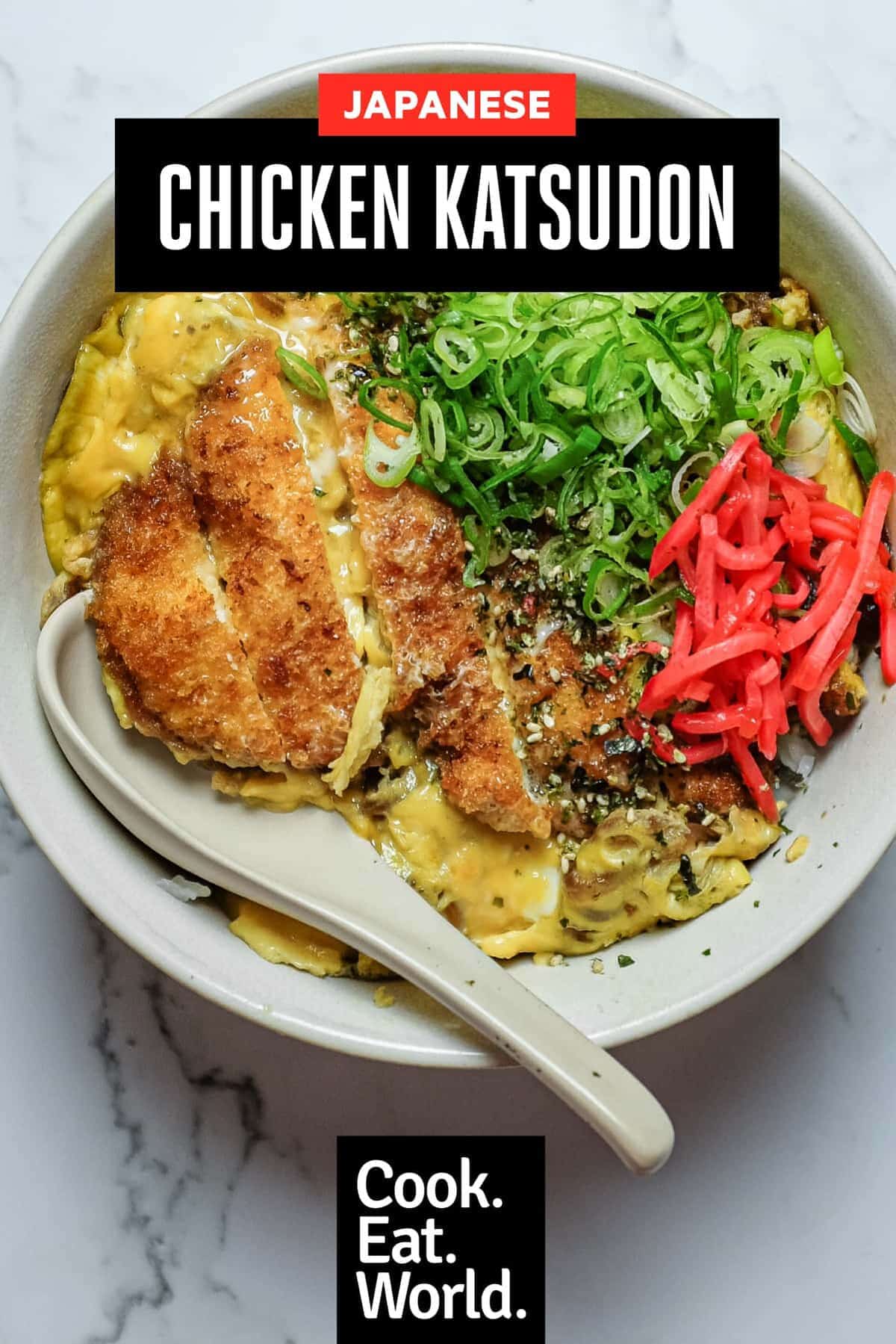

Chicken Katsudon – チキンカツ丼
By Lee Jackson ↣ Published on: February 2, 2026
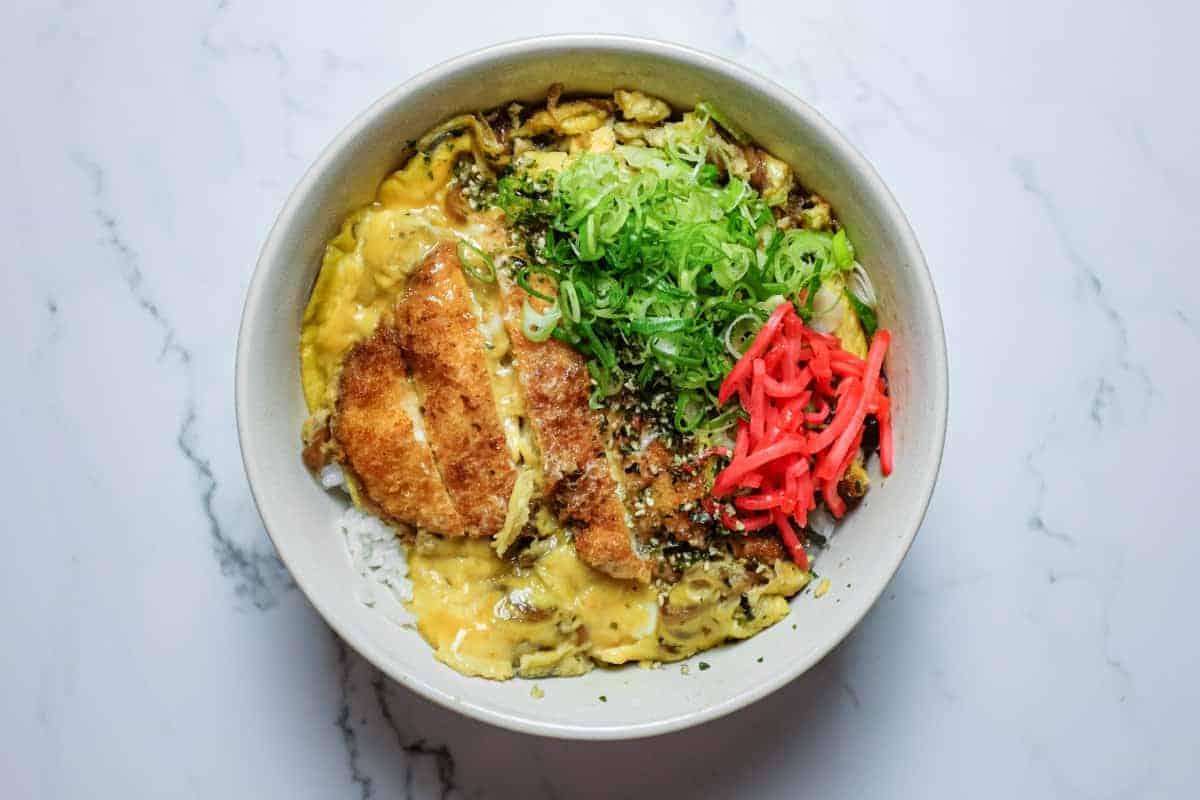
Chicken katsudon (チキンカツ丼) is a classic Japanese rice bowl made with crispy chicken katsu, softly cooked eggs and a sweet-savory dashi sauce, all served over fluffy rice. Comforting, filling and full of umami, it’s simple homestyle cooking that delivers big flavour with minimal fuss.
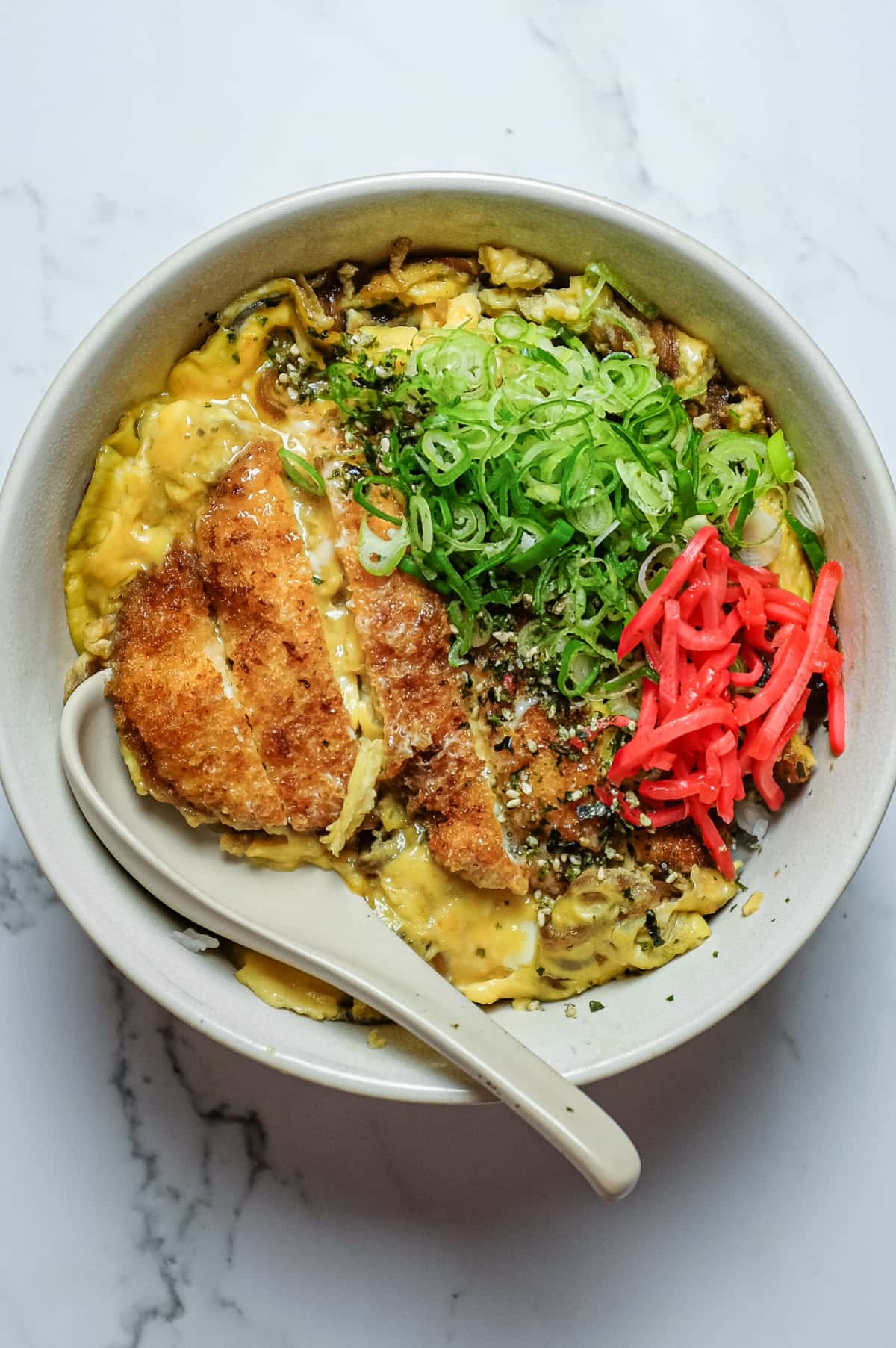
For those days when you just need something restorative, this classic Japanese 'donburi' 丼, translated quite literally as 'bowl' is a healing, hearty fix to any hunger/hanger situation. Crunchy cutlets of chicken (or pork) sit in a seasoned egg mixture and are lovingly placed over fluffy rice.
Unlike dishes where crispness is everything, authentic katsudon deliberately lets the coating soften, soaking up flavour rather than fighting it. The result is rich but gentle, deeply savoury without being heavy, and incredibly comforting. It’s everyday Japanese food at its best.
This recipe is part of my Asian and Asian Street Food collections, capturing the bold flavours and fast, vibrant cooking found across the region.
What's Ahead?
- What is donburi?
- Stuff You'll Need
- Step by Step
- Pro Tips - get a donburi pan
- SUBSTITUTIONS & VARIATIONS
- Serving & Storage Suggestions
- FAQ (Frequently asked questions)
- Ingredients
- Instructions
- Nutrition
- 7 RECIPES I COOK ON REPEAT FROM AROUND THE WORLD
- THE 10 ASIAN RECIPES I COOK THE MOST. Tried, tested and cooked on repeat!

What is donburi?
Donburi (丼) simply means “bowl” in Japanese, and refers to a whole category of meals served over rice in a single bowl. They’re fast, affordable, filling, and deeply ingrained in everyday Japanese food culture.
- Gyūdon - 牛丼 - Thinly sliced beef simmered with onion in a sweet dashi broth.
- Tentamadon - 天玉丼 - Delicious crunchy tempura fish or vegetables simmered in an egg dashi sauce.
- Oyakodon - 親子丼 - Chicken served with a sweet egg/dashi mix and fresh scallions.
- Chashudon - チャーシュー丼 - a delicious combination of stewed chashu pork with eggs, pickles and scallions. Get my recipe for Chasu Don
- Tamagodon - 玉子丼 - Dashi flavoured scrambled eggs over rice. Get my recipe for Japanese Scrambled Eggs.
- Unadon - 鰻丼 - Soy glazed eel fillets, charred over hot coals. A super tasty, humble and simple donburi to make at home.
Why You'll love chicken Katsudon
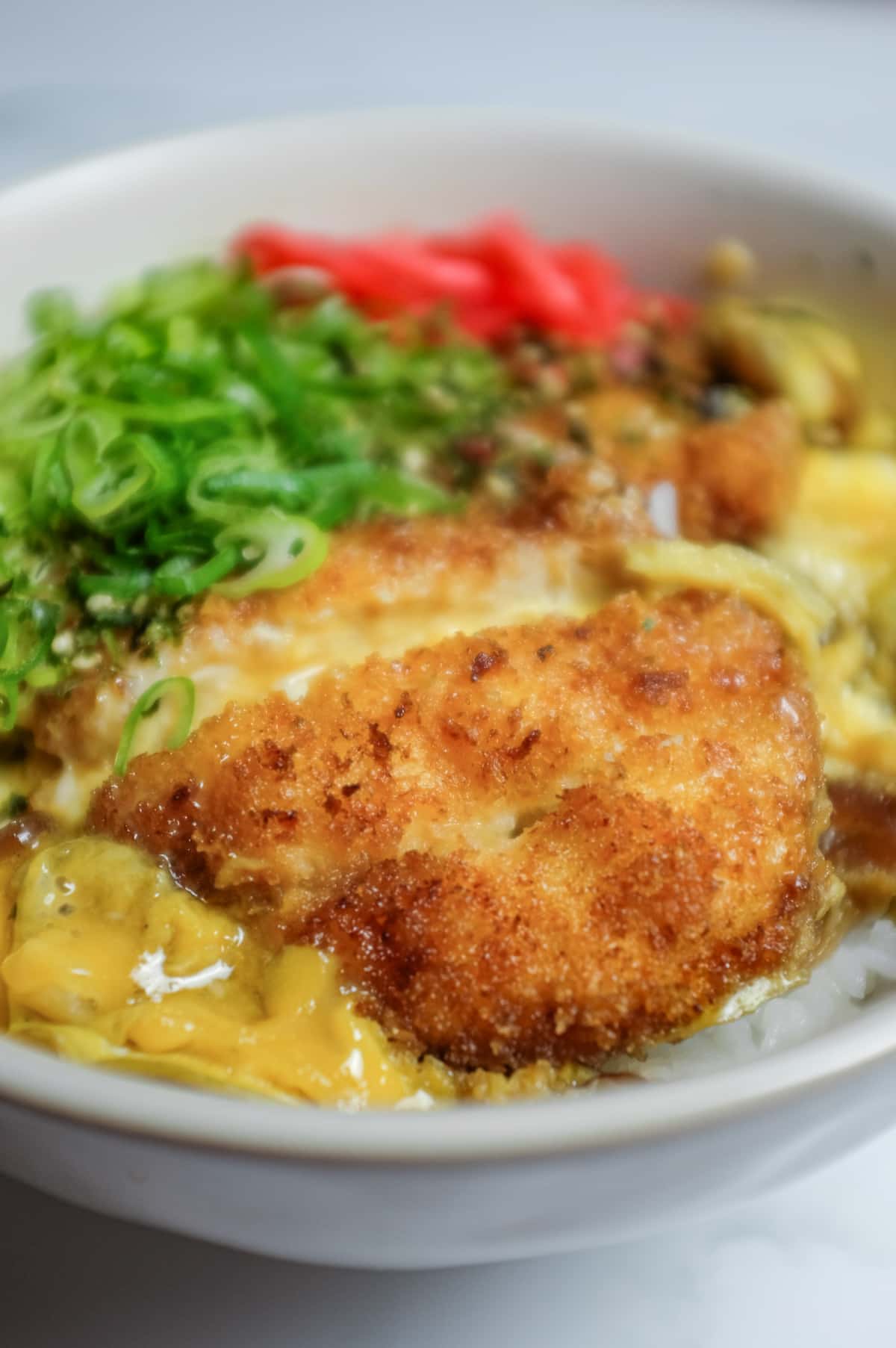
Katsudon deliberately breaks the “keep it crunchy” rule. Instead of preserving the crisp crust, the cutlet is gently steamed in sauce and egg — and that’s the magic.
The breadcrumbs absorb the sweet, savoury dashi, the eggs stay soft and silky, and the whole dish becomes more flavourful, not less. It’s intentional, comforting, and completely addictive.
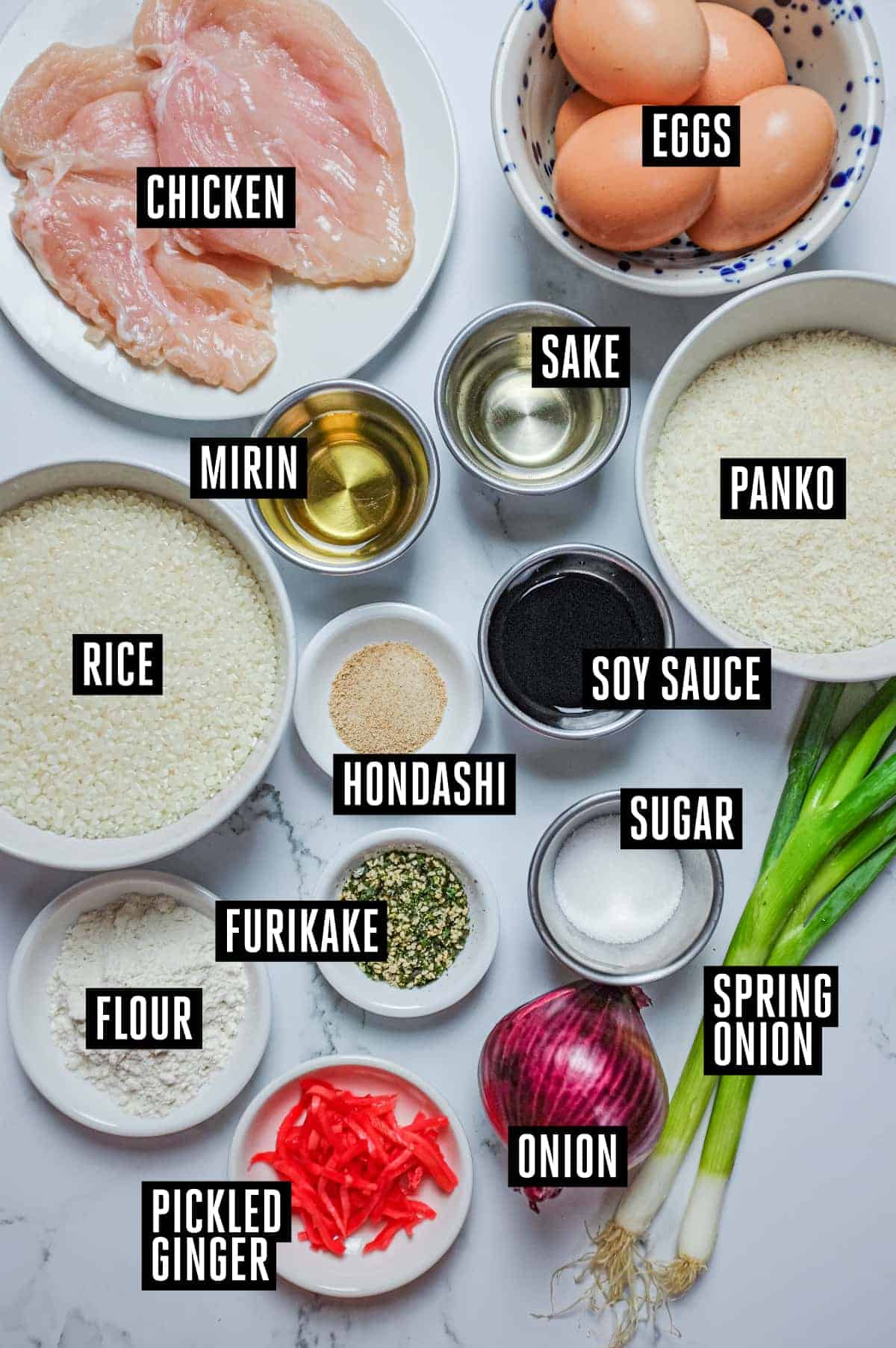
Stuff You'll Need
Making Chicken Katsudon is easy, but you'll need a few Japanese essentials first.
- Chicken Breast - Pounded thin for even cooking.
- Breading Ingredients - Flour, Eggs and finally the traditional Japanese crunchy Panko Breadcrumbs
- Oil - for frying the cutlets.
- Onion - the onion becomes part of the sauce mixture that the cutlet sits in.
- Mirin - Mirin is a sweet Japanese cooking wine, that brings a subtle sweetness to the onion braising liquid
- Hondashi - Hondashi mix the key to the delicious authentic Japanese flavour - dried and powdered bonito fish
- Sake - Japanese sake adds a level of complexity to the sauce
- Soy sauce - adds a salty umami.
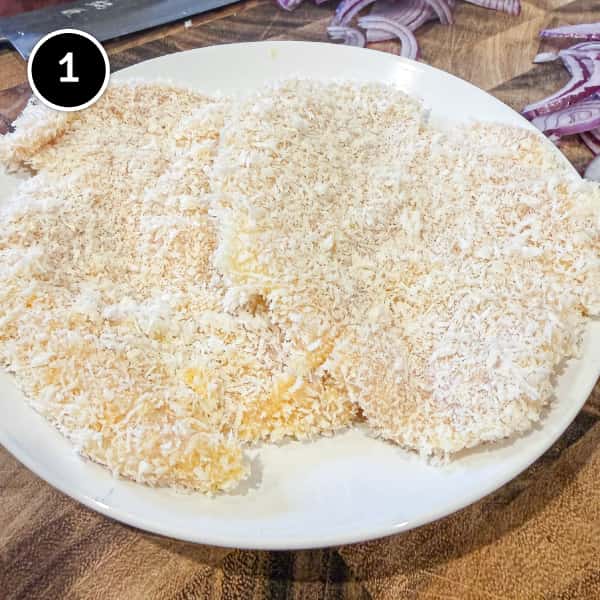
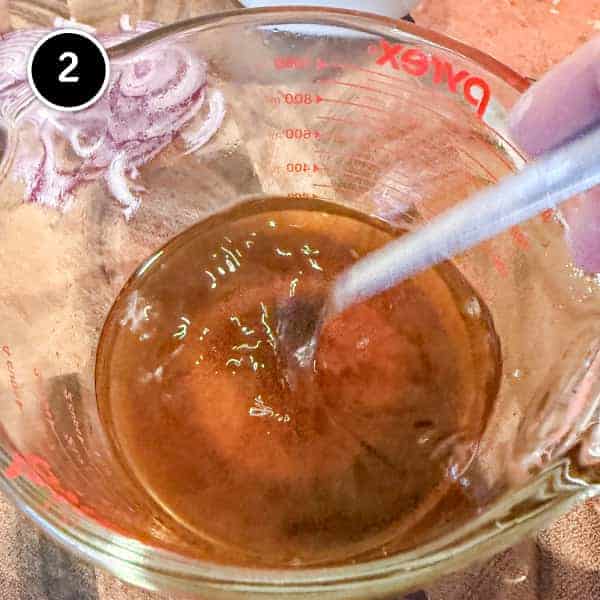
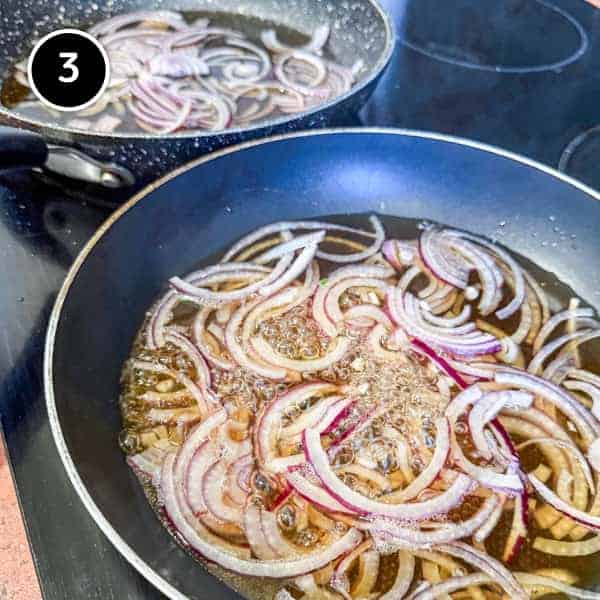
Step by Step
Making this dish is easy and once you get the technique down you'll be making katsudon like a pro. Each serving is typically made individually, so you may need a few pans if you're cooking for more than one. My recipe makes two.
- Step 1 - Pound the chicken breasts into thin cutlets, then set up a breading station of flour, beaten egg and breadcrumbs, then coat each cutlet in that order.
- Step 2 - Whisk together 1 cup freshly boiled water with the hondashi, soy, mirin, sake and sugar.
- Step 3 - Separate the onion into two pans and pour half of the hondashi liquid over each. Bring to a light simmer, cover and bubble gently over a low heat for 15 minutes.
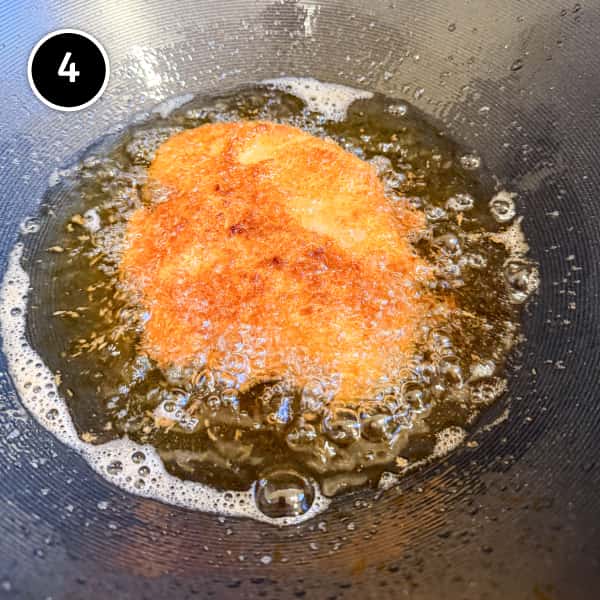
- Step 4 - Meanwhile, fry the chicken cutlets until golden brown and drain on paper towels.
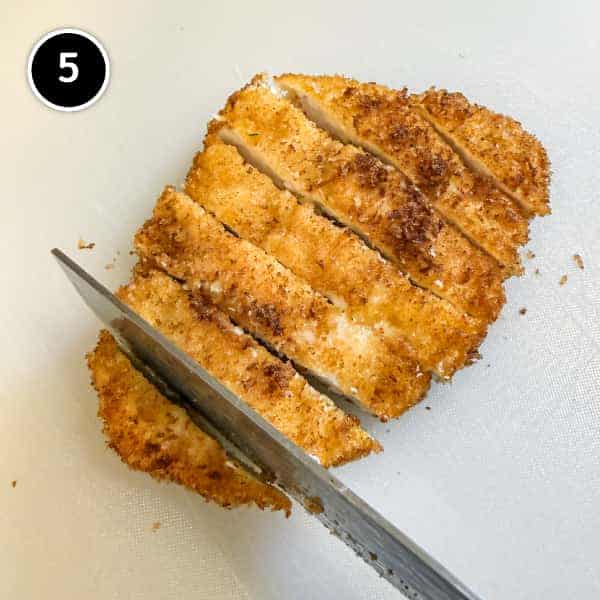
- Step 5 - Cut the fried katsu into thick strips, while keeping its original shape
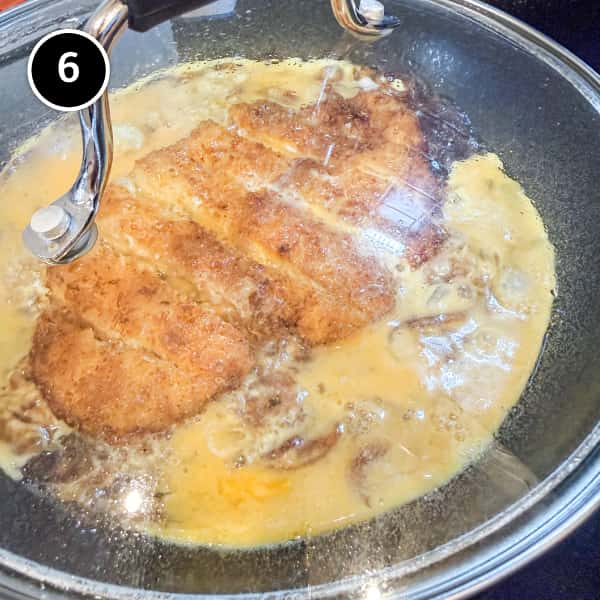
- Step 6 - Lay a cutlet on top of the softened onions in each pan, turn up the heat to high and pour two beaten eggs over each cutlet and pop on a lid to steam for a minute or two.
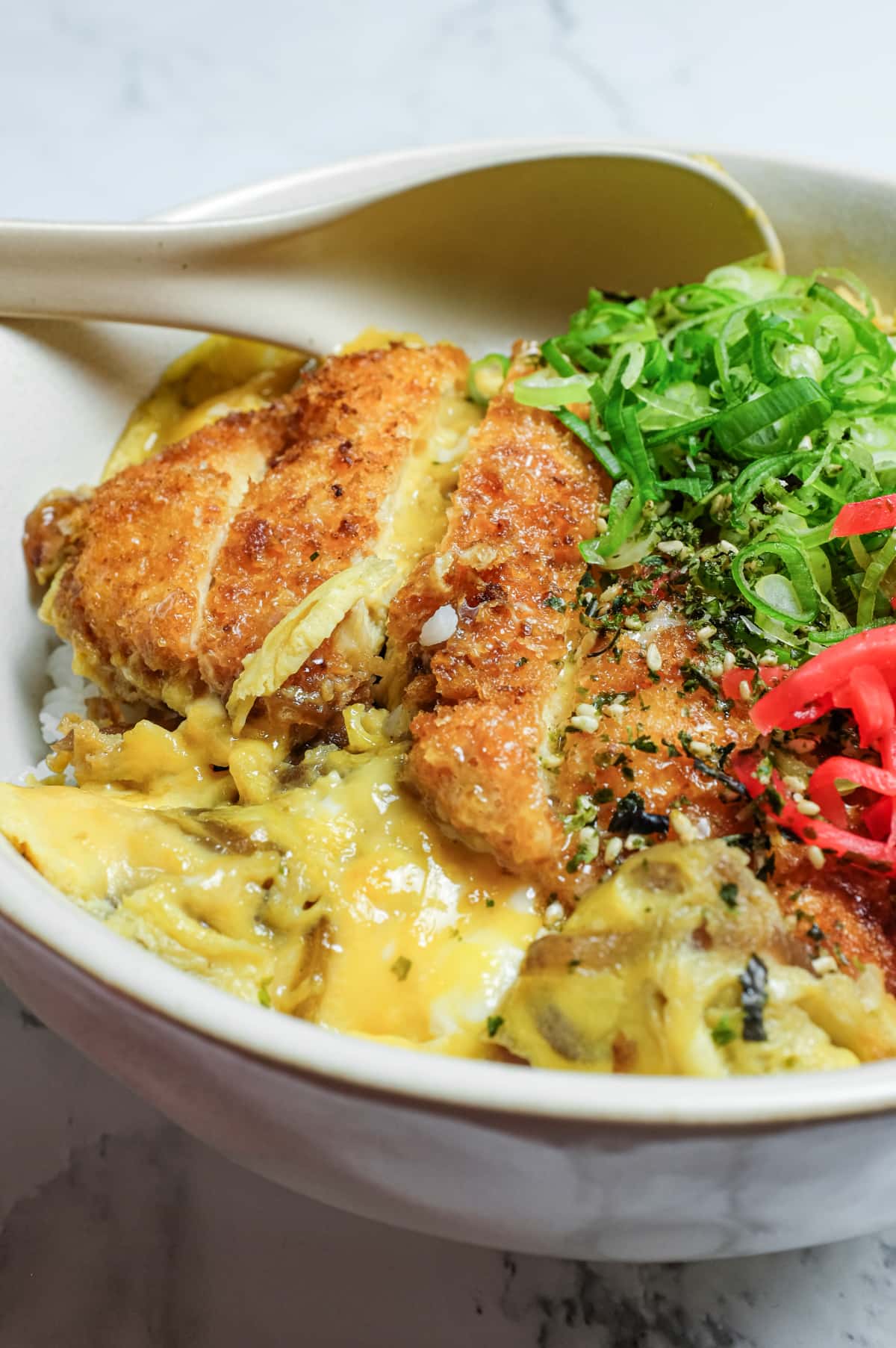
Slide the eggs and chicken over a waiting bowl of cooked rice. Garnish with pickled ginger, chopped spring onion and a sprinkle of furikake (Japanese rice seasoning) and eat!
Pro Tips - get a donburi pan
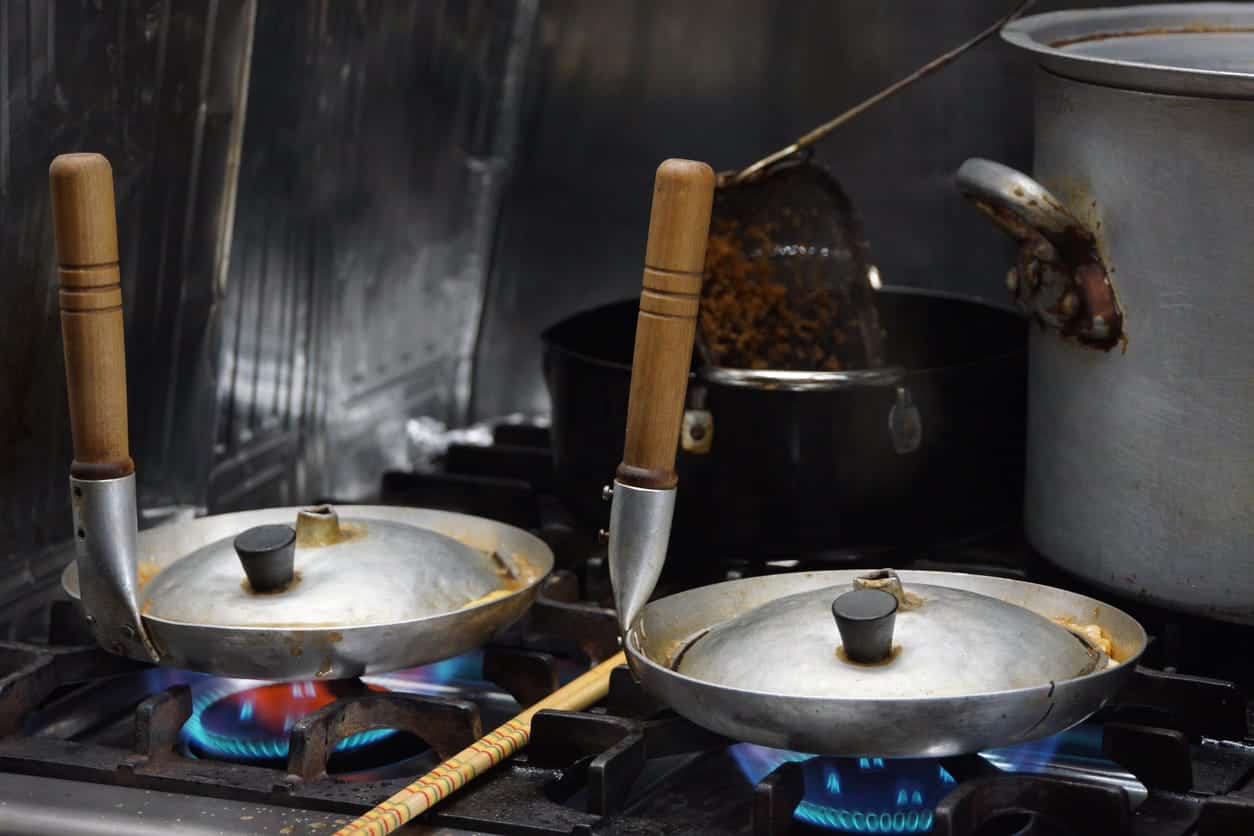
A small donburi pan makes this much easier. The shallow shape and lid help steam the eggs evenly, and the vertical handle makes sliding everything neatly onto the rice effortless. That said, a small frying pan works perfectly well.
SUBSTITUTIONS & VARIATIONS
- Swap chicken for pork to make tonkatsudon.
- Try menchi katsu (minced meat cutlets). Discover my recipe for crunchy Menchi Katsu.
- Use thin beef or pork slices instead of fried cutlets.
- Fried salmon works beautifully too.
The technique stays the same — only the topping changes.
Serving & Storage Suggestions
- Serve: Immediately, while hot. Garnish with spring onions, pickled ginger, seaweed flakes or furikake.
- Leftovers: Refrigerate for up to 2 days and reheat gently. Not suitable for freezing.
Ready to get cooking?
If you’re craving true Japanese comfort food, this chicken katsudon always hits the spot. It’s warm, deeply savoury, and endlessly satisfying — the kind of bowl that makes everything feel better.
More delicious Japanese recipes
If you liked this recipe for chicken katsudon, why not try some of my other homestyle Japanese recipes.
FAQ (Frequently asked questions)
Have a question? Let me know in the comments.
Can I keep the chicken crispy in katsudon?
Traditionally, katsudon is meant to soften. The fried cutlet is gently simmered with sauce and egg so it absorbs flavour rather than staying crunchy. If you prefer more crunch, reduce the steaming time slightly, but expect a less traditional result.
Do I need a special pan to make katsudon?
No. A small frying pan works perfectly well. A donburi pan simply makes it easier to steam the eggs evenly and slide the finished dish neatly over the rice, but it isn't essential.
Can I make katsudon ahead of time?
Katsudon is best cooked and eaten immediately. You can prepare the chicken cutlets and sauce in advance, but the final egg-steaming step should be done just before serving for the best texture.
What rice is best for katsudon?
Short-grain Japanese white rice is ideal. It's slightly sticky and absorbs the sauce well, helping the dish hold together in the bowl. Medium or long-grain rice will work, but the texture will be different.
This recipe uses affiliations and may receive a commission based on your activity (link clicks). Learn more.
Ingredients
- 2 small chicken breasts (pounded into flat cutlets)
- 2 tbsp plain flour
- 1 egg
- 2 cups panko breadcrumbs
- vegetable oil (enough for frying -about 2–3 cm / ¾–1 inch)
- 1 medium onion (halved and thinly sliced)
- 2 spring onions (finely sliced)
- pickled ginger (for garnish)
- Seaweed rice seasoning (for garnish)
Seasoning sauce
- 1 cup freshly boiled water
- 2 tsp Hondashi
- 2 tbsp Japanese soy sauce
- 2 tbsp sake
- 3 tsp sugar
- 2 tbsp mirin
- 4 eggs
- 1½ cups Japanese rice
Instructions
- Cook your rice either in a pan or rice cooker and keep warm while you prepare everything.
- Pound the chicken breasts into thin cutlets. Set up a breading station with flour, beaten egg and breadcrumbs, then coat each cutlet in that order.
- Whisk 1 cup of freshly boiled water with the hondashi, soy sauce, mirin, sake and sugar until dissolved.
- Divide the sliced onion between two small frying pans and pour half of the seasoning sauce into each. Bring to a gentle simmer, cover and cook over low heat until the onions are soft, around 10 minutes. Keep warm over a very low heat.
- Meanwhile, heat a deep frying pan with around 2–3 cm / ¾–1 inch of oil and fry the chicken cutlets until golden on both sides and cooked through, then drain on paper towels.
- Slice each fried cutlet into thick strips, keeping its original shape.
- Divide the eggs between two bowls (two eggs per bowl) and beat lightly. Set aside.
- Place a cutlet on top of the onions in each pan. Increase the heat to high, pour the beaten eggs over each cutlet, cover and steam for 1–2 minutes until the eggs are softly set.
- Slide the chicken and egg over bowls of cooked rice. Garnish with pickled ginger, chopped spring onion and a sprinkle of furikake, then serve immediately.
Notes
Substitutions
Chicken katsudon is very flexible. You can swap the chicken for pork cutlets to make tonkatsudon, or use menchi katsu (minced meat cutlets). The same egg-and-dashi technique also works with thinly sliced beef or pork, or even fried salmon. Keep the sauce and method the same — only the protein changes.Serving & Storage
Serve katsudon hot, straight from the pan over freshly steamed rice. Garnish simply with sliced spring onions, pickled ginger, seaweed flakes or furikake. Katsudon is best eaten immediately, but leftovers can be refrigerated for up to 2 days and reheated gently. Freezing is not recommended.Nutrition
Leave A Comment