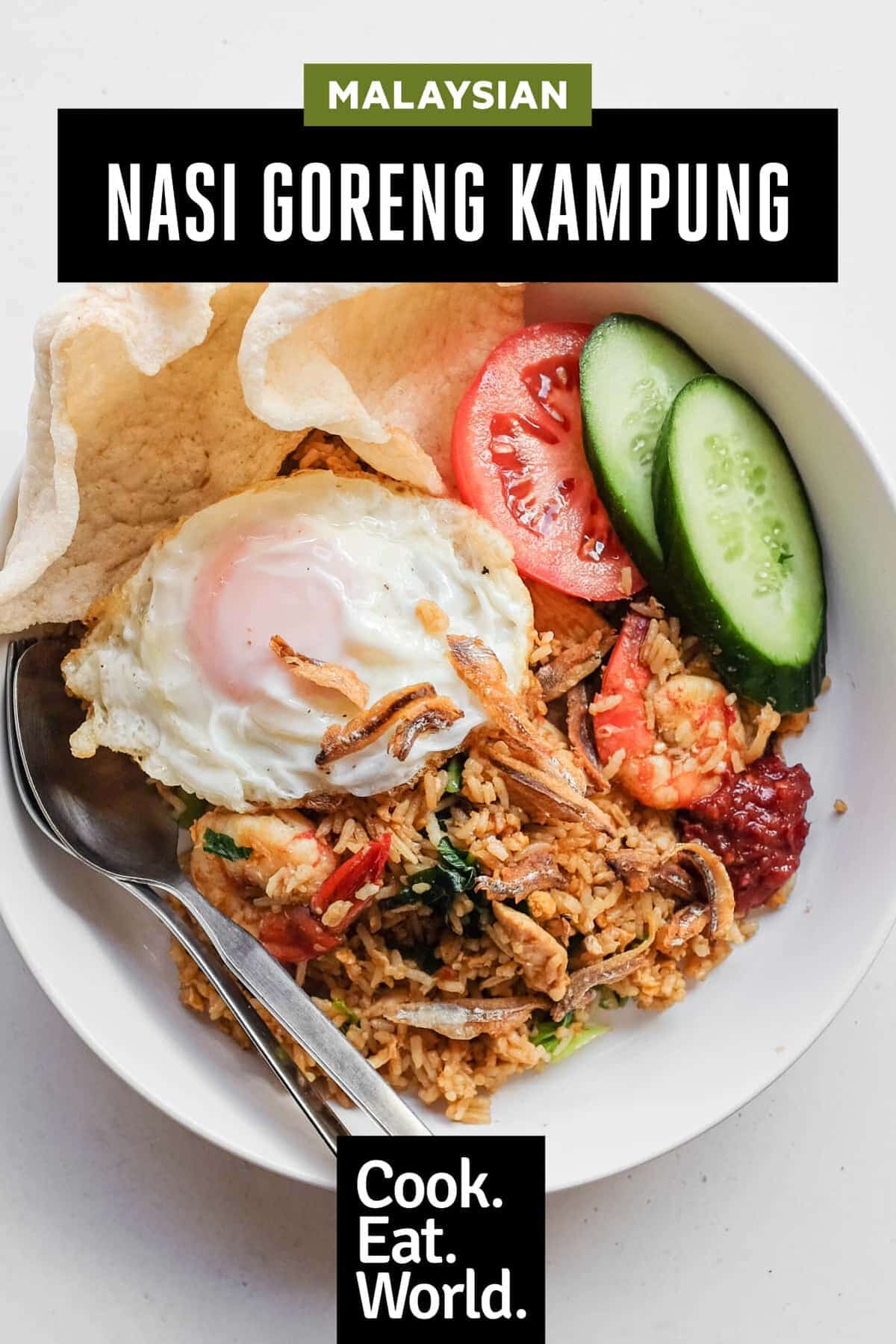
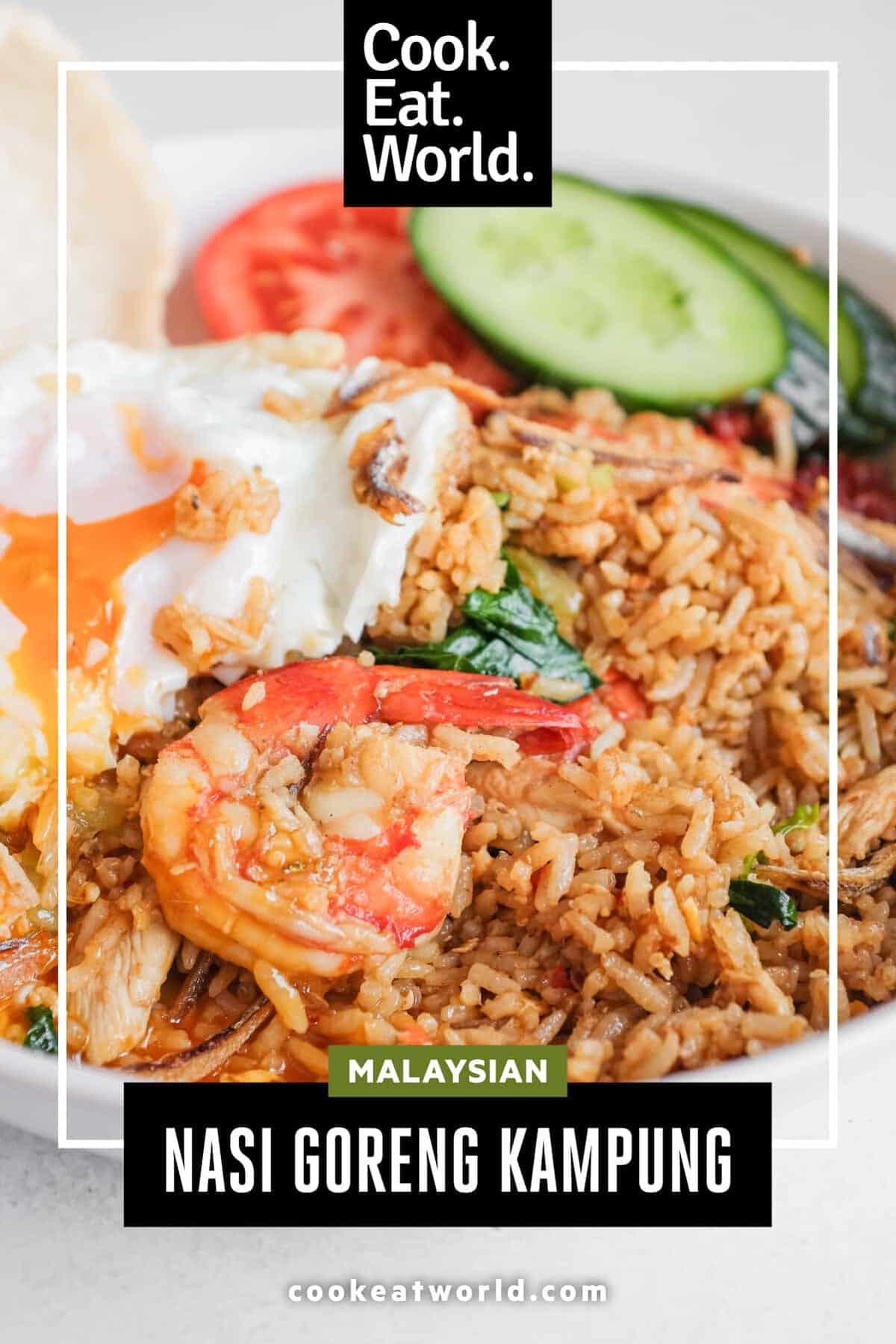

Nasi Goreng Kampung (Malaysian Fried Rice)
By Lee Jackson ↣ Published on: August 11, 2026
There’s nothing quite like Malaysian Fried Rice, Nasi Goreng Kampung – a warm and comforting celebration of rice, spice and everything nice! It’s one of the tastiest and most beloved Southeast Asian recipes.
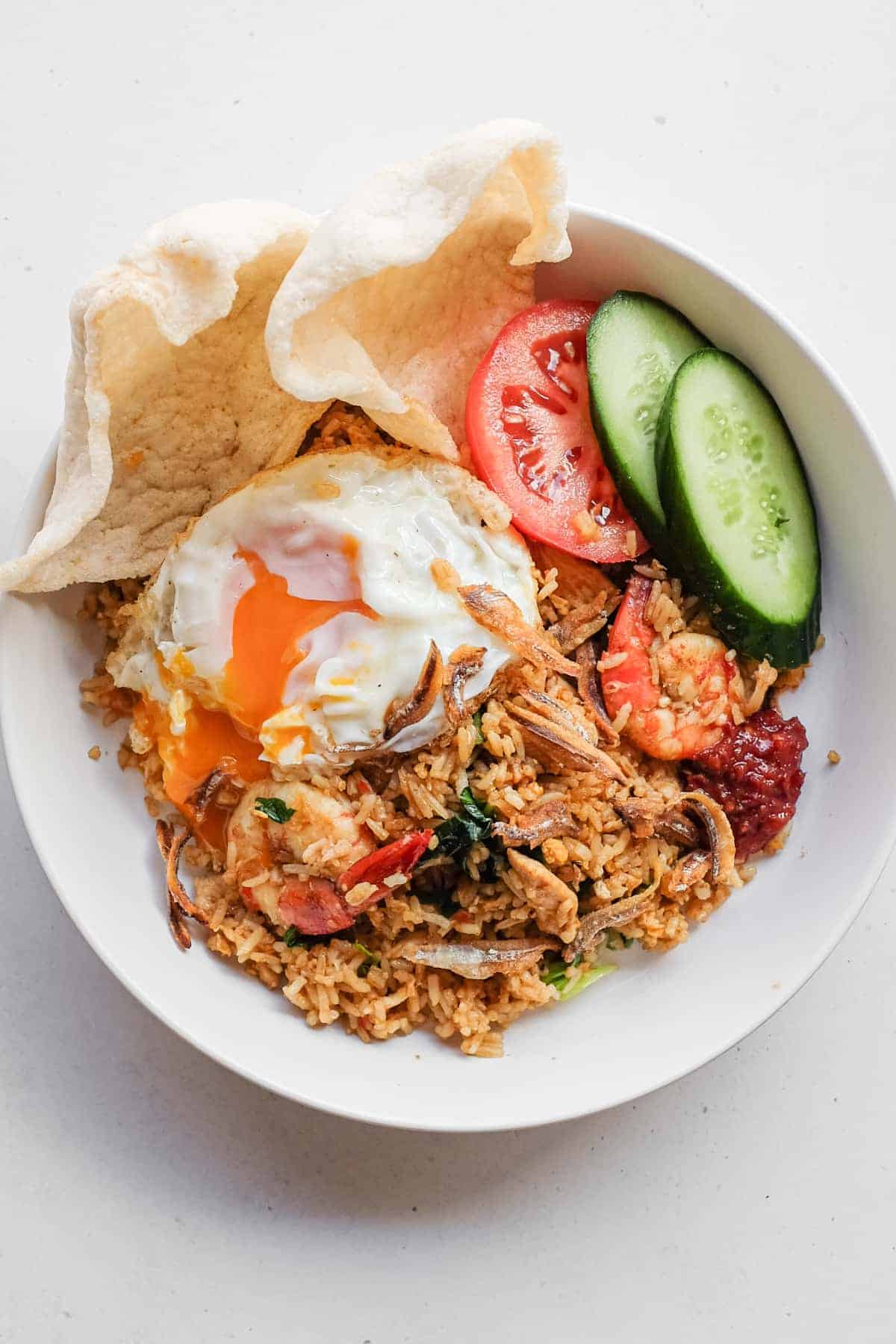
The pinnacle of Malaysian food must surely be this iconic fried rice, Nasi Goreng Kampung. It's an impossibly delicious melange of flavour that I just can't get enough of. Way back in 2004 I got my first taste of this dish while en-route to Australia on my Malaysian stop-over. I'd long been a fan of Chinese fried rice, but had never before encountered Malaysian fried rice, and I was in for a lifelong treat!
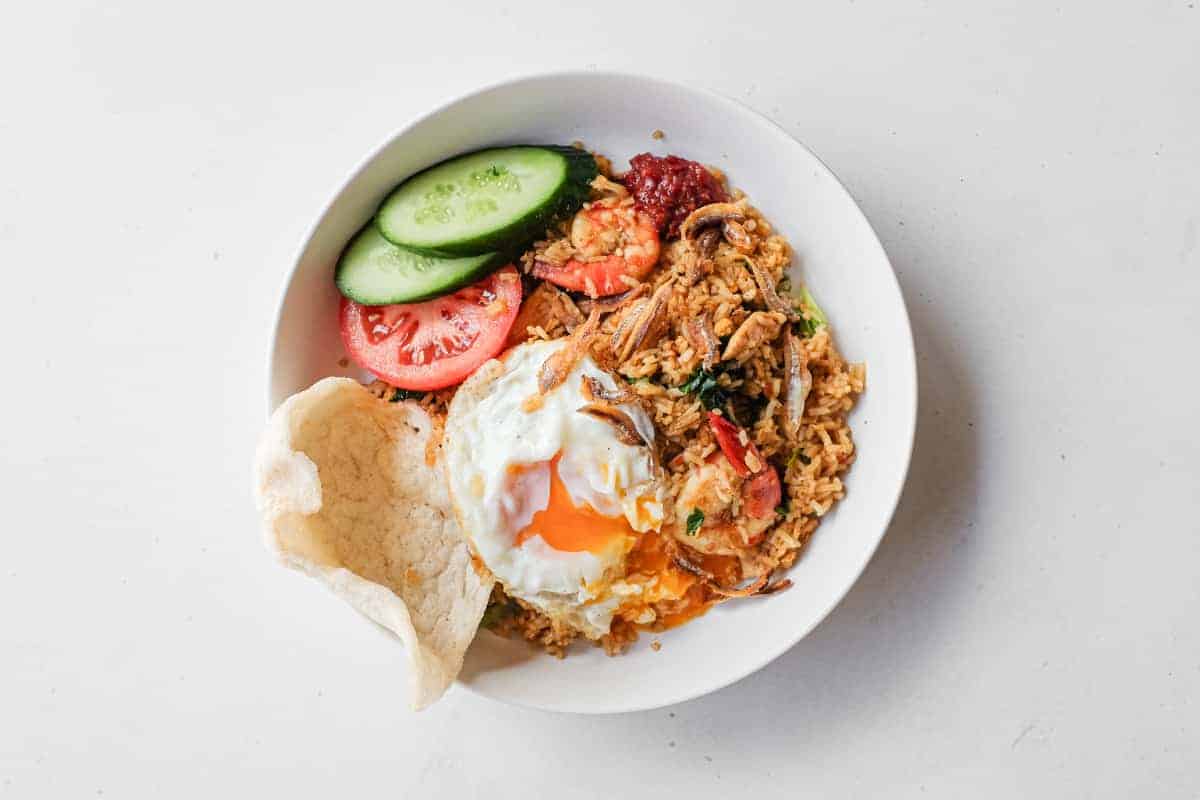
To say that I was bowled over is an understatement. The Malaysian version is a meal unto itself, with chicken, prawns and more, all kissed by the breath of the wok - including the indispensable crisp fried egg, which is almost a work of art in itself. I've been cooking nasi goreng ever since (and I'm still in Australia).
There are many excellent pre-made spice mixes and pastes for nasi goreng, but nothing can prepare you for the flavour of homemade. It takes on a whole new level of freshness and fragrance, with added textures you just can't achieve with shop bought pastes. It may well be in my top 5 dishes of all time - in any cuisine! The great news is that it's actually pretty easy to make at home - this is where I come in... read on.
This recipe is part of my curated Asian Collection and Asian Noodles & Rice Hub, where you'll find more of my favourite recipes from the region.
What's Ahead?
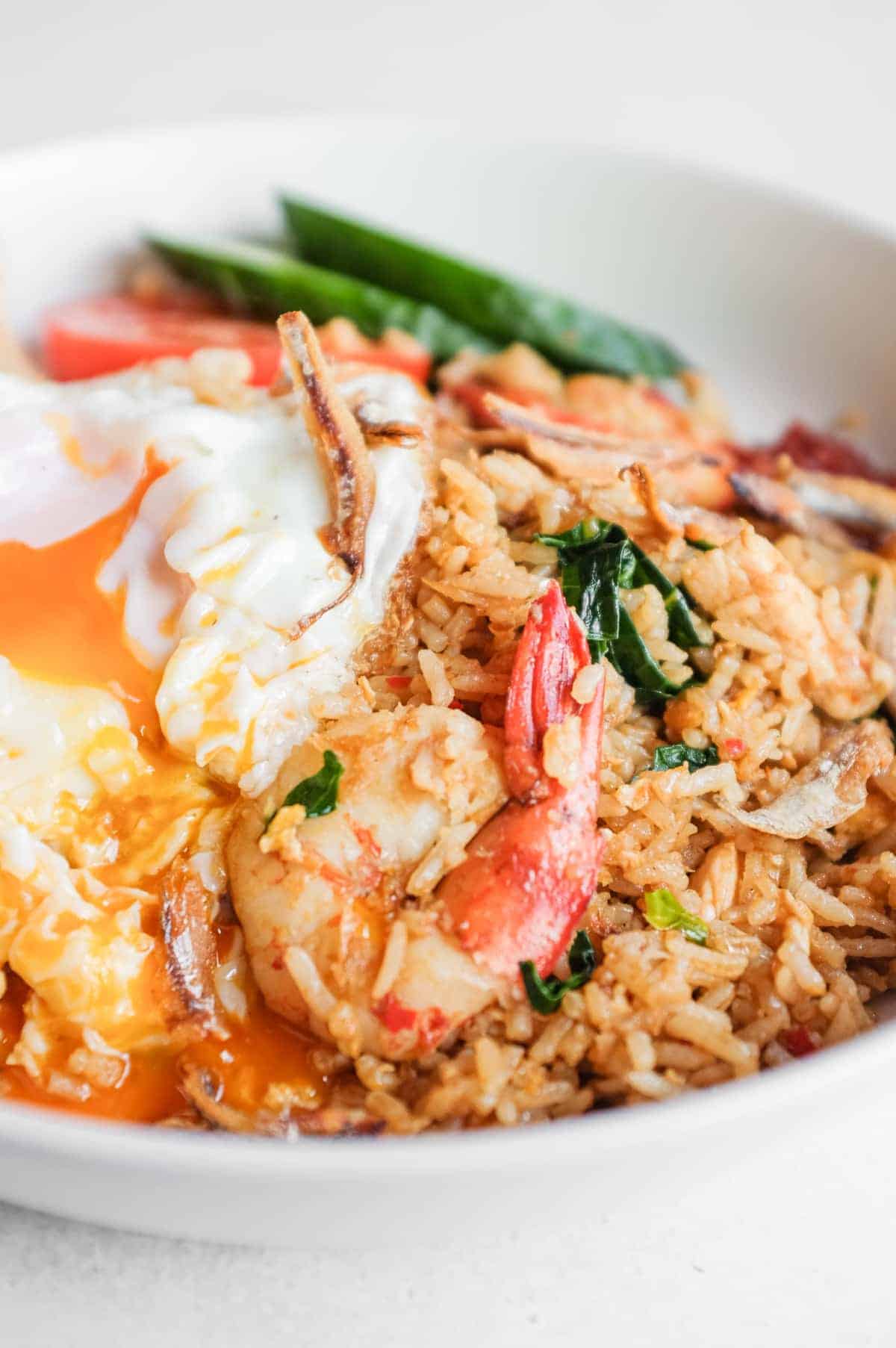
What is Nasi Goreng Kampung
Nasi goreng kampung is one of the best-known rustic variations of nasi goreng, a broad family of fried-rice dishes found across Malaysia and Indonesia.
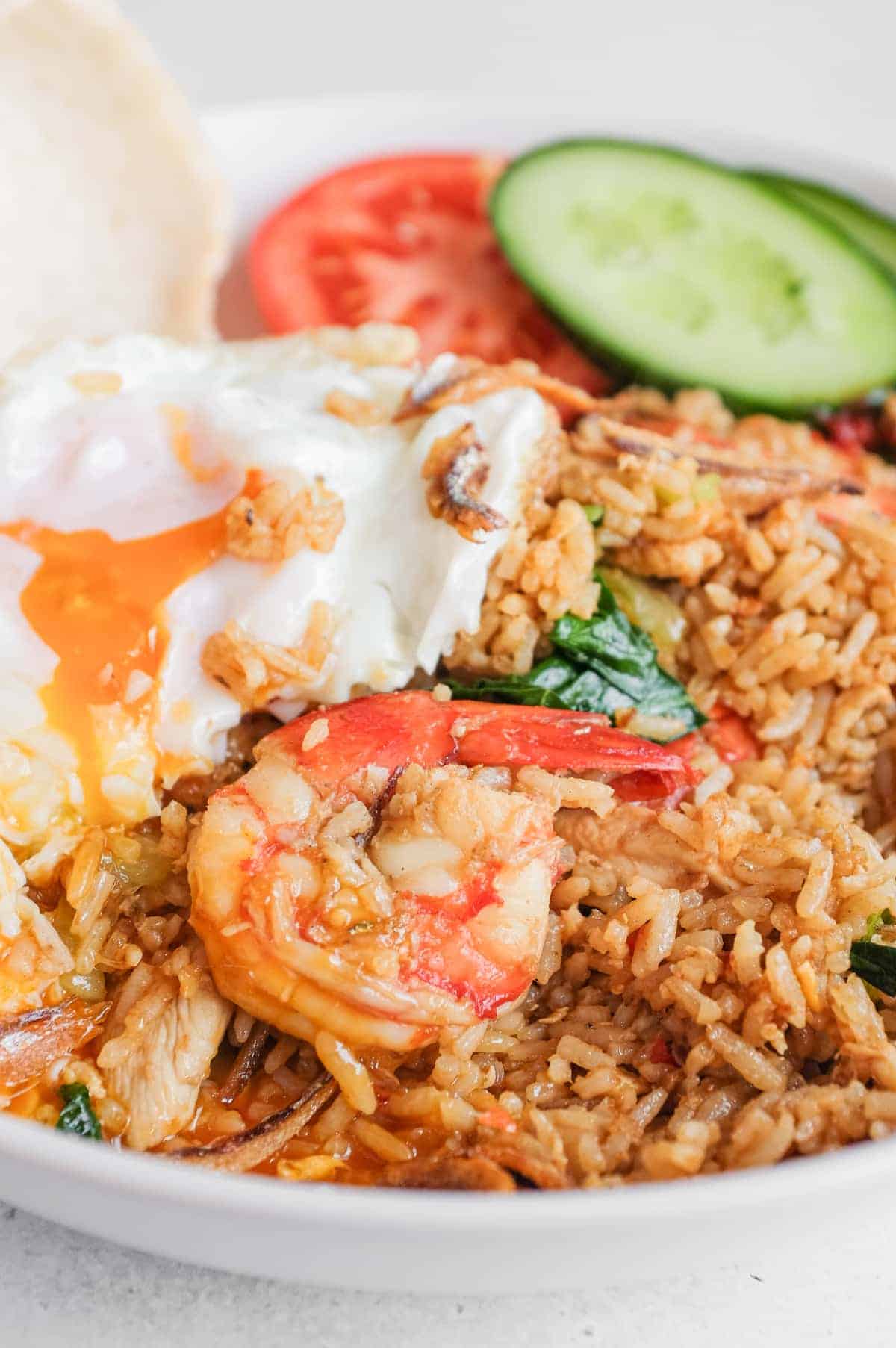
Nasi goreng kampung is a rustic “village-style” fried rice dish enjoyed across Malaysia and rooted in Indonesia’s rich nasi goreng ('fried rice') tradition. Traditionally made to use leftover rice, it is stir-fried over high heat with a punchy paste of chillies, garlic, shallots and belacan (shrimp paste). Ikan bilis (dried anchovies) add savoury crunch, while vegetables (typically water spinach 'kangkung'), egg, chicken and/or prawns make it substantial.
Recipes vary by household, but its bold, smoky, spicy character remains unmistakably comforting and deeply satisfying for any quick meal of the day. I especially love it for breakfast as it really wakes up the senses and gets me off to the perfect start for the day.
Why You'll Love it
- Big and bold – It has a wonderful big flavour that can't be ignored. It's so addictively tasty, that I just can't stop eating!
- Perfect for leftover rice – I always make extra jasmine rice for all my Southeast Asian curries, and I'll also often blend a bulk batch of the nasi goreng spice paste and freeze it in small bags, so that when the inspiration takes me, I can whip up a quick nasi goreng.
- A complete meal – if I go all in with the sides and egg, Nasi Goreng Kampung is a full meal in a bowl. And a satisfying one at that.
- Easy to customise – it's a dish that can be made with whatever combination of ingredients you have at hand, in fact my version uses pak choy instead of Asian water spinach as it's easier to find at my supermarket. The recipe can be customised further, see my suggestions below.
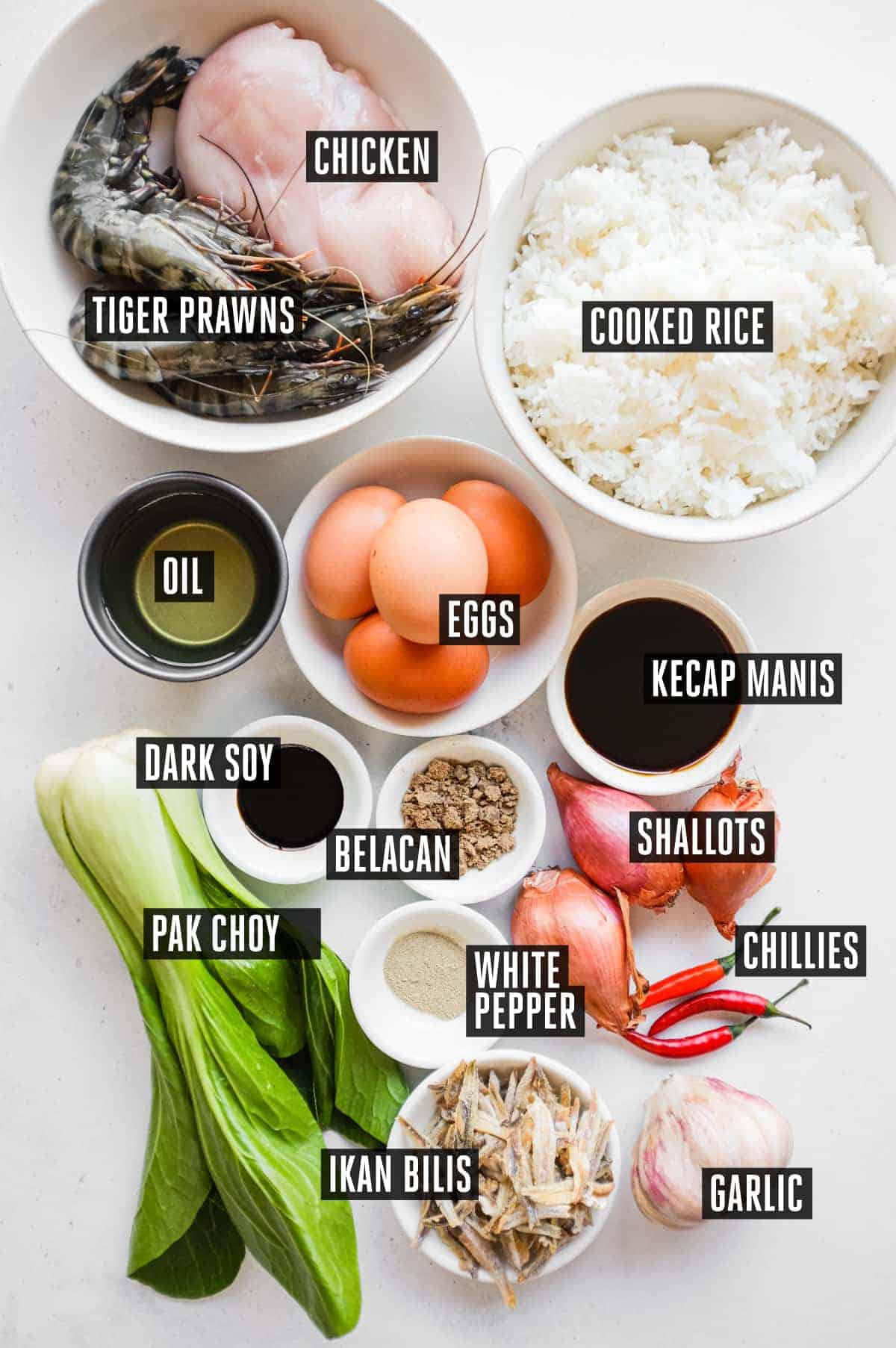
Ingredients You'll Need
The recipe only asks for three potentially tricky ingredients, but they're completely worth tracking down to achieve the authentic flavour of Nasi Goreng Kampung.
- Cooked rice - day-old jasmine rice that's been chilled gives the best results. At the very least, make it a few hours in advance and spread it on a plate to cool completely.
- Chicken and prawns (shrimp) - The tastiest versions of this recipe have always included both, so I will too. You can use one or the other or both like me.
- Ikan bilis - an essential, dried anchovies, creates the distinctive flavour, aroma and texture of a top-notch nasi goreng. Find them at many good Asian stores, or online.
- Belacan - is Malaysian shrimp paste, that pungent fermented paste that stinks to high heaven, but creates all the umami that makes nasi goreng so addictive! Buy toasted belacan, or use Thai shrimp paste if it's easier to find. Belacan goes into BOTH the spice paste and the fried rice to maximise its flavour.
- Kecap manis - is a sweet soy sauce that will balance out the saltiness of the shrimp paste and anchovies. You'll find it in most Asian stores, but you can substitute with light soy sauce mixed with white or brown sugar.
- Shallots, garlic and chillies - bring the backbone and spice to the paste. Use hot Thai chillies (birdseye). Three chillies gives a good heat (3/5 hot) - add more for a spicier version or less or no chilli heat.
- White pepper and dark soy - add depth of flavour and colour to the final rice.
- Pak choy - use any Asian greens. The traditional green is water spinach, but that can be hard to find, so I typically use pak choy which is much easier to get hold of.
- Eggs - like a Chinese fried rice, eggs are scrambled into the rice, but nasi goreng also has a crisp, wok-fried egg on top which I believe is essential. Crisp on the outside, runny yolk on the inside - pure perfection.

Step by Step
Have everything ready and Nasi Goreng Kampung is simple (and quick) to pull together - here's how.
- Make the spice paste - Blend or pound the spice-paste ingredients until slightly coarse, then set aside. I use a food processor. A pestle and mortar is traditional, so if you have the time, this will create excellent results too.
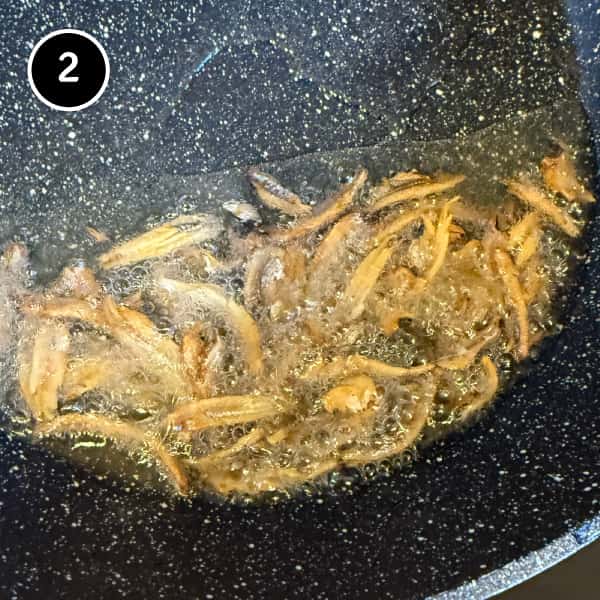
- Fry the ikan bilis - in some oil, fry the remaining ikan bilis for a minute until brown - drain and cool.
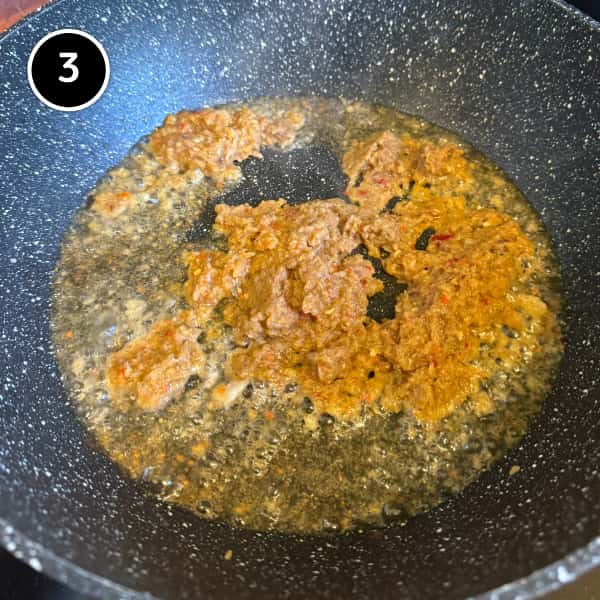
- Fry the spice paste - pour half the oil away, leaving around 1/4 cup (and keep for later) then fry the spice paste for a minute until fragrant.
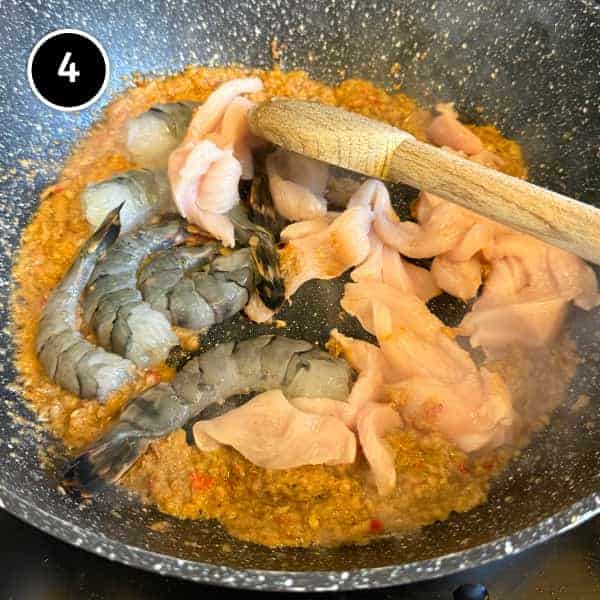
- Add the protein - add the chicken and shrimp and stir-fry for 2-3 minutes to cook through - the chicken is thinly sliced, so will cook in the same time as the prawns.
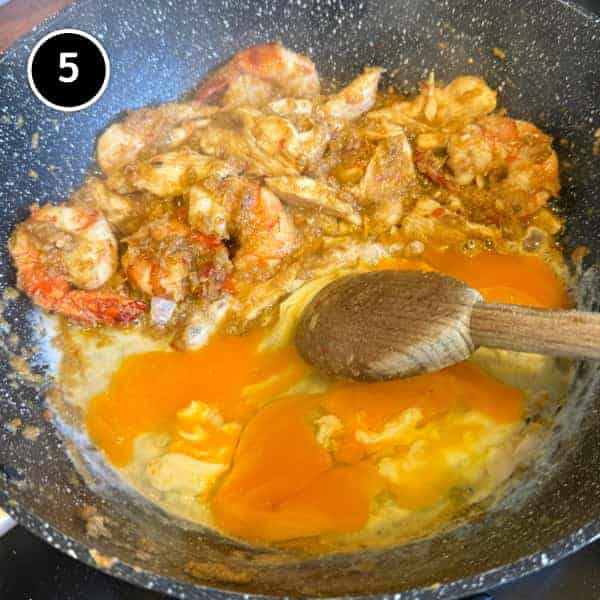
- Add eggs - move the mix to one side of the pan and pour in the eggs. Stir to scramble and cook through, then stir into everything else.
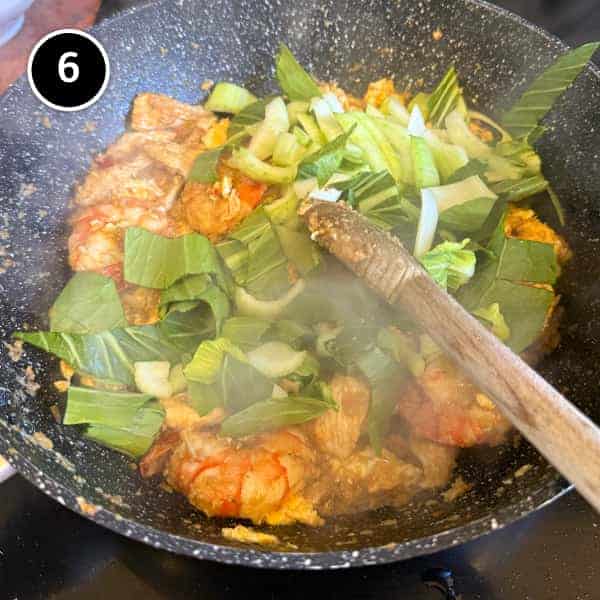
- Add the greens - add the pak choy along with the extra belacan, crumbled into the mixture and stir-fry for 30 seconds or so.
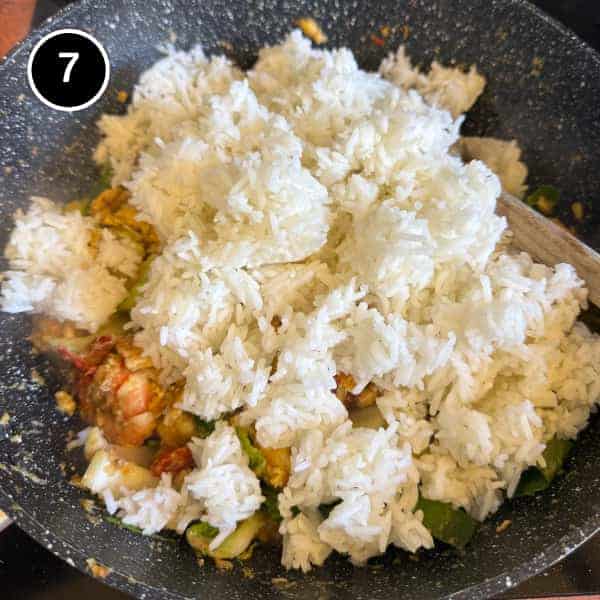
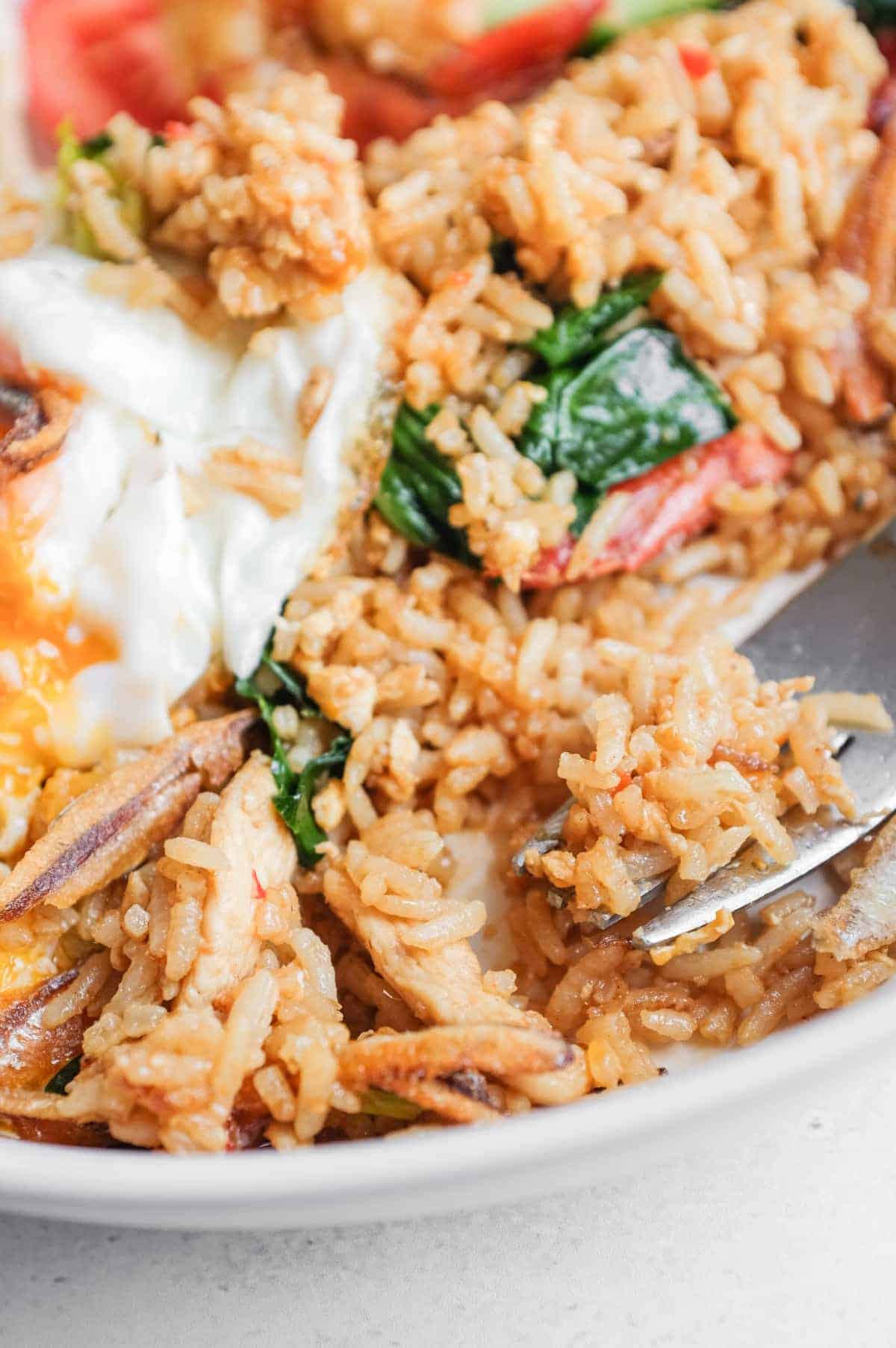
- Add the rice - stir well to coat everything, use the back of your spoon to break up any clumps until it's fully coated.
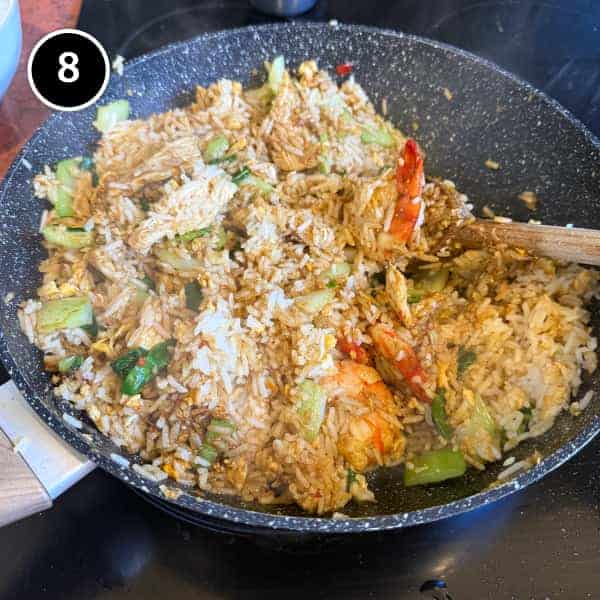
- Season - Pour in the kecap manis and dark soy and stir to combine. Cook for a little longer and then that's it. Your rice is done!
Now all that's needed is for you to fry your eggs in the reserved anchovy oil from earlier. Get it nice and hot and cook one at a time until each egg puffs up and crisps on the bottom while remaining soft and runny inside. Once your eggs are done, you're ready to serve.
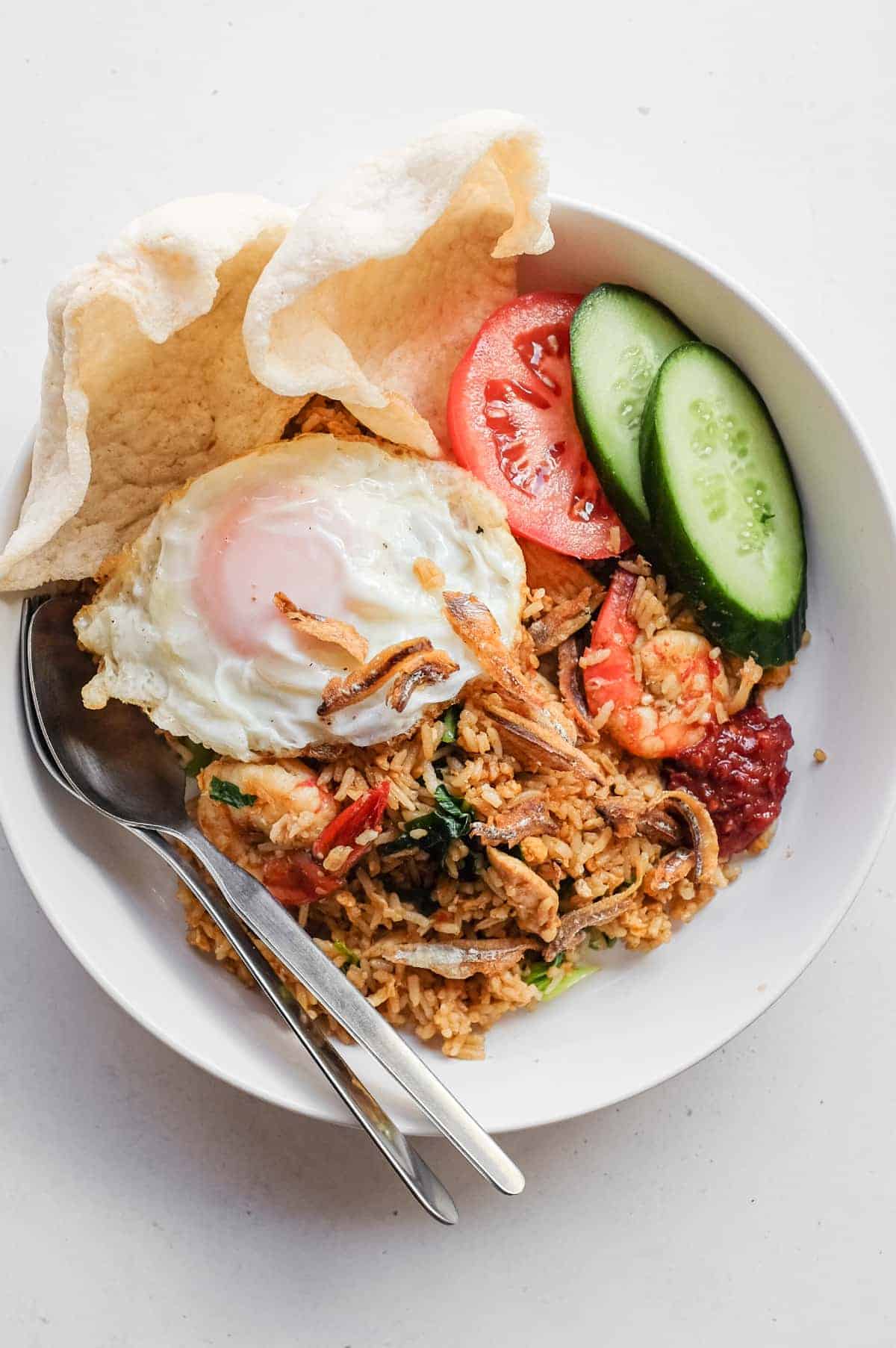
At the very least, create a mound of fried rice, place an egg on top and scatter over a few of the crunchy ikan bilis. I like more sides and accompaniments, so read on for what is traditionally served alongside Nasi Goreng Kampung.
Pro Tips - Things I've learned
- Get that pro-cooked wok flavour - most home cooks' woks won't get anywhere near the temperature of a professional wok burner. But, fear not - to get that char of the wok, when the rice is almost complete, flatten out the rice and leave it on the heat for 1 minute without touching it. The rice on the bottom will crisp a little. Stir and remove from the heat. Don't leave it too long, just enough for a light char to replicate restaurant-style.
- Make the spice paste in bulk and keep in the freezer in small bags (flattened out). They defrost in no time and save half the job for making fresh nasi goreng at the drop of a hat!
Serving & Storage Suggestions
Accompaniments for me are as important as the rice itself.
- Fried egg - To me it's not a nasi goreng at all without a crisp fried egg. Use a fair amount of oil and fry over high heat to let the egg puff and crisp up on the outside, while keeping the yolk soft and runny.
- Prawn crackers - I love to serve mine with a couple of crisp prawn crackers. I buy the Indonesian varieties which are dried and puff up in hot oil in seconds (do this at the beginning with the oil you'll use for frying the spice paste).
- Tomato & cucumber - The freshness cuts through the spice of the rice. I always serve both, either as slices or cubed and tossed with cilantro and lime juice as a simple salad.
- Sambal - I like a sambal to spice things up a little more. I generally go for a sambal belacan or sambal oelek. You can also try my very own Malaysian Sambal Sauce recipe if you're interested.
Fridge - You can keep leftover fried rice in the fridge for 1-2 days - reheat in the microwave (only once) and fry up an egg to accompany + as much of the above as you can muster the energy for!
Freezer - nasi goreng will freeze, although the prawns may suffer a little with reheating. It should be fine for 1 month in the freezer.
Ready to get cooking?
I can't sing the praises of this nasi goreng kampung any more! If you're familiar, you know what I mean, if not, it's a must. It's one of the tastiest Asian dishes there is and one I return to time and again. Anyone and everyone who knows me, knows I'm obsessed with Malaysian food and nasi goreng especially. I think it may well be mentioned somewhere on my gravestone. Enjoy!
More Malaysian recipes
If you liked this recipe, I'm sure you'll love more of my favourite Malaysian recipes.
FAQ
Have a question? Let me know in the comments.
What is the difference between nasi goreng and nasi goreng kampung?
Nasi goreng is the general term for fried rice in Malaysia and Indonesia. Nasi goreng kampung means “village-style fried rice” and typically has a more rustic, spicy flavour created with chillies, shallots, garlic, belacan and ikan bilis. Recipes vary between regions and households.
Why is day-old rice best for nasi goreng?
Chilled day-old rice is firmer and drier than freshly cooked rice, so the grains separate easily and fry without becoming soft or sticky. If using freshly cooked rice, spread it over a tray or large plate and let it cool completely before frying.
What can I substitute for belacan and ikan bilis?
Thai shrimp paste is the closest substitute for Malaysian belacan. If you cannot find ikan bilis, you can use dried anchovies from another Asian cuisine or omit them, although the finished rice will have less savoury depth and crunch. Add a little extra fish sauce or shrimp paste to compensate, but taste before adding salt.
How can I make nasi goreng kampung less spicy?
Reduce the number of bird’s-eye chillies or remove their seeds before blending the spice paste. For a mild version, replace them with a larger, milder red chilli. Serve sambal separately so everyone can adjust the heat at the table.
Can I make nasi goreng kampung without a wok?
Yes. Use the widest heavy-based frying pan you have and heat it thoroughly before adding the ingredients. Avoid overcrowding the pan, and cook in batches if necessary. Letting the rice sit undisturbed for a short time near the end will help create some of the smoky, lightly charred character associated with wok cooking.
This recipe uses affiliations and may receive a commission based on your activity (link clicks). Learn more.
Ingredients
Spice paste
- 15 g ikan bilis (dried anchovies, rinsed and drained)
- 3 Asian shallots
- 4 garlic cloves
- 3 Thai chillies adjusted to taste
- 1 tsp toasted belacan (Malaysian shrimp paste)
- ½ tsp ground white pepper
Fried rice
- ½ cup vegetable oil
- 20 g ikan bilis
- 120 g chicken breast thinly sliced
- 6 tiger prawns peeled and deveined
- 1 tsp toasted belacan (crumbled) (this is extra belacan, in addition to the quantity in the spice paste)
- 2 eggs
- 1 pak choy roughly chopped
- 3 cups cooked rice day-old if possible
- 2 tbsp kecap manis
- 1 tsp dark soy sauce
- Salt only if needed
Other Ingredients
- 2 eggs
- cucumber slices (optional)
- 1 tomato (optional)
- prawn crackers (optional)
Instructions
Spice Paste
- To make the spice paste, add the rinsed ikan bilis, shallots, garlic, Thai chillies, belacan and white pepper to a food processor or pestle and mortar and blend until semi-smooth. Set aside.
Fried Rice
- Using a wok, heat the oil until hot. Add the ikan bilis and fry until golden (about 1 minute). Remove from the oil and drain on paper towels.
- Pour half the oil away and keep for later.
- Return the wok to the heat and add spice paste and fry for 1 minute then add the chicken slices and prawns and fry for 2-3 minutes until cooked through.
- Move everything to one side and add the eggs. Stir to break up and scramble - fry until cooked, then mix into everything else.
- Add the pak choy and extra belacan and stir into the mix for 30 seconds.
- Add the rice and stir to combine, using the back of your spoon to flatten and break up, so that everything is coated.
- Add the kecap manis and dark soy and stir well to combine. Stir-fry for another 2-3 minutes then remove from the heat. Check for seasoning and add a little salt if needed.
Other
- In a small pan, using the reserved anchovy oil, fry the eggs until crisp.
Serving
- Serve the rice topped with a fried egg and scattered with a few of the fried ikan bilis (anchovies).
- Optional extras include a couple of prawn crackers, slices of cucumber and tomato, and a spoonful of Sambal Belacan or Sambal Oelek.
Notes
- Rice – Day-old refrigerated jasmine rice gives the best texture because the grains are firm and separate easily. If using freshly cooked rice, spread it over a tray and let it cool completely before frying.
- Belacan – This recipe uses toasted belacan in two stages. The first teaspoon is fried as part of the spice paste, creating a deeper, mellower savouriness. The second is added later and cooked only briefly, preserving more of belacan’s pungent fermented aroma. This layering is intentional, not a duplicated ingredient.
- Ikan bilis – These dried anchovies provide the characteristic savoury flavour and crisp texture. Rinse and drain them thoroughly before using. Other small dried Asian anchovies may be substituted.
- Chillies – Three bird’s-eye chillies produce medium heat. Reduce the quantity or use a mild red chilli for a gentler version.
- Vegetables – Kangkung is traditional, but pak choy, choy sum or another Asian green works well.
- Cooking – Have every ingredient prepared before heating the wok, as the recipe cooks quickly. Use a wide frying pan and cook in batches if you do not have a wok.
- Storage – Cool and refrigerate leftovers within 2 hours. Keep refrigerated for up to 2 days and reheat only once, until steaming hot. Freeze for up to 1 month; the prawns may become slightly firmer after reheating.
Leave A Comment